Streamlining Sonic Innovation: The New Frontier of FV-1 DSP Emulation
For the uninitiated, the name "Spin Semiconductors FV-1" might sound like an obscure component from a forgotten era of computing. However, within the niche yet passionate community of boutique guitar pedal designers, high-end audio hardware engineers, and DIY sound synthesists, the FV-1 is a legendary piece of silicon. It is the heart of countless digital effects, responsible for the lush reverbs, shimmering choruses, and complex delays that define modern sonic landscapes.
Despite its ubiquity, the development process for this digital signal processor (DSP) has long been hampered by a rigid, time-consuming workflow. That is, until now. Developer [adamjvr], also known as [avr], has introduced a game-changing PC-based emulator for the FV-1, a project that promises to accelerate the pace of audio innovation by bringing the testing bench directly to the desktop.
The Main Facts: Bridging the Gap Between Code and Cabinet
The FV-1 is not a general-purpose processor; it is a highly specialized DSP chip designed specifically for audio effects. Its architecture is lean, efficient, and deeply focused on the math required to manipulate waveforms in real-time. Yet, for years, developers have been forced to endure a "compile-flash-test" cycle that creates significant friction in the creative process.
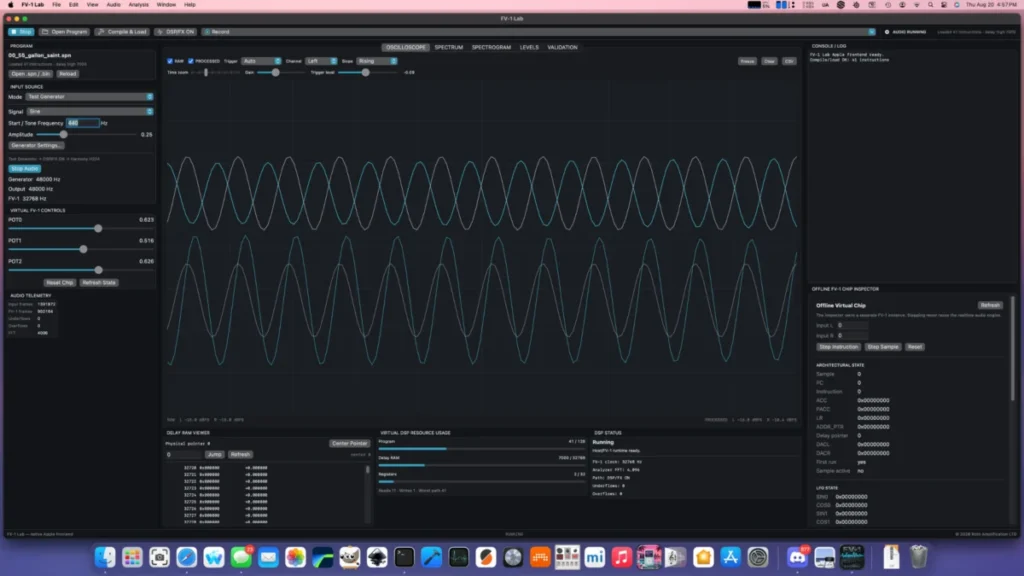
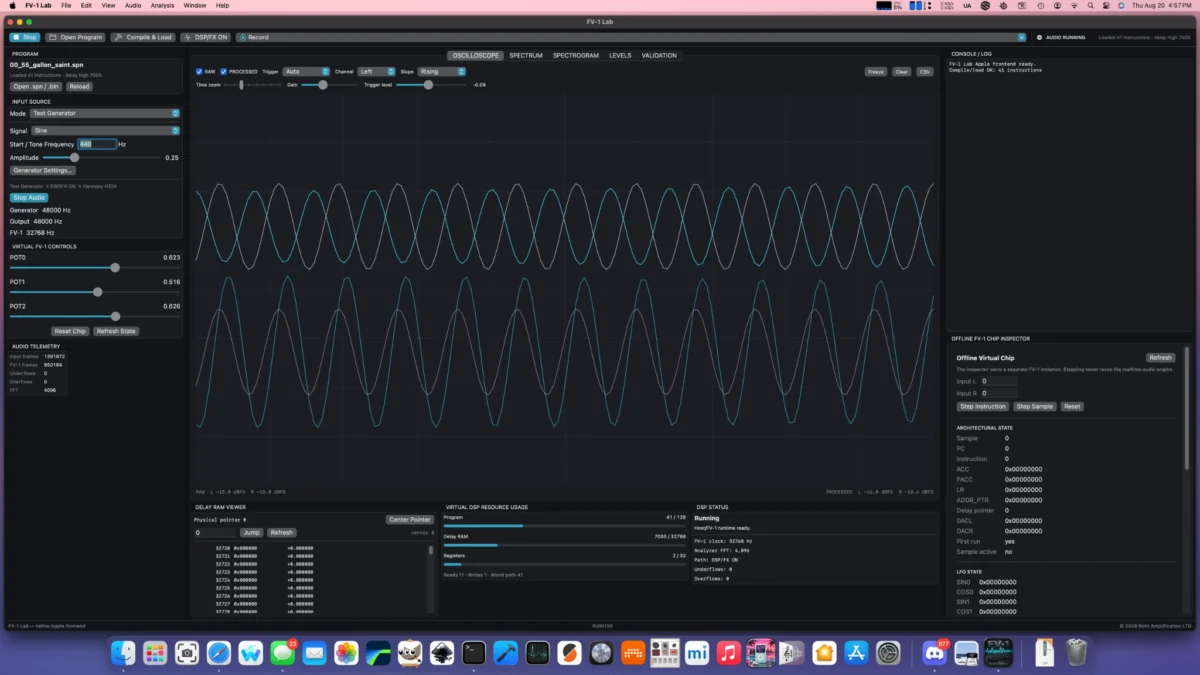
[adamjvr]’s emulator serves as a virtual sandboxed environment that replicates the behavior of the FV-1 hardware. By allowing developers to run their assembly code directly on their computers—processing audio signals through the virtual chip—the emulator eliminates the need to physically burn code onto an EEPROM chip or flash a development board for every minor adjustment.
The project is fully open-source, hosted on GitHub under the Mozilla Public License, and offers cross-platform compatibility for Windows, macOS, and Linux. It is a tool designed to remove the "grunt work" from audio engineering, allowing the artist-engineer to focus on the nuance of the sound rather than the logistics of hardware iteration.
Chronology: The Evolution of the Pedal Development Workflow
To understand the magnitude of this release, one must look at the traditional development cycle of custom digital guitar pedals.
The Era of "Burn and Learn" (Pre-2024)
For nearly two decades, the standard workflow involved writing code in an assembly environment, compiling it into a binary file, and manually programming an EEPROM chip. The developer would then insert the chip into a physical pedal, connect a guitar, and play a few chords. If the effect sounded slightly off—a common occurrence when tuning delay feedback or reverb tails—the developer had to remove the chip, erase it, reprogram it, and repeat the process.
This process was not only tedious but physically destructive. EEPROM chips have a finite number of write cycles. Constant testing could literally wear out the hardware, leading to wasted components and discarded materials.
The Emergence of Simulation (2024–Present)
Recognizing the bottleneck, [adamjvr] began the arduous task of reverse-engineering the logic of the FV-1. The goal was not merely to create a theoretical model, but a bit-accurate emulator that could handle real-time audio input. The project moved from initial conceptualization to a functional prototype throughout late 2024 and early 2025, culminating in the current public release. By decoupling the code from the hardware, [adamjvr] has effectively moved the "bench" to the "desktop," turning a process that once took minutes per iteration into one that takes mere seconds.
Supporting Data: Why the FV-1 Remains the Industry Standard
The Spin Semiconductors FV-1 has maintained its dominance in the boutique pedal market for several reasons, and understanding these underscores why an emulator is such a significant development for the industry.
- Instruction Set Efficiency: The FV-1 features a small, dedicated instruction set specifically optimized for audio. It handles fixed-point arithmetic with a speed and precision that general-purpose microcontrollers often struggle to match without significant overhead.
- Hardware Integration: The chip includes built-in analog-to-digital (ADC) and digital-to-analog (DAC) converters, making it a "one-stop shop" for pedal design.
- The Community Ecosystem: Because the chip has been around for years, there is a massive library of existing algorithms—from lush ambient reverbs to vintage tape-style echos—that developers can build upon.
However, the barrier to entry has always been the technical overhead. By providing an emulator, [adamjvr] is essentially lowering the barrier for entry-level developers. The data suggests that with the introduction of such tools, the frequency of "hobbyist-to-pro" transitions increases, as developers can prototype sophisticated ideas in a software environment before committing to expensive printed circuit board (PCB) fabrication.
Official Responses and Community Reception
The reaction from the DSP and guitar hardware community has been overwhelmingly positive. On platforms like GitHub and Hackaday, contributors have praised the decision to release the emulator under the Mozilla Public License, noting that open-source tools for proprietary hardware are rare.
"This is the missing link for the FV-1," says a prominent contributor in the DIY pedal community. "For years, we’ve been hacking together ways to visualize our code, but never had a real-time, cycle-accurate way to hear it before burning a chip. It changes the entire rhythm of the development process."
While Spin Semiconductors themselves have not released an "official" response, industry observers note that such community-driven tools often breathe new life into older hardware, extending the product lifecycle of the FV-1 by making it more accessible to a new generation of digital luthiers.
Implications: The Future of DIY Audio Hardware
The release of the FV-1 emulator carries profound implications for the future of digital audio development.
1. The Democratization of DSP
When development tools are expensive or require specialized hardware, only those with significant capital can innovate. By offering a free, PC-based emulator, [adamjvr] is helping to democratize high-fidelity audio design. Any student or enthusiast with a laptop can now learn the intricacies of digital signal processing without purchasing a single piece of hardware until their code is finalized.
2. Accelerated Iteration Cycles
In the world of creative hardware, "fail fast" is a mantra. The ability to iterate on an audio algorithm in real-time—hearing changes instantly as one adjusts a coefficient in the code—allows for a level of sonic experimentation that was previously impossible. We are likely to see an influx of more complex, higher-quality DIY pedals as a direct result of this streamlined workflow.
3. Cross-Pollination with Other Technologies
The emulator project sits alongside a growing trend of virtualizing microcontrollers. From browser-based Arduino emulators to sophisticated PIC and AVR simulators, the engineering world is trending toward "software-first" design. The success of the FV-1 emulator suggests that even the most niche hardware will eventually have a software-defined counterpart, allowing developers to simulate entire signal chains before a single soldering iron is heated.
4. Sustainability and Waste Reduction
While often overlooked, the reduction of physical waste is a tangible benefit of this project. By minimizing the number of EEPROM chips that need to be flashed and subsequently discarded, the emulator contributes to a more sustainable model of hardware prototyping.
Conclusion: A New Era for the Digital Luthier
The work of [adamjvr] represents more than just a convenience for developers; it is a vital contribution to the digital audio ecosystem. By stripping away the technical friction of the development cycle, the FV-1 emulator invites more creators to explore the intersection of code and music.
As we move forward, it is likely that this emulator will become a standard tool in the kit of every pedal builder, from the garage hobbyist to the boutique manufacturer. It serves as a reminder that the most significant technological advancements are often those that empower the individual to realize their creative vision with greater speed, precision, and freedom. Whether you are crafting the next iconic reverb or simply exploring the physics of sound, the digital bench is now open—and it’s more accessible than ever before.