Engineering at the Intersection of Play and Power: The LEGO-Based Air-Turbine Table Saw
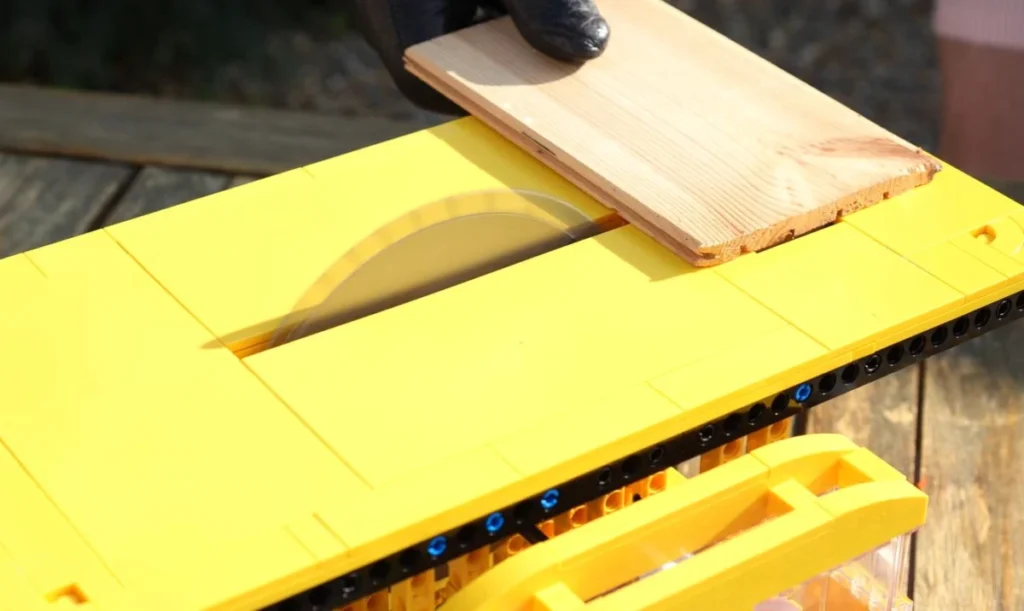
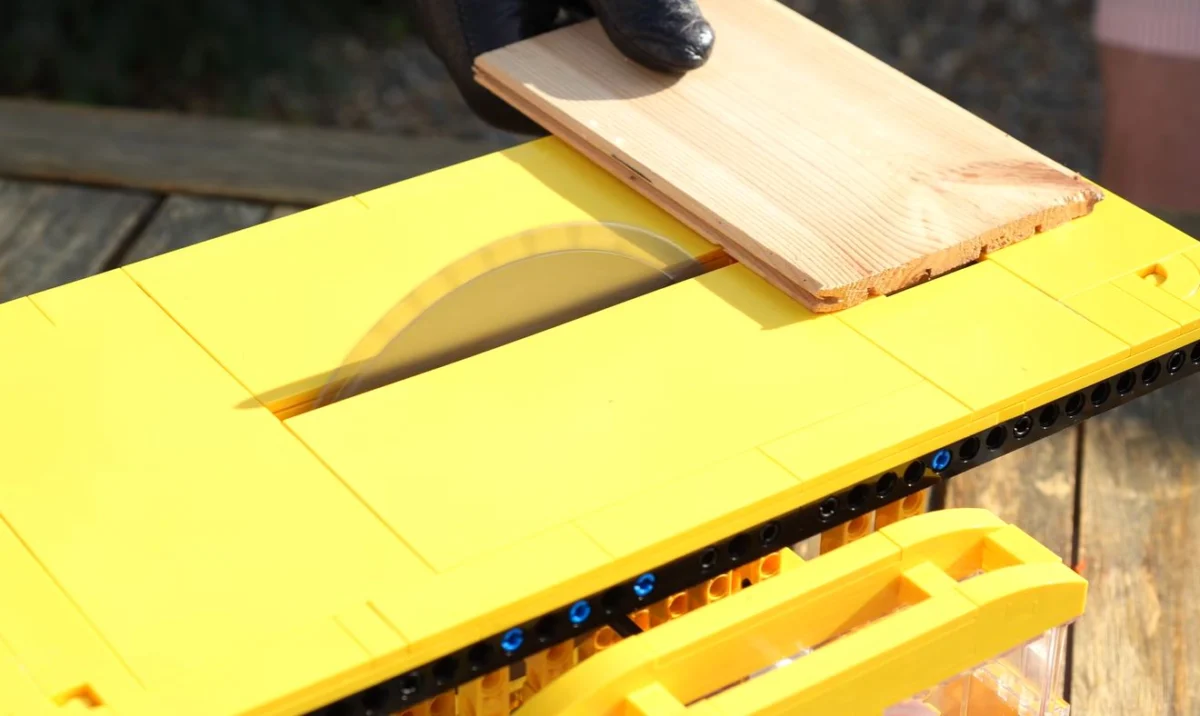
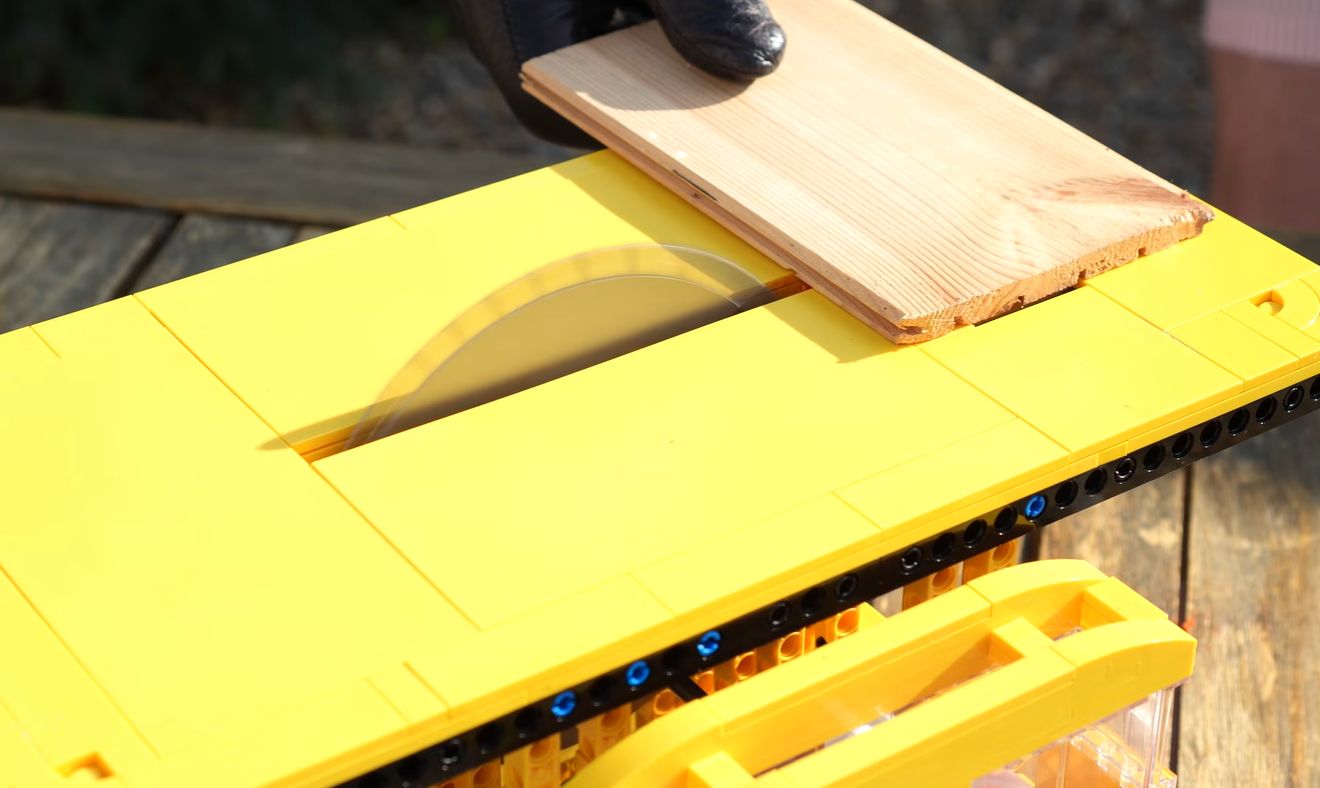
In the world of hobbyist engineering, the boundary between "toy" and "tool" is often defined by nothing more than the imagination of the builder. LEGO, a medium traditionally reserved for static models and intricate recreations of pop-culture icons, has recently been thrust into the realm of heavy-duty power tools. [Jamie], the creator behind the YouTube channel Jamie’s Brick Jams, has successfully bridged this gap, unveiling an air-powered circular saw constructed largely from LEGO elements, capable of slicing through actual timber.
This project represents a fascinating synthesis of additive manufacturing, pneumatic engineering, and structural plastic architecture. While the resulting device is undeniably impressive, it serves as a stark reminder of the latent power held within compressed air systems when integrated with mechanical cutting components.
The Genesis of a Pneumatic Powerhouse: Main Facts
The core of this project is a custom-designed air turbine. Unlike conventional electric motors that provide torque via electromagnetic fields, this system relies on the expansion of high-pressure air through a precisely engineered turbine geometry. [Jamie]’s objective was not merely to construct a "LEGO-looking" saw, but to create a machine capable of performing legitimate woodworking tasks.
The build utilizes a modular LEGO frame to house the drivetrain, which is then connected to a steel circular saw blade. The turbine itself—the heart of the operation—was developed through extensive iterative design. It required the integration of 3D-printed components to achieve the necessary aerodynamics to convert the kinetic energy of compressed air into the rotational velocity required for cutting.
The machine is not a toy; it is a proof-of-concept that demonstrates the surprising mechanical strength of LEGO’s Technic system when used to house pneumatic drives. However, the use of a genuine metal cutting blade transitions the project from a curious desktop demonstration into a piece of hazardous machinery that demands respect.
Chronology of the Build: From Concept to Cut
The development of the air-powered saw followed a rigorous, multi-stage engineering cycle.
Phase 1: The LEGO-Only Prototype
The journey began with an all-LEGO circular saw prototype. In this initial iteration, even the blade was constructed from plastic bricks. Predictably, the structural limitations of ABS plastic became immediately apparent. The device could barely manage to score paper, let alone penetrate wood. This failure was crucial, as it established the baseline for the mechanical torque required to overcome friction and material resistance.
Phase 2: Turbine Optimization
Realizing that the pneumatic potential was being stifled by inefficiency, [Jamie] pivoted to his ongoing research into bladeless Tesla turbines and high-efficiency air-driven impellers. By leveraging 3D printing, he was able to prototype various turbine blade geometries. The goal was to maximize the "conversion ratio"—the amount of potential energy extracted from the air compressor and turned into torque at the shaft. This phase involved weeks of trial and error, adjusting blade pitch and nozzle aperture to find the "sweet spot" of rotational speed and sustained power.
Phase 3: Integration of Metal and Pneumatics
Once the turbine could sustain a stable RPM, the transition to a real metal blade was initiated. This required a redesign of the chassis. LEGO Technic beams were reinforced with additional bracing to handle the gyroscopic forces of the spinning blade. A safety-conscious transmission system was added, culminating in the integration of a "dead-man" switch. This pneumatic valve ensures that the air supply is instantly cut if the operator releases the control, serving as a critical fail-safe in a system that lacks an electronic kill-switch.
Supporting Data: The Mechanics of Compressed Air
The physics behind [Jamie]’s creation centers on the principles of fluid dynamics. Compressed air, when forced through a nozzle, creates a high-velocity jet. When this jet hits the turbine blades, it exerts a force that induces rotation.
The Challenges of 3D Printing Blades
During the development process, [Jamie] experimented with 3D-printed saw blades. The results were suboptimal. The fundamental issue lay in material hardness and edge retention. While 3D-printed plastics like PLA or PETG are excellent for structural frames, they cannot maintain a "micro-edge"—the molecular sharpness required to part wood fibers efficiently. A metal blade, by contrast, provides the mass and hardness necessary to sustain momentum through the workpiece, reducing the likelihood of the blade "binding" or stalling the turbine.
Structural Integrity of LEGO
One might assume that LEGO elements would shatter under the vibrations of a high-speed saw. However, the Technic system is remarkably resilient to tension and compression. By distributing the load across a web of interconnected beams, the chassis remains stable. The primary point of failure is typically the friction-fit pins, which require periodic checking to ensure that the vibration of the turbine hasn’t loosened the assembly.
The Human Element: Safety and Operational Logic
Perhaps the most significant aspect of this project is the inclusion of an auto-feeding system. In industrial woodworking, human error—specifically the proximity of fingers to the blade—is the leading cause of injury. [Jamie] attempted to mitigate this by designing a mechanism that guides the board into the blade automatically.
While the auto-feeder proved to be "finicky" and required manual intervention to keep the wood aligned, the intent highlights a critical design philosophy: the separation of the operator from the hazard. The dead-man switch, requiring constant pressure to operate, is a standard feature in heavy machinery but is rarely seen in home-built LEGO projects. This inclusion suggests a level of maturity and safety awareness that is commendable in the "maker" community.
Implications for the Future of DIY Engineering
What does this project signify for the future of hobbyist engineering? It marks a shift toward "hybrid manufacturing." We are no longer limited to using one medium (like wood or plastic) for an entire build. By combining the rapid-prototyping capabilities of 3D printing with the structural modularity of LEGO and the raw power of pneumatic or electric drives, creators are building machines that were previously the domain of professional machine shops.
Democratizing Mechanical Power
The success of this air-powered saw suggests that high-torque, small-scale machinery could become increasingly accessible. If a builder can construct a functional table saw using LEGO and a 3D printer, what else is possible? We may see a rise in DIY CNC machines, automated assembly arms, and specialized power tools tailored to unique, niche requirements, all built on a foundation of "toy" components.
The Responsibility of the Maker
However, the implications are not entirely optimistic. As these projects become more powerful, they also become more dangerous. The line between a "cool YouTube video" and a "life-altering accident" is thinner than a saw blade. The ease with which one can source high-pressure air and industrial cutting components means that the barrier to entry for dangerous DIY is lower than ever.
[Jamie]’s project serves as a perfect case study: he acknowledges that this is not a project for children. It requires an understanding of fluid dynamics, material science, and safety protocols. As the maker community continues to push the boundaries of what can be built, the discourse must increasingly focus on the ethics and safety of "garage engineering."
Conclusion
[Jamie]’s air-powered LEGO table saw is a triumph of ingenuity. It succeeds not just in cutting wood, but in proving that modern materials—when combined with clever mechanical design—can turn simple building blocks into functional, high-energy tools. It is a testament to the fact that with enough iteration, even the most unlikely components can be coerced into performing industrial-grade tasks.
As we look toward the future of hobbyist construction, this project stands as a benchmark. It invites us to rethink the capabilities of our "toys," but it also serves as a stern reminder of the laws of physics: force, mass, and energy are indifferent to the materials they inhabit. Whether it is made of steel, wood, or LEGO bricks, a spinning blade is a serious piece of equipment. [Jamie] has shown us the potential of his creation, but more importantly, he has shown us the importance of respecting the power we harness.