TensorFlow Lite Supercharges CPU Inference: XNNPack Unveils Dynamic Range Quantization and Mixed-Precision Breakthroughs
By Alan Kelly, Software Engineer
Published in TensorFlow Tech Insights
Main Facts: The Next Leap in On-Device Machine Learning
In a major performance breakthrough for edge AI, the TensorFlow team has announced that XNNPack—the core CPU execution backend for TensorFlow Lite (TFLite)—now officially supports dynamic range quantization for its Fully Connected and Convolution 2D operators.
Because CPUs continue to offer the widest reach for machine learning inference and remain the default target architecture for mobile and edge devices, optimizing CPU performance is paramount. By integrating dynamic range quantization into XNNPack, developers have achieved a staggering quadrupling (4x) of inference performance compared to the traditional single-precision (fp32) floating-point baseline.
This technical leap bridges the gap between resource-heavy cloud infrastructure and constrained local hardware, allowing developers to deploy advanced AI-powered features—including complex generative models like Stable Diffusion—onto older or lower-tier consumer devices without sacrificing responsiveness. Furthermore, this core technology is already powering flagship Google features, including Gemini integrations, Google Meet enhancements, and Chrome OS audio denoising.

Chronology: The Evolution of TensorFlow Lite Optimization
To understand the weight of this milestone, it helps to examine the evolutionary path of TensorFlow Lite’s hardware acceleration and quantization strategies:
- The FP32 Baseline Era: Historically, most machine learning models executed inference using 32-bit single-precision floating-point arithmetic. While accurate, this approach proved computationally expensive and power-hungry for mobile hardware.
- The Introduction of FP16 and Full Integer Quantization: TFLite previously forced developers to choose between full integer quantization (converting weights and activations to signed 8-bit integers) or half-precision (fp16) / single-precision (fp32) floating-point inference. While full integer quantization reduced model size, it required a complex calibration process using a representative dataset and frequently suffered from accuracy degradation or unsupported operators.
- November 2023: TensorFlow released documentation highlighting how half-precision inference could double on-device CPU inference performance on compatible hardware.
- Early 2024: Advanced generative architectures, such as MediaPipe and local Large Language Models (LLMs), began pushing the limits of on-device processing.
- Current Release (TensorFlow 2.17 / Nightly Builds): Dynamic range quantization lands natively inside XNNPack. Prebuilt binaries now include dynamically quantized XNNPack inference by default, combining the ease of floating-point conversion with near-integer performance speeds.
Supporting Data: Benchmarks, Performance, and Capabilities
The integration of dynamic range quantization into XNNPack’s highly optimized, architecture-specific implementations (covering ARM, ARM64, x86 SSE/AVX/AVX512, and WebAssembly) yields unprecedented performance gains across diverse hardware, such as the ARMv9 processors found in the Pixel 8’s Tensor G3 CPU and the OnePlus 11’s Snapdragon 8 Gen 2.
How Dynamic Range Quantization Works
Unlike fully-quantized models—where both weights and activations are hardcoded as 8-bit integers using a representative dataset during conversion—dynamically quantized models maintain a hybrid approach:
- Weights are quantized to 8-bit integers during model conversion.
- Activations remain as float32 tensors until runtime.
- Dynamic Scaling: During inference, activation tensor rows are converted to 8-bit integers on-the-fly, calculating zero-point and scale parameters dynamically based on observed runtime ranges.
- Outputs: The resulting outputs of Fully Connected and Convolution layers revert to 32-bit floating-point format.
This clever mechanism avoids the accuracy loss typically associated with rigid, statically calibrated integer models while retaining most of the computational speedups.

Surprising Benchmark Results
When benchmarking public computer vision and generative models, researchers observed counterintuitive results. Conventional wisdom suggests that full integer quantization should always outperform dynamic range quantization because all operations rely strictly on integer arithmetic, bypassing the runtime overhead of float-to-int conversion.
However, profiling via the TFLite Profiler revealed that dynamic range quantization frequently matches—and occasionally surpasses—the performance of full integer models. For example, Stable Diffusion’s diffusion model could not even be converted using full integer quantization due to missing operator support. Yet, when processed via dynamic range quantization, it executed up to 6.2 times faster than the original float32 baseline.
[Original FP32 Baseline] -------------------> 1x Speed
[Full Integer Quantization] --------------> Varies (Limited by Op Support & Scale Ratios)
[XNNPack Dynamic Range Quantization] -------> Up to 6.2x Speedup (Stable Diffusion)
The Power of Mixed-Precision Inference
Developers can now combine dynamic range quantization with half-precision (fp16) inference on hardware featuring native fp16 support (ubiquitous on modern smartphones dating back to the 2018 Pixel 3).
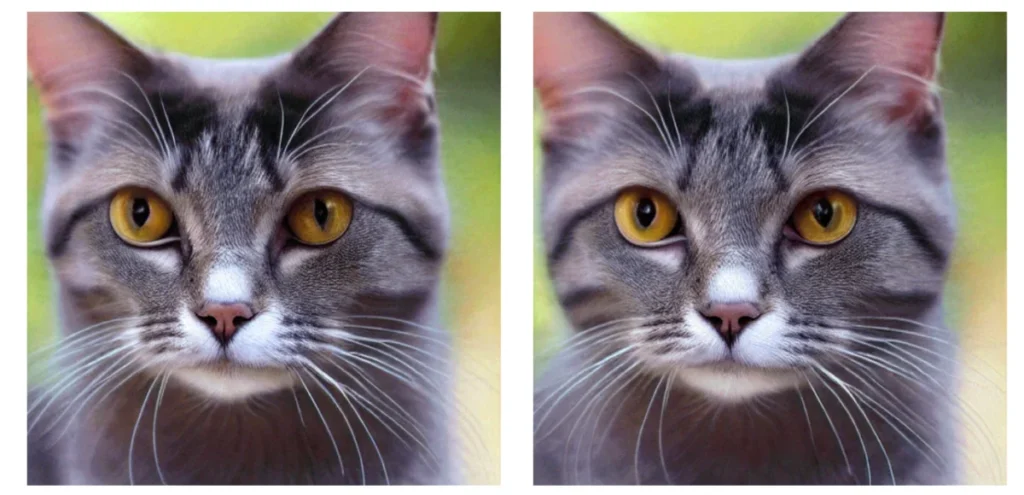
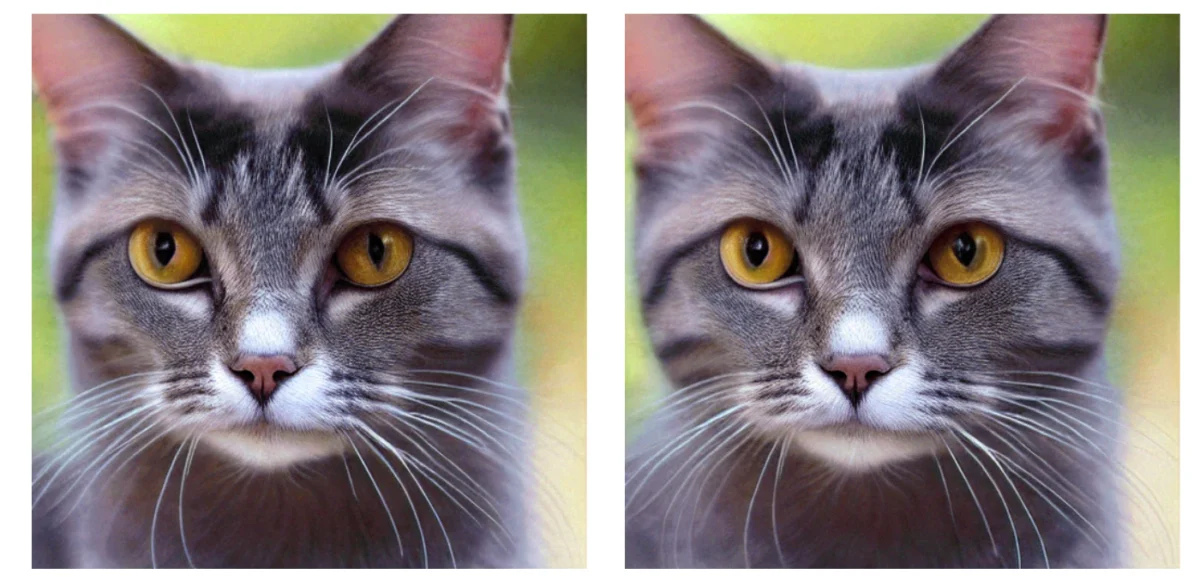
By allowing Fully Connected and Convolution 2D operators to output fp16 data instead of fp32, CPUs can process twice as much vector data per instruction. Crucially, visual fidelity remains uncompromised. Side-by-side visual comparisons of images generated by the Stable Diffusion model using fp32 versus fp16 activations produced identical, high-quality results from the exact same random seed.

Official Responses and Developer Integration
The release represents a collaborative engineering effort within Google’s core machine learning infrastructure teams.
"We are excited to announce that XNNPack’s Fully Connected and Convolution 2D operators now support dynamic range quantization… This means that more AI-powered features may be deployed to older and lower-tier devices," noted software engineer Alan Kelly, acknowledging key engineering contributions from Frank Barchard and Quentin Khan.
How to Implement Dynamic Range Quantization
Adopting the new backend requires minimal friction compared to legacy quantization schemes:
- Model Conversion: Enable the optimization flag during TensorFlow model conversion. No representative dataset is required.
converter = tf.lite.TFLiteConverter.from_saved_model(saved_model_dir) converter.optimizations = [tf.lite.Optimize.DEFAULT] tflite_model = converter.convert() - Compatibility: Models already converted using dynamic range quantization do not need to be reconverted.
- Deployment: From TensorFlow 2.17 onward, dynamically quantized XNNPack inference is enabled by default in prebuilt binaries. Developers wishing to test features early can utilize nightly TensorFlow builds.
Note: While trivial conversions yield immediate speed boosts, engineers strongly advise validating any quantization strategy against a comprehensive validation dataset rather than isolated test cases.

Implications for the AI Industry and Edge Computing
The democratization of high-performance on-device AI carries profound implications for software architecture, privacy, and hardware economics:
- Reduced Cloud Dependency: By squeezing heavy models like Stable Diffusion and Large Language Models onto standard mobile CPUs with a 4x to 6x performance boost, companies can execute resource-intensive tasks locally. This cuts cloud computing costs and eliminates network latency.
- Enhanced User Privacy: Local execution means sensitive user data—ranging from voice audio denoised on Chrome OS to real-time generative prompts—never has to leave the physical device.
- Hardware Longevity and Inclusivity: By optimizing performance for lower-tier and older smartphones (such as devices lacking dedicated NPUs or high-end GPUs), developers ensure that modern AI capabilities remain accessible to global demographics operating on legacy hardware.
- Lower Barrier to Entry: Because dynamic range quantization bypasses the tedious requirement of gathering and tuning representative datasets, mainstream software engineers without specialized machine learning backgrounds can successfully compress and accelerate complex models.
As XNNPack’s dynamic range quantization transitions from core internal Google products (like Gemini and Google Meet) into the hands of open-source developers worldwide, the boundary between what is computationally feasible on a mobile CPU versus a dedicated server GPU continues to dissolve rapidly.