The OSHintosh Project: Reimagining the Macintosh 512k Through Open-Source Hardware
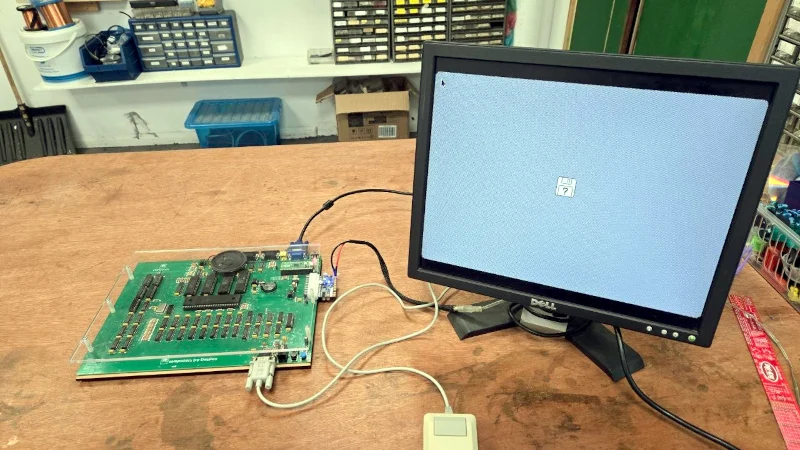
In an era where vintage computing has transitioned from a niche hobby to a sophisticated engineering discipline, the line between "emulation" and "re-creation" is becoming increasingly blurred. Apple’s hardware ecosystem, historically defined by its aggressive proprietary nature, has long been a walled garden that resists external modification. However, a recent project by hardware developer [DosFox1]—dubbed the "OSHintosh"—has challenged this paradigm by successfully implementing a functional clone of the iconic Macintosh 512k on an open-source printed circuit board (PCB).
This development represents more than just a nostalgic curiosity; it serves as a technical milestone in the preservation of computing history. By moving beyond software-based emulators, the OSHintosh project offers a tactile, hardware-level experience that honors the legacy of the original 1984 Macintosh architecture while utilizing modern manufacturing efficiencies.
Main Facts: The Anatomy of the OSHintosh
The OSHintosh is not merely a hobbyist’s aesthetic project; it is a full-scale architectural reimplementation of the Motorola 68000-based Macintosh 512k. The core of the device is a custom-designed, two-layer PCB that replicates the logic board functionality of the original machine.
Key Technical Specifications:
- Architecture: Faithful reproduction of the original Macintosh 512k logic path.
- Boot Medium: Unlike the original, which relied on the mechanical fragility of 3.5-inch floppy drives and the complexity of the SCSI interface, the OSHintosh executes its operating system directly from ROM.
- Manufacturing: The board is designed as a two-layer PCB, making it highly accessible and cost-effective for fabrication through standard prototyping services.
- Hardware Compatibility: It provides a native 68k experience, booting into classic Macintosh OS images without the overhead of heavy emulation layers.
The project effectively strips away the mechanical bottlenecks—the failing floppy drives and oxidized SCSI controllers that plague surviving original units—and replaces them with solid-state logic. While the device does not yet support external peripherals in the same capacity as the original 1984 model, it successfully demonstrates the viability of replicating vintage hardware using modern, accessible fabrication techniques.
Chronology: The Evolution of the "Hackintosh" Concept
To understand the significance of the OSHintosh, one must look at the historical trajectory of Apple hardware preservation.
The Era of Emulation (1990s–2000s)
For decades, the only way to run classic Macintosh software on modern hardware was through virtualization. Tools like Basilisk II and Mini vMac allowed users to run System 6 or 7, but these programs remained detached from the hardware "soul" of the machine. The timing, interrupt handling, and bus behavior were simulated, often resulting in subtle incompatibilities with legacy software.
The FPGA Revolution (2010s)
The rise of Field Programmable Gate Arrays (FPGAs) changed the landscape. Projects like the "FPGA Amiga" (as featured on Hackaday) demonstrated that one could reconfigure logic gates to mirror original silicon behavior. This bridged the gap between pure software emulation and physical hardware.
The OSHintosh Milestone (2024)
The OSHintosh project represents the next logical step: a discrete, PCB-based reproduction that avoids the complexity of FPGA coding while maintaining the physical footprint of the original machine. By open-sourcing the design files, [DosFox1] has transitioned the preservation effort from a proprietary, centralized model to a decentralized, community-driven one.
Supporting Data: Why "Hard" Hardware Matters
There is a frequent debate among computer historians: is a modern clone "authentic" if it doesn’t contain original 1984 silicon?
Data from the vintage computing community suggests that the lifespan of original 1980s capacitors and electrolytic components is nearing its end. Many Macintosh 512k units are currently suffering from "leaking capacitor" syndrome, which can permanently destroy the logic boards.
Comparative Reliability Metrics
| Feature | Original Macintosh 512k | OSHintosh |
|---|---|---|
| Storage | Mechanical Floppy Drive | Solid-State ROM-based |
| PCB Layers | Multi-layer (complex) | 2-layer (accessible) |
| Maintenance | High (Recapping required) | Low (Modern components) |
| Availability | Declining (Finite supply) | High (Open source) |
By utilizing a 2-layer PCB, the OSHintosh makes the repair and replacement of vintage machines affordable. The cost of manufacturing these boards through modern fabrication services is a fraction of the market value of a functional original 512k, ensuring that the architecture can survive even as original units become unusable museum artifacts.
Official Responses and Legal Implications
The legal landscape surrounding the OSHintosh is complex, resting on the intersection of copyright law and the "Right to Repair."
The ROM Dilemma
The most contentious aspect of the project is the inclusion of the Macintosh ROM image. Under U.S. copyright law, Apple’s ROM code remains protected intellectual property. While the developer has not explicitly endorsed the illegal distribution of these files, the project assumes that the end-user owns an original, defunct unit and is merely "migrating" their legal ROM to new hardware.
Legal scholars often categorize this as a "fair use" application in the context of preservation. However, Apple has historically been litigious regarding its software. As of this writing, there has been no official statement from Apple regarding the OSHintosh, likely because the project is a low-volume, hobbyist effort rather than a commercial product.
The Developer’s Intent
[DosFox1] has framed the OSHintosh not as a commercial competitor to Apple, but as an archival tool. The GitHub repository serves as a library, inviting community contributions to refine the board’s stability and compatibility. By keeping the design open-source, the developer prevents the "knowledge rot" that occurs when proprietary designs are lost after a company ceases support.
Implications: The Future of Retro-Computing
The OSHintosh project serves as a blueprint for the future of digital preservation. As we move further away from the 8-bit and 16-bit eras, the hardware that defined those periods is vanishing.
1. The Democratization of History
By open-sourcing the PCB layout, the project allows anyone with a basic understanding of electronics to participate in the history of computing. It removes the "gatekeeper" effect of high-priced auction sites where original machines are often hoarded by collectors rather than used by enthusiasts.
2. Extending the Hardware Lifespan
If the goal of the OSHintosh is to ensure that a "Macintosh 512k experience" is possible in the year 2050, it succeeds. By moving away from mechanical disk reliance and onto ROM-based execution, the project eliminates the most common point of failure in early Macintosh hardware.
3. A Call to Action for Archivists
The OSHintosh demonstrates that preservation is not just about keeping a machine in a display case; it is about keeping the logic alive. When software is ported to modern operating systems, the "experience" of using the machine—the latency of the mouse, the hum of the transformer, the specific quirks of the OS—is often lost. By maintaining the hardware interface, projects like the OSHintosh preserve the interaction between human and machine.
Conclusion
The OSHintosh is a testament to the ingenuity of the open-source hardware community. While it may not yet possess the full peripheral suite of the original 1984 Macintosh, it achieves the primary objective of any preservation project: it allows a piece of computing history to remain functional, accessible, and reproducible.
As original hardware continues to degrade, the value of projects that faithfully replicate the logic of the past will only increase. Whether one views this as a controversial clone or a vital act of digital archeology, the OSHintosh is undoubtedly a landmark development. It reminds us that while Apple’s hardware may have been closed in 1984, the history of that hardware now belongs to the community—and thanks to efforts like these, that history will not be erased by the march of time.