Optimizing for Scale: How Tinder Used the R8 Configuration Analyzer to Revitalize Its Android Performance
For modern global applications, performance is not just a technical metric—it is the bedrock of the user experience. Tinder, the world’s most popular app for meeting new people, recently faced a classic scaling paradox: as their codebase expanded to support millions of global users, the underlying application performance began to degrade. With 70% of the application previously unoptimized and an architecture weighed down by 17 dex files—three of which were dedicated solely to startup processes—the Tinder engineering team knew they had reached a critical inflection point.
To combat increasing startup latency and user-perceived Application Not Responding (ANR) errors, the team turned to a powerful new tool in the Android developer arsenal: the R8 Configuration Analyzer. By auditing their minification and obfuscation rules, Tinder didn’t just tweak their performance; they transformed their application’s footprint, achieving a 47% reduction in cold starts and nearly a 30% decrease in overall download size.
The Challenge of Complexity: Unmasking Technical Debt
The evolution of a large-scale mobile application often involves the accumulation of "invisible" technical debt. For Tinder, this debt manifested in the form of bloated code and inefficient compilation configurations. Even though the team had enabled R8—the Android tool responsible for shrinking, obfuscating, and optimizing code—its true potential remained untapped.
The core issue was a lack of visibility. Tinder’s R8 configuration was being throttled by "keep" rules—directives that instruct the compiler to preserve certain code elements to prevent runtime crashes. However, because the team lacked a diagnostic tool to visualize how these rules interacted with the rest of the application, many of these rules were redundant, over-inclusive, or entirely obsolete.
"Before we implemented the R8 Configuration Analyzer, we were essentially flying blind," the team noted. They were trapped in a cycle where broad, defensive coding practices were hindering the very optimizations intended to make the app faster.

Chronology: A Path to Performance Optimization
The optimization journey at Tinder was not an overnight success, but a methodical, data-driven campaign.
Phase 1: Identification (The Diagnostic Audit)
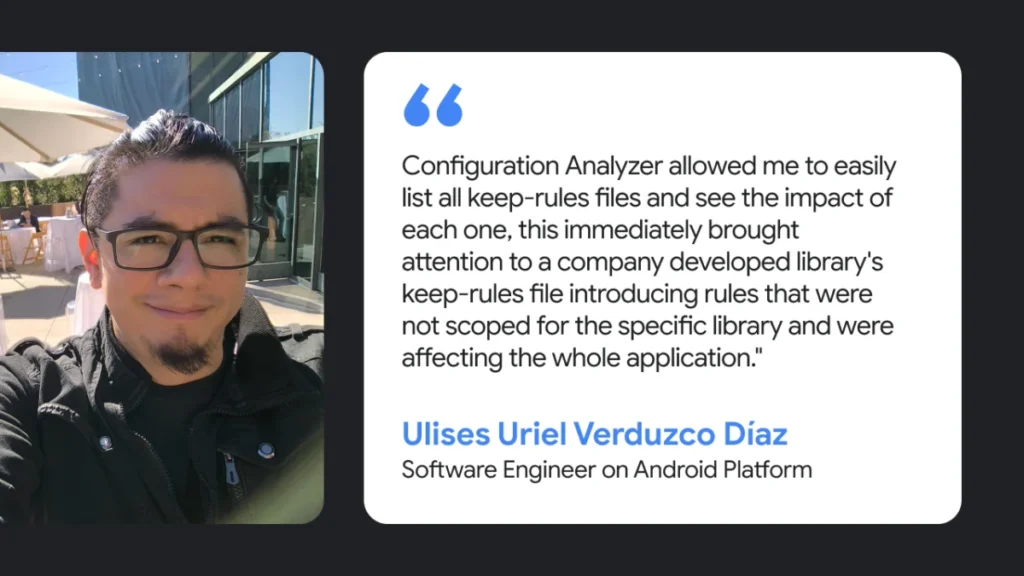
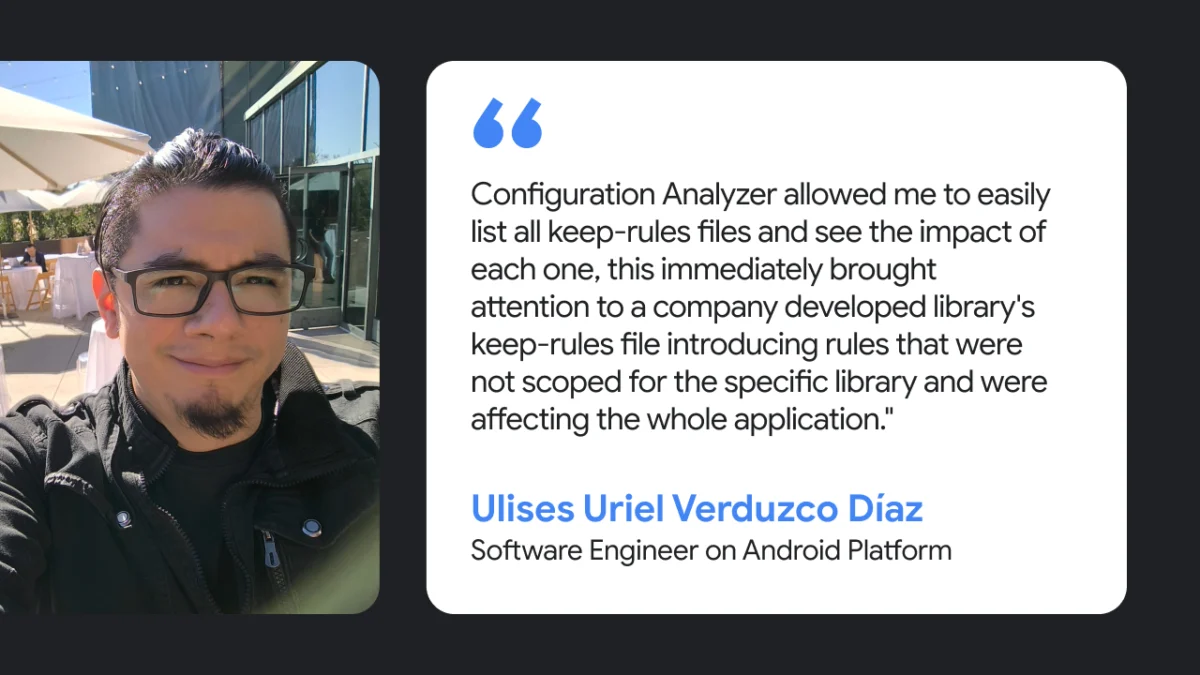
The process began with the adoption of the R8 Configuration Analyzer. The team needed to understand why, despite using R8’s "full mode," their optimization score sat at a stagnant 28%. The analyzer provided an immediate, bird’s-eye view of the codebase, revealing that an internal, legacy library was broadcasting a "wide" keep rule. This rule, designed to protect public classes and their members from being stripped away, was accidentally casting a massive net over the entire app.
Phase 2: Targeted Refinement
Armed with the insights from the analyzer, the engineering team began the delicate process of pruning these rules. By pinpointing the specific classes being impacted by the "wide" library rule, they were able to replace generic, blanket instructions with granular, precise rules. This allowed the compiler to safely shrink and optimize classes that were previously "protected" for no reason.
Phase 3: Validation and CI Integration
Once the primary blockers were removed, the team saw immediate results. To ensure that these gains would not be lost as the app continued to evolve, Tinder integrated optimization monitoring into their CI/CD pipeline. By making R8 scores a visible part of their daily developer workflow, they shifted the culture from one of "ignoring the compiler output" to "active optimization."
Supporting Data: The Quantitative Impact
The impact of this optimization initiative was both profound and immediate. By removing the blockers identified by the R8 Configuration Analyzer, the team reported the following performance benchmarks:

- Cold Start Latency: A 47% reduction, significantly improving the "time-to-first-interaction" for users.
- Application Size: A 28.98% reduction, bringing the final binary size down to a streamlined 61.5 MB.
- Stability: A 28% decrease in user-perceived ANR (Application Not Responding) errors, leading to a much smoother navigation experience.
- Optimization Efficiency: The R8 optimization score jumped from 28% to 50%, a metric the team continues to refine today.
These figures are particularly significant in resource-constrained markets, where smaller app sizes and faster startup times are often the deciding factors in whether a user retains an application or deletes it.
Official Insights: The Role of the R8 Configuration Analyzer
The R8 Configuration Analyzer acts as a diagnostic engine that tracks shrinking, optimization, and obfuscation scores. By identifying the impact of keep rules—including those buried within third-party dependencies—it allows developers to see exactly what is blocking the compiler.
Key Features of the Analyzer:
- Optimization Score Tracking: Provides a clear baseline of how much of the application is actually being optimized.
- Redundant Rule Detection: Automatically flags obsolete keep rules that provide no functional benefit but harm performance.
- Dependency Auditing: Highlights how external and internal libraries contribute to codebase bloat, allowing for more disciplined library management.
- Agentic Workflow Support: Through the release of the R8 Analyzer skill, developers can now use automated tools to summarize report metrics and highlight the top five most impactful keep rules, streamlining the audit process significantly.
Implications: The Future of Android Development
Tinder’s success story carries profound implications for the wider Android development ecosystem. It serves as a case study for why "legacy" code—even code deemed stable—should not be exempt from performance auditing.
Moving Beyond "Set and Forget"
The most critical takeaway from Tinder’s experience is that R8 configuration is not a "set and forget" process. As apps grow, new dependencies and features are added, often bringing their own sets of keep rules that may conflict with the overall performance strategy. Tinder’s decision to integrate R8 auditing into their CI/CD pipeline represents a shift toward Continuous Performance Integration.
The "Internal Library" Trap
The team’s discovery that an internal, "stable" library was the primary cause of their performance issues is a cautionary tale for large engineering organizations. Developers often trust internal code implicitly. However, the R8 Configuration Analyzer proves that internal libraries are just as capable of introducing performance-draining "wide" rules as third-party packages. Auditing internal dependencies is now as vital as auditing external ones.

Business Growth Through Performance
Finally, this project underscores the direct link between engineering excellence and business metrics. By improving the cold-start time and reducing the APK size, Tinder has directly lowered the barrier to entry for new users. In a global market where mobile data is expensive and device hardware varies wildly, a 61.5 MB app is significantly more competitive than its heavier predecessor.
Conclusion: A New Standard for Optimization
Tinder’s journey serves as a roadmap for any Android developer or team looking to reclaim the performance of their application. By moving from a state of passive compliance with compiler rules to an active, audited approach, they have demonstrated that even the most complex, long-standing codebases can be revitalized.
The R8 Configuration Analyzer is more than just a diagnostic tool; it is a catalyst for a more efficient, performant, and sustainable development culture. As Tinder continues to iterate on their platform, they have built a foundation that is not only faster for today’s users but also more resilient for the challenges of tomorrow.
For developers looking to replicate these results, the path is clear: start by analyzing your current keep rules, identify the broad blockers that are preventing the compiler from doing its job, and integrate these insights into your automated pipelines. The metrics—and your users—will thank you.
How to Get Started
The R8 Configuration Analyzer is available for developers to use today. Depending on your version of the Android Gradle Plugin (AGP), you can access these features to audit your own build. For comprehensive guidance, visit the official Android performance documentation.

By Ajesh R Pai (Developer Relations Engineer), Ulises Uriel Verduzco Diaz (Software Engineer at Tinder), and Tracy Agyemang (Product Marketing Manager).