The Future of Quality: Analyzing the Explosive Growth of the Global Software Testing Market
For years, the software development industry has been haunted by two recurring questions: "What is the long-term viability of the software testing profession?" and "Is quality assurance (QA) a sustainable, high-growth career path?"
As digital transformation accelerates across every sector of the global economy, these questions are being answered with a resounding affirmation. Software testers, QA engineers, and test automation analysts have evolved from peripheral roles into the central nervous system of modern product teams. The industry is no longer merely "checking for bugs"; it is safeguarding the integrity, security, and performance of the digital infrastructure that powers the world.
Main Facts: A Multi-Billion Dollar Trajectory
The global software testing market is currently undergoing a period of unprecedented expansion. Data from industry analysts suggests that we are witnessing a fundamental shift in how corporations prioritize quality.
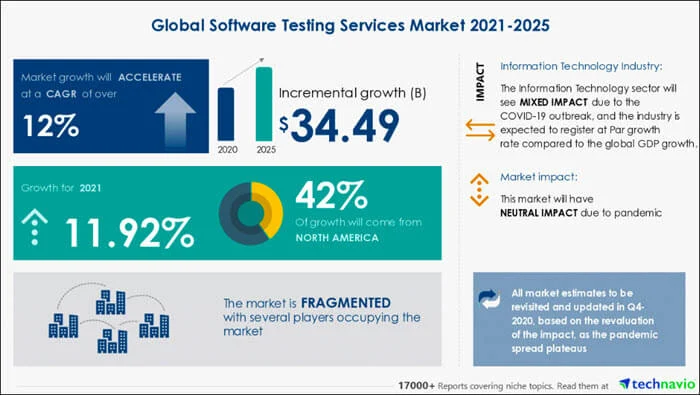
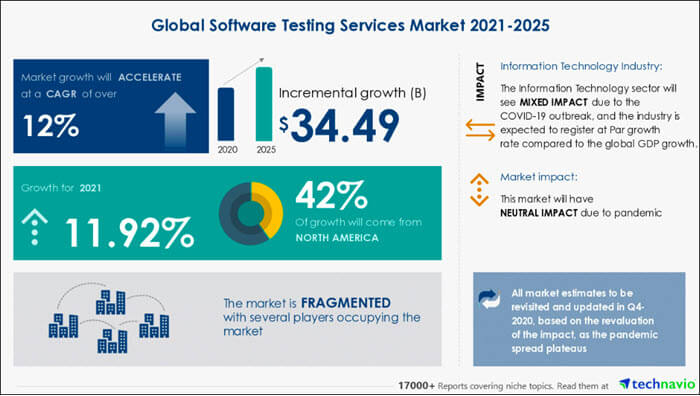
According to market research published by PR Newswire, the software testing services market is projected to grow by approximately $90 billion between 2021 and 2030. This represents a robust Compound Annual Growth Rate (CAGR) of 12.39%. Complementing this, Global Market Insights reported that the sector surpassed the $40 billion threshold in 2020 and expects steady, consistent growth throughout the decade.

This expansion is not accidental. It is driven by the increasing complexity of software architectures, the proliferation of IoT (Internet of Things) devices, and the unforgiving nature of the modern digital marketplace, where a single security breach or performance lag can result in catastrophic reputational and financial damage.
A Chronology of QA Evolution
To understand where the industry is going, we must look at how it has transformed over the last decade:
- 2010–2015: The Manual Era. During this period, testing was largely manual, siloed, and often treated as an afterthought in the software development lifecycle (SDLC).
- 2016–2019: The Rise of Agile and DevOps. The industry shifted toward "Continuous Testing." Quality assurance began to merge with development, fostering the "Shift Left" mentality where testing starts at the earliest possible phase of coding.
- 2020–2022: The Intelligent Automation Pivot. The onset of the global pandemic forced a massive migration to digital services. Organizations realized that human-only testing could not keep pace with the demand for rapid release cycles. This led to the widespread adoption of AI-driven automation.
- 2023–Present: The Era of Cognitive QA. Today, we see the integration of machine learning (ML) and generative AI, which can predict potential failure points, optimize test suites, and self-heal broken test scripts, marking the most significant evolution in the history of the profession.
Supporting Data: The Pillars of Growth
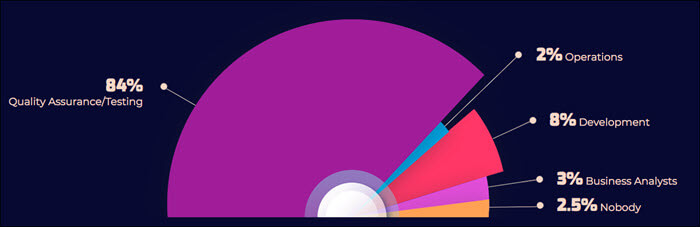
Research from organizations such as Tricentis and the Forte Group underscores this paradigm shift. A survey conducted by Tricentis revealed that in over 80% of organizations, the functional test automation process is now led by dedicated QA professionals. This indicates that testers have gained the technical autonomy to own the automation strategy, rather than being subservient to developers.
The Automation Landscape
Automation is no longer a luxury; it is a baseline requirement. Forte Group research highlights that 12% of QA practitioners now operate in a "fully automated" environment, while 35% are halfway toward achieving total automation.
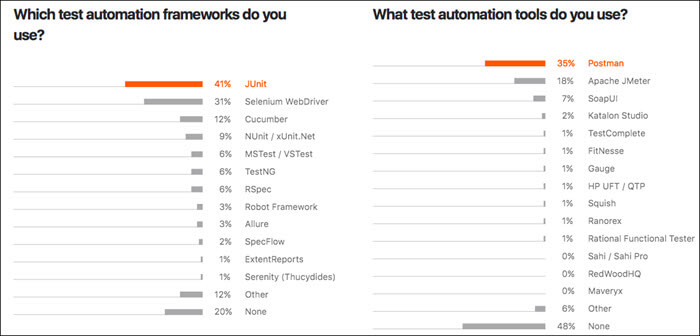
Key tools fueling this transition include:
- Frameworks: JUnit and Selenium WebDriver remain the industry titans for test automation.
- API/Performance Tools: Postman and Apache JMeter have become standard equipment for ensuring application resilience.
- Language Preference: Java continues to hold the crown as the most common programming language used for building robust test automation suites, though Python and JavaScript are making significant inroads.
The Human Element: Skills in Demand
Despite the surge in AI, the human factor remains the most critical asset. QA Lead research points out that, globally, there are approximately 5.2 software testers for every 100,000 people. As the demand for talent outstrips supply, the emphasis on specialized skills has sharpened.
Current recruiters prioritize:
- Communication Skills (75% of respondents): The ability to articulate risk and collaborate across multidisciplinary teams is now more valuable than pure technical output.
- Scripting and Automation Expertise (63% of respondents): The ability to write code to test code is the primary differentiator for high-earning QA engineers.
Official Responses and Industry Insights
The "World Quality Report" by Micro Focus provides the most authoritative pulse on the industry, noting that 90% of businesses are currently seeing growth in AI initiatives. This, in turn, has forced a recalibration of the testing budget. No longer a discretionary expense, QA is now an indivisible line item in the broader software engineering budget.
Furthermore, 69% of businesses report meeting their primary quality goals. While this is a positive indicator, the remaining 31% represent the massive "gap" that is driving demand for specialized software testing firms. As companies struggle to implement DevOps and continuous integration, they are increasingly turning to third-party consultants to bridge the expertise divide.
Implications: The Future of the Profession
The implications of these trends are profound for anyone considering a career in the field or a business leader looking to scale their operations.
1. The Rise of "Codeless" Testing
As we move deeper into the decade, "codeless" automation tools are lowering the barrier to entry. This does not mean the end of the skilled tester; rather, it means the tester is becoming an "orchestrator" of automation, using AI-powered tools to manage complex test environments that would be impossible to handle manually.
2. Cybersecurity as a QA Sub-discipline
Cybersecurity testing has moved from the domain of specialized "Red Teams" to an integral part of the QA lifecycle. With companies projecting that global cybersecurity spending could exceed $133 billion, QA engineers who possess security-testing skills are seeing their market value skyrocket. Organizations are no longer willing to wait until the "security audit" phase to discover vulnerabilities; they are building these checks into the daily testing routine using Robotic Process Automation (RPA).
3. AI and ML: The New Standard
Artificial Intelligence is no longer just a buzzword; it is an omnipresent tool. Whether it is using ML algorithms to analyze test results for false positives or using AI to generate synthetic test data, the synergy between QA and Artificial Intelligence is expected to reach a market value of $200 billion by 2030.
4. The Shift Toward Performance Engineering
Modern testing is not just about functionality; it is about performance engineering. As systems move to the cloud and become distributed, testers must understand latency, load balancing, and infrastructure resilience. Testing is moving from a "QA" focus to a "Quality Engineering" (QE) focus, where the engineer understands the entire system architecture.
Conclusion: A Resilient Career Path
The skepticism regarding the future of software testing has been replaced by the reality of its indispensability. Software testing has successfully transitioned from a gatekeeping function to a value-creation function. By identifying defects early, optimizing performance, and ensuring that security is baked into the DNA of every application, QA professionals are directly contributing to the bottom line of the global economy.
For those entering the field, the path forward is clear: focus on technical agility, master automation frameworks, and embrace the integration of AI. The software testing industry is not just surviving; it is thriving, and it is doing so by becoming the essential guardian of our digital future. As we look toward 2030, the demand for high-quality, secure, and reliable software will only grow—and so too will the professionals who ensure that quality is never compromised.