LG to Purge Smart TV Apps Utilizing Residential Proxy SDKs Following Security Revelations
By Global Cybersecurity & Technology Desk
Updated July 22
Home appliance giant LG Electronics USA has announced plans to aggressively police its webOS application ecosystem, vowing to suspend any smart television apps that convert consumer displays into always-on residential proxy nodes. This enforcement action comes on the heels of alarming independent security research revealing that nearly half of all software offerings on the platform leverage specialized software development kits (SDKs) to silently route third-party internet traffic through unsuspecting users’ home networks.
The swift regulatory pivot by LG highlights an escalating war over consumer IoT (Internet of Things) monetization, transparency, and data privacy. It also exposes how third-party developers, desperate for alternative monetization channels, have weaponized benign entertainment hardware into commercial routing infrastructure.
Main Facts
- The Crackdown: LG Electronics USA has initiated a comprehensive review of its webOS app store to identify and remove applications embedding residential proxy SDKs. Developers who fail to purge these functionalities face immediate app suspension.
- The Scale of the Problem: Groundbreaking research published by the cybersecurity firm Spur revealed that over 42 percent of games and utilities available on LG’s webOS store—and more than 25 percent on Samsung’s competing Tizen OS—include residential proxy components.
- The Mechanism: These SDKs convert everyday consumer devices, such as smart TVs, into proxy nodes. This allows third-party entities to lease residential IP addresses to route external internet traffic, masking their true digital footprints.
- Industry Pushback: While proxy network operators like Bright Data defend their ecosystems as consent-driven, audited, and strictly regulated, security researchers argue that smart TVs are uniquely ill-suited for this type of network participation, introducing invisible security and bandwidth risks to consumers.
Chronology of Events
The unfolding crisis surrounding residential proxies in smart home displays accelerated rapidly over the course of July:
- July 2, 2026: Security firm Spur publishes a detailed threat intelligence report exposing the massive footprint of residential proxy SDKs embedded within smart TV ecosystems across both LG and Samsung hardware.
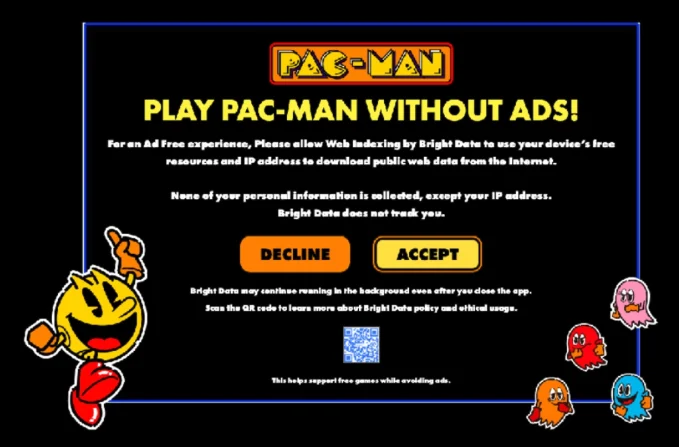
- Mid-July 2026: Technology security journalists, analyzing the Spur telemetry, highlight how applications ranging from simple casual games (like Pac-Man variants) to basic screensavers and file managers are acting as conduits for commercial proxy services.
- Late July 2026: In response to direct media inquiries, LG Senior Vice President John Taylor issues an official statement to security outlets confirming that residential proxies are "not an intended use for LG smart TVs" and outlining the company’s impending enforcement actions.
- Simultaneously (Late July): Independent hardware reviewers, notably the YouTube channel Gamers Nexus, expose a separate controversy involving LG: certain high-end LCD monitors are autonomously pushing McAfee antivirus promotional software via Windows Update drivers without explicit user consent.
- July 22, 2026: Major residential proxy provider Bright Data issues a formal, public response defending its operational framework, citing strict "Know Your Customer" (KYC) protocols, user opt-in screens, and independent third-party audits by PwC.
Supporting Data: The Ubiquity of Proxy SDKs
The scope of the phenomenon was laid bare by Spur’s telemetry analysis, which evaluated thousands of applications across the dominant smart TV operating systems. The data illustrates a pervasive monetization strategy where developers trade user network bandwidth for ad-free experiences or direct micro-payouts.
Key Metrics from the Spur Research:
- LG webOS Ecosystem: Over 42% of analyzed applications contained residential proxy SDKs.
- Samsung Tizen Ecosystem: More than 25% of evaluated applications featured similar proxy-routing capabilities.
- Dominant Providers: The commercial proxy network Bright Data accounted for the absolute majority of proxy SDKs identified across both major TV platforms.
- Application Types: Proxy SDKs were not restricted to complex software; they were routinely bundled with casual puzzle games, interactive arcade titles like Pac-Man, digital picture frames, and utility applications.
[Smart TV App Store]
       │
       ├── Contains Proxy SDK (e.g., Bright Data)
       │         │
       │         └── Opt-in Prompt (often buried or misunderstood)
       │                   │
       │                   ▼
[Consumer Smart TV] ───► [Residential Proxy Node] ───► [Third-Party Traffic Routed]
According to Spur’s findings, applications often presented users with a binary choice during setup: watch recurring video advertisements or toggle an agreement to let their device serve as a shared network node. However, researchers point out that these choices are rarely presented with adequate context regarding security implications.
Official Responses and Industry Stakeholders
The confrontation has forced major players across the consumer electronics and proxy infrastructure sectors to clarify their stances on device monetization and platform security.
LG Electronics
John Taylor, Senior Vice President at LG Electronics USA, acknowledged the severity of the issue and clarified the company’s official policy regarding network utilities on consumer displays.
"A residential proxy network is not an intended use for LG smart TVs, and LG Electronics is working with developers to remove the residential proxy option from their apps on the webOS platform," Taylor stated. "If this option is not removed, these apps will be suspended."
Taylor emphasized that LG’s evaluation process for developer-submitted applications is undergoing a rigorous overhaul. The company is actively auditing its current catalog to ensure compliance, signaling a permanent policy shift away from software capable of establishing unauthorized proxy nodes.
Bright Data
In response to the security community’s findings and subsequent reports, Bright Data defended its network architecture, emphasizing transparency, user consent, and rigorous compliance measures.

"Every peer opts in through a dedicated screen and receives value in return; every customer is vetted, and our practices have now undergone a second independent audit by PwC," Bright Data noted in an official statement. "We remain committed to an open, transparent internet where legitimate businesses, researchers, and institutions can responsibly access data that lives in the public domain."
Bright Data and competing proxy services maintain that they enforce stringent "Know Your Customer" (KYC) policies to filter out malicious actors. These platforms claim that their infrastructure is predominantly utilized for benign web intelligence gathering, market research, and content aggregation, backed by technical firewalls designed to prevent proxied traffic from interacting with localized, private home networks.
Broader Implications and Consumer Risks
While proxy providers stress their safety controls, the cybersecurity community remains deeply skeptical. The core debate extends beyond corporate compliance to fundamental questions regarding device governance, consumer awareness, and digital consent.
1. The Illusion of Informed Consent
Security researchers argue that smart televisions are fundamentally communal appliances shared by multiple members of a household—including children, guests, and elderly relatives. A single consent prompt buried within the initial setup screens of a casual game does not constitute meaningful, informed consent for turning an appliance into a commercial routing node.
As Trevor Sutter of Spur noted:
"A one-time consent prompt buried in a TV app is not a substitute for meaningful transparency, ongoing control, and platform oversight. The risk is amplified when consent comes from individuals within the household who use the device but shouldn’t give consent, such as minors."
2. Consumer Blind Spots Regarding Hardware
Unlike traditional desktop computers or mobile phones, consumers rarely view smart TVs, home security cameras, or connected refrigerators as general-purpose computing nodes capable of auditing network traffic. Consequently, users lack the technical tools, visibility, or foundational awareness necessary to monitor outgoing proxy traffic originating from living room entertainment systems.
3. Emerging Trust Deficits for LG
LG’s prompt action regarding webOS apps has been largely praised by cybersecurity professionals; however, the company simultaneously faced public criticism on other hardware fronts. Hardware analysis channels such as Gamers Nexus revealed that certain high-end LG LCD monitors silently push third-party antivirus software (specifically McAfee promotional applications) via Windows Update drivers without requesting active user permission.
This convergence of software monetization controversies—ranging from invisible proxy nodes on televisions to unprompted security software installations on computer monitors—suggests that hardware manufacturers must exercise stricter governance over the bundled software ecosystems tied to their physical products.
Outlook and Future Compliance
As LG and other electronics manufacturers tighten their application store guidelines, developers relying on passive monetization models will be forced to seek alternative revenue streams. For consumers, the unfolding crackdown serves as a vital reminder that modern connected devices are increasingly targeted as commercial assets by third-party data brokers. Moving forward, heightened scrutiny from platform operators and independent security auditors will likely reshape how applications are vetted before reaching the living room screen.