Canadian Man Pleads Guilty in Snowflake Extortions – Krebs on Security


WASHINGTON — In the murky underworld of elite cybercrime, few names struck as much terror into corporate boardrooms in 2024 as "Judische" and "Waifu." Behind those shifting online monikers stood 26-year-old Connor Riley Moucka, a Canadian software engineer from Kitchener, Ontario, whose digital rampage exposed the fragile underbelly of modern cloud infrastructure and corporate cybersecurity.
In a federal courtroom, Moucka’s veneer of digital anonymity finally crumbled. The young Canadian formally pleaded guilty to a slate of federal charges, including computer fraud, wire fraud, conspiracy, and aggravated identity theft. His admissions bring a temporary climax to a sprawling, multi-nation investigation that uncovered a terrifying nexus of corporate extortion, stolen billions of sensitive records, and alarming ties to extremist digital networks.
Moucka’s guilty plea is not just the downfall of a single prolific hacker; it lays bare a masterclass in opportunistic cyber exploitation that targeted over 165 major organizations, bled millions in ransoms, and compromised the personal data of more than 100 million telecommunications customers. As federal prosecutors prepare for his sentencing on October 27, the fallout from the "Snowflake" data breaches continues to reverberate across global industries.
Main Facts: The Anatomy of a Massive Cloud Compromise
The core of Moucka’s criminal enterprise centered on a devastating campaign against U.S.-based software-as-a-service provider Snowflake. Operating between February and October 2024, Moucka and a tightly knit cadre of co-conspirators executed a coordinated strategy to infiltrate cloud-hosted customer databases.
The attack vector was alarmingly simple yet devastatingly effective: credential stuffing and the exploitation of accounts that failed to enforce multi-factor authentication (MFA). Armed with stolen login credentials, the syndicate systematically plundered vast repositories of cloud data belonging to at least 165 high-profile organizations.
The victim list reads like a corporate directory of household brands, including Ticketmaster, LendingTree, Advance Auto Parts, and Neiman Marcus. The stolen data was staggering in scope and scale, comprising terabytes of proprietary files and billions of sensitive consumer records. Among the pilfered information were:
- Non-content call and text history records belonging to over 100 million AT&T customers
- Banking and financial details
- Corporate payroll records
- Drug Enforcement Administration (DEA) registration numbers
- Government-issued identification, including driver’s licenses, passports, and Social Security numbers
Rather than merely exfiltrating the data for underground sale, Moucka and his co-conspirators leveraged the stolen troves for high-stakes extortion. Victims were threatened with the public dissemination of their confidential data unless exorbitant ransoms were paid. According to the U.S. Department of Justice, the conspirators successfully extorted more than $2.5 million in cryptocurrency payments.
In a display of breathtaking audacity, Moucka’s syndicate did not stop at initial extortion. In at least one documented instance, Moucka re-extorted a victim organization by deploying the stolen personal data of a government officer and members of that official’s immediate family, threatening further leaks if additional demands were not met.

Chronology of a Manhunt: From Dark-Web Nexus to Arrest
The unraveling of Connor Moucka’s criminal network is a testament to the intersection of investigative journalism and international law enforcement tenacity.
- Pre-2020 to 2024: Operating under aliases such as "Judische," "Waifu," and various other transient handles, Moucka honed his craft as a software engineer in Ontario. Investigative reports later revealed that his digital footprint intersected with English-speaking extremist groups notorious for harassing and extorting minors into self-harm, illustrating a dark cross-pollination between violent online subcultures and high-end financial cybercrime.
- September 2024: Investigative journalist Brian Krebs published a landmark exposé detailing the dark nexus between harm groups and the individual operating as "Judische," identifying him as an Ontario-based software engineer linked to years of voice phishing and data breaches targeting U.S. entities.
- October 21, 2024: Royal Canadian Mounted Police (RCMP) surveillance operatives captured a photograph of Moucka in Ontario—just nine days before his eventual apprehension.
- Late October 2024: Acting on a provisional arrest warrant issued by the United States, Canadian authorities moved in and arrested Moucka in Ontario, halting one of the most consequential threat actors of the year.
- July 2025: Co-conspirator Cameron "Kiberphant0m" Wagenius pleaded guilty to parallel extortion schemes involving telecommunications giants AT&T and Verizon.
- Upcoming Dates: Moucka’s sentencing is slated for October 27, where he faces up to 30 years in prison alongside a mandatory minimum of two years for aggravated identity theft. Meanwhile, Wagenius faces his own sentencing hearing on September 3, 2026.
Supporting Data: The Syndicate and Global Repercussions
Moucka did not operate in a vacuum. Federal indictments and investigative deep dives have mapped out a trio of key co-conspirators whose actions compounded the scale of the disaster.
1. Cameron "Kiberphant0m" Wagenius
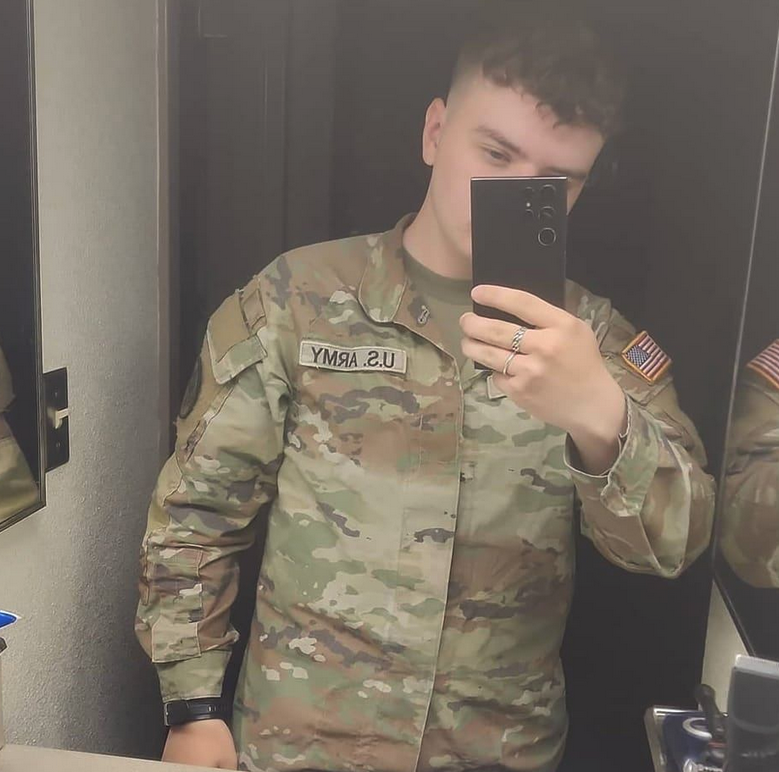
A U.S. Army soldier stationed in South Korea, Wagenius utilized Telegram and Discord handles to coordinate with Moucka. Wagenius specialized in targeting telecommunications infrastructure, successfully extorting AT&T and Verizon. Following Moucka’s arrest, Wagenius attempted a desperate and reckless bid to derail the investigation by posting what he claimed were AT&T call logs belonging to then-President-elect Donald Trump and then-Vice President Kamala Harris on hacker forums, alongside schematics allegedly stolen from the National Security Agency (NSA). Wagenius pleaded guilty in July 2025 and awaits sentencing.
2. John Erin Binns ("IRDev" / "IntelSecrets")
The third pillar of the syndicate is John Erin Binns, a 26-year-old American fugitive indicted for his role in the catastrophic 2021 T-Mobile data breach that exposed 76 million records. Investigative sources revealed that Binns fled the United States and was recently incarcerated in a Turkish prison. Following his release, Binns reportedly acquired Turkish citizenship. Under Turkish constitutional law, citizens are generally shielded from foreign extradition, effectively placing Binns beyond the immediate reach of U.S. federal prosecutors unless diplomatic pressures shift.
Financial and Human Toll
The syndicate amassed over $2.5 million in direct ransom payouts. However, the true economic cost—encompassing forensic investigations, legal fees, regulatory fines, and reputational damage across 165+ corporate victims—numbers in the hundreds of millions of dollars. The compromise of raw telecommunications metadata and federal identification numbers exposed millions of ordinary citizens to severe long-term risks of identity theft and targeted phishing campaigns.
Official Responses: Government and Corporate Reckoning
The Department of Justice has pulled no punches in describing the severity of the threat posed by Moucka and his accomplices.
"Moucka and his co-conspirators leveraged unauthorized access to steal billions of sensitive customer records, downloading terabytes of information to fuel a relentless campaign of corporate extortion," federal prosecutors noted in official statements. "Their willingness to re-extort victims using the personal data of government officials and their families underscores a chilling disregard for the rule of law and human decency."
The fallout also forced a profound reckoning within the cloud computing industry. Snowflake, the primary platform exploited in the attacks, faced intense scrutiny over default security settings that permitted customer accounts to operate without mandatory multi-factor authentication.
In response to the data thefts, Snowflake instituted sweeping security reforms. The company radically increased password complexity requirements and made multi-factor authentication a mandatory, non-negotiable prerequisite for all customer accounts. Cybersecurity experts praised the pivot as long overdue, noting that the incident served as a brutal wake-up call for Software-as-a-Service (SaaS) providers regarding shared responsibility models in cloud security.
Implications: The New Frontier of Cloud Vulnerability and Insider Threats
The case of Connor Riley Moucka serves as a watershed moment for the cybersecurity landscape, carrying profound implications for corporate defense, national security, and international law enforcement.
1. The Death of "Optional" Multi-Factor Authentication
For years, convenience often trumped security, with many cloud providers leaving MFA implementation as an optional toggle for end users. The Snowflake breaches have permanently closed that chapter. Enterprises can no longer treat basic identity and access management (IAM) hygiene as a secondary consideration. Moving forward, regulatory bodies are expected to codify mandatory MFA and robust credential monitoring as baseline legal requirements for cloud storage vendors.
2. The Convergence of State-Level and Extortion-Level Actors
The involvement of active-duty military personnel like Cameron Wagenius highlights a troubling pipeline where individuals with legitimate technical training or access within state apparatuses drift into illicit cybercriminal syndicates. The ability of these threat actors to steal and weaponize high-level intelligence—such as NSA schematics and political call logs—demonstrates that modern cybercrime syndicates are increasingly blurring the lines between financial extortion and national security espionage.
3. Safe Havens and Extradition Loopholes
The situation surrounding John Erin Binns underscores the persistent geopolitical friction in international cyber law enforcement. When criminals can exploit dual citizenship laws—such as Binns reportedly securing Turkish nationality to evade extradition—it creates frustrating jurisdictional dead ends. Global cooperation and Interpol mechanisms must adapt to close these loopholes if transnational syndicates are to be effectively dismantled.
As Connor Moucka awaits his day of sentencing on October 27, the digital ecosystem he manipulated has been permanently altered. The era of casual cloud security is over, replaced by a harsh reality where a single compromised password can unravel global corporate giants and expose the private lives of over a hundred million citizens.