FreeCORE: The Unexpected Revival of the FreeBSD-Based NAS Legacy
For years, the open-source storage community viewed TrueNAS CORE as the gold standard for FreeBSD-based network-attached storage. Built upon the robust, battle-tested foundation of FreeBSD and OpenZFS, it offered a level of stability and performance that resonated deeply with enterprise admins and home-lab enthusiasts alike. However, the landscape shifted dramatically in 2024 when iXsystems, the parent company behind the TrueNAS ecosystem, announced a transition to a "sustaining engineering phase" for CORE.
With new feature development funneled exclusively toward the Linux-based TrueNAS SCALE (now rebranded as TrueNAS Community Edition), the FreeBSD faithful found themselves at a crossroads: adapt to a Debian-based future or cling to a legacy product with an expiration date.
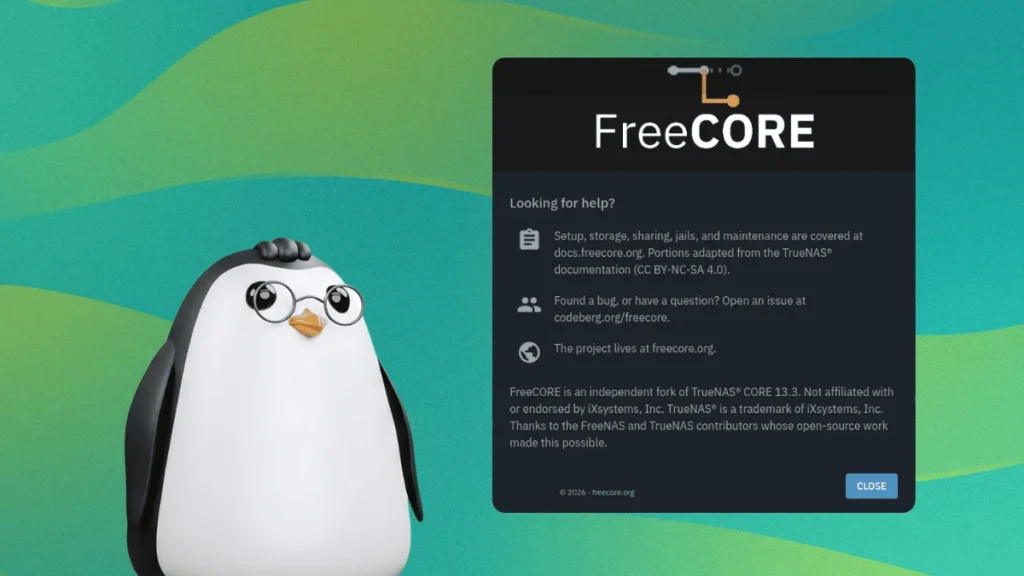
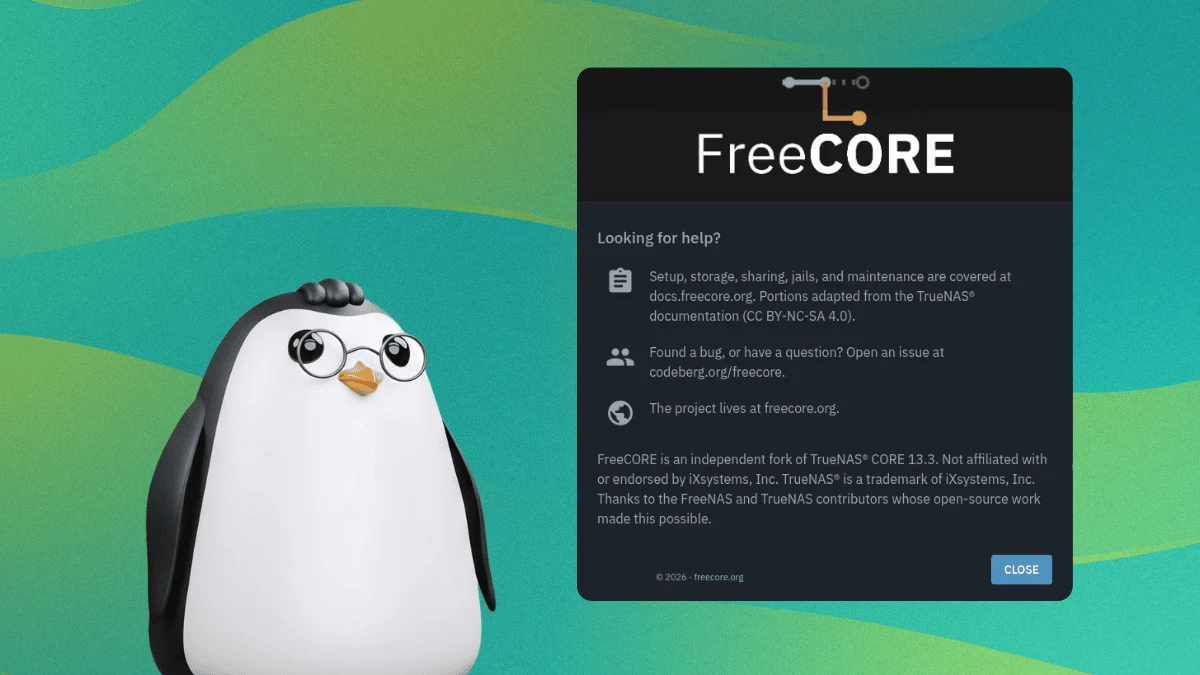
Enter FreeCORE, a community-driven project that has emerged as a lifeline for those who refuse to leave the FreeBSD ecosystem.
Main Facts: What is FreeCORE?
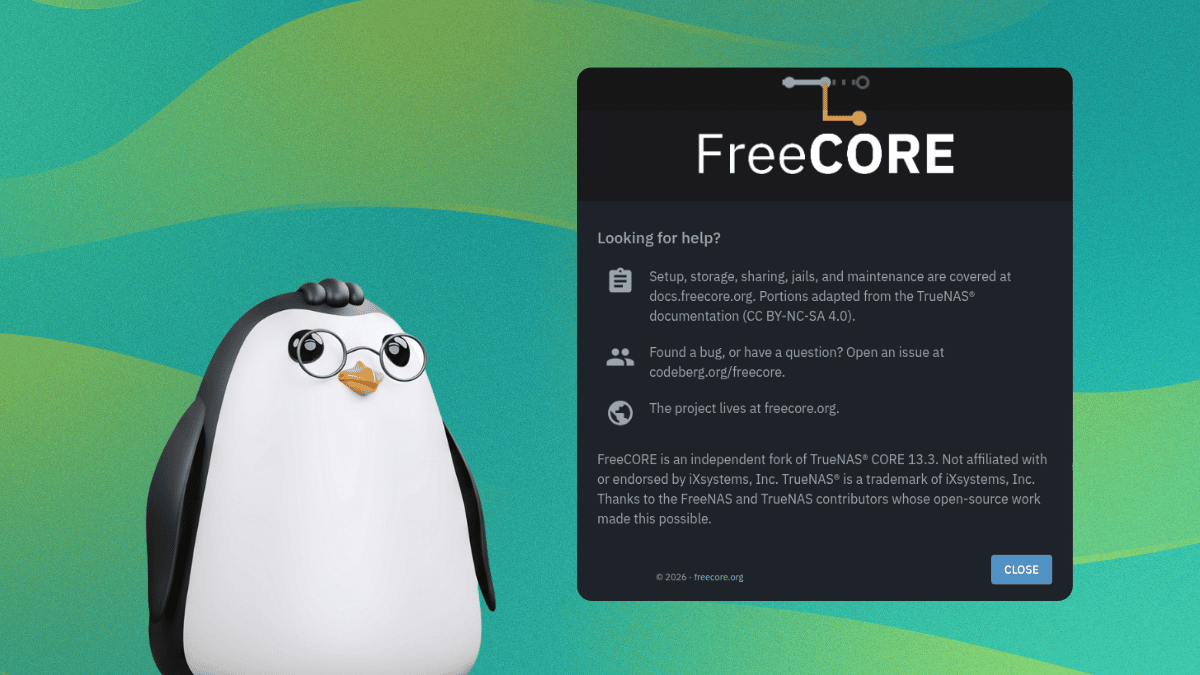
FreeCORE is an independent, open-source NAS operating system that traces its lineage directly back to the original FreeNAS and subsequent TrueNAS CORE iterations. At its heart, it maintains the core architecture that users have trusted for over a decade: a pure FreeBSD base paired with the power of OpenZFS.
Unlike its predecessor, which became increasingly tied to the proprietary roadmap of iXsystems, FreeCORE is developed with a community-first philosophy. The project is explicitly designed for "TrueNAS CORE holdouts"—those who rely on FreeBSD-specific features such as FreeBSD Jails and the bhyve hypervisor. By leveraging a modern FreeBSD 15 base, the project ensures that users can continue managing their storage, virtual machines, and jails within a familiar, high-performance environment, all while escaping the shift toward Linux.
Perhaps most remarkably, FreeCORE is the result of a solo developer’s vision. Motivated by the necessity of finding a "way out" for their own production hardware, the project lead utilized advanced AI-assisted coding agents to accelerate development, while personally maintaining rigorous oversight, validation, and architectural direction.

A Chronology of the Transition
To understand why FreeCORE exists, one must look at the timeline of events that led to the fragmentation of the TrueNAS community:
- Early 2024: iXsystems officially relegates TrueNAS CORE to a "sustaining engineering phase." This move signaled the end of active feature development, restricting the OS to security patches and minor stability updates.
- Late 2024: The final curtain falls on the 13.3 series. With the release of 13.3-U1.2, iXsystems marks the end of maintenance for the CORE train, effectively forcing users to choose between stagnant software or migration to the Linux-based SCALE (TrueNAS Community Edition).
- 2025–2026: As support for CORE wanes, the vacuum left by the transition becomes apparent. Users frustrated by the migration process—which often involves complex data re-importing and the loss of jail-based workflows—begin seeking alternatives.
- Mid-2026: FreeCORE emerges, positioning itself as a direct, drop-in evolution of the abandoned CORE platform. The project quickly gains traction by offering a seamless migration path from existing TrueNAS installations.
Supporting Data: Technical Advancements
FreeCORE is far from a mere "frozen" copy of TrueNAS. By updating the underlying FreeBSD 15 base, the project introduces a suite of performance and security enhancements that were absent in the final versions of TrueNAS CORE:
Modernized Stack
- OpenZFS: The filesystem has been upgraded from the aging 2.1.14 version to the cutting-edge 2.4.2, providing significant improvements in data integrity and performance.
- Programming Languages: Python has been bumped from 3.9 to 3.11, ensuring compatibility with modern scripts and plugins.
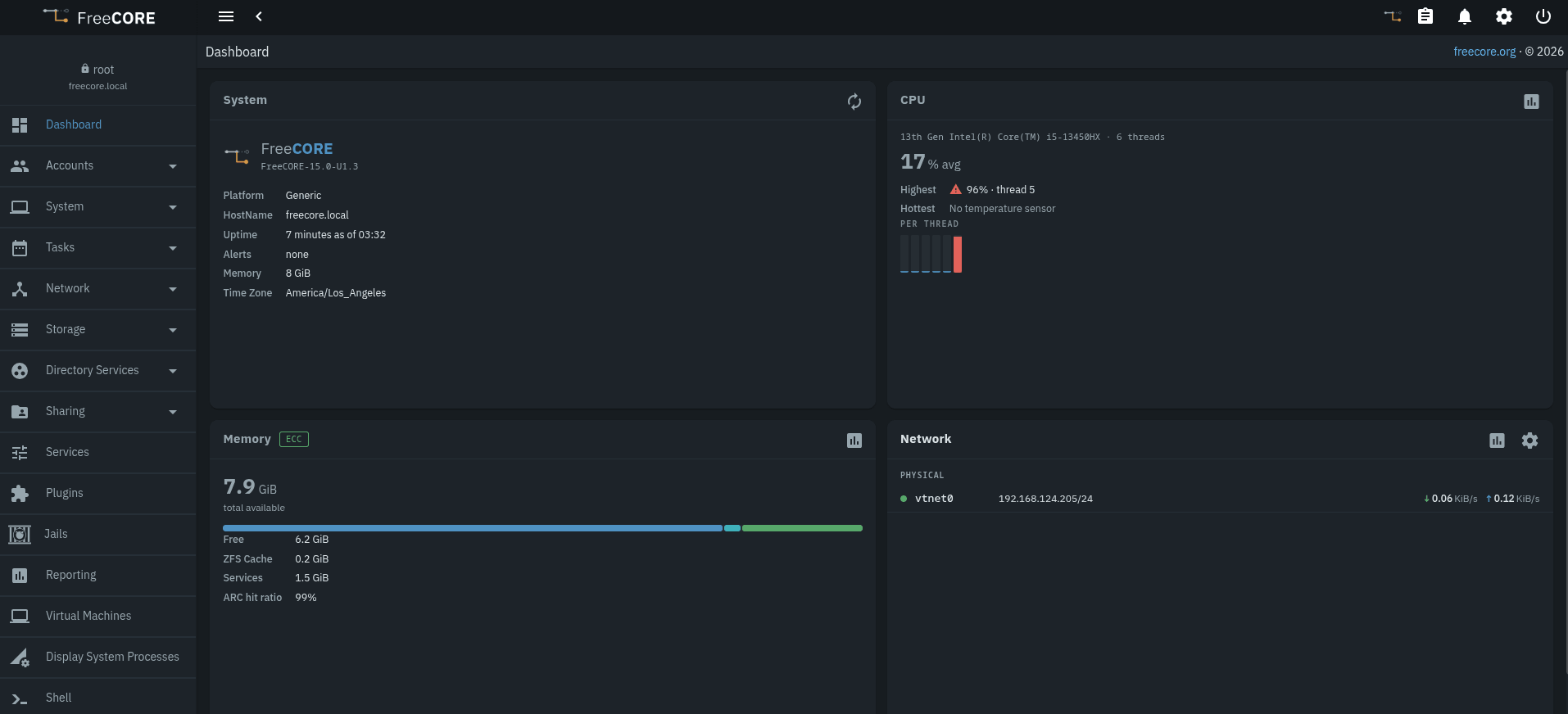
- Web UI: The management dashboard, a critical component for any NAS, has been overhauled to run on a much newer build of Angular, resulting in snappier load times and a more responsive user experience.
Enhanced Functionality
- Hardware Integration: Jails now benefit from a new DRM (Direct Rendering Manager) driver, allowing for efficient GPU passthrough.
- Security: The introduction of WebAuthn support brings hardware security keys as a second-factor authentication (2FA) method. Additionally, console logins now support one-time passwords (OTP).
- Storage Flexibility: The inclusion of
rar2fsallows for read-only mounting of RAR archives, streamlining data management for users with diverse media libraries. - Advanced Networking: Jail networking has been refined, offering granular control via VNET, NAT, or DHCP, catering to administrators who demand a high level of network isolation.
The Human Element: AI and Independent Development
The story of FreeCORE is a compelling case study in modern software development. In an era where large-scale open-source projects are often managed by corporations with hundreds of developers, FreeCORE proves that individual contributors, when empowered by the right tools, can maintain complex infrastructure.
The lead developer’s use of AI coding agents was not a move to replace human intuition, but rather to bridge the gap between intent and implementation. By utilizing these tools to handle boilerplate code and routine bug fixes, the developer was able to focus on architectural decisions—such as the migration logic and the UI/UX enhancements—that give FreeCORE its "TrueNAS-like" feel. This methodology has allowed the project to move at a pace that mirrors, and in some ways exceeds, traditional community-maintained efforts.
Implications for the Storage Community
The emergence of FreeCORE signals a growing desire for "vendor independence" in the home-lab and SMB (Small and Medium Business) sectors. When iXsystems pivoted to Linux, they inadvertently created a market of orphans—users who invested in FreeBSD-specific hardware and software stacks only to find their chosen OS deprecated.
1. The Survival of FreeBSD in NAS
FreeCORE serves as proof that FreeBSD remains a viable and highly desirable OS for storage. Its ZFS implementation and security model remain arguably superior to Linux for specific enterprise use cases. By preserving this lineage, FreeCORE prevents the total "Linux-ification" of the NAS market.
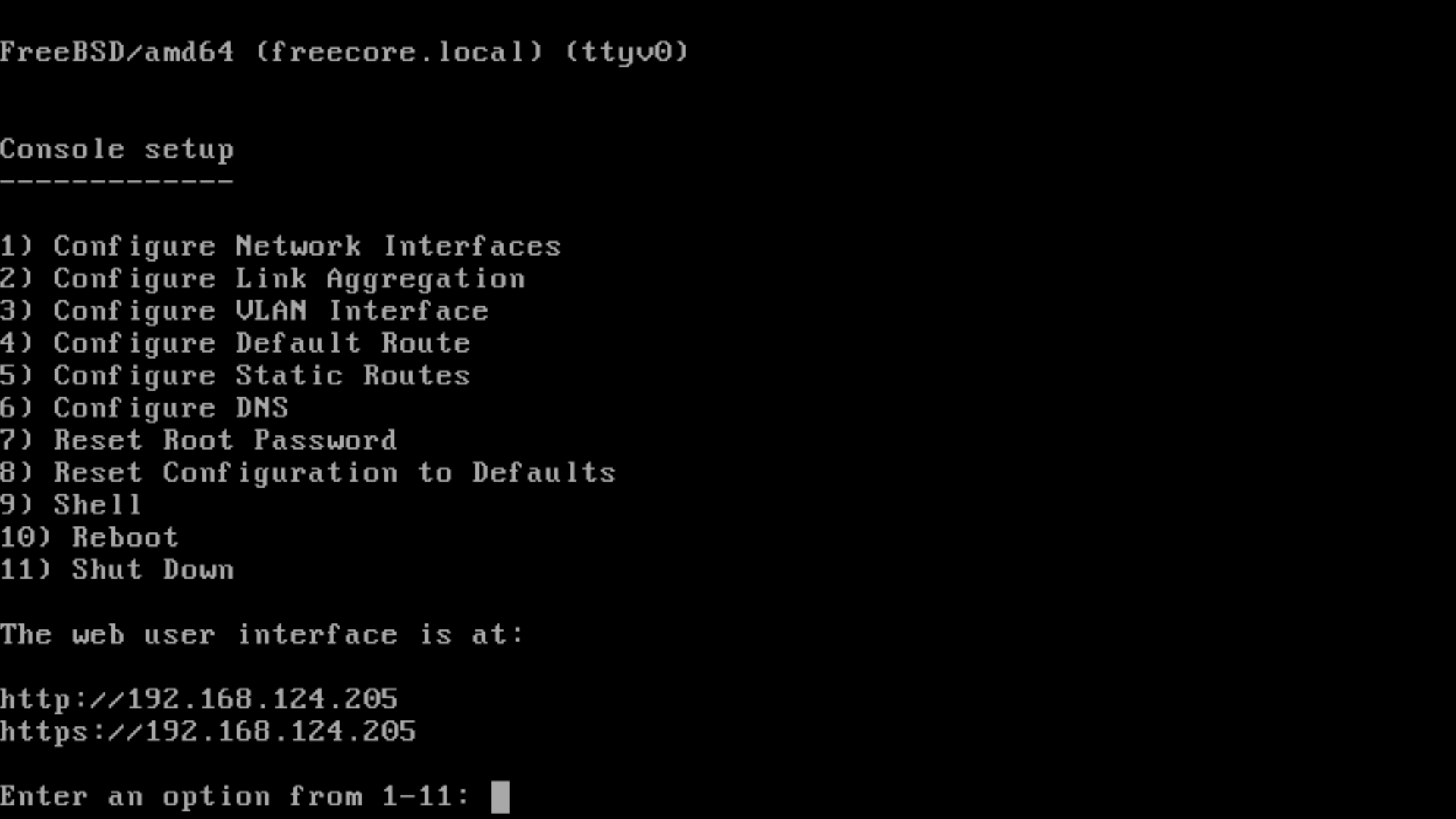
2. Migration vs. Fresh Installation
The project offers two distinct paths for users. For those on TrueNAS CORE 13.3, a migration script is available:
fetch https://freecore.org/freecore-enroll.sh && sh freecore-enroll.sh
This script pivots the update train to FreeCORE’s servers. While this is efficient, users should note that the migration does not perfectly replicate every legacy configuration; for instance, OpenVPN is replaced by the more modern WireGuard, and proprietary enterprise-licensed features from iXsystems are stripped away.
3. A Call to Action for Contributors
Because FreeCORE is a one-person project, its long-term viability depends on community adoption and contribution. The code is hosted on Codeberg, and the project actively encourages feedback and documentation contributions. For those who value the "FreeBSD way," supporting FreeCORE is not just about keeping a NAS running—it is about preserving a specific philosophy of software engineering that values stability, simplicity, and user sovereignty.
Conclusion
The transition of TrueNAS CORE to a legacy status was, for many, the end of an era. However, through the dedication of a single developer and the power of modern coding tools, that era has been extended. FreeCORE is more than just a fork; it is a manifestation of the open-source community’s refusal to be dictated by the commercial pivots of a single vendor.

Whether you are a seasoned administrator managing dozens of jails or a home-lab user who simply prefers the reliability of FreeBSD and ZFS, FreeCORE offers a compelling, actively maintained path forward. It stands as a reminder that as long as there is a need for high-quality, stable storage solutions, the spirit of community-driven innovation will find a way to thrive.
For those ready to move away from the iXsystems ecosystem, the documentation at docs.freecore.org provides the necessary guidance to begin the transition. In the world of open source, it seems, legacy never truly dies—it just finds a new home.