The AI Revolution in Linux: Navigating the New Frontier of Intelligent Operating Systems
The open-source landscape is currently undergoing a tectonic shift. For decades, Linux distributions were defined by their desktop environments, package managers, and release philosophies. Today, a new variable has entered the equation: Artificial Intelligence. As the industry races to integrate large language models (LLMs) and autonomous agents directly into the kernel-user space boundary, users are left grappling with a fundamental question: What does it actually mean for a Linux distribution to be "AI-focused"?
There is currently no industry standard. Some developers are embedding AI agents into the first-boot experience, effectively turning the operating system into an extension of a generative model. Others are pursuing strict "air-gapped" philosophies, ensuring that AI processing remains entirely local, shielded from the prying eyes of cloud-based telemetry. As these competing visions collide, the Linux ecosystem is fragmenting into a fascinating array of experimental, intelligent platforms.
A New Chronology: From Static Tools to Autonomous Agents
The integration of AI into Linux did not happen overnight. The timeline of this evolution can be traced through several distinct phases:

- The Pre-AI Era (Pre-2023): Linux remained a tool-based environment. AI was a library or a Python script that users manually installed if they possessed the technical expertise to handle CUDA drivers and dependencies.
- The Integration Phase (2024): Early adopters began creating wrappers. Projects like Deepin started experimenting with "AI-enhanced" search functionalities, treating AI as a productivity feature rather than a core system component.
- The Native Era (2025–2026): We have now entered a period where the "AI-native" distribution is the primary goal. Projects like Omarchy and Shadowfetch Linux have re-engineered the OS experience so that the agent is the primary interface for system administration.
The Vanguard: Profiles of AI-Native Distributions
The current market is diverse, with each project tackling the integration of intelligence from a different strategic angle.
1. Omarchy: The Malleable OS
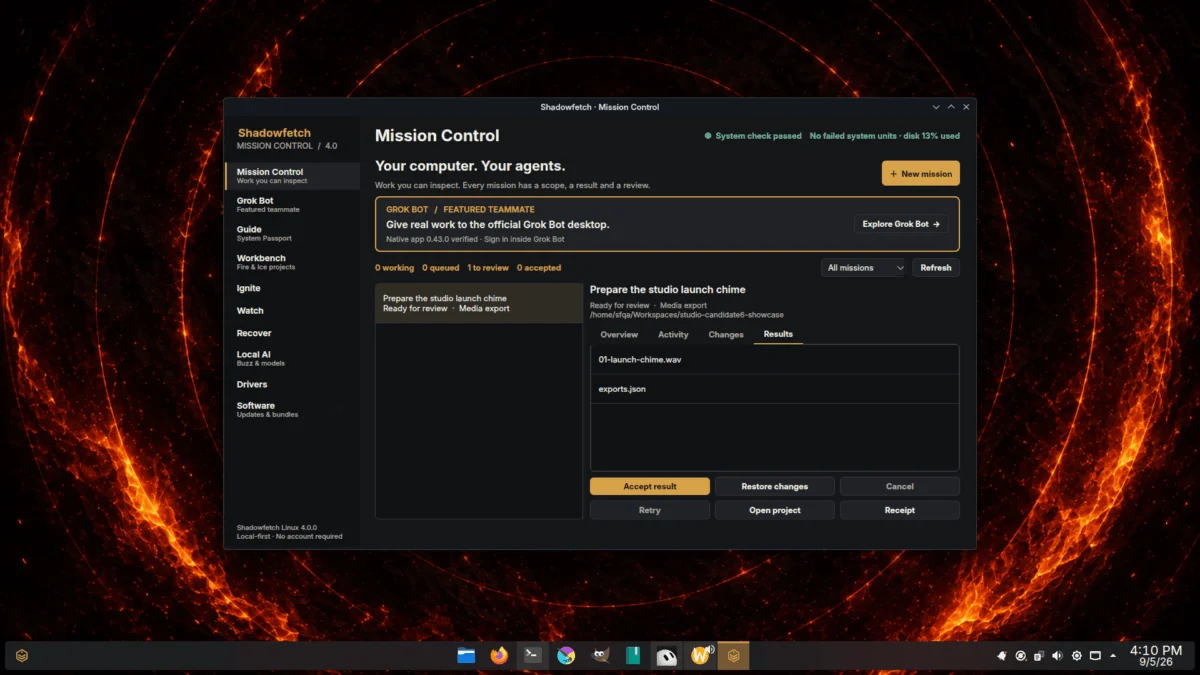
Omarchy represents perhaps the most ambitious shift in the paradigm. Initially conceived as a specialized installer for Hyprland on Arch Linux, it has matured into an agent-centric platform backed by significant venture capital. By prioritizing "agent-first" architecture, Omarchy treats the operating system as a fluid environment that can be reconfigured on the fly. Upon the first boot, users select their preferred AI agent—options include Claude Code, Codex, and the Copilot CLI. Once selected, the agent manages system state, troubleshooting, and even application development, essentially turning the OS into a collaborative programming environment.
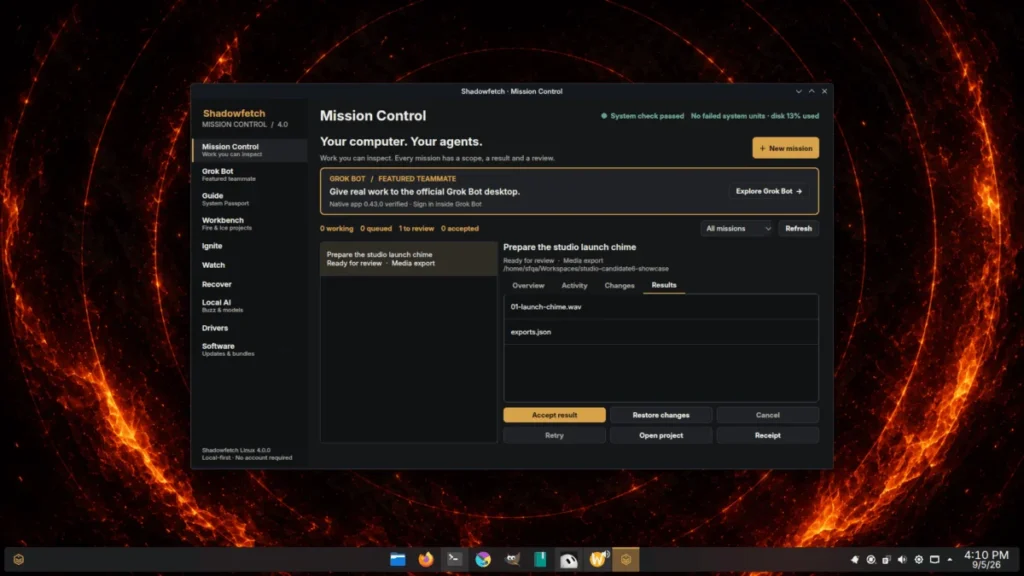
2. Shadowfetch Linux: The "Mission Control" Philosophy
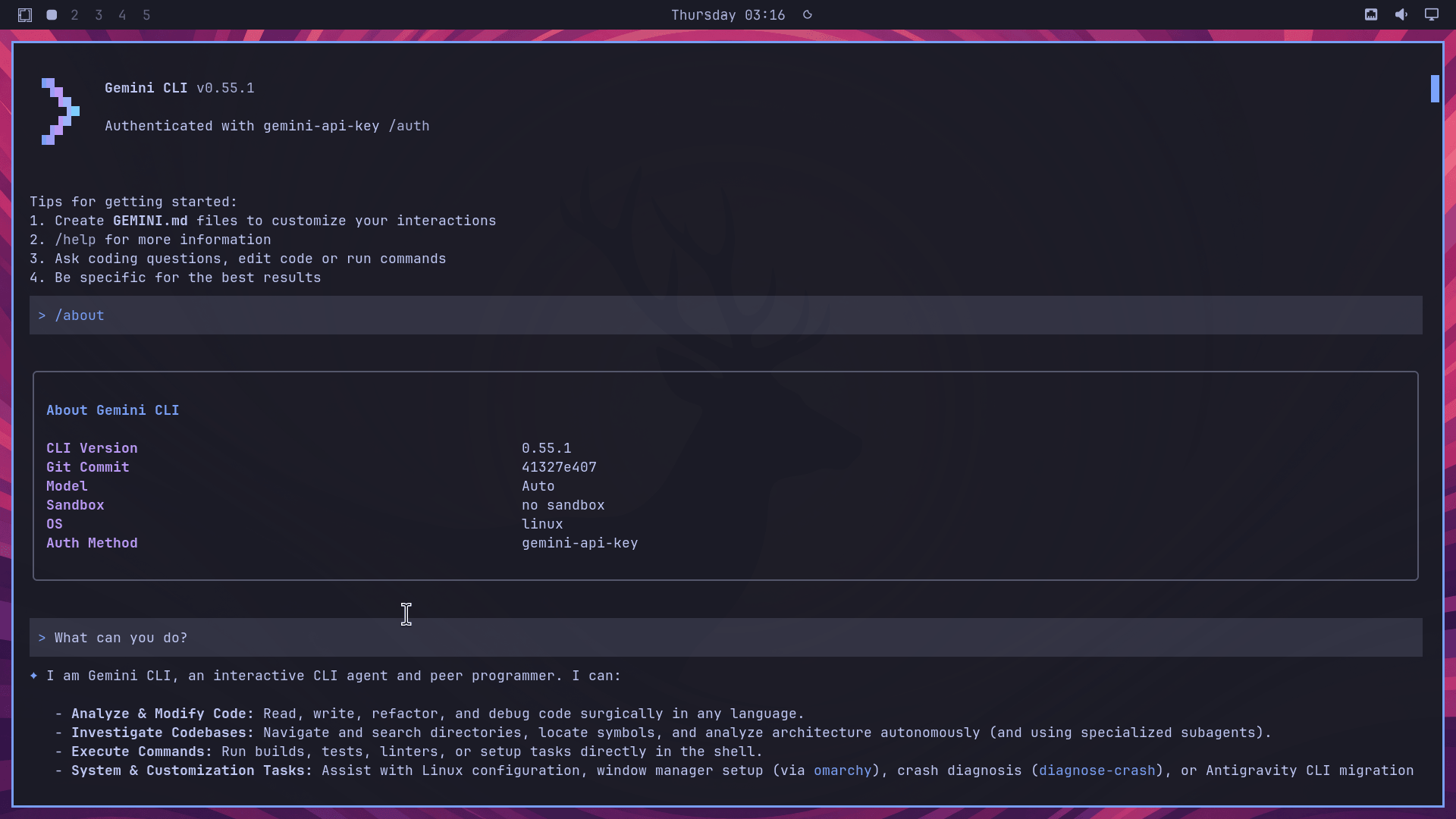
Shadowfetch takes a more cautious, oversight-heavy approach. Its "Mission Control" system acts as a human-in-the-loop mediator. No action is performed by an AI agent without explicit verification. The distribution offers two distinct operational modes: "Fire," which leverages cloud-based agents for heavy lifting, and "Ice," an offline mode utilizing local processing. The inclusion of the "Firebreak" feature—which sandboxes agent activity to specific projects—highlights a growing concern within the community: security.

3. Gnoppix AI Linux: The Privacy-First Fortress
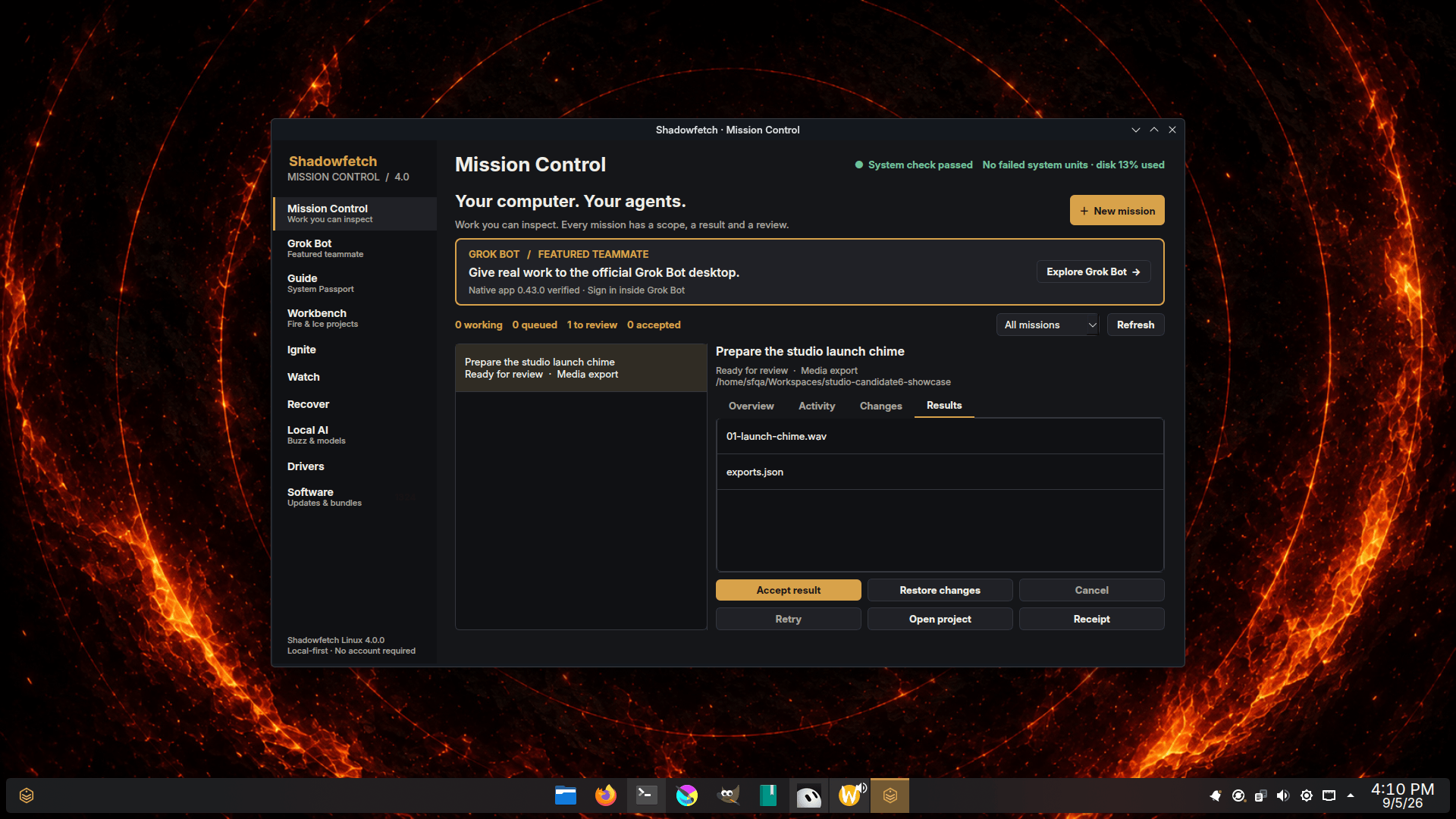
Tracing its lineage back to the Debian-based Gnoppix of 2002, this distribution is a masterclass in privacy. It operates under the philosophy that AI should be inherently air-gapped. By running local models like Mistral 7B, Gnoppix ensures that system intelligence never leaves the machine. This is bolstered by a suite of privacy-preserving tools, including encrypted messaging and anonymized search, making it the preferred choice for security-conscious power users.
4. MakuluLinux: Electra and the Unified Assistant
MakuluLinux offers the most accessible user interface via "Electra," a floating assistant bar. What distinguishes Electra is its backend; the developers have built their own infrastructure rather than relying on third-party APIs. This allows for seamless transitions between online cloud processing and offline local execution, providing a consistent experience regardless of network connectivity.
5. Deepin: The Early Adopter
Deepin remains the most polished of the group, having pioneered the integration of AI into everyday tasks like email and file management. Its "Intelligent Search" function represents a departure from traditional keyword indexing, allowing users to query the file system using natural language queries—a precursor to the search capabilities we expect to see in mainstream commercial OSs in the coming years.
Supporting Data: The Technical Divide
The divergence in these projects can be mapped against two primary axes: Local vs. Cloud and Autonomous vs. Assisted.
- Computational Burden: Projects like Gnoppix focus on hardware-accelerated local inference, requiring users to have robust GPU resources. In contrast, "Fire" mode in Shadowfetch assumes the user is comfortable offloading compute to remote servers.
- Security Models: There is a clear tension between convenience and isolation. The use of "Firebreak" (Shadowfetch) and "Air-Gapping" (Gnoppix) indicates that the community is prioritizing the mitigation of "hallucinated" system commands—a critical risk when giving an AI agent root access.
Official Responses and Industry Sentiment
The shift toward AI-native Linux has drawn mixed responses from the broader open-source community. Canonical’s move with Ubuntu 26.10—specifically the introduction of the "Myna" dictation tool—suggests that major players are not yet ready to commit to full agent-based operating systems. Instead, they are opting for modular, feature-specific AI integration.
Canonical’s strategy of using removable "snaps" for local speech models provides a template for how the industry might handle AI moving forward: a "plug-and-play" approach that allows users to opt into specific AI features without fundamentally altering the core OS philosophy.
Conversely, the "AI-Free" movement, which includes established distributions like Debian, Slackware, and Void Linux, remains a powerful counter-narrative. These distributions argue that the complexity introduced by AI agents—both in terms of security risks and opaque black-box logic—is antithetical to the principles of transparency and reliability that have made Linux the backbone of the internet.
Implications for the Future of Computing
What does this mean for the average user? We are likely moving toward a bifurcated ecosystem:
- The Intelligent Desktop: A future where the OS anticipates needs, fixes broken configurations automatically, and translates natural language into complex shell scripts. This will likely lower the barrier to entry for new Linux users significantly.
- The Transparent Desktop: A continuation of the traditional Unix philosophy where every action is traceable, predictable, and fully under the user’s manual control.
As the lines between user, developer, and machine blur, the challenge for Linux distributions will be maintaining the "do one thing and do it well" ethos of Unix. If an AI agent attempts to do everything for the user, does the operating system lose its identity?
Summary of Current State
| Distribution | Focus | Key Feature |
|---|---|---|
| Omarchy | Agent-First | Malleable, developer-centric environment |
| Shadowfetch | Oversight | Mission Control with Firebreak sandboxing |
| Gnoppix | Privacy | Fully air-gapped local AI models |
| MakuluLinux | Accessibility | Electra assistant with local/cloud fallback |
| Deepin | Productivity | Intelligent natural language search |
Conclusion
The "AI-focused" Linux distribution is no longer a futuristic concept; it is an active, competitive reality. Whether you are an enthusiast looking to automate your workflow through an agent like those in Omarchy, or a security professional who prefers the hardened local models of Gnoppix, the ecosystem now provides options for every ideology.
However, the rapid adoption of these technologies brings with it a responsibility for transparency. As we move forward, the most successful distributions will be those that provide powerful AI capabilities without sacrificing the transparency and user agency that have defined the Linux community for over three decades. For now, the best advice remains: evaluate your personal tolerance for automation versus privacy, and choose the distribution that aligns with your specific philosophy of computing.