Three Decades of Relational Resilience: Tom Lane on 30 Years of PostgreSQL
As PostgreSQL marks its 30th anniversary as an open-source project, the global developer community is pausing to reflect on the architectural choices, cultural quirks, and engineering philosophies that transformed a niche academic database out of UC Berkeley into the world’s most popular relational database.
To unpack this milestone, core team member and long-time committer Tom Lane sat down for an extensive retrospective. Lane, whose tenure with the project spans 25 of those 30 years, offered a rare window into the early days of chaotic bug-fixing, the pragmatic engineering bets that paid off, and the horizon for Postgres in an era dominated by cloud infrastructure and artificial intelligence.
Main Facts: The Anatomy of a Relational Titan
PostgreSQL’s survival and meteoric rise in an intensely competitive enterprise market can be traced to a few foundational pillars:
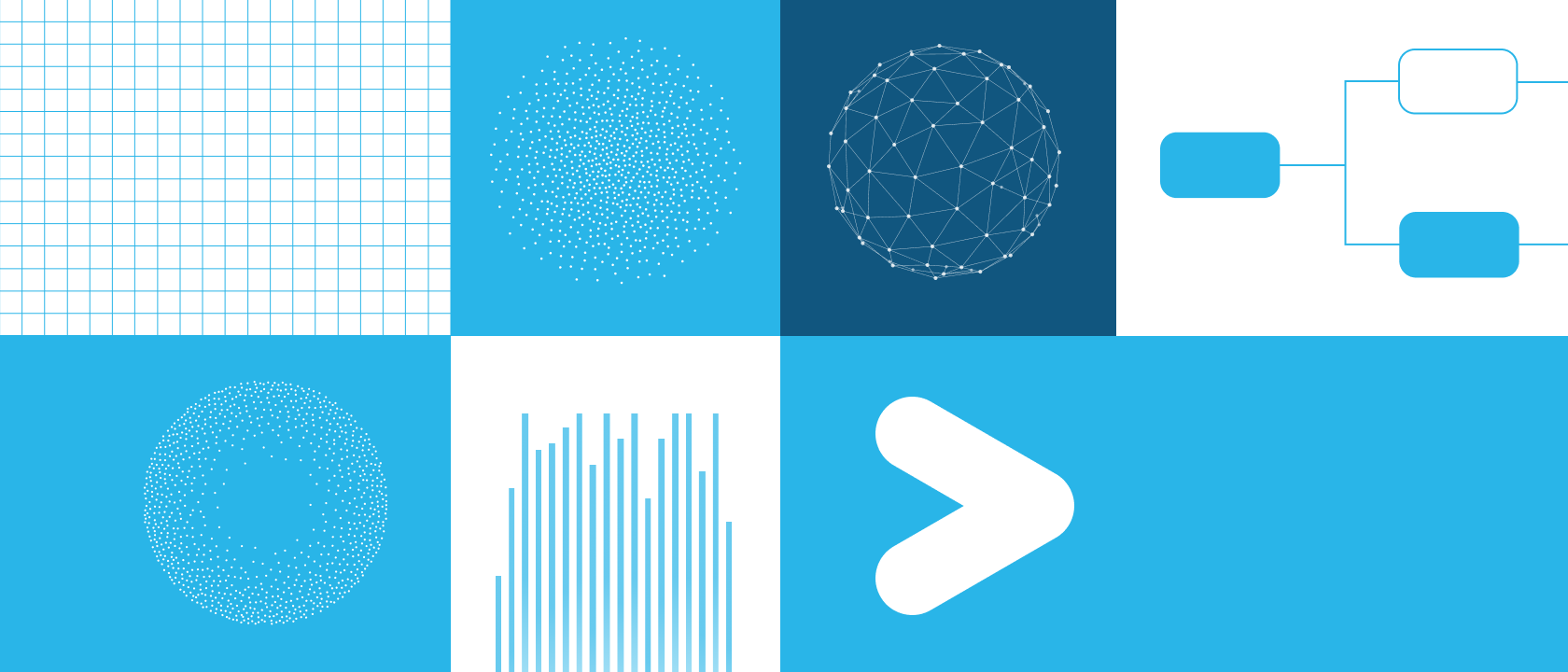
- The Process-per-Connection Model: Unlike engines such as MySQL, SQL Server, or Oracle—which rely on multi-threading to handle connections within a shared memory space—Postgres spawns a dedicated operating system process for every connected session. This provides pristine crash isolation; if a single session goes rogue and crashes, it does not corrupt the overarching system state or take down neighboring connections.
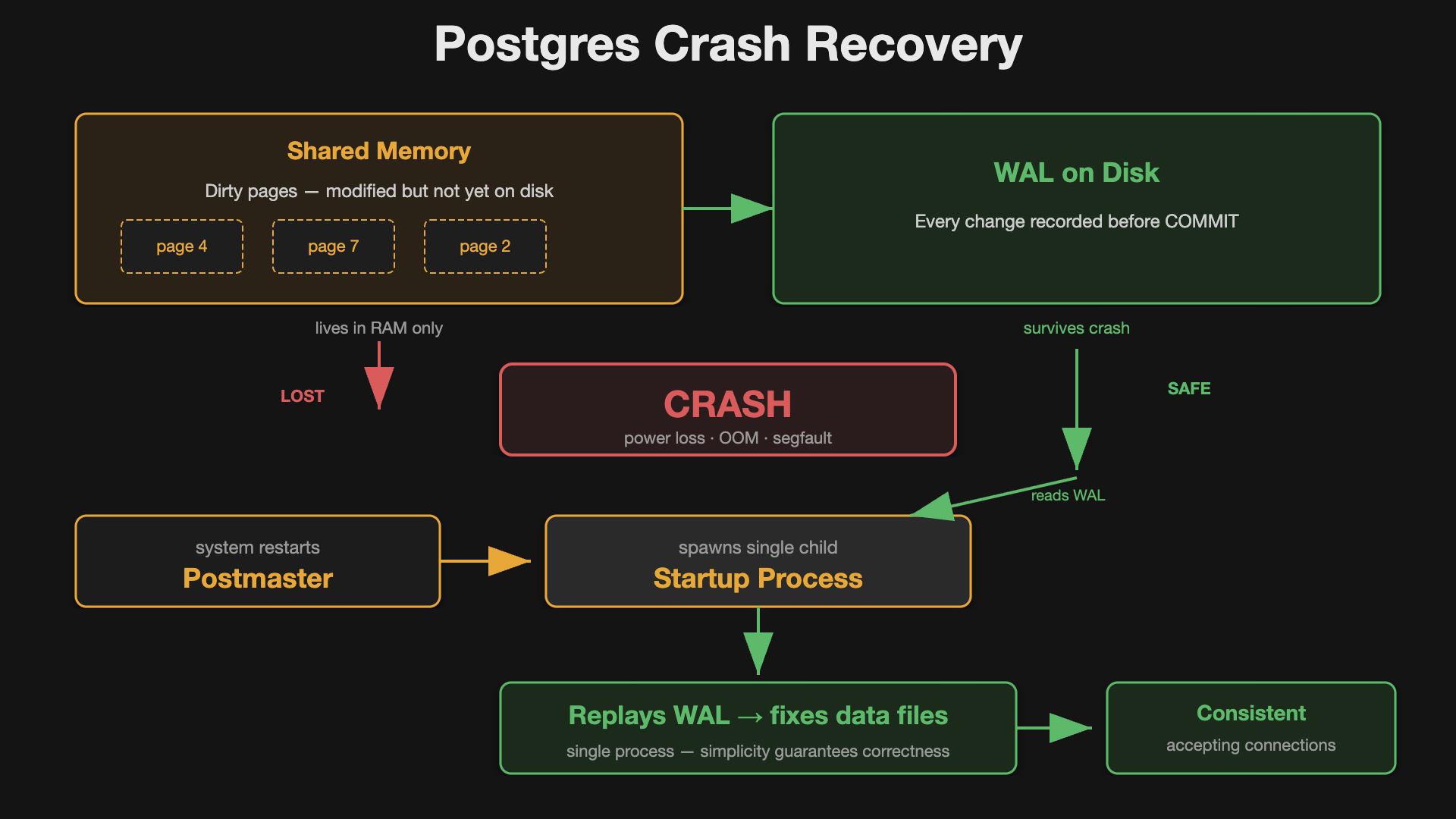
- Write-Ahead Logging (WAL): Introduced in version 8.0, WAL decoupled transaction commits from immediate disk writes across scattered tables and indexes. By channeling modifications into a sequential log stream, Postgres achieved enterprise-grade reliability and crash recovery.
- Multi-Version Concurrency Control (MVCC): Rather than locking tables or relying on complex undo logs that block operations during aborts, Postgres writes new row variants and offloads cleanup to background maintenance processes like
autovacuum. - Permissive Licensing: Inherited from UC Berkeley, the permissive license enables enterprises and major cloud providers to build commercial ecosystems around Postgres without restrictive copyleft encumbrances, fostering widespread global adoption.
Chronology: From Academic Experiment to Enterprise Standard
The 1990s: The Berkeley Hand-off and Early Chaos
Postgres emerged from UC Berkeley as an experimental object-relational database system before being released to the open-source world as Postgres95. Lane entered the ecosystem out of practical necessity. Needing a database to manage stock trading market models and unwilling to pay commercial licensing fees for Oracle, Lane evaluated MySQL and Postgres. Finding MySQL’s codebase lacking, he turned to Postgres, which he found "much better structured."
Early interactions involved submitting patches for lingering bugs. At the time, Lane noted, the project lacked fundamental safety nets, most notably crash recovery. "If you crashed, you were frequently looking at having to reinitialize your database from whatever backups you had," Lane recalled.
The 2000s: The Turning Point of Version 8.0
The release of PostgreSQL 8.0 marked a paradigm shift. By integrating robust write-ahead log recovery, the project evolved from an academic project into a production-grade enterprise system. Around this period, Lane transitioned from a contributor to a full-time core committer, dedicating 100% of his efforts to the core codebase using Emacs and a Linux-based development stack.
The 2010s to 2026: Cloud Scaling and Extension Ecosystems
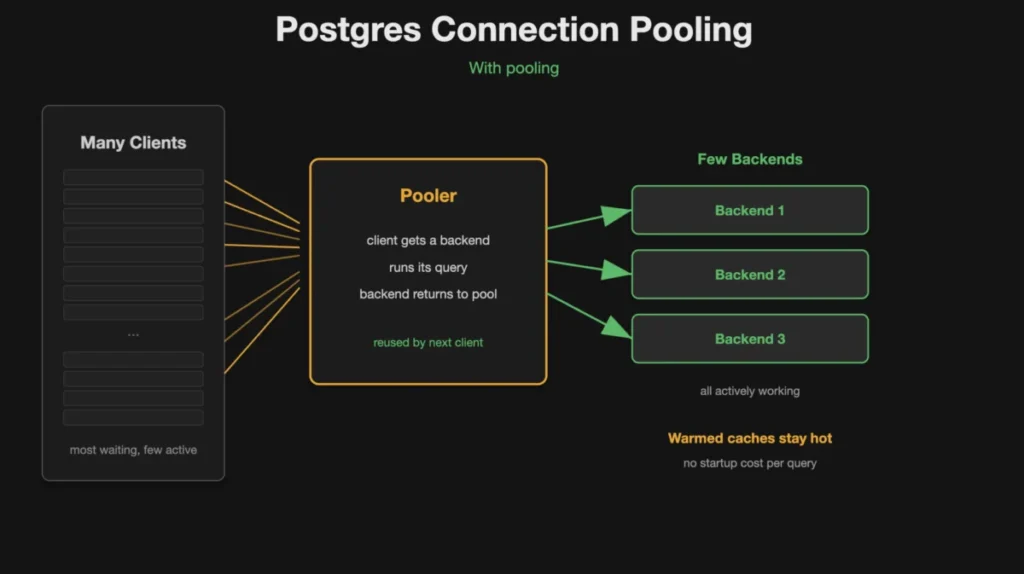
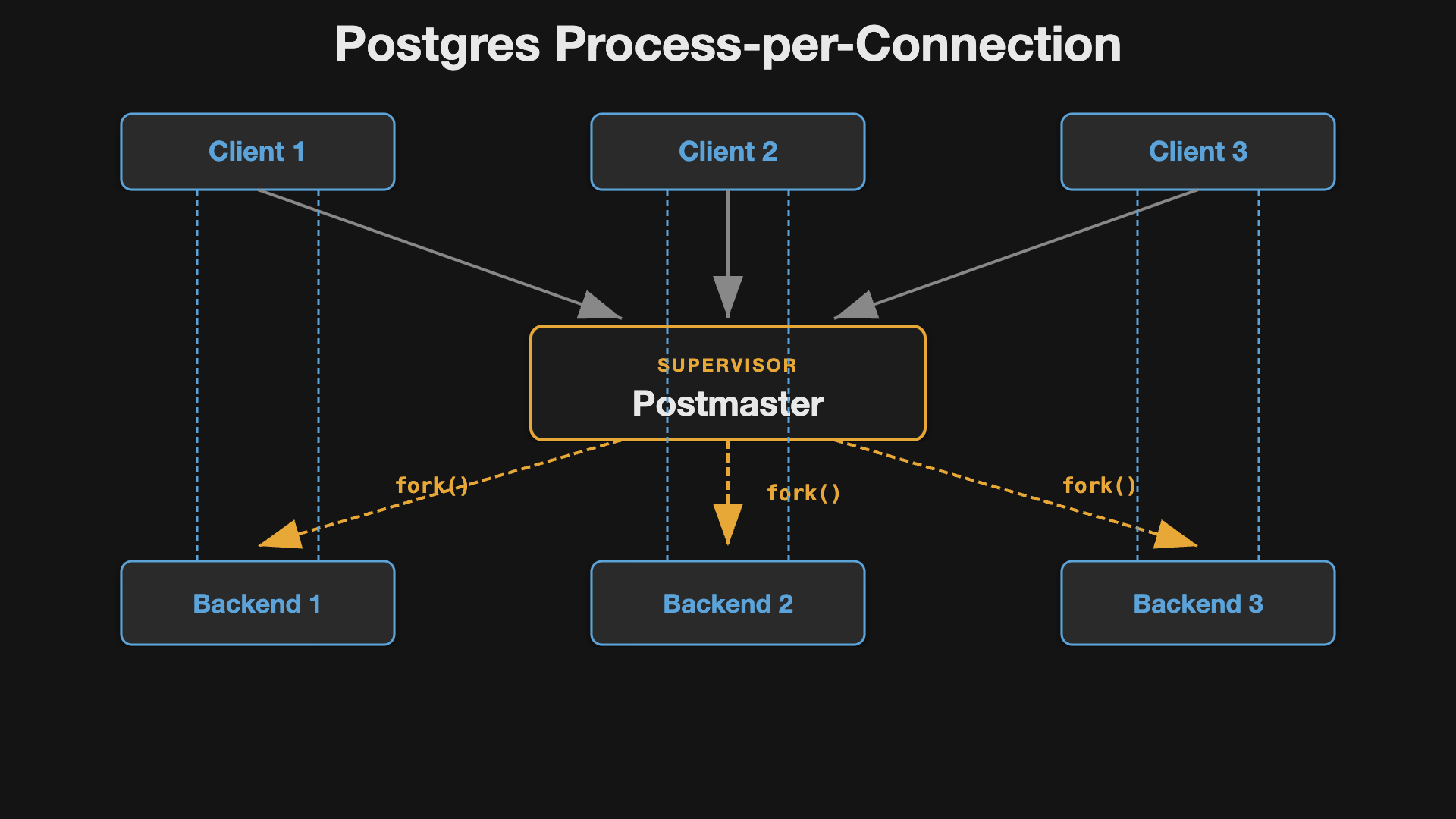
Over the last decade, Postgres became the default persistence layer for modern web applications. To handle massive concurrency, the community rallied around external connection poolers like PgBouncer. Meanwhile, the extension ecosystem exploded, allowing developers to repurpose Postgres into a document store, key-value repository, messaging queue via LISTEN/NOTIFY, and vector database via pgvector—all without fragmenting into proprietary forks.
Supporting Data: Architectural Trade-Offs
The interview illuminated the deliberate trade-offs embedded in Postgres’s design:
| Architectural Component | Advantage | Trade-Off / Challenge |
|---|---|---|
| Process-per-Connection | Absolute memory isolation, code simplicity, and crash containment. | High context-switching overhead and memory consumption at scale. |
| Write-Ahead Log (WAL) | Fast transaction commits; I/O optimization via sequential writes. | Single-process crash recovery and replay bottlenecks. |
| MVCC & Autovacuum | Consistent non-blocking reads; maintenance pushed to background tasks. | Table bloat requiring continuous heuristic tuning of vacuum operations. |
| Memory Contexts | Eliminates manual memory management; auto-cleans queries/sessions. | Risk of dangling pointers and memory leaks in long-lived contexts. |
Official Responses and Engineering Perspectives
Lane’s insights underscore a development philosophy rooted in pragmatism rather than chasing transient software trends.

On the Threading vs. Processes Debate
While some engineers actively explore converting Postgres to a threaded model to optimize modern hardware with hundreds of CPU cores, Lane notes the path is fraught with difficulty. "The dirty little secret here is that if one process crashes, we take down all the rest anyway, because we aren’t totally certain that that one process didn’t manage to corrupt anything in shared memory," Lane explained. Overcoming this requires solving complex, gnarly problems surrounding shared catalog caches across sessions.
On Memory Safety and C
Despite modern industry enthusiasm for memory-safe languages like Rust, Lane remains unconvinced that rewriting Postgres’s 1.5 million lines of C code offers a favorable cost-benefit ratio. Instead, Postgres relies on memory contexts—hierarchical allocation trees tied to specific lifespans (queries, transactions, or sessions). "Assuming you can allocate stuff in the shortest-lived context, you can basically stop worrying about memory leaks," Lane said.
On Project Governance
Unlike projects governed by formal foundations (such as the CNCF or Apache Software Foundation), the PostgreSQL Development Group operates informally. It lacks a corporate board, a public roadmap, or a central steering committee. Code contributions are driven by email-based consensus via mailing lists rather than automated pull requests.
"Any sort of really strong governance model just would not have worked. People would have walked away from it," Lane remarked, emphasizing that stability is naturally enforced because "people want their databases to be boring."
Implications: The Cloud, AI, and the Next Decade
As Postgres enters its fourth decade, it faces new paradigms in cloud-native computing and artificial intelligence.
The AI Wave and Code Generation
The rise of AI has introduced both friction and utility to the ecosystem. While Lane has experimented with coding assistants like Claude Code, the community maintains a cautious stance on generative code. During a recent in-person workshop, core developers reached a consensus: a human must stand behind every line of code, fully able to explain its architectural rationale. Furthermore, the project has experienced an influx of AI-generated bug reports—some uncovering valid edge cases, others hampered by a superficial understanding of core database internals.

The Future of Extensions and Core Expansion
Looking forward, Lane cautions against bloating the core engine with features that can comfortably live as extensions. Discussions persist regarding column-organized storage tables and parser extensibility, though rigid tools like Flex and Bison continue to anchor the SQL grammar.
Ultimately, Lane’s commitment remains unwavering. When asked about his long-term plans beyond the project, he offered a characteristically grounded reply: "I think I’ll keep working on Postgres until either I decide I’m bored with the project or I realize I’m obsolete. And I don’t know when or if those things will happen, but right now I’m quite content to keep doing what I’m doing."