The Silent Beat of Europe: How a Tiny Microcontroller Decodes the Continent’s Master Clock
For decades, the rhythmic, low-frequency pulse of the DCF77 transmitter has served as the invisible backbone of timekeeping across Europe. From the ubiquitous wall clocks in German households to industrial automation systems, the signal emanating from Mainflingen, near Frankfurt, provides an atomic-standard reference that ensures synchronization across borders. While the technology behind it—Very Low Frequency (VLF) radio—feels like a relic of the Cold War, it remains a marvel of efficiency.
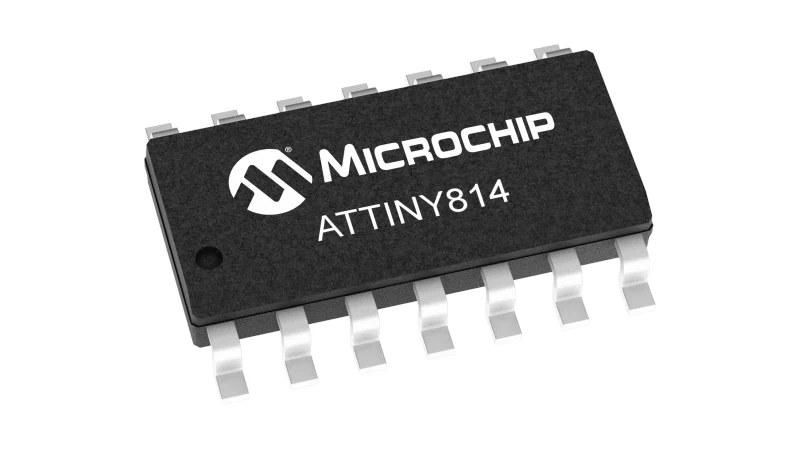
Recently, the maker community has been reminded of this elegance through a minimalist project by developer [kwolf1909], who successfully utilized an ATtiny microcontroller to decode this sophisticated time signal. This project serves as a poignant reminder that in an era of bloated firmware and "over-engineered" Internet of Things (IoT) devices, there is still immense value in lean, hardware-efficient design.
Main Facts: The Anatomy of a Time Signal
The DCF77 station operates on a frequency of 77.5 kHz. Unlike high-frequency broadcasts that rely on complex modulation schemes to carry data, DCF77 uses a simplified Pulse Width Modulation (PWM) format. Every second, the transmitter sends a bit of information by varying the duration of the carrier wave reduction.
Key Technical Specifications:
- Carrier Frequency: 77.5 kHz (Longwave/VLF band).
- Effective Range: Approximately 2,000 kilometers from the transmitter, covering nearly all of Europe.
- Data Rate: 1 bit per second (bps).
- Content: The signal carries the current minute, hour, day, day of the week, month, and year, along with leap-second information and summer/winter time transition alerts.
- The Hardware Challenge: Because the data rate is exceptionally slow—a single bit per second—the processing requirements for decoding are minimal. This is where the ATtiny microcontroller, a member of the AVR family known for its tiny footprint and low power consumption, shines.
In [kwolf1909]’s implementation, the ATtiny acts as the bridge between a raw radio receiver module and an I2C-based display. The microcontroller monitors the signal’s pulse widths, interprets the binary stream, and refreshes the time on the screen, all while remaining significantly more power-efficient than a standard microcontroller like an Arduino Uno or a Raspberry Pi.
Chronology: A History of Precision
The story of DCF77 is not merely one of electronics, but of institutional dedication to synchronization.
1959: The Inception
The station was officially commissioned by the Physikalisch-Technische Bundesanstalt (PTB), Germany’s national metrology institute. Originally intended to provide a standard frequency reference, it began broadcasting a coded time signal in 1973.
1980s – 1990s: The Consumer Boom
During the late 20th century, the "Radio Controlled" clock became a standard appliance in European homes. As low-cost, integrated radio receiver modules became available, manufacturers began embedding DCF77 decoders into alarm clocks, wristwatches, and wall-mounted timepieces. This period solidified the station’s role as the primary timekeeper for the European public.
2010s – Present: The Maker Renaissance
With the rise of the "Maker Movement," hobbyists began to reverse-engineer these signals. Rather than relying on proprietary, black-box modules, developers like [kwolf1909] began building their own decoders. This movement shifted the focus from merely "using" the signal to "understanding" the physics and logic behind the radio propagation.
The current project represents a distillation of this history: stripping away the extraneous UI elements and heavy libraries to arrive at the purest possible implementation of a time-sync circuit.
Supporting Data: The Efficiency of Minimalism
The modern consumer electronic landscape is dominated by devices that require multi-gigahertz processors and gigabytes of RAM to perform simple tasks. The DCF77 decoder project stands in stark contrast to this trend.
Power Consumption Analysis
- Standard IoT Device: Often requires an ESP32 or similar Wi-Fi-enabled chip. These devices consume significant power while idling to maintain network handshakes.
- ATtiny Implementation: Operates in the milliwatt range. By using the ATtiny, the decoder can theoretically run on a small coin-cell battery for months, if not years, depending on the display technology chosen.
Interface Complexity
The project employs a single push-button interface. A short press cycles through the display modes (time, date, signal quality), while a long press initiates a manual reset of the DCF77 synchronization logic. This "human-in-the-loop" approach demonstrates that even with limited I/O pins, a high degree of user functionality can be achieved through clever software state machines.
Furthermore, the architecture allows for modular expansion. By selecting an ATtiny variant with sufficient pin density, users can integrate real-time clock (RTC) modules—to maintain time during signal outages—and temperature sensors, transforming a simple clock into a sophisticated environmental monitor.
Official Responses and Metrological Significance
The PTB, which maintains the DCF77 signal, views these hobbyist projects with guarded approval. While the institute provides the signal as a service to the public and industry, they emphasize the importance of signal integrity.
"The DCF77 signal is a foundational element of the European time infrastructure," a spokesperson for a European metrology laboratory noted in a recent symposium on radio-frequency standards. "When hobbyists engage with the signal, they are learning about the realities of radio propagation—interference, atmospheric noise, and the necessity of robust error checking."
The PTB provides extensive documentation on the signal structure, encouraging researchers to verify the accuracy of their implementations. For hobbyists, this creates a unique bridge between amateur electronics and professional-grade metrology.
Implications: The Future of VLF Broadcasting
The success of the ATtiny-based DCF77 decoder raises broader questions about the future of low-frequency radio in a digital-first world.
1. Resilience in the Digital Age
As we move toward cloud-based NTP (Network Time Protocol) servers, the reliance on internet connectivity for time synchronization has created a single point of failure. If the internet goes down, smart devices drift. DCF77 provides an analog-based "fail-safe" that does not require an active internet connection, making it an essential backup system for critical infrastructure.
2. The Educational Value of Hardware Constraints
By using a limited processor, developers are forced to learn about bitwise operations, hardware interrupts, and timing constraints. This is a far more rigorous educational experience than simply calling an API in a high-level language like Python or JavaScript. The project proves that constraints are not an impediment to innovation; they are the catalyst for it.
3. Sustainability and Longevity
The "Right to Repair" movement has highlighted the fragility of modern electronics. Many IoT devices become "e-waste" the moment the manufacturer shuts down the server. A DCF77 receiver, however, relies only on the atmospheric signal. As long as the PTB continues to broadcast, the hardware remains functional. This longevity is the ultimate goal of sustainable engineering.
Conclusion: A Lesson in Elegance
The DCF77 decoder project by [kwolf1909] is more than a technical curiosity. It is a manifesto for a specific type of engineering—one that prizes efficiency, longevity, and the beauty of doing one thing perfectly.
In a world increasingly obsessed with the "next big thing" in software updates and hardware cycles, the silent, invisible beat of the DCF77 signal remains a constant. It is a reminder that the most reliable systems are often the simplest ones. Whether you are a seasoned electrical engineer or a student just picking up a soldering iron, this project serves as a masterclass in how to interact with the foundational technologies that keep our world in sync.
As we look toward the future, the lessons learned from these tiny, minimalist decoders will remain relevant. When the servers go offline and the cloud becomes unreachable, the radio wave will still be there, pulsing at 77.5 kHz, waiting to be heard by those with the ingenuity to listen.