Automatic Soldering Fume Extractor with Dust and VOC Sensors
Main Facts
In the world of electronics prototyping, DIY crafting, and circuit board assembly, one hazard remains a constant companion: soldering smoke. Composed of vaporized flux, heavy metals, and particulate matter, these fumes are notorious for causing respiratory irritation, headaches, and long-term health complications. While benchtop fume extractors are widely available, they share a common flaw rooted in human error—makers routinely forget to turn them on before touching a soldering iron to a joint, or neglect to switch them off when walking away, leading to unnecessary noise, wasted energy, and premature fan wear.
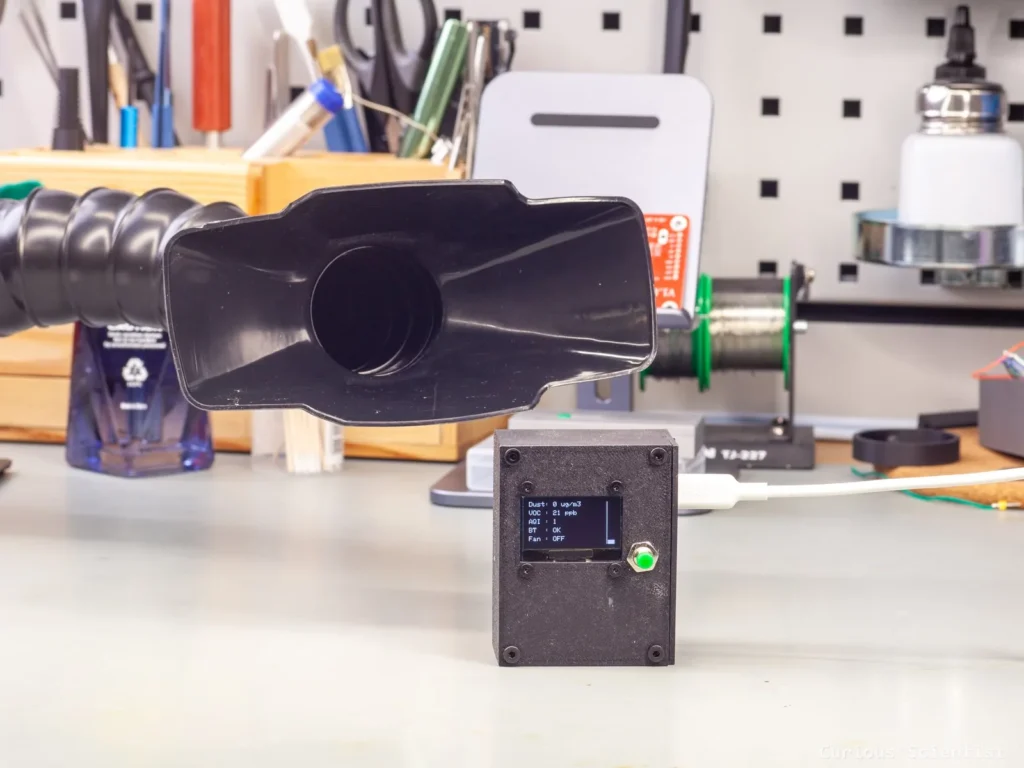
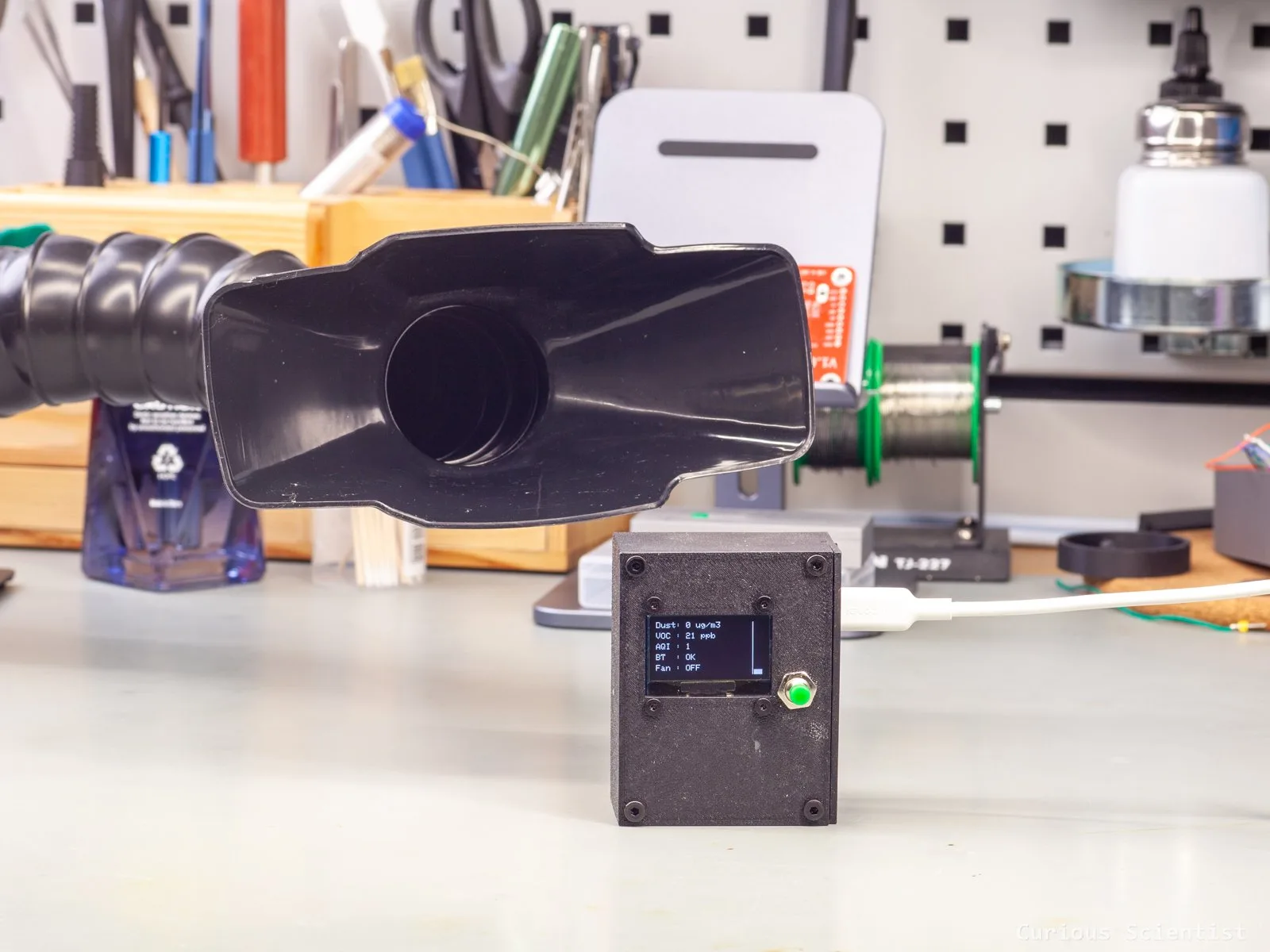
Enter the latest innovation from independent technology creator Curious Scientist, who has engineered a fully automated, context-aware soldering fume extractor designed to eliminate user intervention entirely. Built around a compact ESP32-C3 Super Mini microcontroller and complemented by an Arduino Nano, this sophisticated DIY device continuously monitors workspace air quality using a dual-sensor array.
When airborne pollutants—such as flux micro-particles and volatile organic compounds (VOCs)—exceed predetermined safety thresholds, the system springs to life autonomously. It dynamically scales its fan speed relative to the density of the pollution detected. Furthermore, the unit features an intelligent 180-second idle countdown timer with a manual override grace period, ensuring that the workspace remains clear long after the iron has been returned to its stand, while saving energy and reducing ambient noise when the bench is vacant.
The project bridges the gap between industrial-grade environmental monitoring and accessible maker-space electronics. By combining modern Internet of Things (IoT) hardware families with reliable peripheral processing, Curious Scientist has provided the global maker community with a blueprint for a safer, cleaner, and entirely automated workbench.
Chronology of Development: From Concept to Workbench Reality
The journey toward a truly autonomous fume extractor was born out of a common frustration shared by electronics hobbyists and professional engineers alike: the cognitive load of managing bench peripherals while troubleshooting complex circuits.
Phase 1: Identifying the Problem and Setting Specifications
The initial design phase focused on identifying the precise triggers required for automation. A simple motion detector or a current-sensing plug connected to the soldering iron station was considered and ultimately rejected. Motion sensors cannot distinguish between a maker reaching for a screwdriver and actual active soldering. Current-sensing mechanisms only indicate that the iron is powered on, not whether solder is actively being melted and generating flux fumes.
Curious Scientist concluded that true automation required direct environmental sensing—the system needed to "smell" and "see" the smoke at the exact moment it entered the micro-climate of the workbench.
Phase 2: Hardware Architecture and Component Selection
To achieve this, the builder selected a dual-processing architecture. An ESP32-C3 Super Mini—part of the highly popular, Wi-Fi and Bluetooth-capable RISC-V microcontroller family widely adopted in IoT projects—was chosen as the main controller. Paired with it is an Arduino Nano, which assists with peripheral management, sensor data polling, and hardware-level control logic.
For user feedback, the design incorporates a 1.3-inch OLED display driven by an SSH1106 controller chip. This screen provides real-time updates regarding system status, current pollution indices, and visual countdowns during shutdown sequences.
Phase 3: Sensor Integration and Algorithmic Calibration
The core engineering challenge lay in writing firmware that could reliably distinguish between actual soldering smoke and benign environmental interferences, such as cooking odors, steam, or routine dust from opening a window.
The builder integrated two distinct sensing modalities:
- Particulate Detection: Utilizing a Sharp GP2Y1010AU0F optical dust sensor.
- Chemical Detection: Utilizing an ENS160 volatile organic compound (VOC) sensor.
Rather than relying on raw, instantaneous sensor values—which are notoriously susceptible to erratic baseline shifts and false positives—Curious Scientist developed a rolling-average verification algorithm. The microcontroller requires multiple consecutive over-threshold readings within a fixed temporal window before triggering the extraction fan.
Phase 4: Prototyping, Enclosure Design, and Firmware Refinement
With the core logic validated, the hardware was integrated with a 12V extraction fan. To optimize acoustic performance and ensure continuous sensor exposure, the fan is systematically undervolted and driven at 5V. This low-RPM state draws a gentle, constant stream of ambient air across the internal sensors without creating intrusive wind noise.
Finally, the auto-shutdown logic was refined. The system registers the last detected pollution event and initiates a strict 180-second (3-minute) countdown. If no further soldering occurs, the system powers down safely, concluding the development cycle into a replicable open-reference project published on the Curious Scientist digital platform.
Supporting Data: Hardware Specifications and Analytical Logic
Understanding the technical composition of the Curious Scientist fume extractor reveals the depth of engineering embedded in this desktop device. Below is a breakdown of the core components, their operational parameters, and the mathematical logic governing the automation routines.
Bill of Materials (BOM)
| Component | Model / Type | Core Function |
|---|---|---|
| Main Microcontroller | ESP32-C3 SuperMini | Central IoT processing, Wi-Fi/BLE capability, system management |
| Co-Processor | Arduino Nano (V3/compatible) | Peripheral handling, sensor data acquisition |
| Optical Dust Sensor | Sharp GP2Y1010AU0F | Measures airborne particulate matter via infrared light scattering |
| VOC Sensor | ENS160 | Evaluates chemical pollutants, generating an Air Quality Index (AQI) |
| Visual Interface | 1.3-inch OLED (SSH1106 driver) | Displays system status, AQI metrics, and countdown timers |
| Extraction Actuator | 12V DC Fan (Powered at 5V) | Pulls and filters contaminated air away from the workbench |
Sensor Operation Mechanics
1. The Sharp GP2Y1010AU0F Optical Dust Sensor
This sensor operates on an optical sensing principle. An internal infrared LED is pulsed on briefly by the microcontroller. When smoke or dust particles pass through the optical chamber, they scatter the infrared light. A built-in photodiode captures the scattered light, producing an analog output voltage directly proportional to the dust concentration in the air.
- Activation Threshold: The system is calibrated to recognize a minimum baseline threshold parameter of 40 µg/m³.
2. The ENS160 VOC Sensor
Unlike basic resistive gas sensors that output volatile raw resistance values, the ENS160 calculates comprehensive environmental metrics, including TVOC (Total Volatile Organic Compounds) and an Air Quality Index (AQI) scaled numerically from 1 to 5.
- Adaptive Baseline Logic: The firmware does not evaluate raw TVOC numbers directly. Instead, it maintains a slow-adapting baseline that filters out gradual environmental drifts. The system triggers only when it detects a sharp, statistically significant spike relative to this floating baseline, successfully shielding the extractor from false triggers caused by normal room occupancy changes.
Multi-Stage Activation and Decaying Logic
To prevent erratic "stuttering"—where a fan rapidly switches on and off due to fleeting micro-puffs of smoke—the control firmware utilizes a multi-tiered verification sequence:
- Initial Response: When pollution levels breach the 40 µg/m³ dust threshold or the AQI shifts upward, the microcontroller does not immediately jump to maximum RPM. Instead, it initiates a LOW-speed operational state.
- Escalation Protocol: If sensor readings remain elevated over a series of sequential polling cycles, proving that low-speed suction is insufficient to clear the plume, the system scales up fan velocity dynamically.
- Graceful Shutdown: Once the workbench becomes inactive, the system remembers the timestamp of the last recorded pollution event. It initiates a 180-second countdown.
- User Warning & Override: During the final 30 seconds of this countdown, an audible or visual warning message scrolls across the 1.3-inch OLED display. If the maker picks up the soldering iron and resumes work—or presses a physical panel button—within this 30-second window, the timer resets instantly without requiring the fan to spin down completely and restart.
Official Responses and Creator Insights
The creator behind the project, publishing under the professional moniker Curious Scientist, has shared extensive documentation regarding the motivations and design philosophy behind the automated extractor.
In technical breakdowns published on the official Curious Scientist blog, the maker emphasized that the primary enemy of workshop safety is human complacency:
"Every electronics hobbyist and technician knows they should turn on their fume extractor before melting lead-tin or lead-free solder. Yet, in the flow of troubleshooting, measuring pins, and swapping components, it is routinely forgotten. You realize you’ve been breathing flux smoke only after your eyes begin to sting. By automating this process through intelligent, multi-sensor verification, we remove the human element from safety compliance entirely."
Addressing the challenges of sensor calibration, Curious Scientist noted that consumer-grade air quality sensors are notoriously sensitive to ambient humidity and background drift:
"If you program a sensor to trigger on absolute raw thresholds, your fan will turn on whenever someone boils water in the next room or walks across a dusty carpet. The core breakthrough of this project wasn’t just wiring components together; it was writing adaptive baseline logic. By looking for rapid, localized deviations rather than absolute static numbers, the extractor achieves near-industrial reliability using inexpensive maker components."
The open-source community has responded with immense enthusiasm. Early reviews on electronics forums and maker platforms have praised the integration of the ESP32-C3 architecture, highlighting its low power consumption, affordability, and seamless integration with the Arduino IDE development ecosystem.
Implications: The Future of Smart, Responsive Maker Workspaces
The release of Curious Scientist’s automated soldering fume extractor carries significant implications for home workshops, educational fab-labs, and small-scale electronic repair operations.
1. Democratizing Industrial Safety Standards
Historically, sophisticated environmental automation was restricted to high-end industrial cleanrooms and commercial assembly lines equipped with centralized, expensive HVAC and extraction infrastructure. Projects like this demonstrate that modern microcontrollers (such as the ESP32-C3) and affordable semiconductor sensors (like the ENS160 and GP2Y1010AU0F) allow individual makers to build enterprise-grade safety automation for a fraction of the cost.
2. Shifting from Manual Interactivity to Ambient Computing
The philosophy underlying this project represents a broader trend in modern engineering: ambient intelligence. Instead of requiring human operators to consciously manage peripheral devices (turning switches on, adjusting dials, remembering to power down), the workspace itself becomes a responsive, context-aware organism. As IoT sensors drop in price and increase in accuracy, we can expect to see similar automation applied to benchtop lighting, soldering iron thermal setbacks, microscope illumination, and localized electrostatic discharge (ESD) monitoring.
3. Occupational Health Improvements for Hobbyists
Unlike professional electronics manufacturing facilities—which are bound by strict occupational health and safety (OHS) regulations enforced by bodies like OSHA or the Health and Safety Executive—hobbyists and independent makers often work in unventilated spare bedrooms, garages, or basements. Prolonged exposure to colophony (pine resin flux) is a well-documented trigger for occupational asthma ("rosin asthma") and chronic respiratory hypersensitivity. By removing the psychological barrier of remembering to switch on extraction equipment, automated tools like Curious Scientist’s extractor directly contribute to the long-term well-being of the DIY community.
4. Open-Source Replication and Community Growth
Because the firmware is written for the ubiquitous Arduino IDE and relies on standard libraries compatible with the SSH1106 OLED driver, the barrier to replication is exceptionally low. Makers worldwide can adapt the source code, integrate custom 3D-printed enclosures tailored to their specific workbench layouts, or scale up the extraction fan array for heavier industrial tasks.
Conclusion
Curious Scientist has successfully transformed a mundane workshop chore into an exercise in elegant systems engineering. By fusing the computational power of the ESP32-C3 with robust optical and chemical sensing, this automated soldering fume extractor redefines what makers can achieve with off-the-shelf components. As the maker movement continues to mature, projects that prioritize ergonomic safety, health preservation, and autonomous operation will undoubtedly set the new gold standard for personal electronics laboratories across the globe.
For readers interested in building their own unit, full project schematics, bill of materials, and source code are publicly accessible via the official Curious Scientist Tech Blog.