The Desktop Cinema Revolution: How the ‘Cheap Yellow Display’ Became the Ultimate Retro Mini-TV
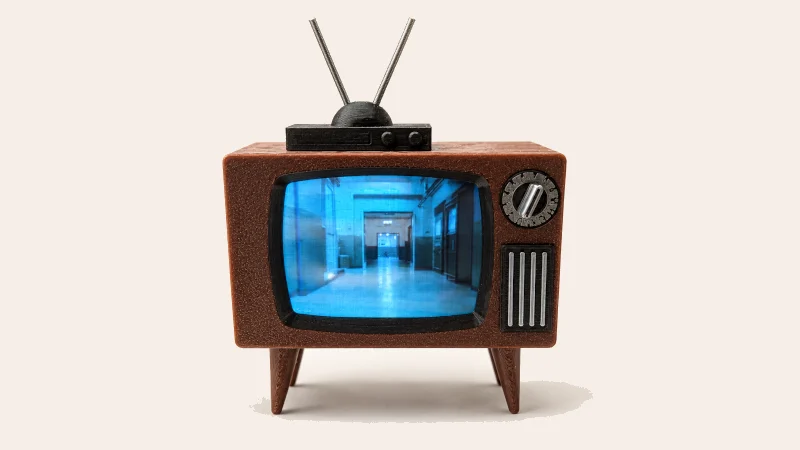
In the rapidly evolving landscape of hobbyist electronics, few components have achieved the cult status of the "Cheap Yellow Display" (CYD). Initially dismissed by some as a generic, low-cost commodity found on platforms like AliExpress, this all-in-one ESP32-based development board has transcended its origins to become a cornerstone of the maker community. Today, the CYD is finding its way into the most nostalgic of applications: the miniaturized television set.
Thanks to the recent efforts of developer [Nickm324], the CYD has been repurposed into a functional, portable mini-TV, demonstrating that even modest hardware can bridge the gap between retro aesthetics and modern digital convenience.
Main Facts: The Intersection of Nostalgia and Microcontrollers
The project, documented extensively on GitHub under the moniker ESP32-CYD-MiniTV, utilizes the standard ESP32-based CYD hardware—a board notable for its integrated color touchscreen, SD card slot, and relative ease of use. By leveraging the existing hardware ecosystem, [Nickm324] has created a device that functions as a multi-channel media player, effectively turning the small display into a desktop-sized television station.
Key Specifications of the Project:
- Core Hardware: ESP32-based Cheap Yellow Display (CYD).
- Interface: A minimalist, single-button control scheme utilizing the onboard BOOT button.
- Functionality: Media playback via SD card.
- Compatibility: Optimized for synchronized .mjpeg video and audio files.
- Design Philosophy: Minimalist wiring, high accessibility, and a focus on modular "channel" switching.
Unlike larger, more complex single-board computers like the Raspberry Pi, the CYD does not possess the processing overhead to stream high-definition video from the internet. Instead, it relies on locally stored, pre-processed files. This limitation, while seemingly restrictive, is precisely what makes the project elegant; it mimics the constraints of analog television broadcasting, where the viewer is limited to the content provided on specific "channels."
Chronology: A History of Iterative Development
The "tiny TV" movement is not a singular invention but rather a cumulative effort of the open-source community. The history of this trend follows a clear trajectory of optimization, where each developer builds upon the source code and architectural lessons of their predecessors.
The Foundations (2020–2023)
The rise of the ESP32 as a low-cost, feature-rich microcontroller enabled a new wave of "guerilla" electronics. Early experiments involved using basic SPI displays to render simple animations. However, it was not until the mass-market availability of the Cheap Yellow Display—which bundled the screen, touch controller, and SD card reader into a single $10–$15 package—that the barrier to entry for video playback projects plummeted.
The DynaMight Precedent
Before [Nickm324] refined the concept, developers such as [DynaMight1124] laid the groundwork with the ESP32-MiniTV-Player. This project proved that the ESP32 could handle the frame-buffering required to play video without stuttering, provided the content was encoded specifically for the device’s resolution and processing speed.
The Nickm324 Evolution (Present Day)
The latest iteration by [Nickm324] introduces a refined software layer that focuses on the user interface. By mapping the BOOT button to a channel-switching logic, the device feels more like a piece of consumer electronics and less like a circuit board. This shift from "development project" to "functional gadget" marks the current peak of the CYD television trend.
Supporting Data: Understanding the ESP32’s Constraints
To understand why the CYD is both perfect and limited for this application, one must look at the technical specifications of the ESP32 chip.
Processing Power vs. Resolution
The ESP32 is a dual-core microcontroller, not a full-fledged CPU. It is designed for Wi-Fi and Bluetooth connectivity, not video decoding. When tasked with rendering video, the chip must perform "heavy lifting" to decode .mjpeg files. Because .mjpeg is essentially a sequence of compressed JPEG images, it is computationally lighter than modern codecs like H.264 or HEVC, making it the ideal candidate for the CYD’s hardware constraints.
The Synchronization Challenge
Audio-video synchronization (AV sync) is notoriously difficult on low-power microcontrollers. If the audio buffer or the frame buffer falls behind, the "TV" experience breaks. [Nickm324]’s implementation manages this by keeping the file structures lean. Data is pulled from the SD card via the SPI bus, which is the primary bottleneck of the system. By keeping the resolution low and the bitrates optimized, the system maintains a consistent frame rate that creates the illusion of smooth motion.
Official Responses and Community Impact
While there is no "official" manufacturer response—as the CYD is a generic, unbranded hardware platform produced by various vendors—the response from the maker community has been overwhelmingly positive.
The Open-Source Ethos
The project repository has become a hub for collaboration. Other enthusiasts are currently debating the best ways to encode video for the board, sharing tools like FFmpeg scripts to batch-convert full-length movies into "CYD-ready" formats. This community feedback loop is the lifeblood of the project.
The Aesthetics of 3D Printing
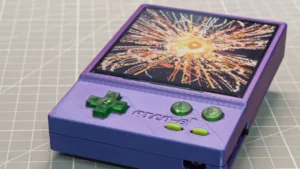
One point of contention in the community has been the "cutesy" 3D-printed case featured in the project documentation. Currently, the specific design files for the housing are not publicly linked in the main repository, sparking a mini-community effort to design and share open-source chassis designs that can be printed on standard FDM printers. This represents a secondary economy of design that often grows around popular hardware projects.
Implications: Why the "Tiny TV" Matters
The rise of the CYD Mini-TV is more than just a novelty; it has significant implications for education, industrial design, and the future of consumer electronics.
1. The Democratization of Hardware
The Cheap Yellow Display has fundamentally changed how beginners approach electronics. By providing a "pre-packaged" solution, the barrier to creating a complex, visual-heavy project has been removed. This allows students and hobbyists to focus on the software logic—the "what" and "how" of the project—rather than the tedious process of wiring individual components.
2. Retro-Futurism and Media Consumption
There is a profound psychological element to the "Tiny TV" trend. In an era of infinite, high-definition streaming and massive 4K displays, there is a clear appetite for restricted, physical, and localized media. By limiting the user to a handful of channels on a 2-inch screen, these devices force a different kind of engagement. It is a reaction against the "infinite scroll" of modern media, favoring a curated, intentional viewing experience.
3. Industrial Applications
Beyond the novelty, the underlying architecture has non-novelty applications. Similar setups are already being used in:
- Digital Signage: Small, low-power displays for retail pricing or information.
- Diagnostics: Portable monitors for field technicians to view status codes or sensor data on-the-go.
- HMI (Human-Machine Interface): Replacing physical buttons and dials on industrial equipment with simple, touch-sensitive UI modules.
4. The Environmental Impact
By repurposing low-cost, readily available hardware, this project avoids the waste associated with high-end, proprietary electronics. The longevity of the ESP32 means that these devices can be repurposed repeatedly. When a user tires of their "mini-TV," the hardware can be wiped and re-flashed to serve as a smart thermostat, a Wi-Fi analyzer, or a home automation controller.
Future Outlook
The trajectory of the ESP32-CYD-MiniTV suggests that we are entering a phase of refinement. As more developers contribute to the GitHub repository, we can expect to see:
- Improved Codecs: Experiments with more efficient compression to allow for longer-form video.
- Network Integration: While the current project focuses on SD card playback, future iterations may utilize the ESP32’s built-in Wi-Fi to stream low-bandwidth "internet radio" style video channels.
- Modular Hardware Kits: It is highly probable that boutique electronics retailers will soon offer "Mini-TV" kits including the CYD, a pre-printed 3D case, and a battery pack, effectively turning a niche hobby project into a ready-to-assemble consumer product.
Conclusion
The Cheap Yellow Display has proven that the spirit of invention is not dependent on raw power or expensive silicon. By stripping away the bloat of modern computing, [Nickm324] and the broader maker community have reclaimed the television as a physical, tactile object. Whether viewed as a charming piece of desk art or a functional proof-of-concept for embedded UI design, the CYD Mini-TV serves as a reminder that the most exciting innovations often emerge from the cheapest, most unassuming places.
As the project continues to evolve, it invites us all to consider what we can do with the hardware sitting in our own drawers. The "Cheap Yellow Display" is not just a screen; it is a canvas for the next generation of digital tinkerers, proving that with enough ingenuity, even the smallest display can tell a very big story.