The Return of the Suitcase Commuter: Reconstructing Mazda’s Lost Automotive Icon
For the modern traveler, the arrival gate is often the start of a new ordeal: the long, winding trek to the rental car center, the endless queues, and the frustration of waiting for a shuttle bus. In 1991, Mazda engineers proposed an audacious solution to this "last-mile" problem—a functional go-kart hidden entirely within a standard Samsonite suitcase. While the original project faded into history, a recent mechanical recreation has brought this whimsical piece of 90s Japanese innovation back into the public consciousness, proving that some ideas are simply too clever to stay buried.
Main Facts: The Anatomy of a Suitcase Kart
The "Mazda Suitcase Car" was never intended for mass production, but rather as a testament to the engineering bravado of Japan’s bubble economy era. The concept was simple yet physically demanding: transform a piece of luggage into a rideable, motorized vehicle capable of navigating airport terminals or small paddocks.
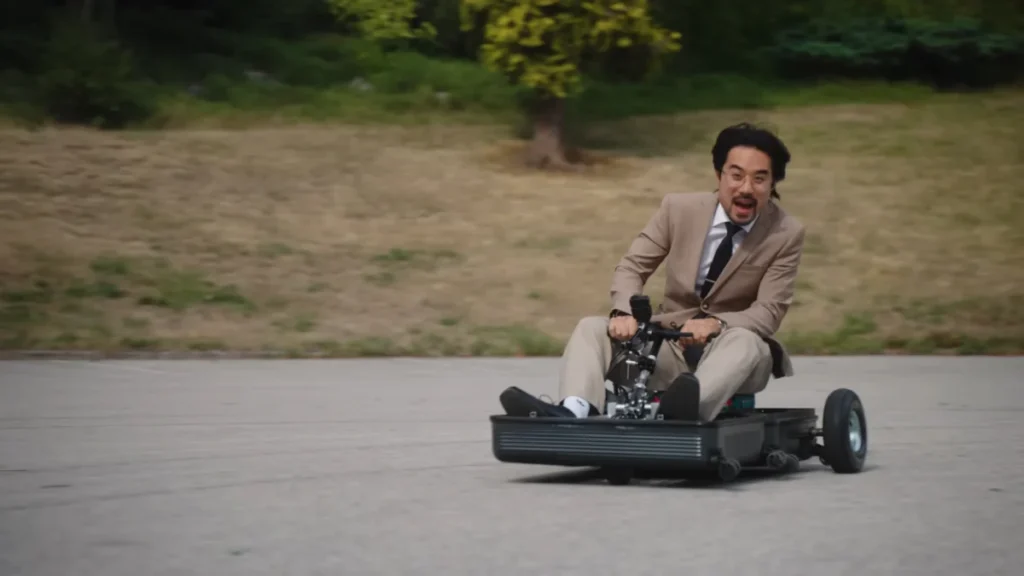
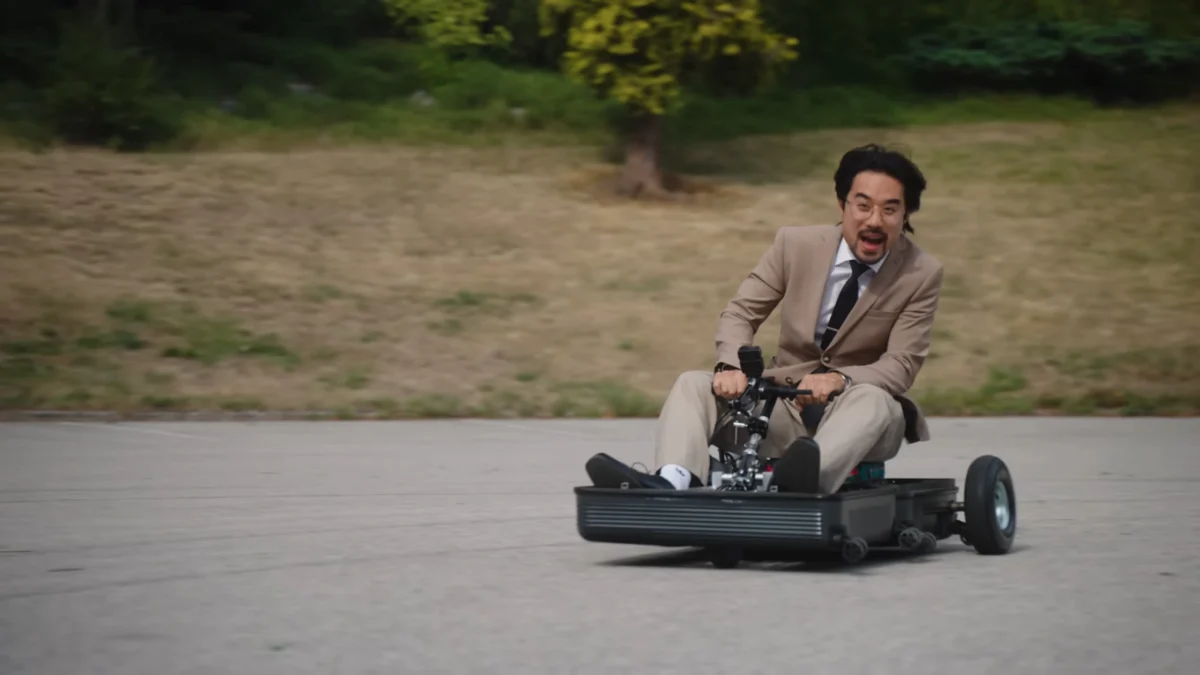
The original prototypes were built around a custom-welded aluminum frame, cleverly folded to fit within the rigid dimensions of a large Samsonite suitcase. When deployed, the luggage halves acted as the chassis, with the wheels and steering assembly emerging from the interior. The modern recreation, spearheaded by the builder known as "Bucket," follows this blueprint with obsessive detail. By utilizing a compact internal combustion engine sourced from a "pocket rocket" mini-bike, the replica achieves a power-to-weight ratio that arguably exceeds the 1991 original.
The vehicle’s performance metrics are modest by automotive standards but impressive for a piece of luggage. The replica clocked a top speed of 33 km/h (approximately 20 mph). While the builder noted that the handling characteristics at this speed were "frightening," it demonstrated that the core concept—a portable, motorized transit solution—is entirely viable. Weighing in at 56.8 lbs, the machine sits just slightly above the standard airline checked-baggage weight limit of 50 lbs, suggesting that with minor material refinements, a "flyable" go-kart is well within the realm of possibility.
Chronology: From Bubble Era Whimsy to Modern Replication
1991: The Zenith of Mazda Creativity
In the early 1990s, Mazda was riding a wave of immense creative confidence. The brand was pushing boundaries with rotary engines and avant-garde designs. As an internal engineering challenge, a group of Mazda employees took three Samsonite suitcases and converted them into functional go-karts. The vehicles were showcased at trade shows and on Japanese television, becoming an instant cult sensation.
The Post-Show Decline
Following their brief moment in the spotlight, the practical utility of the suitcase cars was deemed insufficient for consumer markets. Of the three original prototypes, two were destroyed during testing or post-production decommissioning. The third was sequestered into a private collection, effectively vanishing from the public eye and leaving subsequent generations of automotive enthusiasts to wonder if the rumors of its existence were exaggerated.
2024-2025: The Rise of the Replica
In recent months, a resurgence of interest in 90s-era "micro-mobility" has spurred hobbyists to reverse-engineer the Mazda concept. Through archival research and direct communication with the current owner of the final surviving 1991 prototype, "Bucket" was able to study the internal geometry and mechanical linkages of the original design. The resulting replica serves as a functional tribute, proving that while the technology of the 90s was impressive, modern materials allow for even greater performance.
Supporting Data: Engineering Specifications and Performance
To understand the feasibility of a suitcase-based vehicle, one must analyze the constraints of the form factor. The original Mazda design utilized a 33.6cc engine, a modest powerplant that nonetheless moved the lightweight frame with surprising agility.
Performance Comparison Table
| Metric | 1991 Mazda Prototype | 2025 Replica (Bucket) |
|---|---|---|
| Engine Displacement | 33.6cc | ~40cc (Pocket Rocket) |
| Top Speed | ~15 mph | 20 mph |
| Chassis Material | Aluminum | Welded Aluminum |
| Weight | ~70 lbs | 56.8 lbs |
| Suitcase Type | Samsonite | Samsonite |
The primary challenge in the replica build was balancing the structural integrity of the suitcase shell against the weight of the drivetrain. The builder utilized high-grade aluminum for the chassis to maintain rigidity without adding excessive mass. The 56.8 lb total weight is a significant achievement, as it brings the vehicle within reach of the 50 lb threshold required to avoid significant "heavy item" surcharges at most major airports.
Official Responses and Industry Reception
Mazda has never officially sought to commercialize the suitcase car, largely due to the obvious liability concerns and the shifting focus of the automotive industry toward sustainable, electric mobility. However, when the original prototypes surfaced in vintage car media, the company’s heritage departments expressed pride in the project as a representation of the "Mazda Spirit"—the company’s internal philosophy of challenging the status quo.
Industry experts have noted that while the suitcase car is an impractical solution for real-world airport travel, it serves a critical role in the "maker movement." It highlights the intersection of industrial design and mechanical engineering, encouraging young engineers to view everyday objects as canvases for innovation.
"The beauty of the Mazda Suitcase Car," says automotive historian Marcus Thorne, "isn’t in its ability to solve airport congestion. It’s in the audacity of the engineering. It challenges the definition of what a car is. When we see these modern replicas, we aren’t just seeing a toy; we are seeing a continuation of a lineage of creative freedom that the auto industry has largely suppressed in favor of mass-market safety and regulatory compliance."
Implications: The Future of Micro-Mobility
The successful replication of the Mazda suitcase car forces a conversation about the future of individual transport. While the original was powered by a gasoline engine, the current trend toward electrification could revolutionize this concept.
The Electric Potential
If one were to replace the pocket-rocket gasoline engine with modern high-density lithium-ion batteries and a brushless hub motor, the suitcase car could become significantly lighter and quieter. An electric version would eliminate the fumes associated with the current replica, potentially allowing it to be used in indoor environments—provided, of course, that airport security allows a motorized vehicle through the terminal.
Regulatory Hurdles
The primary barrier to such devices is not technical, but regulatory. Airports and municipal authorities have strict rules regarding motorized vehicles in pedestrian zones. Even if a suitcase car could fit in an overhead bin, the legal ramifications of riding a 50 lb piece of aluminum at 20 mph through a crowded terminal are substantial. As personal electric vehicles (PEVs) become more common—such as e-scooters and hoverboards—the "suitcase car" may find itself in a gray area of transit law.
Beyond the Suitcase
The project has inspired a wave of "suitcase-based" engineering. Recent internet-based projects have explored suitcase-sized hovercraft and 3D-printed go-karts. These developments suggest a growing subculture of designers who prioritize "portability above all." Whether these devices remain niche hobbies or evolve into legitimate last-mile transit solutions remains to be seen.
What is certain is that the spirit of the 1991 Mazda engineers remains alive. In a world of increasingly homogenous vehicle design, the suitcase car serves as a reminder that the most compelling innovations often come from asking the most ridiculous questions. The next time you find yourself dragging a heavy suitcase through a terminal, you might find yourself wondering: "If I could ride this, would I?" For the engineers behind these replicas, the answer is not just a dream—it is a finished project, ready to hit the pavement.