Young Makers Dive Deep: How a Raspberry Pi Underwater Explorer is Revolutionizing Citizen Science
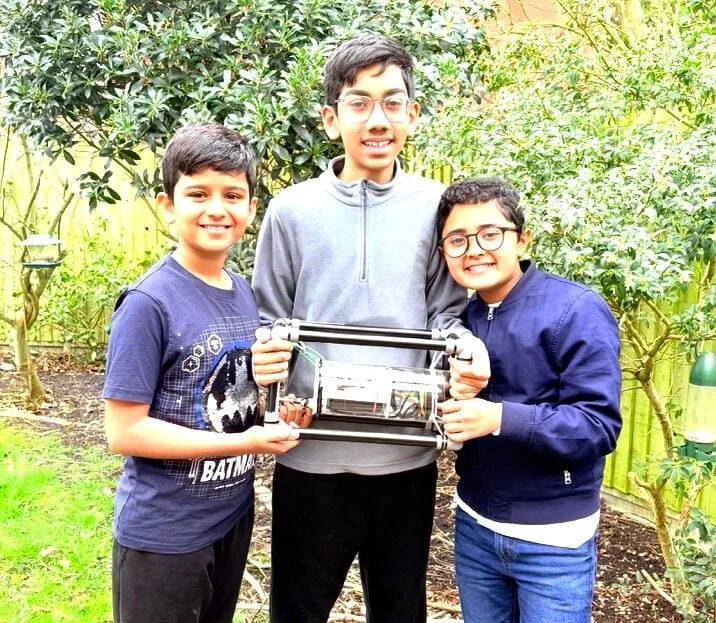
CAMBRIDGESHIRE, UK — When the members of the Unboxed STEM Club set out to explore the hidden ecosystems beneath local waterways, they didn’t ask for a commercial, high-end action camera. Instead, three young makers aged 10 to 13—Pinak, Vihaan, and Yuvan—joined forces with mentors Kshitij Varma and Dr. Amol Patil to engineer their own solution.
The result is Sensea, a remarkably sophisticated, low-cost DIY underwater exploration rig built around a Raspberry Pi 3 Model B+. Featured prominently in issue 170 of the Raspberry Pi Official Magazine, the project proves that meaningful environmental science is no longer restricted by steep budgets or industrial-grade equipment. Costing roughly £130 to build, Sensea successfully investigates water quality, records local aquatic life, and demonstrates the profound potential of youth-led citizen science.
Main Facts
At its core, Sensea is an airtight, custom-engineered underwater camera and data-logging system designed to peer into local ponds, rivers, and lakes.
- The Brains: Powered by a Raspberry Pi 3 Model B+ paired with a Raspberry Pi Camera Module 3.
- The Sensors: Features a waterproof DS18B20 temperature probe and a PCF8523 real-time clock module to guarantee accurate, offline time-stamping.
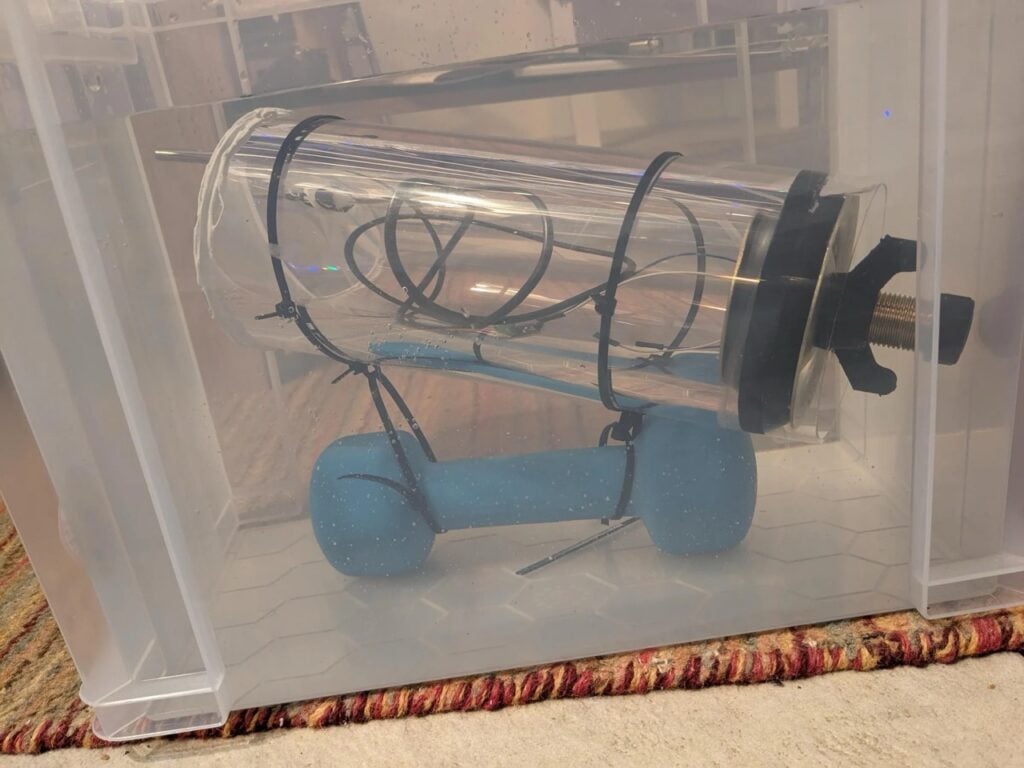
- The Housing: Constructed from a transparent acrylic tube sealed permanently at one end with a marine-epoxy-bonded disc, and secured at the other with a plumbing-grade expanding drain plug.
- The Ballast: Rather than relying on expensive motor-driven propellers, Sensea utilizes a 2kg bone-shaped dumbbell to achieve controlled descents to river and lake beds.
- The Cost: Totaling approximately £130, the project drastically undercuts commercial alternatives while offering high customization and low power consumption via a standard 5V USB power pack.
Chronology of the Build: From Concept to Deployment
The journey of Sensea began with a simple yet ambitious premise: while society frequently debates the health of rivers and oceans, everyday citizens rarely have accessible tools to measure what actually transpires beneath the surface.
Phase 1: Ideation and Design
Rejecting standard consumer solutions like commercial GoPros, the Unboxed STEM Club embraced a hands-on prototyping philosophy. Meeting on weekends, the boys approached engineering problems as connected puzzles with multiple valid paths. They selected the Raspberry Pi ecosystem for its low power draw, robust Python programming capabilities, and the massive, helpful community documentation available online.

Phase 2: Waterproof Engineering
One of the most formidable hurdles was ensuring total, long-term dry conditions for the internal electronics while maintaining sensor exposure and camera visibility.
- The team engineered a transparent acrylic pressure chamber.
- One end cap was permanently fixed using marine epoxy, with a waterproof cable gland drilled through to accommodate the DS18B20 temperature probe.
- The opposite end utilized an expanding plumber’s drain plug for easy access to the rechargeable batteries and internal components.
- Prior to any live deployment, the team instituted a rigorous leak-testing protocol: submerging the entire sealed tube inside a bucket of water for five minutes to check for rising air bubbles.
Phase 3: Buoyancy and Optics
Achieving stable underwater footage required careful weight distribution. After trying various options, a 2kg dumbbell was secured to the exterior cage to act as ballast, smoothly sinking the rig to the bed.
Optically, the team deliberately bypassed autofocus capabilities. Recognizing that suspended river particles frequently trick automated lenses, they configured the Raspberry Pi Camera Module 3 to use a fixed manual focus, ensuring remarkably sharp and stable 10-second video clips.
Phase 4: Field Testing and Recognition
With the sensea_logger.py Python script automating video triggers and temperature logs, the team deployed Sensea into local environments, including the River Cam and Todd’s Pit lake. The resulting data clearly illustrated ecological differences between the two water bodies. Building on this success, the project recently won top honors in Instructables’ Sensors Contest.
Supporting Data and Technical Specifications
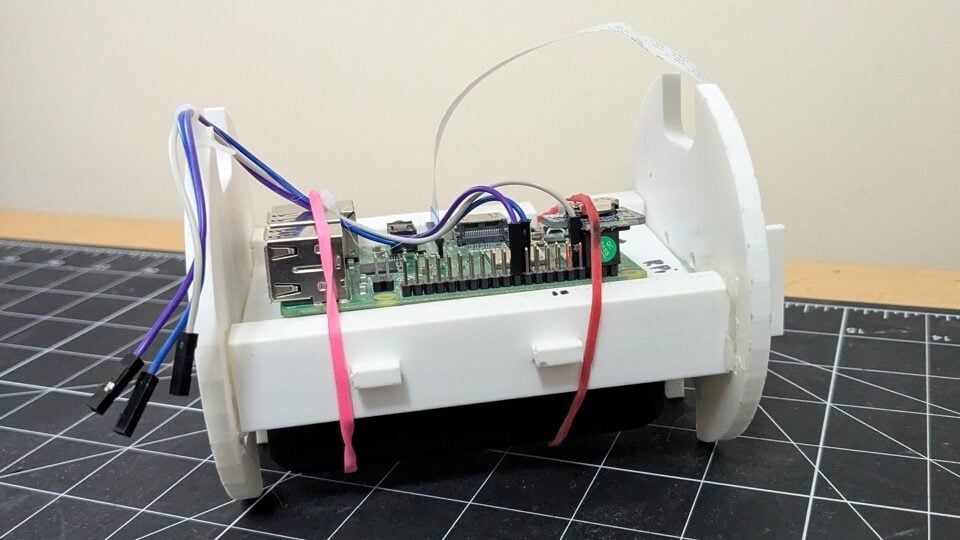
To understand the accessibility and efficiency of the Sensea rig, examining its structural and computational metrics highlights why it stands out in the maker community:
| Component Category | Hardware / Software Selection | Purpose |
|---|---|---|
| Microcomputer | Raspberry Pi 3 Model B+ | Executes Python scripts, manages storage, and controls modules. |
| Imaging | Raspberry Pi Camera Module 3 | Captures high-definition 10-second video feeds in fixed manual focus. |
| Thermal Tracking | DS18B20 Waterproof Probe | Logs precise, time-stamped water temperature measurements. |
| Timekeeping | PCF8523 Real-Time Clock | Ensures accurate chronological data logging without an internet connection. |
| Power Supply | Standard 5V USB Power Pack | Delivers prolonged energy efficiency for field deployments. |
| Chassis & Ballast | Acrylic tube + 2kg Dumbbell | Provides structural pressure integrity and reliable vertical sinking. |
Official Responses and Perspectives
The success of Sensea highlights a broader educational and environmental shift. Mentors Kshitij Varma and Dr. Amol Patil note that the young makers’ defining characteristic is an insatiable appetite for inquiry. Rather than shrinking from failure, Pinak, Vihaan, and Yuvan treat obstacles as iterations toward a working solution.
"We often talk about protecting oceans and rivers, but rarely have the tools to measure what’s happening below the surface," shared the club representatives. By designing an explorer that could be largely constructed by children with minimal adult supervision, the team proved that high-tech environmental monitoring does not require an institutional science budget.
Furthermore, editors at the Raspberry Pi Official Magazine highlighted Sensea in issue 170 to inspire global hobbyists, emphasizing that community-driven citizen science projects can bridge the gap between classroom coding and real-world ecological stewardship.
Implications for the Future of Citizen Science
The ripple effects of the Sensea project extend far beyond local ponds in Cambridgeshire. By demonstrating how affordable single-board computers can be transformed into rugged aquatic probes, the Unboxed STEM Club has mapped out a versatile blueprint for makers worldwide.
1. Democratizing Environmental Monitoring
Traditional water quality testing equipment is often prohibitively expensive, keeping community groups and amateur naturalists locked out of local data collection. At a price point of £130, Sensea lowers the barrier to entry, empowering schools, community groups, and independent hobbyists to survey local watersheds independently.
2. Scalable Modularity
Because the system relies on the flexible Raspberry Pi architecture, its use cases are virtually limitless. The team has already outlined several prospective upgrades:
- pH and Chemical Sensors: Integrating live acidity monitoring to track agricultural or industrial runoff.
- Depth and Pressure Profiling: Expanding telemetry capabilities to map deep-water topography.
- AI Species Identification: Implementing machine learning models locally on the Raspberry Pi to automatically tag fish, macroinvertebrates, and invasive plant species via video feeds.
- Surface and Atmospheric Adaptations: Transitioning the housing configuration to a floating buoy setup to monitor surface water, air quality, or greenhouse environments.
Ultimately, Sensea is more than just a camera in a plastic tube. It is a testament to the power of curiosity-driven education. As young makers like Pinak, Vihaan, and Yuvan continue to prototype solutions for our planet’s waterways, projects like Sensea prove that the next generation of environmental scientists is already coding its own path forward.
For those interested in building their own underwater explorer, full documentation of the Sensea project can be found on Instructables, while detailed breakdowns are available in issue 170 of the Raspberry Pi Official Magazine.