Privacy Overhaul: How to Stop Meta from Training AI on Your Smart Glasses’ Visual Data
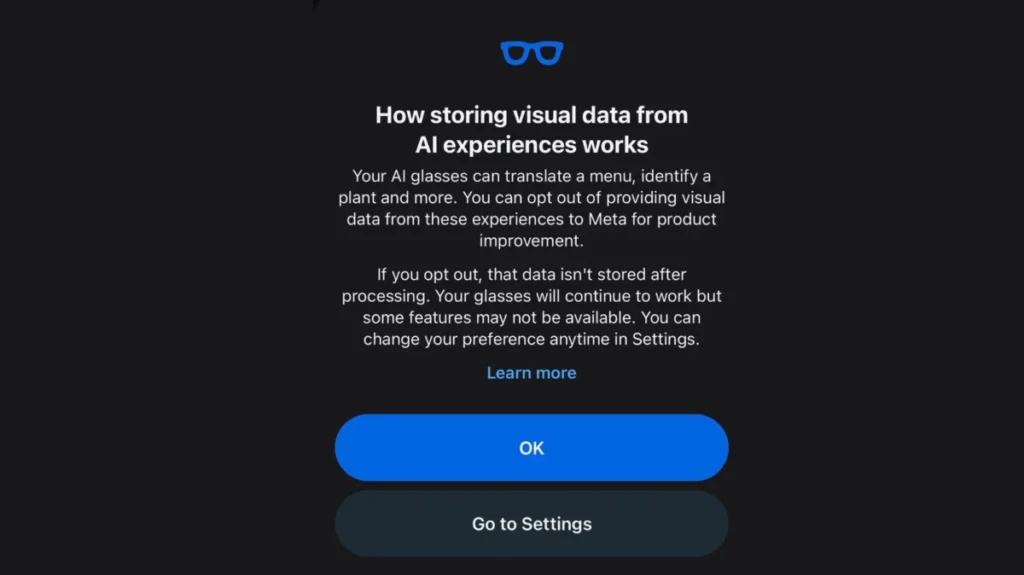
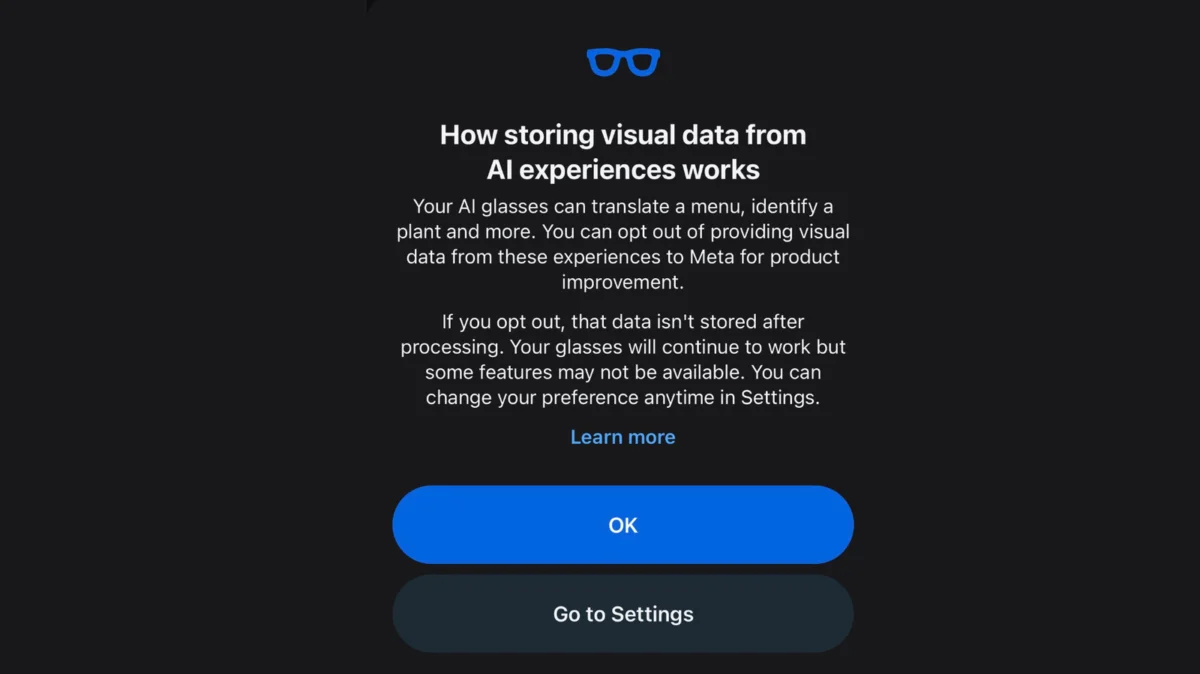
In an era where the boundary between personal privacy and the insatiable hunger for artificial intelligence training data is increasingly blurred, Meta has taken a significant, albeit controversial, step toward transparency. The company has officially begun rolling out a new privacy setting for its smart glasses—a feature that finally allows users to opt out of having their visual data utilized for the training of Meta’s underlying AI models.
This move follows mounting scrutiny regarding how Silicon Valley giants harvest information from the real world to improve their machine-learning systems. For owners of Meta’s smart glasses, the update provides a newfound sense of agency, but it also highlights the hidden trade-offs inherent in modern wearable technology.
The Core Shift: What’s Changing for Meta Users?
For months, users of Meta’s smart glasses—developed in partnership with Ray-Ban—have been part of an invisible data pipeline. Every time a user asked their glasses to identify a plant, translate a foreign menu, or describe a landmark, the visual information captured by the frames was not merely processed for an immediate answer; it was often stored and subsequently leveraged to refine Meta’s massive AI models.
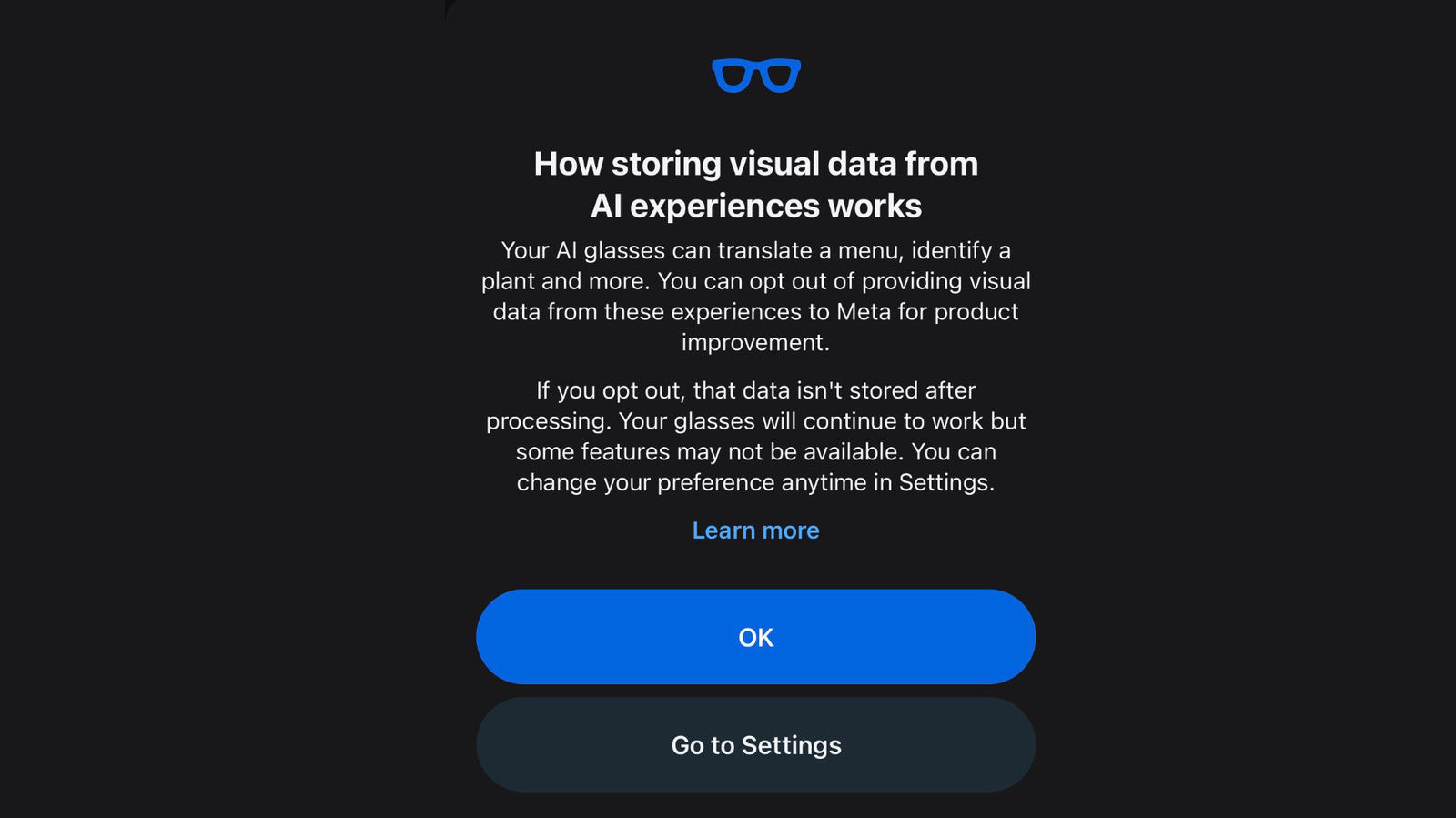
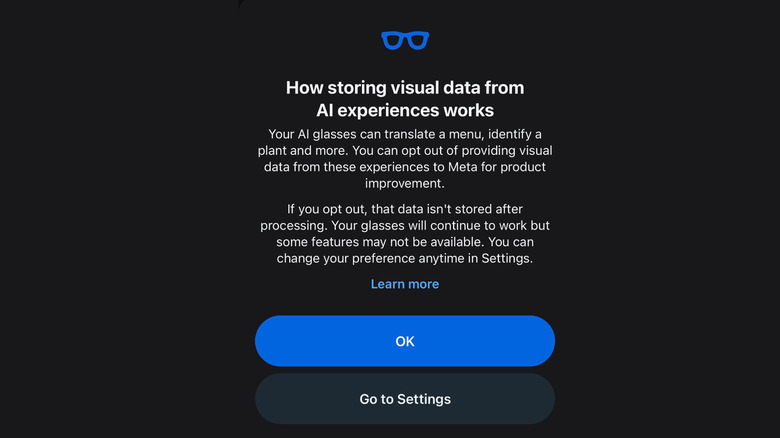
The newly introduced setting, now accessible within the Meta AI mobile application, creates a "circuit breaker" in this pipeline. When activated, the setting ensures that any visual data captured during AI-powered interactions is purged from Meta’s servers immediately after the query is processed.
How to Opt Out
Meta is currently pushing notifications to users via the Meta AI app, but the process can be handled manually for those who want to take immediate control. To disable the training pipeline:
- Connect and Wake: Ensure your glasses are removed from their charging case and actively paired with your smartphone.
- Navigate: Open the Meta AI app and locate the settings menu specific to your hardware.
- Select: Tap on the "Meta AI" tab.
- Toggle: Scroll down to the section labeled "Store visual data from AI experiences" and switch it to the "off" position.
Note: If you own multiple pairs of smart glasses, you must repeat this process for each individual device, as the setting is tethered to the hardware’s internal configuration rather than a global account-wide toggle.
A Chronology of the Privacy Debate
The evolution of Meta’s data policies regarding its wearable hardware has been marked by a transition from broad, implicit consent to granular, explicit control.
- Initial Launch: When the first generation of Meta’s AI-integrated smart glasses debuted, the focus was almost entirely on the novelty of the experience. The technical fine print regarding how the "Multi-modal AI" (which processes both text and visual inputs) functioned remained largely in the background of consumer discourse.
- The Regulatory Spotlight: As Meta ramped up its AI development in 2023 and 2024, privacy advocates began raising alarms. The primary concern was the lack of clarity regarding what happened to the "visual context" provided to the AI.
- The Disclosure: Under pressure, Meta updated its Help Center documentation to be more explicit. The company acknowledged that data captured by the glasses—separate from the photos and videos taken with the dedicated camera button—was being used for both automated and manual (human-reviewed) training.
- The Opt-Out Rollout: Recognizing the growing backlash, Meta initiated the current rollout, providing a clear interface for users to revoke consent for their data being used in product improvement loops.
The Human Element: When Your Life Becomes Training Data
Perhaps the most significant revelation in the company’s recent policy update is the confirmation of "manual review." Meta’s documentation explicitly states that the training of its AI models involves both automated processes and human intervention.
This means that snippets of your daily life—your grocery lists, the street signs you view, or the inside of your home as seen through the lens of the glasses—could potentially be reviewed by Meta contractors or employees tasked with "ground-truthing" the AI. This is a standard practice in the industry, used to improve accuracy and reduce "hallucinations" in vision-language models. However, it raises profound questions about consent. Many users believed they were utilizing a utility tool, not participating in a massive, distributed data-gathering effort for a global tech conglomerate.
Meta has attempted to assuage these fears by drawing a hard line between "AI-processed data" and "User-captured content." According to the company, the images and videos you intentionally snap using the physical capture LED are not part of this training pool. The distinction lies in intent: if you press the button to take a photo, that is your personal property. If you ask the AI to "look" at something, that data is considered "product improvement" material.
Implications for the User Experience
Freedom from data harvesting is not without its costs. Meta has been transparent about the fact that opting out will degrade the functionality of the smart glasses.
The "Visual Reminder" Gap
The most notable feature affected by the opt-out is the "visual reminder" capability. This feature allows a user to look at an object—such as a specific brand of coffee at a grocery store—and command the AI to "remind me to buy this next Tuesday."
Because the AI needs to retain context about that object to deliver the reminder at a later time, disabling the storage of visual data effectively kills this feature. Meta warns that other, potentially unforeseen, AI-driven experiences may also be limited if the system is denied the ability to store and review visual inputs. This creates a classic tech dilemma: do you value the convenience of an all-knowing digital assistant, or the sanctity of your private visual space?
Official Responses and Corporate Strategy
In its official Help Center communications, Meta frames this change as a commitment to user choice. A spokesperson for the company noted, "We believe that by providing users with clear, accessible settings, we can continue to innovate in the AI space while ensuring that our community feels secure and in control of their information."
However, industry analysts suggest that this move is also a strategic defense against potential European and North American data privacy litigation. By allowing users to opt out, Meta creates a legal "safe harbor." It allows them to argue that they are not performing unauthorized data collection, as the user has been provided with an explicit mechanism to decline.
Furthermore, this update reflects the broader industry shift toward "Privacy by Design." As AI models become more hungry for real-world data, the companies that provide the most transparent interfaces for controlling that data will likely gain the most long-term trust from the consumer base.
The Future of Wearable AI Privacy
The saga of Meta’s smart glasses is a microcosm of the larger struggle for privacy in the age of ambient computing. As we move toward a future where AR glasses and other wearable sensors are as common as smartphones, the definition of "private space" is being rewritten.
What Lies Ahead?
- Standardization of Opt-Outs: Expect regulators to push for "Opt-Out by Default" across all AI-enabled hardware.
- Local Processing vs. Cloud: The industry is racing to move more AI processing to the device itself (Edge AI). If the glasses can process visual data locally without sending it to the cloud, the need for these complex opt-out menus may disappear entirely.
- Consumer Sophistication: Users are becoming more tech-literate. The expectation that a piece of hardware "just works" is being replaced by the expectation that hardware "explains itself."
Final Considerations
If you are an owner of Meta smart glasses, the choice is now yours. If you prioritize the cutting-edge capabilities of the AI—the reminders, the real-time translations, and the context-aware search—you may choose to keep the data collection enabled, trusting in Meta’s anonymization protocols.
However, if you are uncomfortable with the idea of your surroundings being stored or reviewed by human trainers to sharpen an algorithm, the path to opting out is now clear. In the rapidly evolving landscape of wearable AI, your privacy settings are just as important as the hardware specs themselves. By taking the time to review these settings, you are not just managing an app—you are defining the boundaries of your own digital footprint in the physical world.