Resurrection of a High-End Asset: Diagnosing and Repairing PoE++ Failure in Ubiquiti Switching Infrastructure
In the world of enterprise networking, the Power over Ethernet (PoE) functionality is no longer a luxury—it is the backbone of modern connectivity. From high-definition security cameras and VoIP handsets to ceiling-mounted Wi-Fi 7 access points, the ability to deliver both data and high-wattage electricity over a single Cat6 cable is essential. When a flagship device, such as the Ubiquiti USW-Pro-Max-24-PoE, loses its power-delivery capabilities, the impact on a network deployment is immediate and costly.
Recently, the technical channel The Parallel Port conducted an in-depth forensic investigation into a common, yet vexing, failure mode: the total loss of PoE++ functionality in a 24-port switch that remained otherwise fully operational. This deep dive into the hardware architecture of a $800 enterprise-grade switch provides a masterclass in component-level troubleshooting, demonstrating how an understanding of surge protection philosophy can turn a "bricked" paperweight into a fully functional asset.
Main Facts: The Anatomy of the Failure
The subject of the investigation was a Ubiquiti UniFi Pro Max 24 PoE. On paper, this is a formidable piece of hardware: 24 RJ-45 ports supporting 2.5 Gbps throughput, dual 10 Gbps SFP+ uplink ports, and a robust 400-watt power budget. The switch, featuring a sleek 1.3-inch LCM touchscreen interface, represents a significant investment for any IT department or prosumer enthusiast.
The primary symptom was a complete cessation of PoE output. While the switch booted perfectly—displaying its diagnostic information, port status, and even the augmented reality (AR) QR code—no downstream devices were receiving power. A quick interrogation of the internal BusyBox console revealed a critical error: all ports reported a bad status for the PwrGood telemetry, accompanied by recurring power status request errors. Validation via an external PoE splitter confirmed the diagnosis: the switch was effectively operating as a standard, unpowered Layer 2/3 switch, stripping away its primary value proposition.
Chronology of the Forensic Investigation
Phase I: Initial Triage and Diagnostics
The diagnostic journey began not with a soldering iron, but with software. By accessing the switch’s underlying Linux-based firmware, the team confirmed that the fault was system-wide rather than isolated to a single port. When the switch’s management controller reported that all PoE ports were in a bad state, the engineers knew they were dealing with a primary power rail failure rather than a localized component burn-out on a single channel.
Using a PoE splitter as a test load, they confirmed the physical absence of voltage. The switch was then taken offline for invasive surgery.
Phase II: Physical Inspection and Thermal Mapping
Once the chassis was opened, the team performed a visual inspection of the internal power board—the daughterboard responsible for converting AC line power into the high-current DC required for PoE. Initial multimeter probing indicated a dead short to ground.
To expedite the search for the offending component, the team utilized a high-resolution thermal imaging camera. While the switch was powered, they looked for localized heat signatures that would indicate a "leaky" or shorted semiconductor. The camera identified a clear, anomalous hot spot on the PCB where the PoE power board integrated with the main logic board. This confirmed that the short was not merely a software glitch or a sensor error, but a physical failure of the protection circuitry.
Phase III: The "Crowbar" Discovery
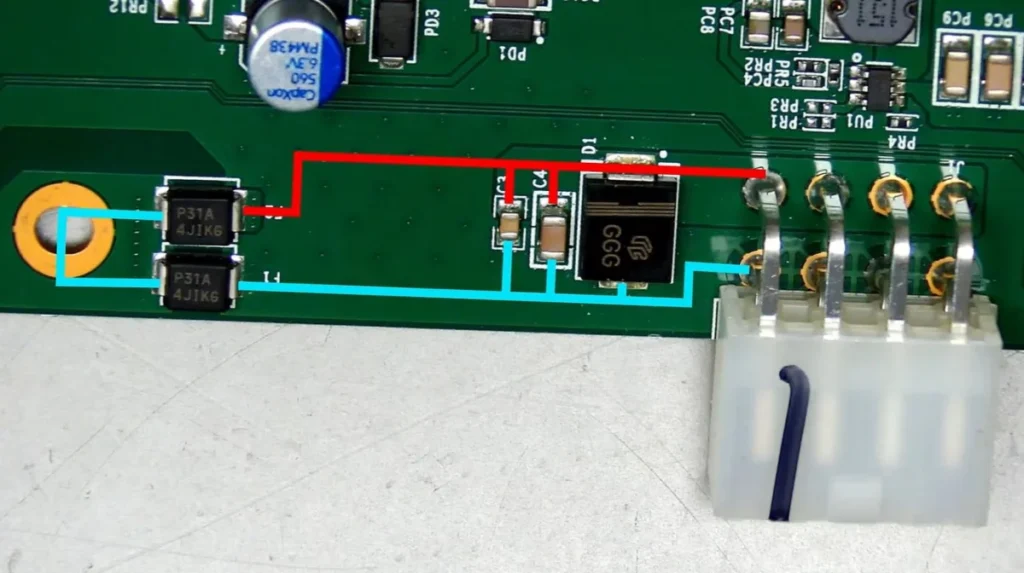
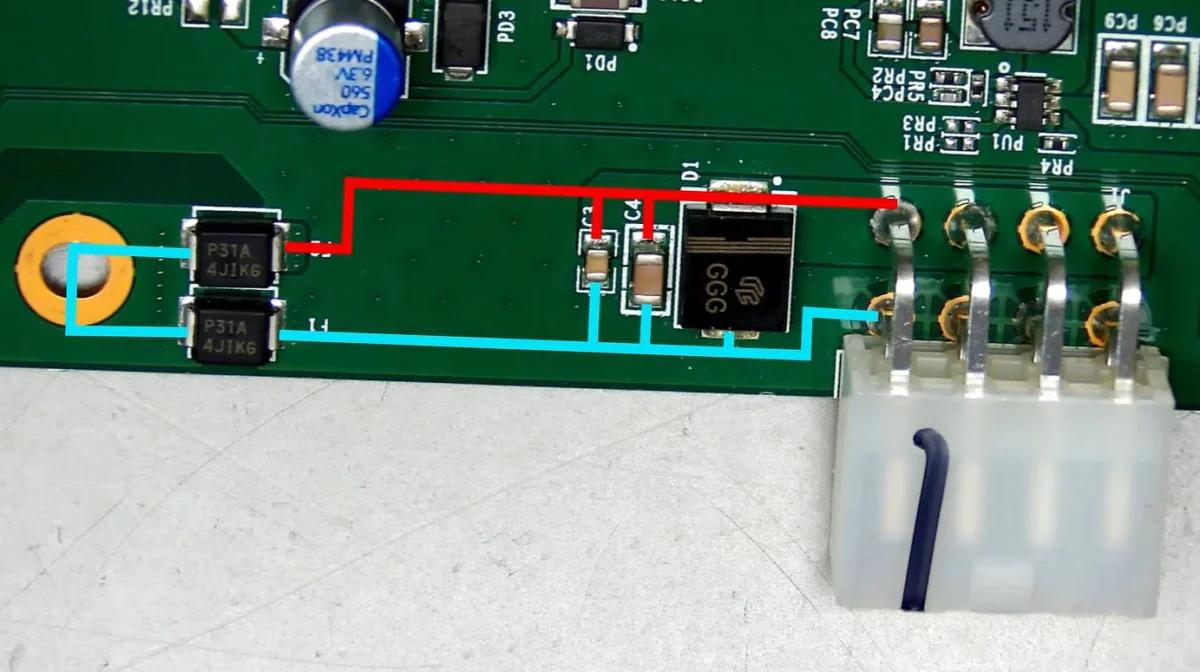
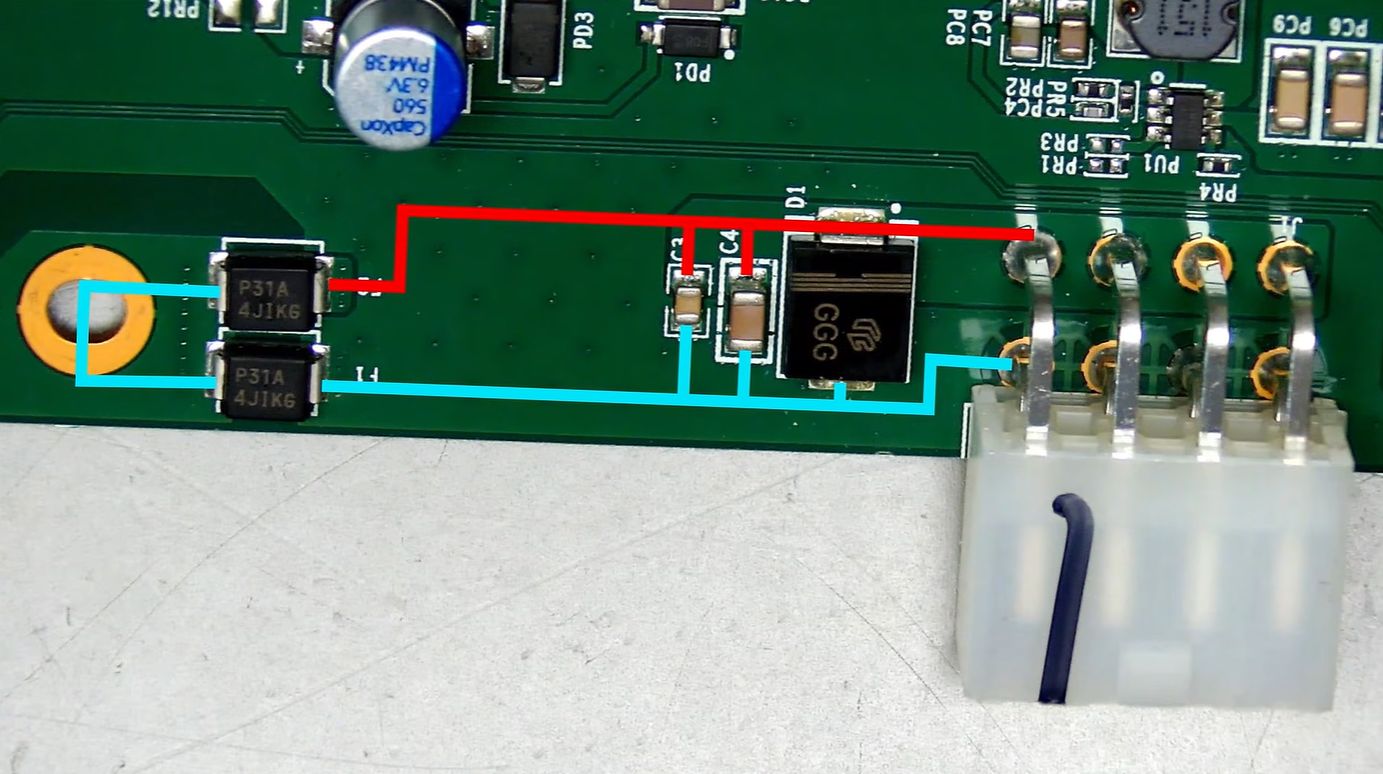
The team turned their attention to the Transient Voltage Suppression (TVS) diodes, which are standard defensive components in high-end networking gear. Interestingly, the TVS diodes were found to be healthy. However, nestled in close proximity were protective thyristors—specifically, "Trisil" devices.
These components act as "crowbar" circuits. In the event of a dangerous voltage spike (a surge), the Trisil is designed to short the line to ground, effectively sacrificing itself to prevent the surge from destroying the delicate logic chips and PoE controllers further downstream. Upon testing, the team discovered that these Trisils were permanently latched in a shorted state. They had done their job during a previous electrical event, shielding the expensive internal circuitry by absorbing the surge, but they had failed to "reset" or had been destroyed by the magnitude of the event.
Phase IV: Remediation
With the faulty Trisils identified, the repair process was straightforward. The damaged devices were desoldered, and new, identical components were sourced and installed. Upon reassembly and a cold boot of the switch, the console reported a good status for the power rails. The PoE splitter, previously dead, was successfully illuminated, and the switch resumed its role as a high-wattage power injector.
Supporting Data: Why "Crowbar" Protection Matters
The Ubiquiti Pro Max 24 uses advanced power management to handle the IEEE 802.3bt (PoE++) standard, which can push significant current across multiple pairs. Protecting such a system requires a two-tiered approach:
- TVS Diodes: These act like shock absorbers, clamping voltage spikes to a safe level.
- Trisil/Crowbar Devices: These are the "circuit breakers" of the silicon world. They are designed for high-energy dissipation.
The fact that these devices failed indicates that the switch had likely been exposed to a significant surge—perhaps through a long cable run connected to an outdoor camera or a poorly grounded power grid. The repair succeeds precisely because the design engineers included these sacrificial components. Without them, the surge would have bypassed the protection and incinerated the PoE controller chip, which would have been a significantly more difficult, if not impossible, repair for a hobbyist.
Official Perspectives and Industry Standards
While Ubiquiti has not issued a specific statement regarding this particular repair, industry standards for PoE equipment (as defined by the IEEE 802.3 working group) mandate that devices must be protected against transients. The repair highlights a common tension in modern electronics design: the trade-off between "field-repairability" and "modular safety."
Professional network installers often debate whether to attempt component-level repairs on enterprise gear. The consensus in the IT industry generally favors board-level replacement (RMA) for mission-critical infrastructure to ensure that the device remains within its certified operating parameters. However, for post-warranty equipment, the techniques demonstrated by The Parallel Port represent a sustainable alternative to electronic waste, provided the technician has the appropriate soldering skills and diagnostic tools.
Implications for Network Administrators
1. The Cost of Maintenance
The success of this repair saves the owner roughly $800 in replacement costs. For a small business, this is a significant ROI. However, it also highlights the vulnerability of high-wattage PoE infrastructure to environmental transients. Administrators should consider deploying external surge protection on all long-distance PoE runs—particularly those heading outdoors—to ensure the switch’s internal "crowbar" circuits aren’t forced to do the heavy lifting.
2. Diagnostic Literacy
The investigation serves as a reminder that the "console" is the administrator’s best friend. Many network faults that appear to be catastrophic are actually well-documented in system logs. Had the switch been in a remote location, the ability to interpret PwrGood telemetry would have been the difference between an immediate onsite repair and a costly, unnecessary full-unit replacement.
3. Sustainability and Repairability
As the "Right to Repair" movement gains momentum, the ability to perform component-level diagnostics on complex networking hardware becomes increasingly vital. The Ubiquiti switch is not merely a black box; it is a collection of circuits that follow fundamental laws of physics. By understanding how protection circuits are designed to fail, technicians can extend the lifespan of high-performance hardware, reducing the carbon footprint associated with the rapid turnover of enterprise networking equipment.
Conclusion
The restoration of the Ubiquiti USW-Pro-Max-24-PoE is a triumph of methodical troubleshooting over the frustration of hardware failure. By utilizing thermal imaging to locate a physical short and recognizing the role of sacrificial Trisil devices, the repair team successfully bypassed the typical "buy a new one" cycle. For the IT professional, this case study serves as a dual lesson: implement robust surge protection on your network edges, and never underestimate the value of a logical, step-by-step diagnostic process when your infrastructure goes dark.