Amazon CloudWatch Omni Redefines Observability with AI-Powered Intelligence and OpenTelemetry Integration
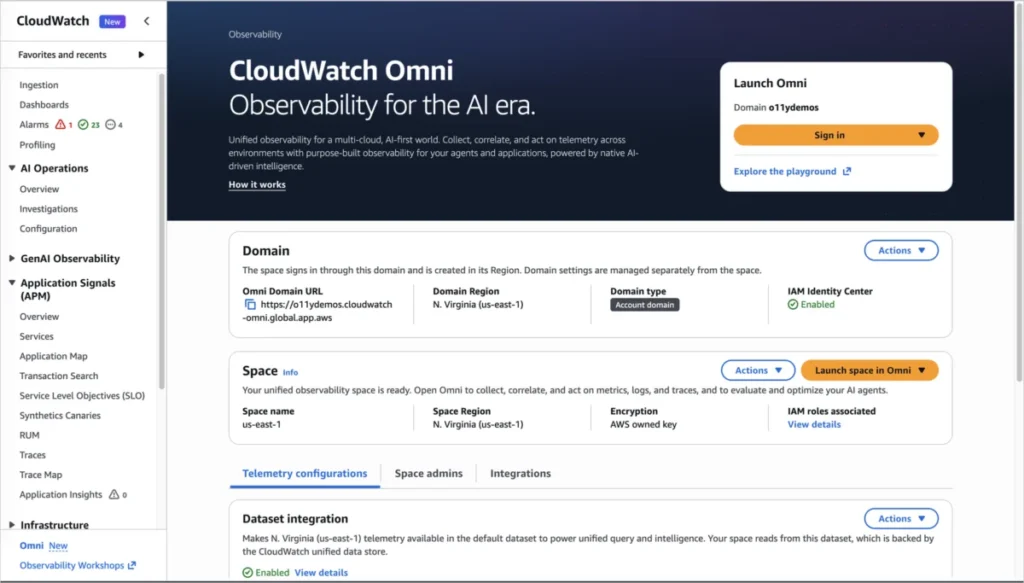
Seattle, WA — In a major evolution for cloud monitoring and DevOps tooling, Amazon Web Services (AWS) has officially announced the launch of Amazon CloudWatch Omni. Designed to address the mounting complexity of modern distributed systems, generative AI integrations, and autonomous software agents, Omni introduces an AI-powered, application-centric observability experience that unifies cross-functional engineering teams.
By shifting the focal point of monitoring away from fragmented infrastructure signals and toward holistic application topology, AWS aims to eliminate the friction, tool-switching, and lost context that have historically bogged down incident response teams. Built natively on OpenTelemetry and integrated with the Amazon DevOps Agent, CloudWatch Omni allows developers, site reliability engineers (SREs), database administrators, and managers to collaborate within a single unified workspace—all without requiring direct access to the AWS Management Console.
Main Facts: What is Amazon CloudWatch Omni?
Amazon CloudWatch Omni is an advanced, AI-driven observability platform tailored for modern cloud applications, microservices, and agentic AI workloads. Key aspects of the platform include:
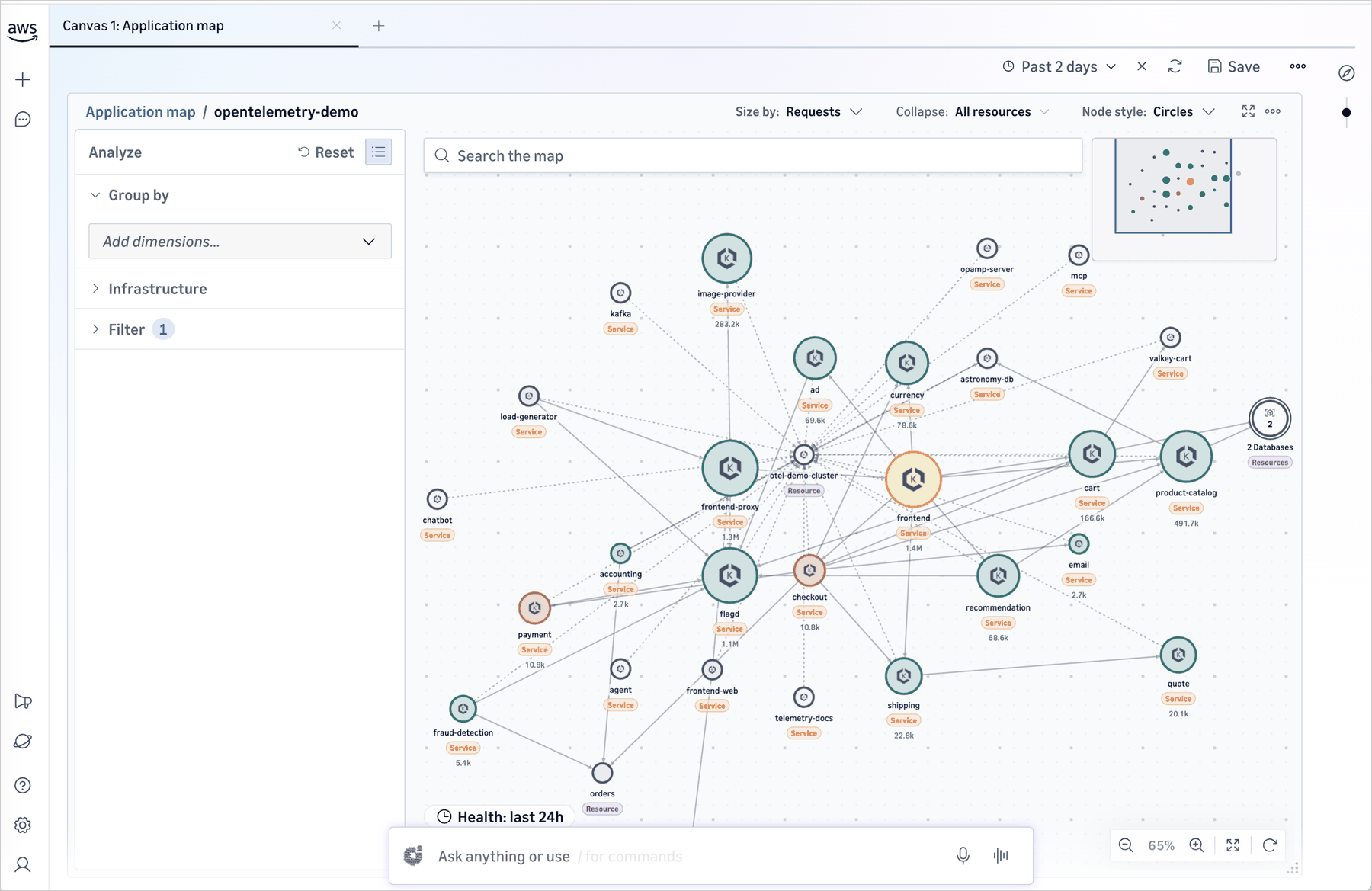
- Application-Centric Architecture: Rather than organizing telemetry by isolated infrastructure components (such as CPU utilization, individual log streams, or specific metrics), Omni structures data around the applications themselves, mapping services and dependencies automatically.
- Built on OpenTelemetry: Omni natively leverages OpenTelemetry standards. Telemetry data already flowing into CloudWatch appears seamlessly without requiring reconfiguration, while external workloads utilize an OpenTelemetry Protocol (OTLP) endpoint.
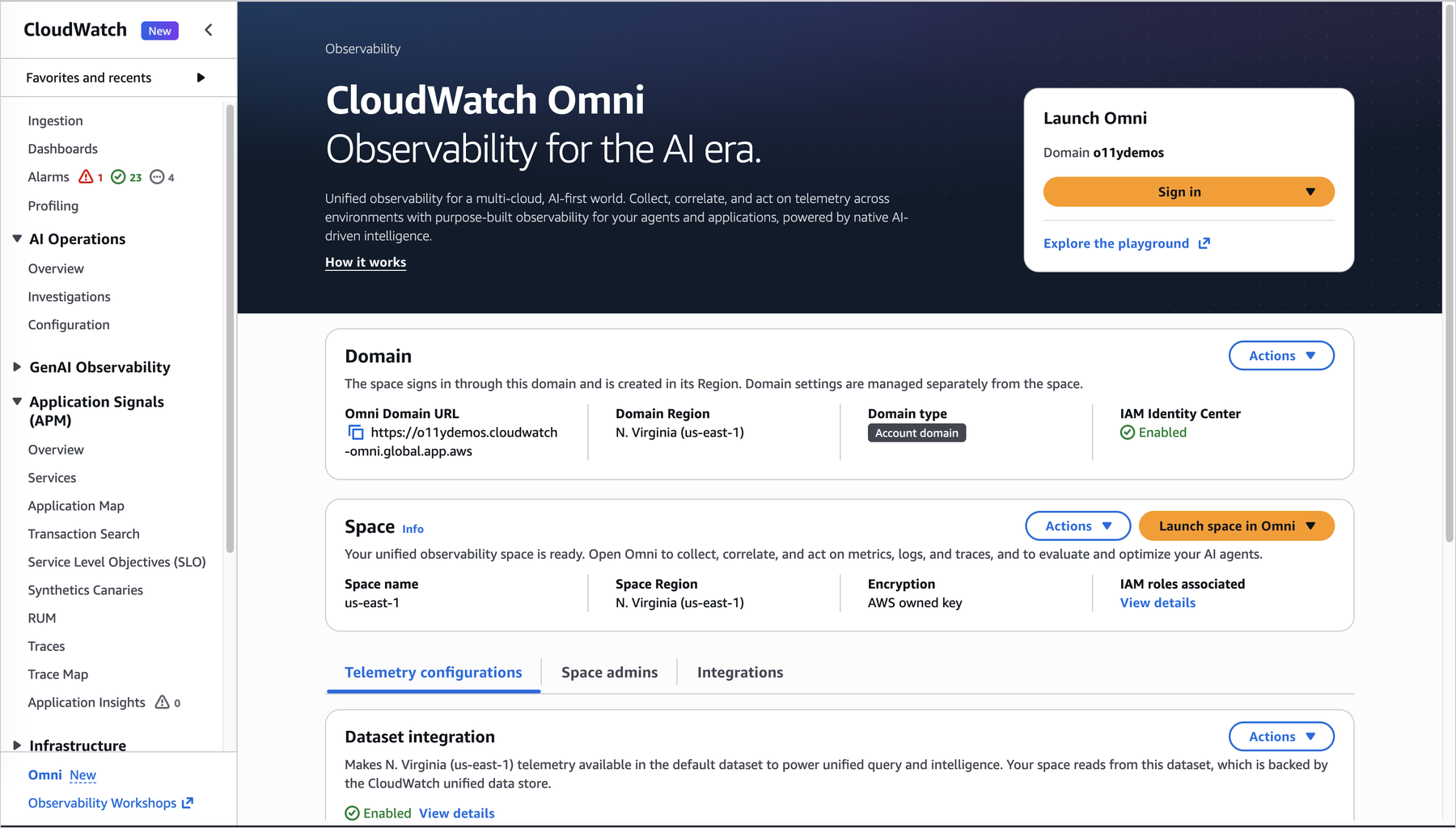
- Standalone Collaboration Spaces: Accessible via a dedicated organizational URL, Omni utilizes enterprise Single Sign-On (SSO) via AWS IAM Identity Center (supporting providers like Okta and Microsoft Entra ID). Team members can collaborate in shared "Spaces" without needing AWS Console permissions.
- Amazon DevOps Agent Integration: An autonomous AI assistant participates directly in investigation sessions, correlating anomalies, analyzing root causes through dependency graphs, and providing actionable remediation steps grounded in real-time telemetry.
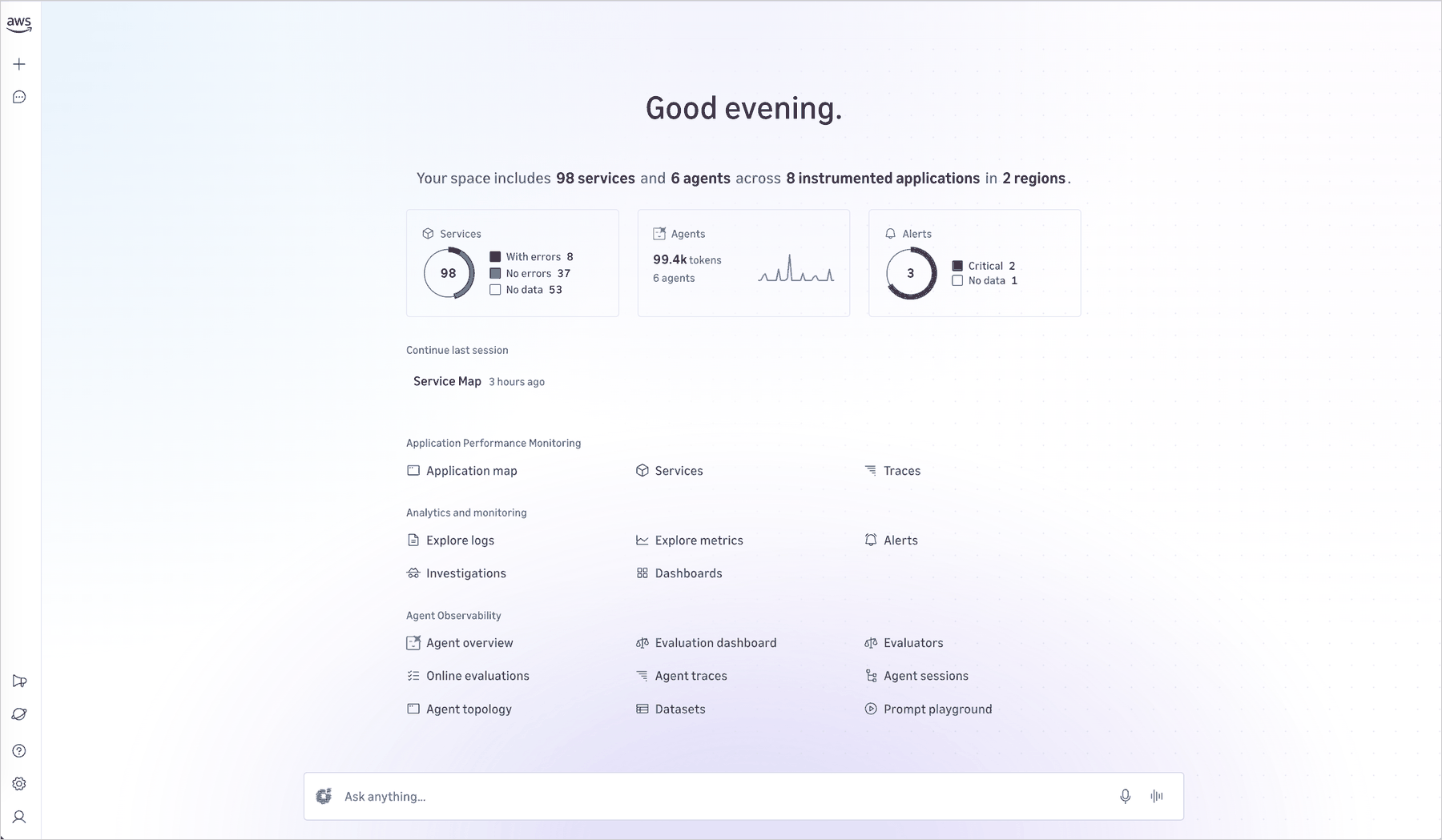
- Unified Generative AI & Application Monitoring: Omni provides dual-track capabilities, covering traditional application observability alongside dedicated monitoring, evaluation frameworks, and trace exploration for generative AI and agentic workloads.
Chronology: The Road to Context-Driven Observability
To understand the necessity of a tool like CloudWatch Omni, it is helpful to look at the historical trajectory of cloud monitoring and the pain points that drove its development.
Phase 1: The Era of Siloed Infrastructure Monitoring (Early Cloud Era)
In the early days of cloud computing, monitoring tools focused heavily on infrastructure health. Engineers monitored individual virtual machines, storage volumes, and network interfaces. Dashboards were manually curated, static, and heavily fragmented. When an outage occurred, teams relied on tribal knowledge to stitch together metrics from disparate charts.
Phase 2: The Microservices and APM Explosion (Mid-2010s to 2020s)
As organizations transitioned from monolithic architectures to microservices, containerization (Docker, Kubernetes), and serverless computing, the volume of telemetry data exploded. Application Performance Monitoring (APM) tools emerged to trace requests across distributed networks. However, this introduced a new problem: "tool fatigue." SREs and developers found themselves constantly switching between log viewers, metric dashboards, and tracing tools during critical incidents, losing valuable context along the way.
Phase 3: The Rise of Agentic Workloads and AI Complexity (Present Day)
With the rapid integration of Large Language Models (LLMs), retrieval-augmented generation (RAG) pipelines, and autonomous AI agents, debugging software has reached a new level of complexity. Traditional observability tools struggle to capture the non-deterministic nature of AI agents, prompt latency, token costs, and multi-step reasoning failures.
Phase 4: The Launch of CloudWatch Omni (September 2026)
Recognizing that engineering teams spend an unsustainable amount of time maintaining dashboards and translating Slack threads into incident post-mortems, AWS developed CloudWatch Omni. Announced in late September 2026, Omni synthesizes decades of CloudWatch data infrastructure with cutting-edge generative AI assistance, open standards (OpenTelemetry), and frictionless enterprise collaboration.

Supporting Data and Technical Mechanics
The architecture of CloudWatch Omni is designed for immediate adoption without data movement overhead. By pointing directly to existing CloudWatch data repositories, organizations can activate Omni without re-architecting their logging and tracing pipelines.
The Anatomy of an Incident Investigation
To evaluate Omni’s efficiency, AWS highlighted a typical incident lifecycle within the platform:
- Automated Detection: An alarm triggers due to an elevated error rate in a core checkout service.
- Context-Rich Ingestion: Omni immediately spawns an investigation session. It pre-loads the service topology, highlights a recent code deployment from 10 minutes prior, and flags increased latency originating from a downstream payment API.
- AI-Assisted Correlation: The Amazon DevOps Agent reviews the telemetry alongside the on-call SRE, identifying a direct correlation between the error spike and a configuration change in the payment provider’s API gateway.
- Seamless Cross-Team Handoff: The SRE invites a payments engineer into the exact same collaborative session. The incoming engineer instantly views the complete investigation history, trace views, and agent correlations without needing to scroll through historical Slack screenshots.
- Automated Reporting: Because every step of the investigation is logged sequentially within the Omni session, the incident report is generated automatically, eliminating manual post-incident documentation overhead.
Technical Specifications and Setup Overview
Setting up Omni involves three core steps for enterprise administrators:
- Identity Federation: Connecting the organization’s SAML 2.0 identity provider (such as Okta or Microsoft Entra ID) via AWS IAM Identity Center.
- Space Creation: Grouping applications and environments into dedicated "Spaces" that map directly to pre-existing CloudWatch logs, metrics, traces, and alarms.
- Topology Discovery: Utilizing automated resource discovery (via AWS Config and OpenTelemetry instrumentation) to map live service dependencies without manual dashboard curation.
Official Responses and Industry Perspective
Industry analysts and AWS product leaders emphasize that CloudWatch Omni represents a fundamental paradigm shift in how software teams interact with telemetry data.
"Engineering teams have historically been forced to adapt to their observability tools—manually building dashboards, tuning thresholds, and translating signals across disparate tabs," noted Daniel Abib, product lead at AWS. "CloudWatch Omni flips this dynamic. The system adapts to your applications, organizes your team around shared workspaces, and brings an AI copilot directly into the trenches of incident response."
Early enterprise feedback underscores the value of cross-functional workspaces. Organizations managing complex, distributed microservices architectures report that bridging the gap between product developers, SREs, and specialized database engineers has traditionally been the biggest bottleneck during high-severity outages. By centralizing investigation sessions behind a single SSO URL, Omni removes administrative barriers that previously kept non-AWS users out of monitoring loops.
Furthermore, industry observers point out that Omni’s dual focus on traditional application metrics and agentic AI workloads positions AWS strongly in the evolving generative AI market. As enterprises increasingly deploy autonomous agents to handle backend logic and customer interactions, specialized observability for non-deterministic AI code paths has shifted from a luxury to an operational necessity.
Implications for Enterprise DevOps and the Future of Monitoring
The introduction of CloudWatch Omni carries profound implications for software engineering organizations, cloud architects, and the broader observability market.
1. The Death of Static Dashboards
For years, the gold standard of monitoring was the creation of bespoke, highly customized dashboards. However, these dashboards frequently fall out of sync with rapidly changing microservices architectures, resulting in stale data and ignored alerts. Omni’s dynamic, intent-based approach—where teams declare targets (such as availability thresholds and latency budgets) and let the system adapt automatically—signals the obsolescence of manual dashboard curation.
2. Democratization of Observability Data
By decoupling Omni access from the AWS Management Console via enterprise SSO and IAM Identity Center, AWS has made it feasible for non-technical stakeholders, product managers, and customer support leads to participate in system health reviews. This democratization fosters a culture of shared accountability where operational data is no longer siloed exclusively within specialized DevOps or SRE teams.
3. The Maturation of Autonomous AI Agents in Operations
The integration of the Amazon DevOps Agent moves artificial intelligence beyond simple log summarization. By actively participating in investigation sessions, tracing root causes across complex dependency graphs, and formulating mitigation strategies grounded in real telemetry, autonomous agents are transitioning from novelty features to core operational team members.
4. Open Standards as a Catalyst for Adoption
By relying heavily on OpenTelemetry as its foundation, AWS is signaling a pragmatic alignment with open-source standards. Organizations that have already invested in vendor-neutral instrumentation do not need to rewrite their tracing code to benefit from Omni’s AI features, lowering the barrier to entry significantly.
Getting Started
Amazon CloudWatch Omni is generally available now. Existing CloudWatch customers can evaluate the platform immediately by navigating to the Amazon CloudWatch console and selecting "Try CloudWatch Omni."
For organization-wide deployments, administrators can configure enterprise identity providers via IAM Identity Center, establish team Spaces, and ingest telemetry from both AWS and external environments without incurring data movement penalties. Comprehensive documentation, API references, and regional availability details are accessible via the AWS documentation portal and the AWS MCP Server toolkit for preferred AI development environments.