Architecting for the Future: How Instagram Direct Became an AI-Native Powerhouse with Jetpack Compose
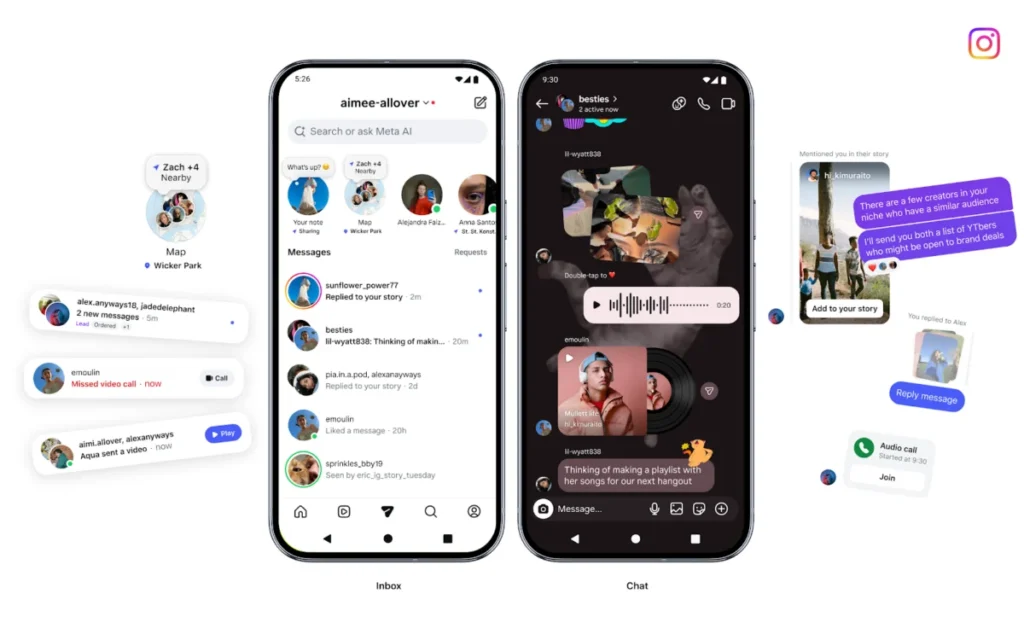
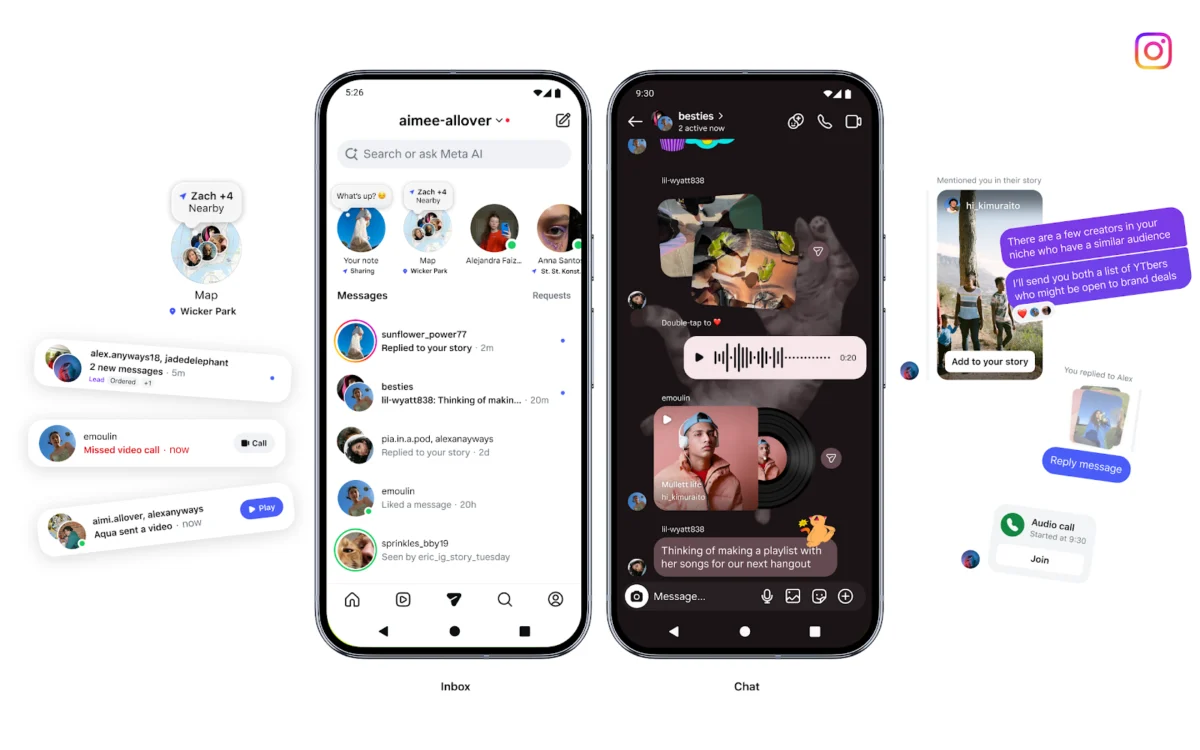
In the high-stakes world of mobile engineering, few surfaces are as critical or as complex as Instagram Direct. With billions of messages exchanged daily, the messaging infrastructure serves as the heartbeat of the platform’s social engagement. For years, the team relied on the legacy Android View system, pushing it to its absolute limits through exhaustive micro-optimizations. However, as the industry shifted toward declarative UI and AI-driven development, the team faced a pivotal realization: their legacy codebase had become a bottleneck for innovation.
In a landmark collaboration, engineers from Meta and Google embarked on an ambitious mission to modernize the Instagram Direct architecture. By migrating to Jetpack Compose, the team didn’t just swap UI frameworks; they architected an "AI-native" foundation that has fundamentally altered how they build, maintain, and scale one of the world’s most active mobile surfaces.
The Genesis of an AI-Native Vision
The impetus for this massive undertaking was twofold: technical debt and the rise of AI coding assistants. As Meta’s engineers increasingly utilized AI to accelerate development, they discovered that the imperative, state-heavy nature of the legacy View system often clashed with the way AI models "reasoned" about code.
"Adopting Jetpack Compose for Instagram Direct went beyond a typical UI modernization," note Pavlo Stavytskyi, Software Engineer at Meta, and Rebecca Franks, Developer Relations Engineer at Google. "The team built an AI-native UI codebase that is 50% smaller than the original, while achieving a 35% reduction in AI agent execution time, 32% fewer engineer-agent exchanges, and a 33% reduction in token cost."
.jpg)
The core philosophy was simple: AI is most effective when the underlying code is concise, predictable, and structurally decoupled from complex lifecycle management. By moving to Jetpack Compose’s declarative model, the team provided AI agents with a "clean slate" where state is explicit and component boundaries are clearly defined, effectively multiplying the ROI of their AI-assisted workflows.
Chronology of a Massive Migration
Migrating an app used by hundreds of millions of people is akin to changing an engine mid-flight. The project followed a phased, data-driven methodology to ensure zero disruption to the user experience.
Phase 1: The Hybrid Coexistence
Initially, the team had to bridge the gap between legacy Views and new Compose components. During this period, hundreds of UI components were migrated in parallel with their legacy counterparts. The engineering team employed strict architectural patterns to prevent "paradigm leakage," where imperative and declarative logic might inadvertently blend, creating bugs that are notoriously difficult to track.
Phase 2: Building AI-Friendly Guardrails
The team established a set of strict conventions for AI agents. Rather than allowing AI to generate code that might rely on mutable class members or complex lifecycle hooks, the team enforced a "Constructor-Injection" pattern. By ensuring that Compose code lived purely within the constructor scope, they effectively turned every UI component into a pure function—a structure that AI models find trivial to manage.

Phase 3: The Shift to LazyColumn
With the individual components successfully migrated, the team turned their attention to the underlying list architecture. The transition from RecyclerView to the Compose-native LazyColumn marked the final step in removing dependency on the legacy framework. This allowed for seamless A/B testing at scale, enabling the team to evaluate performance in real-time production environments.
Supporting Data: Efficiency at Scale
The performance metrics gathered during this migration provide a compelling case for the efficiency of the declarative paradigm. Meta’s internal data analysis compared AI agent performance on legacy View-based tasks versus the new Compose architecture, revealing clear wins in both productivity and resource consumption.
AI Agent Resource Efficiency
The analysis measured resource efficiency through a composite of token consumption, execution time, and engineer-to-agent interaction frequency.
- Reduced Friction: As code complexity (measured by "risk scores") increased, the efficiency of AI agents working on legacy View code dropped by 30% per landed character.
- Resilience: In the same high-risk scenarios, the efficiency of AI agents working on Jetpack Compose code dropped by only 9%.
This suggests that Compose is not only more performant for the end-user but also more "maintainable" by machine learning models, allowing developers to scale their features without a corresponding linear increase in technical debt.

Performance: The Pursuit of "Zero Regression"
For Instagram, performance is not just a metric; it is a product feature. The team tracked several critical performance indicators during the rollout, with a primary focus on:
- Scroll Performance: Ensuring 60fps consistency during high-speed flings.
- Interaction Latency: Reducing the time between a user tap and a visual response.
- Memory Footprint: Minimizing the overhead of the Compose runtime compared to the legacy View hierarchy.
The most significant technical breakthrough in this area came through a direct partnership with Google, resulting in the development of LazyLayoutCacheWindow. This feature, now integrated into the broader Android ecosystem, allows for "pausable composition." By preparing and retaining off-screen items within a specific pixel-based band, the team reduced large frame drops by approximately 13%.
"The more of a surface is migrated end-to-end without bridging interruptions, the clearer and better the picture becomes performance-wise," the team noted, emphasizing that the benefits of Compose are most visible when the entire surface—not just individual pieces—is fully declarative.
Official Perspectives: A Collaborative Success
The collaboration between Meta and Google represents a new standard for how large-scale tech companies influence the evolution of developer tools. By pushing the boundaries of what Compose could do within the context of an app as complex as Instagram, the engineers involved directly influenced the framework’s roadmap.

Key acknowledgments go to:
- From Meta: Michal Zielinski, Matthew Du, Gary Ye, and Gopal Juneja, whose work spanned engineering, data science, and architecture.
- From Google: Andrei Shikov and George Mount, who worked closely with Meta to translate real-world performance bottlenecks into concrete, reusable additions for the Android developer community.
The introduction of APIs like onVisibilityChanged—a direct result of this partnership—provides a standardized way for developers to track UI impressions, further proving that this migration was as much about contributing to the Android ecosystem as it was about improving Instagram.
Implications for the Future of Android Development
The success of the Instagram Direct migration carries profound implications for the industry. As AI coding assistants become ubiquitous, the "AI-readiness" of a codebase will become a primary concern for architects.
1. The Death of Boilerplate
The 50% reduction in UI code is not merely a vanity metric; it represents a massive reduction in the "surface area for bugs." By using declarative UI, teams can focus on what the interface should look like rather than the imperative steps required to manage its state.

2. Standardized AI Conventions
The migration highlights that developers must create strict, AI-friendly architectural patterns to reap the full benefits of automated coding. The "Constructor-Injection" pattern used by Meta serves as a template for other large organizations.
3. Framework-Agnostic Thinking
Perhaps the most critical takeaway is the necessity of "de-coupling." By abstracting their UI components away from the underlying RecyclerView or LazyColumn frameworks, the Instagram team has future-proofed their app against the next generation of UI advancements.
4. Ecosystem Synergy
This project demonstrates that when high-scale apps partner with platform providers (Google), the entire developer community wins. Features like LazyLayoutCacheWindow and onVisibilityChanged are now available to any developer building on Compose, effectively democratizing the performance gains achieved at the scale of Instagram.
Conclusion: A New Standard for Modern Apps
The Instagram Direct migration is more than just a successful engineering project; it is a blueprint for the future of mobile development. By prioritizing AI-native architecture and deep-linking performance metrics to production reality, the Meta and Google teams have proven that even the most complex legacy systems can be transformed.

As the industry moves toward a future where AI handles an increasing portion of the coding burden, the lessons learned here are clear: build for clarity, keep state predictable, and never stop optimizing the foundation. For those who have yet to embrace Jetpack Compose, the path forward is increasingly illuminated—not just by the promise of better UI, but by the undeniable efficiency of an AI-native, modern codebase.