Driving Entertainment: Android Auto and Automotive OS Open Doors for Game Developers
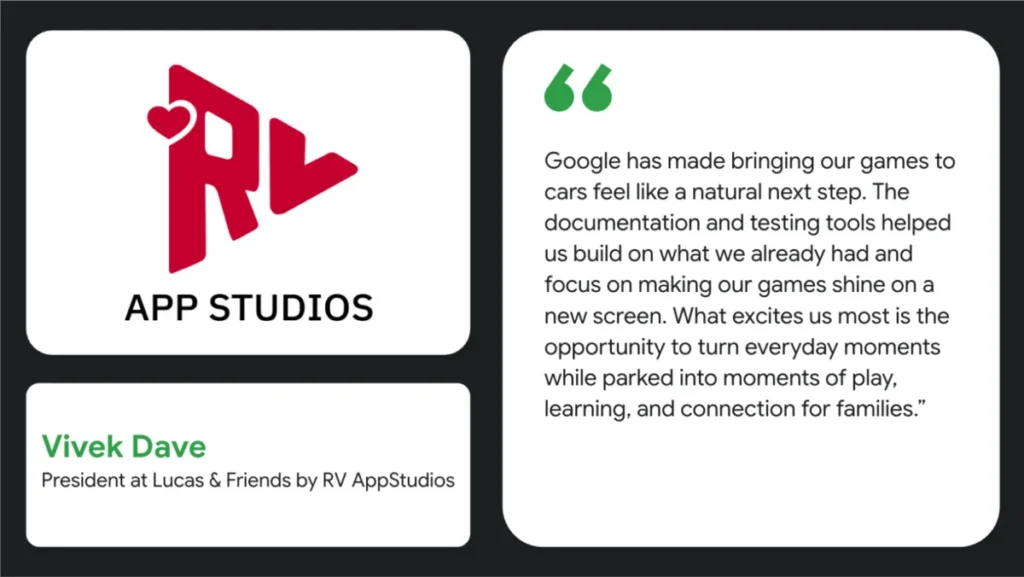
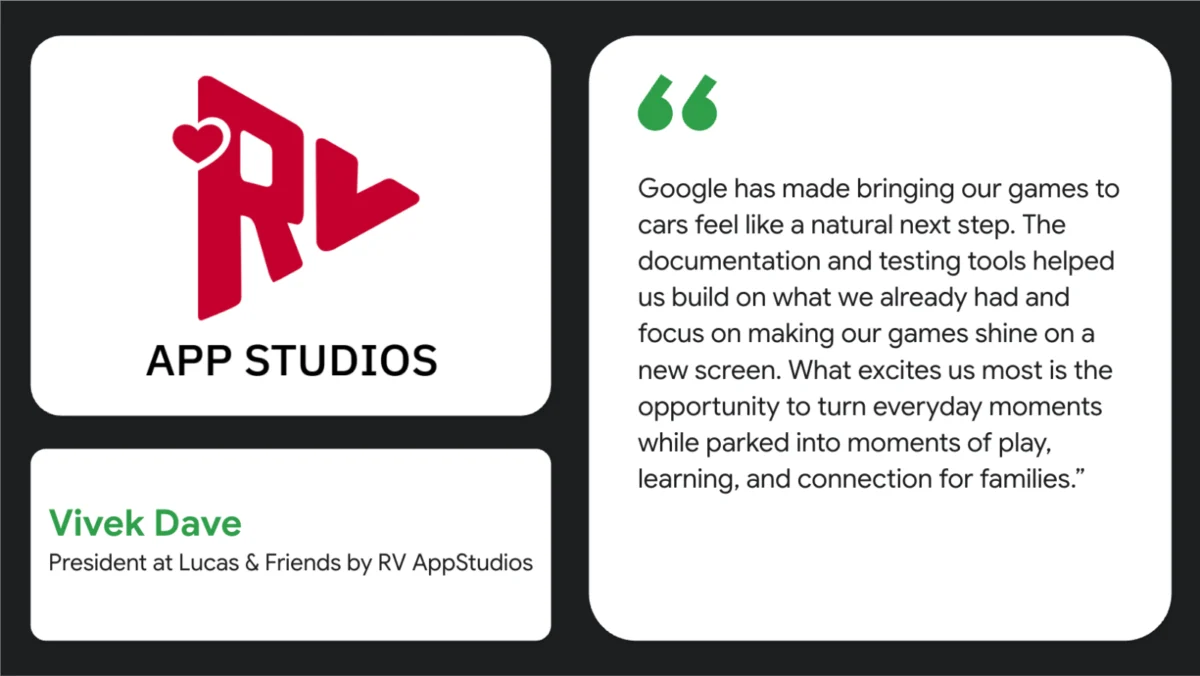
The digital dashboard is evolving from a mere navigation and communication hub into a sophisticated entertainment console. In a significant shift for the automotive industry and the developer ecosystem, Google has officially transitioned its "Games for Cars" category from beta testing to full general availability. This milestone allows developers to deploy gaming titles directly to vehicles powered by Android Auto and Android Automotive OS with Google built-in, transforming moments of inactivity into engaging, interactive experiences.
The Evolution of the In-Car Entertainment Ecosystem
For years, the interior of a vehicle was a space defined by the road ahead. Whether waiting for a child at school, sitting at a curbside pickup point, or killing time at an electric vehicle (EV) charging station, "downtime" in a car was traditionally a passive experience.
The graduation of the Games category from beta to general availability marks a strategic pivot. By leveraging the large, high-resolution displays now standard in modern vehicles, Google is enabling a new class of "parked-only" software. This ensures that while drivers and passengers can enjoy immersive gameplay, safety remains the paramount priority.
A Chronology of the Transition
- Initial Conception: Recognizing the rise of the "third living space"—the car—Google began investigating how to safely integrate non-essential apps into the vehicle cockpit.
- The Beta Phase: Google launched an early-access program, inviting a select group of developers to optimize their games for the unique constraints and interfaces of automotive hardware.
- Refinement: Throughout the beta period, Google worked closely with partners to establish strict UX guidelines, ensuring that apps behave predictably under varying vehicle states (parked vs. in-motion).
- The General Availability Milestone: Today, the category is officially open. Developers can now push their titles through the Google Play Console to production, reaching millions of vehicles worldwide.
Technical Implementation: Bridging Mobile and Automotive
For developers, the transition from a mobile-first mindset to an automotive-ready one requires a meticulous approach to app architecture. Google has emphasized that existing adaptive apps—those designed to scale across tablets and foldables—are the best candidates for this transition. However, there are non-negotiable technical requirements for any developer looking to enter this space.

Categorization and Manifest Configuration
The most foundational step is the explicit declaration of the app’s purpose. By adding the android:appCategory="game" attribute to the application’s manifest file, developers signal to the Google Play Store that their software belongs in the gaming ecosystem. This is not merely a metadata tag; it informs the system’s resource allocation and display behavior.
Declaring Platform Support
Developers must explicitly declare compatibility with the specific automotive environments:
- Android Auto: For mobile-tethered experiences, support is available on devices running Android 15 and higher. This requires the
android.intent.category.CAR_LAUNCHERintent filter, ensuring the game appears in the car’s app launcher only when appropriate. - Android Automotive OS: For vehicles with Google built-in, the manifest must include the
android.hardware.type.automotivetag. The configuration of theandroid:requiredattribute is critical here; developers must decide whether their game is a "mobile-first" app that happens to run in a car or a "car-dedicated" experience.
The Imperative of "Parked-Only" Safety
The most stringent requirement in this transition is the handling of the vehicle’s "parked state." Because these games are designed for static vehicles, they must be architected to cease functionality the moment the vehicle shifts into gear.
Developers are strictly prohibited from including the distractionOptimized metadata element in their manifests. Furthermore, all audio output must terminate immediately upon vehicle movement. The system is designed to automatically block access to these apps during travel, meaning developers must ensure their game states are saved and recoverable upon the vehicle returning to a parked status.

Expanding the Hardware Landscape: Game Controllers
While the center console touchscreen is the primary interface for most vehicle systems, it is often suboptimal for complex gaming. Recognizing this, Google has built support for external gamepads into the framework.
Developers are encouraged to declare the android.hardware.gamepad feature in their manifest. This serves two purposes: it enables the system to recognize connected controllers via Bluetooth or USB, and it boosts the app’s discoverability in the Play Store for users who specifically search for controller-compatible titles. The key takeaway for developers is to treat controllers as an enhancement, not a requirement, unless the gameplay mechanics explicitly demand them.
Adaptive Design: The Challenge of Aspect Ratios
Unlike the relatively standardized screens of smartphones, automotive displays are wildly diverse. Some vehicles feature massive, ultra-wide landscape screens, while others utilize portrait-oriented vertical tablets.
"One size fits all" is a failed strategy in the automotive space. Developers must embrace fully adaptive layouts. The goal is to eliminate letterboxing and pillarboxing, ensuring the game utilizes the entire available screen real estate. Google provides extensive testing tools, including the Desktop Head Unit (DHU) for Android Auto and specific hardware-profile emulators for Android Automotive OS, allowing developers to simulate various screen sizes before their app ever reaches a physical vehicle.

Implications for the Developer Ecosystem
The opening of this category is more than just a new distribution channel; it is a fundamental expansion of the gaming market.
New Revenue and Engagement Avenues
For game studios, the "in-car" audience represents a highly captive demographic. Whether it is a commuter waiting for a carpool or a family on a road trip charging their EV, these users are looking for high-quality, transient entertainment. This environment provides a unique opportunity for developers to monetize their games through ad-supported models or in-app purchases that feel native to the vehicle experience.
Raising the Bar for App Quality
Google’s requirement that all games undergo a rigorous review process against "car app quality guidelines" serves to protect the brand integrity of both the vehicle manufacturers and the Android platform. By filtering out low-quality, buggy, or non-responsive applications, Google is ensuring that the in-car gaming experience remains premium and frustration-free.
The Future of In-Car Productivity and Play
As autonomous driving technology advances, the demand for sophisticated in-car entertainment will only grow. Today’s games are limited to the "parked" state, but the architecture being built today provides the foundation for more advanced, motion-safe, or even passenger-focused interactive experiences in the future.

Final Strategic Advice for Developers
To succeed in this new frontier, developers should follow a three-pronged approach:
- Prioritize State Management: Ensure your game is "resilient" to interruptions. If the driver puts the car in drive, your game must save the state instantly and cleanly.
- Optimize for Input Diversity: Build for touch first, but provide robust mapping for physical controllers.
- Use the Provided Tooling: Do not rely on "on-device" testing alone. The Desktop Head Unit and the Android Automotive OS emulator are essential for identifying UI scaling issues early in the development lifecycle.
The transition to general availability is an invitation to innovate. As vehicles become increasingly software-defined, the distinction between the "living room" and the "car interior" continues to blur. Developers who adapt their portfolios to this new, stationary, high-tech environment will find themselves at the forefront of a major shift in how we interact with our vehicles, turning the commute into a platform for play.
For those ready to begin, the full documentation and guidelines are now live on the Android Developers portal, marking the beginning of a new chapter in mobile gaming.