Google Announces First-Ever Developer Summit on Recommendation Systems: A New Era for Personalized Tech
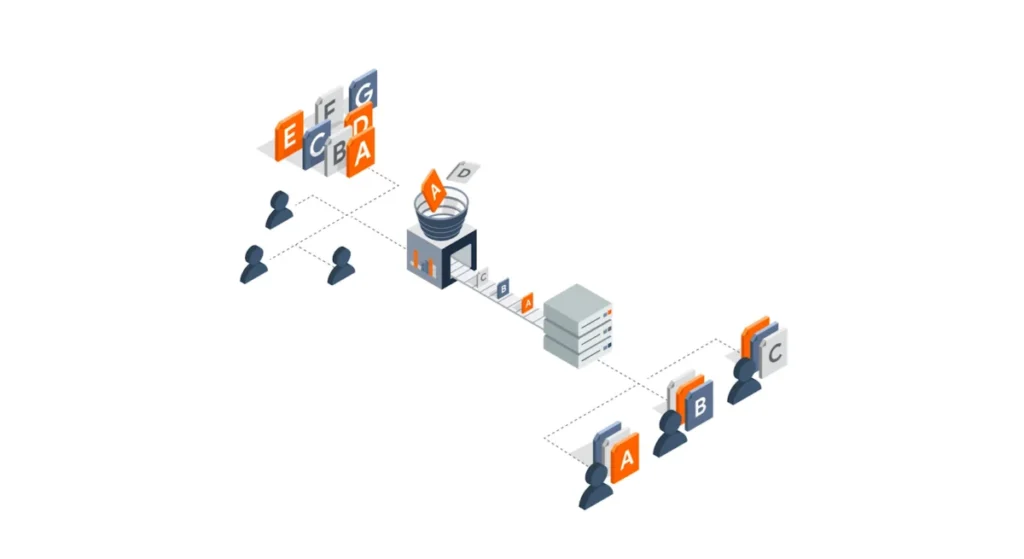
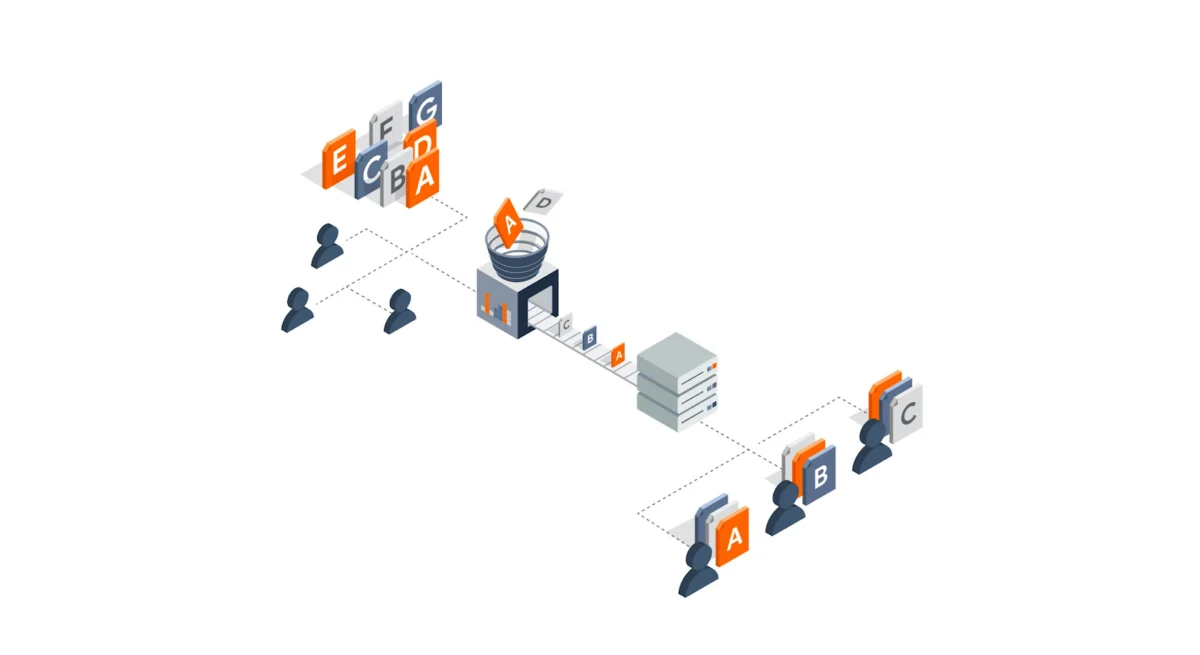
SAN FRANCISCO — In an era where digital experiences are defined by hyper-personalization, recommendation systems have transitioned from backend algorithms to the very core of modern software. Whether curating a user’s evening streaming queue, predicting e-commerce purchases, or surface-leveling breaking news, these engines dictate how humans interact with information.
Recognizing the surging demand for advanced tooling and architectural clarity in this domain, Google has officially announced its inaugural Developer Summit on Recommendation Systems. Scheduled as a virtual event for June 9, 2023, from 10:00 AM to 12:15 PM US Pacific Time, the summit aims to bridge the gap between academic research and practical engineering, offering developers a rare, deep-dive look into how Google constructs some of the world’s most sophisticated recommendation architectures.
Authored by Developer Advocate Wei Wei, the announcement follows the successful launch of Google’s consolidated recommendation system landing page last year. The upcoming summit promises to unpack the complex mechanics behind modern recommenders, exploring everything from core foundational components to cutting-edge integrations with Generative AI and Large Language Models (LLMs).
Main Facts: What You Need to Know About the Summit
The Developer Summit on Recommendation Systems is a targeted, high-impact virtual gathering designed for developers, data scientists, machine learning engineers, and technical leaders.
- Event Date and Time: June 9, 2023, from 10:00 AM to 12:15 PM (US Pacific Time).
- Format: 100% online, making it globally accessible for practitioners worldwide.
- Cost & Registration: The event is free to attend, with registration currently open via the official Google RSVP portal.
- Core Focus Areas:
- Deep dives into Google’s specialized product suites, including TensorFlow Recommenders, TensorFlow Ranking, and TensorFlow Agents.
- Architectural strategies for augmenting traditional recommenders with Large Language Models (LLMs).
- Cutting-edge research breakthroughs, such as generative retrieval using generative AI techniques.
- Key Presenters: The event features direct insights from the Google engineers and researchers who conceptualized, wrote, and maintain Google’s suite of recommendation products.
Chronology: The Evolution of Google’s Recommender Ecosystem
To understand the significance of the upcoming June summit, it is essential to trace the trajectory of how Google has cultivated its developer ecosystem around machine learning and recommendation science.
The Fragmented Early Years
In the early days of machine learning deployment, building a recommendation system required stitching together disparate libraries, managing custom data pipelines, and writing extensive boilerplate code. While frameworks like TensorFlow revolutionized deep learning, developers looking to build production-grade recommendation engines often found themselves navigating a complex landscape without unified architectural guidelines.
The Modular Breakthrough
Recognizing this friction, Google began systematically open-sourcing and consolidating specialized libraries. Tools like TensorFlow Recommenders (TFRS) emerged to help researchers and professionals build scalable retrieval and ranking models. Simultaneously, TensorFlow Ranking provided specialized losses and metrics for learning-to-rank tasks, while TensorFlow Agents opened up reinforcement learning applications—vital for dynamic, long-horizon recommendation strategies.
The Resource Landing Page (2022)
A major milestone occurred last year when Google launched its unified recommendation system landing page. Designed to serve as a centralized hub, the page aggregated documentation, tutorials, and best practices for the developer community. According to Google, the response was overwhelmingly positive, validating the thesis that developers were hungry for cohesive, end-to-end guidance rather than isolated code snippets.
The Path to the First Developer Summit (2023)
Buoyed by the engagement surrounding the 2022 resource rollout, Google’s developer relations and engineering teams identified a deeper need. While developers appreciated the introductory materials, many expressed an eagerness to learn how to scale these tools for bespoke, in-house business requirements. This feedback loop directly catalyzed the planning for the June 9 Developer Summit—marking the first time Google has dedicated a standalone, comprehensive event entirely to the ecosystem of recommendation systems.
Supporting Data & Technological Pillars
Recommendation science has evolved rapidly from simple collaborative filtering and matrix factorization to complex deep neural networks capable of processing multi-modal data in real-time. At the upcoming summit, Google engineers will unpack several core technological pillars that define modern recommender architecture.
1. TensorFlow Recommenders (TFRS)
At the heart of modern recommendation pipelines is TFRS, a TensorFlow-based library built on Keras. It facilitates the entire lifecycle of a recommender system—from candidate generation (retrieval) to scoring (ranking). TFRS allows developers to easily build multi-task models that optimize for multiple user behaviors simultaneously, such as clicks, watch time, and purchases.
2. TensorFlow Ranking
Ranking is the critical second stage of a recommendation pipeline, where a smaller subset of retrieved items is ordered by relevance before being presented to the user. TensorFlow Ranking provides state-of-the-art loss functions and evaluation metrics (such as NDCG and Mean Reciprocal Rank) that account for the relative ordering of items, significantly outperforming standard classification losses in recommendation contexts.
3. TensorFlow Agents and Reinforcement Learning
Static recommendations often fail to capture changing user moods or long-term engagement patterns. By integrating reinforcement learning via TensorFlow Agents, developers can build recommendation systems that act as intelligent agents, optimizing for long-term user satisfaction rather than immediate, short-term clicks.
4. The Intersection of LLMs and Recommender Systems
Perhaps the most forward-looking aspect of the summit will be the exploration of Large Language Models in recommendation workflows. As generative AI transforms software, LLMs are increasingly being utilized to understand unstructured item metadata, generate personalized explanations for why an item was recommended, and process natural language user queries to drive conversational discovery.

5. Generative Retrieval
Moving beyond traditional indexing methods, Google’s cutting-edge research—such as work on generative retrieval—reimagines how items are retrieved. Instead of searching through an explicit database index, generative retrieval models use sequence-to-sequence architectures to directly generate the identifiers of relevant items, opening up radical new paradigms for efficiency and scale.
Official Perspectives and Expert Insights
Google’s engineering leadership emphasizes that recommendation systems are no longer a luxury reserved for tech giants with massive research divisions; they are fundamental infrastructure for businesses of all sizes.
"Recommendation systems are everywhere," notes Wei Wei, Developer Advocate at Google, highlighting the ubiquity of the technology. "They power our favorite websites, apps, and services, helping us find the things we enjoy. But how do modern recommenders work? What are the key components and how do they fit together? How can we make them even better?"
According to internal feedback gathered by Google’s developer relations team, practitioners are increasingly moving past the "getting started" phase. While introductory documentation helped developers take their first steps, the modern enterprise developer faces intricate scaling challenges:
- How do you handle cold-start problems for new users and items?
- How can models be updated in real-time without introducing latency bottlenecks?
- How can privacy-preserving machine learning (such as federated learning) be integrated into recommendation pipelines?
By putting the original authors of Google’s recommendation suites on the virtual virtual stage, the summit aims to provide authoritative answers to these nuanced engineering questions. Sessions will feature direct breakdowns of architectural decisions, performance tuning tips, and live Q&A segments designed to troubleshoot real-world production hurdles.
Implications for the Industry
The announcement of Google’s Developer Summit on Recommendation Systems carries profound implications for the broader software development and machine learning landscapes.
Democratization of Advanced AI
By making tools like TFRS and TensorFlow Ranking accessible—and pairing them with expert-led instruction—Google is effectively lowering the barrier to entry for enterprise-grade personalization. Small-to-medium enterprises (SMEs) that previously lacked the resources to build custom recommendation engines can now leverage battle-tested frameworks to compete with industry incumbents.
The Shift Toward Generative Recommendations
The inclusion of Large Language Models and generative retrieval in the summit’s agenda signals a major paradigm shift. The boundary between natural language processing (NLP) and recommendation systems is rapidly dissolving. Developers who master the synthesis of traditional deep learning recommenders with generative AI will be uniquely positioned to build the next generation of intuitive, conversational discovery engines.
Focus on Engineering Efficiency and ROI
As companies worldwide scrutinize technology budgets, engineering teams are under pressure to prove the ROI of their machine learning initiatives. Recommendation systems directly impact key business metrics—conversion rates, retention, average order value, and user engagement. By optimizing these systems using Google’s structured toolsets, businesses can drive measurable top-line growth while optimizing computational infrastructure costs.
Conclusion and Call to Action
The Developer Summit on Recommendation Systems represents a unique convergence of theoretical computer science and practical software engineering. Whether a developer is writing their very first recommendation model or scaling a complex, multi-modal retrieval system for millions of global users, the June 9 event offers invaluable insights.
As the digital landscape grows increasingly saturated with content, the ability to surface the right information to the right person at the right time remains one of computer science’s most valuable frontiers.
Registration for the virtual event is currently open. Developers, data scientists, and technical leaders interested in attending can secure their spot by visiting the official Google RSVP Page.
Google’s engineering community looks forward to (virtually) meeting developers from across the globe on June 9 to shape the future of personalized technology.