The New Frontier of AI Engineering: Android Bench 2.0 Sets a Higher Bar for Coding Agents
In the rapidly evolving landscape of software development, the role of Artificial Intelligence has shifted from a novel experiment to a foundational pillar of the developer workflow. As AI models grow more sophisticated, so too must the frameworks used to evaluate them. Today, the development community marks a significant milestone with the launch of Android Bench 2.0, an overhauled benchmarking suite designed to push AI models beyond simple bug fixes and into the realm of complex, long-horizon engineering.
By introducing Long-Horizon Tasks (LHTs), continuous scoring mechanisms, and agent-specific evaluations, Android Bench 2.0 is not merely an update—it is a redefinition of how we measure the efficacy of AI as a partner in building modern, large-scale Android applications.
Main Facts: A Paradigm Shift in AI Benchmarking
The inaugural version of Android Bench was built on a rigorous foundation, aimed at testing how Large Language Models (LLMs) handle discrete, manageable coding tasks. However, as the complexity of real-world Android development grows, the limitations of early benchmarks—often focused on minor bug fixes or isolated feature requests—became apparent.
Android Bench 2.0 addresses this gap by introducing Long-Horizon Tasks (LHTs). Unlike their predecessors, these tasks represent genuine engineering challenges that would traditionally occupy a human developer for days or even a full week. These include structural migrations, the implementation of complex features from scratch, and the comprehensive refactoring of legacy codebases.
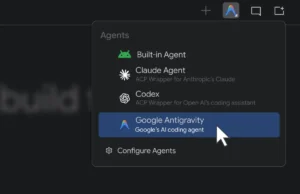
Furthermore, the release introduces agentic evaluation. Recognizing that AI models do not work in a vacuum, the new framework evaluates models as they function within an agentic workflow, using tools provided by the model creators. This transition from "model-only" to "agent-plus-model" testing provides a more authentic representation of the AI-assisted developer experience.
Chronology: From Incremental Fixes to Architectural Ambition
The history of AI in coding has been defined by a move toward increasing autonomy. When the first Android Bench launched, the industry was focused on "incrementalism"—teaching models to recognize patterns, fix syntax errors, and generate small snippets of boilerplate code. This was a direct response to the limitations of LLMs at the time.
As models like Gemini, GPT-6, and Fable began to demonstrate deeper logical reasoning, the development community started delegating more substantial work to these tools. The evolution of the Android Bench framework follows this trajectory:
- Phase 1 (The Foundation): Focused on baseline competency—code completion, basic bug detection, and documentation generation.
- Phase 2 (The Refactoring Era): Developers began asking AI to perform cross-file updates, such as migrating from XML-based layouts to Jetpack Compose.
- Phase 3 (The Current Milestone): Android Bench 2.0 moves into the realm of "architectural reasoning." The benchmark now tests the model’s ability to maintain context over thousands of lines of code and multiple days of logical progression.
This evolution mirrors the way developers themselves have integrated AI: moving from a "copy-paste" assistant to a strategic partner capable of handling long-term technical debt and large-scale system migrations.

Supporting Data: Why "Pass/Fail" No Longer Cuts It
One of the most critical updates in Android Bench 2.0 is the departure from binary grading. In the world of complex engineering, a binary "pass" or "fail" is fundamentally reductive. An AI agent might successfully refactor 40 screens of a legacy app to Jetpack Compose, set up complex database tables, and implement an entire new navigation graph—only to fail a single edge-case assertion. Under a binary system, this would be a 0% score, ignoring the 99% of work that was completed successfully.
The Rise of Continuous Scoring
Android Bench 2.0 introduces a continuous scoring system. This new methodology calculates completion rates based on:
- Functionality: Does the code run as expected?
- Visual Fidelity: Do the UI components meet the design specifications?
- Regression Avoidance: Did the agent accidentally break existing, stable code?
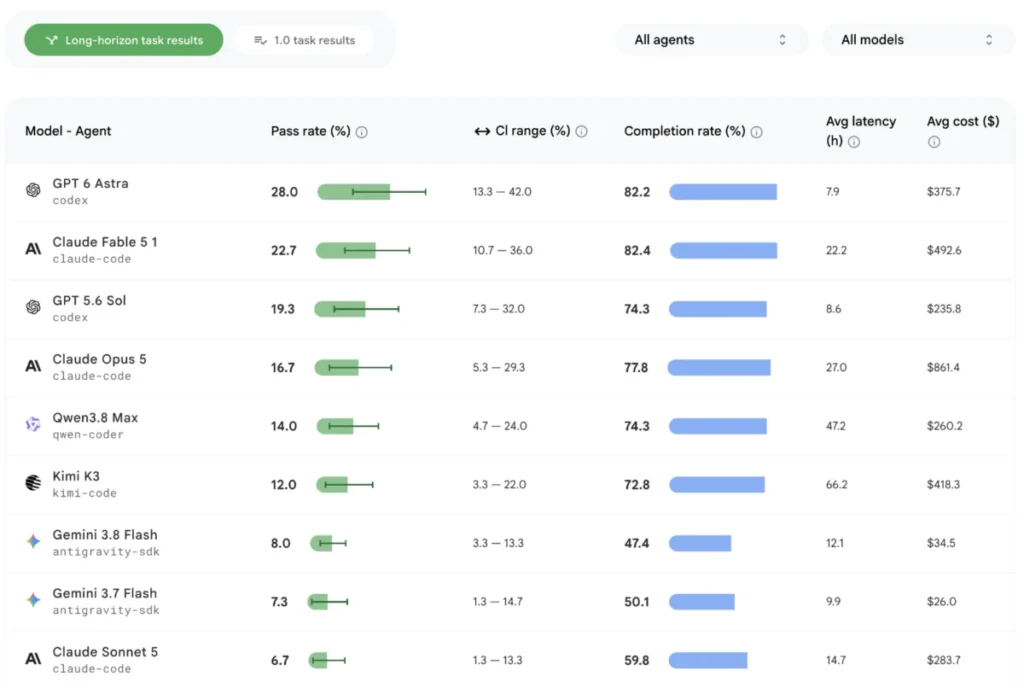
Objective penalties are applied for deviations from instructions or structural constraints, providing a nuanced view of model performance. The data is telling: while original benchmark tasks saw pass rates around 91%, the new LHTs show a highest pass rate of approximately 28%. This stark difference underscores the massive leap in complexity the new benchmark represents.
Leaderboard Insights
The updated leaderboard, now featuring model card views, offers granular data. By clicking into a specific model, developers can view:
- Pass Rate: The frequency of fully successful task completions.
- Completion Rate: The percentage of requirements met in partial successes.
- Average Cost: The financial and computational resources required per task, providing a vital metric for teams managing enterprise-level budgets.
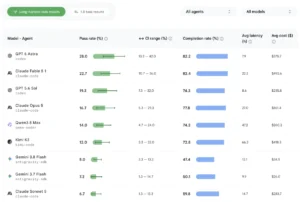
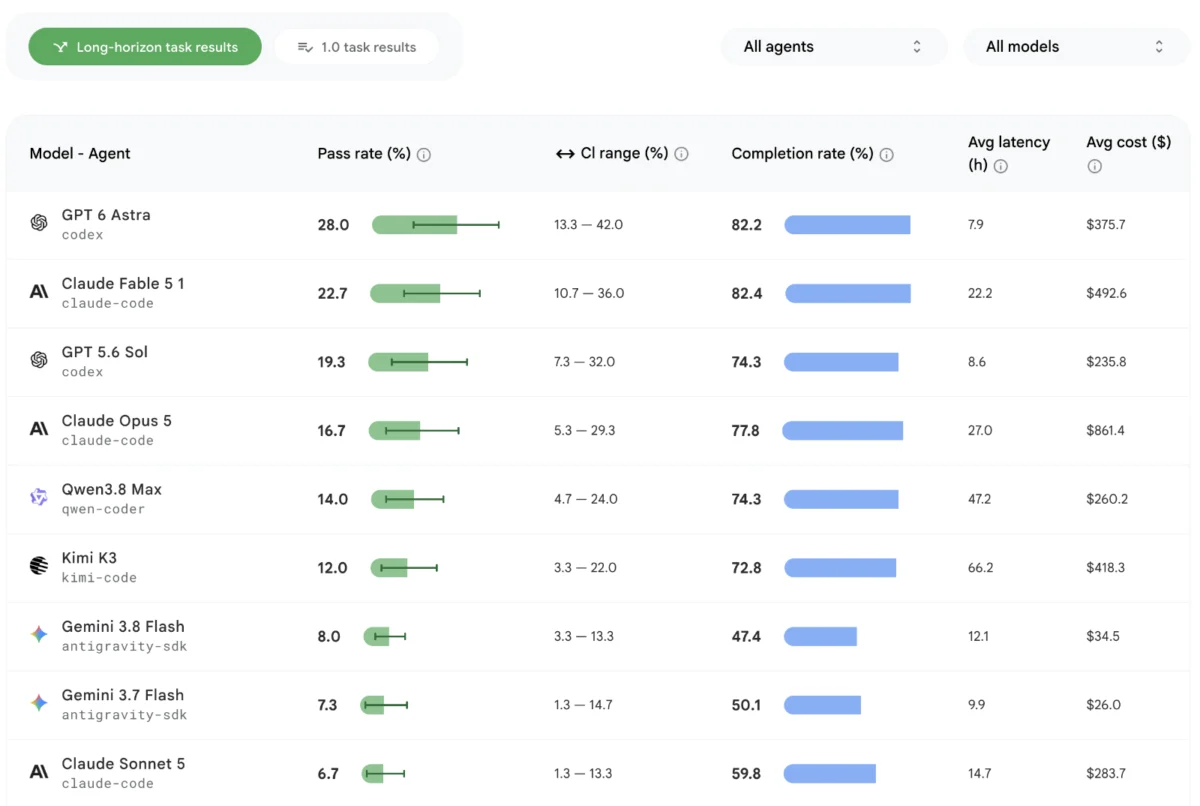
Current leaders include OpenAI’s GPT-6 Astra, which sits at the top with a 28% pass rate, followed closely by a roster of high-performing models including Gemini 3.8 Flash, Anthropic’s Fable 5.1, Kimi K3, and Qwen 3.8 Max.
Official Responses and Strategic Implications
The development of Android Bench 2.0 is not just a technical exercise; it is an attempt to create transparency in a crowded and often opaque market. By aligning with the Harbor framework, the researchers behind Android Bench are ensuring that the evaluation criteria remain industry-standard and theoretically sound.
Insights into AI Strengths
The research team has identified several key trends that help guide developers in choosing the right tool for their specific needs:
- New vs. Existing Code: AI models remain significantly better at writing new code from scratch than they are at refactoring existing, legacy repositories. Refactoring, the team notes, is an exercise in architectural complexity rather than raw code volume.
- Deterministic Transformations: Models excel at repetitive, deterministic tasks. Tasks such as converting Java to Kotlin, swapping networking libraries (e.g., Retrofit to Ktor), or introducing a ViewModel layer are consistently handled well, even across 125+ files and 8,000+ lines of code.
- The "Knowledge Gap" Problem: Models continue to struggle with runtime validation, breaking framework changes, and unreleased library APIs. Porting cross-platform applications to Android remains the "final boss" of current AI coding capabilities, with even the most advanced frontier models failing to reach 100% completion rates.
The Role of Agentic Workflows
A major takeaway from the 2.0 update is the importance of "harness design." By pairing models with provider-specific agents, the team observed that infrastructure matters as much as the intelligence of the model itself. Features like prompt caching and compact tool windowing were found to be critical in reducing token usage and improving the reliability of the agent’s output. The implication for developers is clear: the best model is only as good as the agent architecture in which it is deployed.
.png)
Implications: A Roadmap for the Future of Coding
The release of Android Bench 2.0 carries profound implications for both AI researchers and the broader developer community.
For AI Researchers: The shift toward Long-Horizon Tasks provides a clear North Star. The data indicates that current models have reached a plateau in simple coding but face a steep cliff when it comes to long-term architectural planning. This data will likely drive research into memory management, long-context window optimization, and iterative self-correction.
For Developers: The transparency provided by the new leaderboard allows for informed decision-making. Developers can now move beyond marketing claims and evaluate models based on their specific, real-world development challenges. If a team is looking to perform a massive migration, they now have a data-backed resource to identify which model/agent combination has the highest completion rate for that specific task.
The Path Forward: The team behind Android Bench has committed to keeping this a living project. By opening the floor for feedback via GitHub and social channels, they are ensuring that the benchmark evolves alongside the technology it measures.
As we look ahead, the integration of these sophisticated AI agents into the daily life of a developer seems inevitable. Android Bench 2.0 ensures that as we move into this era of AI-assisted engineering, we do so with our eyes wide open, armed with the data necessary to ensure that these tools remain, first and foremost, helpful, reliable, and profoundly capable of managing the complexities of modern software development.
To explore the findings in full, visit the Android Bench 2.0 portal and review the updated methodology. As the industry continues to push the boundaries of what is possible, these benchmarks will remain the essential compass for navigating the future of AI-driven Android development.