The Evolution of AI-Assisted Development: Introducing Android Bench 2.0
The landscape of software development is undergoing a seismic shift. As Large Language Models (LLMs) transition from simple autocomplete tools to proactive coding agents, the metrics used to evaluate them must evolve with equal velocity. Today marks a pivotal moment in this transition with the launch of Android Bench 2.0, a comprehensive upgrade to the industry’s most rigorous evaluation framework for AI-assisted Android development.
By introducing "Long-Horizon Tasks" (LHTs), transitioning to continuous scoring models, and integrating native agentic evaluation, Android Bench 2.0 provides a realistic mirror to the complex, multi-day engineering challenges developers face in the real world.
The Core Transformation: From Incremental Fixes to Long-Horizon Tasks
When the initial Android Bench was unveiled, the focus was primarily on incremental improvements—small-scale bug fixes, minor refactoring, or localized feature requests. While these metrics served their purpose during the early stages of AI integration, they failed to capture the architectural depth of professional software engineering. Developers rarely work in isolated snippets; they manage massive codebases, navigate complex dependencies, and execute multi-phase migrations.
To address this gap, Android Bench 2.0 introduces Long-Horizon Tasks (LHTs). These are not trivial exercises; they are complex, multi-day engineering workflows that simulate the actual labor of a senior developer. These tasks include:
- Deep Architectural Migrations: Upgrading major dependencies across thousands of lines of code.
- Systemic Refactoring: Converting massive legacy codebases to modern paradigms like Jetpack Compose.
- Greenfield Development: Building robust, production-ready applications from the ground up.
- Cross-Platform Porting: Translating complex business logic from cross-platform environments into native Android architectures.
By shifting the benchmark’s focus to these ambitious, sustained challenges, the framework now provides a high-fidelity evaluation of how AI models handle long-term context retention and architectural decision-making.
A New Scoring Philosophy: Moving Beyond Binary Success
In the realm of multi-day engineering, the traditional "pass or fail" binary grading system is insufficient. A model that successfully refactors 40 screens to Jetpack Compose while setting up intricate database tables, only to stumble on a minor edge-case assertion, cannot be dismissed as a 0% success.

Under the old rubric, such a model would receive the same grade as a model that failed to generate a single line of working code. Android Bench 2.0 corrects this oversight by adopting a continuous scoring methodology.
How Continuous Scoring Works
The new evaluation process analyzes the success of a task through a multi-dimensional lens, calculating a completion rate based on:
- Functional Integrity: Does the code perform the requested logic?
- Visual Fidelity: Do the UI components match the design specifications?
- Regression Mitigation: Did the model avoid introducing breaking changes to existing, unrelated features?
- Constraint Adherence: Did the model follow strict architectural instructions and coding standards?
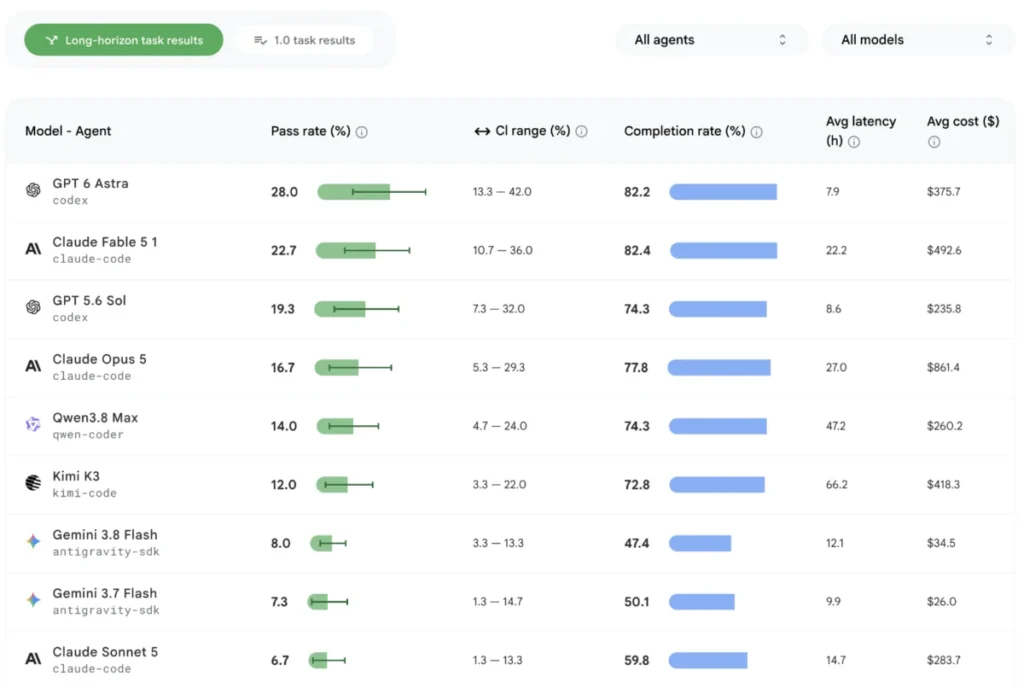
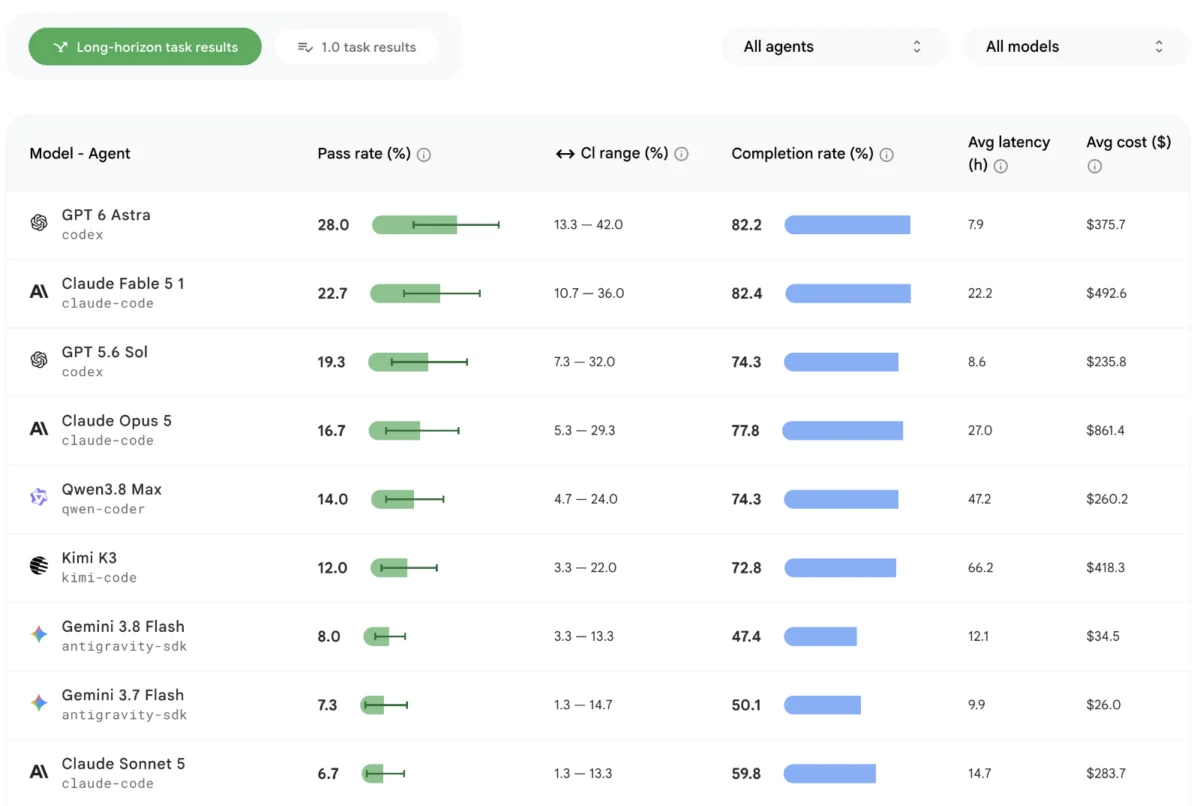
This granular approach offers a clearer signal to both researchers and developers, highlighting not just whether a model "worked," but how close it came to a production-ready state. Each model on the new leaderboard now features a detailed card view, allowing users to inspect pass rates, completion percentages, and, crucially, the average cost per task.
Chronology: The Journey to 2.0
The development of Android Bench 2.0 was not an overnight endeavor but a methodical, iterative process.
- Phase 1 (The Foundation): The original Android Bench was established to set a baseline for LLM performance in Android-specific environments. It focused on objective, narrow-scope code completion.
- Phase 2 (The Harbor Alignment): To ensure industry-standard reliability, the team aligned the benchmarking framework with the Harbor framework, ensuring that measurements were standardized and reproducible.
- Phase 3 (The LHT Dataset Integration): Throughout mid-2026, researchers focused on identifying the specific pain points of modern Android development—namely, the difficulty of managing long-term state across massive codebases.
- Phase 4 (Agentic Evaluation): Recognizing that developers rarely use raw models, the team integrated agentic workflows, testing models alongside the specific agents provided by their developers.
- Phase 5 (The Launch): Today, Android Bench 2.0 stands as the most comprehensive evaluation suite to date, complete with updated leaderboard rankings and expanded model support.
Supporting Data: The Reality of Modern AI Capability
The data provided by the 2.0 release is sobering but illustrative. The transition to Long-Horizon Tasks revealed a significant performance gap compared to the original benchmark metrics. While previous tests showed a ~91% pass rate for simpler, incremental tasks, the highest pass rate for LHTs currently sits at approximately 28%.
This disparity underscores a harsh reality: AI models are exceptionally proficient at deterministic, well-defined transformations, yet they struggle with the ambiguity of large-scale system design.
.png)
Key Performance Insights:
- Code Creation vs. Refactoring: Models significantly outperform when writing new code from scratch compared to navigating and refactoring existing, legacy-heavy repositories.
- Success in Patterns: Models demonstrate remarkable consistency when performing established transformations—such as swapping Retrofit for Ktor or implementing a ViewModel layer—even across 125+ files and 8,000+ lines of code.
- The "Knowledge Gap": Models falter when encountering unreleased libraries, breaking framework changes, or situations requiring complex runtime validation, such as debugging broken dependency injection graphs.
- The Porting Challenge: No model currently hits a 100% pass rate for porting cross-platform apps to native Android, with frontier models peaking at roughly 80% completion.
Official Responses and Strategic Implications
The introduction of agentic evaluation represents a major shift in how the Android ecosystem views AI. By running models like GPT-6 Astra and Gemini 3.8 Flash within their native agentic harnesses, the benchmarking team is gathering data on how "harness design"—such as prompt caching and compact tool windowing—directly impacts developer outcomes.
The message from the Android developer community is clear: they do not just want a "smarter model"; they want an integrated partner that understands the specific architectural nuances of Android development.
"We invest in this measurement because it is critical that developers have the freedom to use their agent and model of choice," the team noted in their official release. "Our goal is to provide the transparency necessary for teams to make informed decisions about their AI development stack."
Implications for the Future of Android Development
What does Android Bench 2.0 mean for the individual developer or the enterprise team?
- Increased Accountability for AI Providers: With granular, continuous scoring, model providers can no longer hide behind binary success rates. The leaderboard now exposes exactly where models fail—whether in UI fidelity, regression management, or architectural adherence.
- Shift Toward Agentic Workflows: The inclusion of agent evaluation confirms that the future of AI in coding is not just about the model, but about the ecosystem of tools surrounding it. Developers should expect to see more emphasis on how models interact with their specific IDEs and project structures.
- Realistic Expectations: The 28% pass rate for long-horizon tasks serves as a vital reality check. AI is currently a force multiplier for routine tasks and specific refactoring patterns, but it is not yet a replacement for the architectural oversight provided by human engineers.
- A Collaborative Feedback Loop: By hosting the dataset on GitHub and soliciting feedback via social channels, the Android Bench team is fostering a community-driven approach to AI evaluation. This ensures that the benchmark itself evolves alongside the rapidly changing capabilities of the models it tests.
As the industry looks ahead, Android Bench 2.0 stands as a testament to the fact that while we have made incredible strides in AI-assisted coding, the frontier of "long-horizon" autonomous development is still being mapped. By providing a clear, rigorous, and transparent framework, this update gives developers the compass they need to navigate the future of AI-driven engineering.