The PHP Renaissance: WordPress 7.0 Simplifies Custom Block Development
For over seven years, the narrative surrounding WordPress development has been dominated by a singular, persistent challenge: the "React Wall." Since the inception of the Gutenberg editor, developers wishing to create custom blocks have been forced to navigate a complex ecosystem of JavaScript, NPM packages, Webpack build pipelines, and the intricacies of React state management. For the traditional PHP developer—the backbone of the WordPress ecosystem—this shift represented a steep, often prohibitive, barrier to entry.
With the release of WordPress 7.0, the platform has finally introduced a long-awaited bridge. WordPress now allows developers to register and render custom blocks using exclusively PHP, effectively bypassing the need for a client-side build process for simple components. While this development has sparked debate regarding the future of block-based architecture, it represents a pivotal shift in how WordPress approaches developer experience.
The Chronology of Complexity
To understand the significance of this update, one must look at the evolution of the block editor. When Gutenberg was first integrated into Core in 2018, it prioritized a modern, JavaScript-first architecture to enable real-time editing. Developers were required to "double-register" blocks: once in PHP (to ensure the server could render them) and once in JavaScript (to ensure the editor could manipulate them).
This architecture, while powerful, created a dichotomy between "Core" developers and "Theme" developers. For years, the community clamored for a way to leverage the power of blocks without becoming full-stack JavaScript engineers. Between 2018 and 2026, the WordPress Core team focused heavily on Site Editor capabilities and block themes, yet the requirement for complex build tools remained an immovable object. The arrival of PHP-only block registration in 2026 marks the end of this "exile" for PHP-centric developers, signaling a maturation of the platform’s API design.
Technical Foundations: How PHP-Only Blocks Work
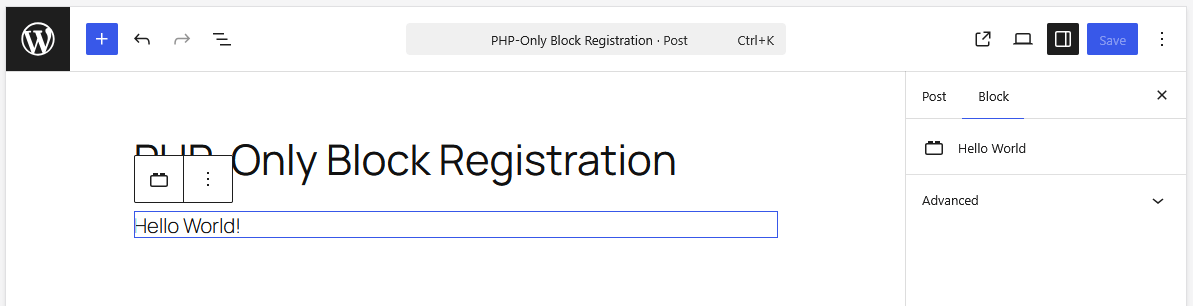
The core of this new functionality lies in the autoRegister flag within the register_block_type function. By setting 'autoRegister' => true in the block’s support array, developers instruct WordPress to automatically generate the necessary JavaScript "glue" code on the fly.
The "Hello World" Paradigm
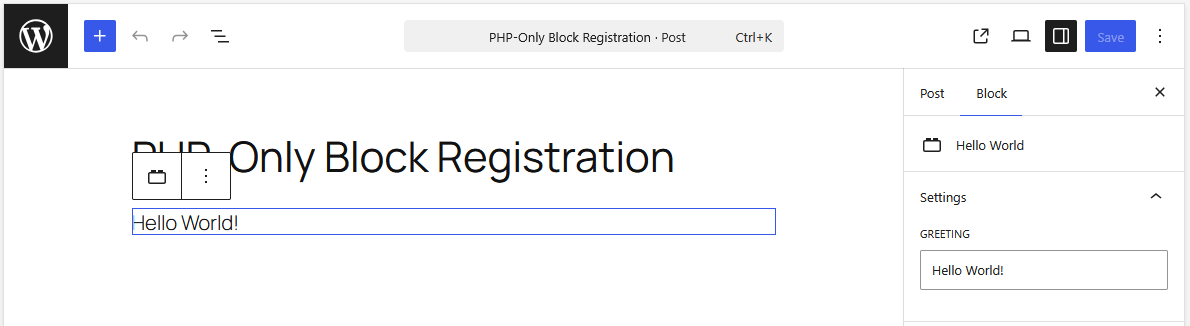
The implementation is remarkably lean. A basic block can now be registered in a single function:
function custom_hello_world_block()
  register_block_type('namespace/hello-world', [
    'title' => 'Hello World',
    'render_callback' => function ()
      return sprintf('<div %s>Hello World!</div>', get_block_wrapper_attributes());
    ,
    'supports' => ['autoRegister' => true],
  ]);

add_action('init', 'custom_hello_world_block');
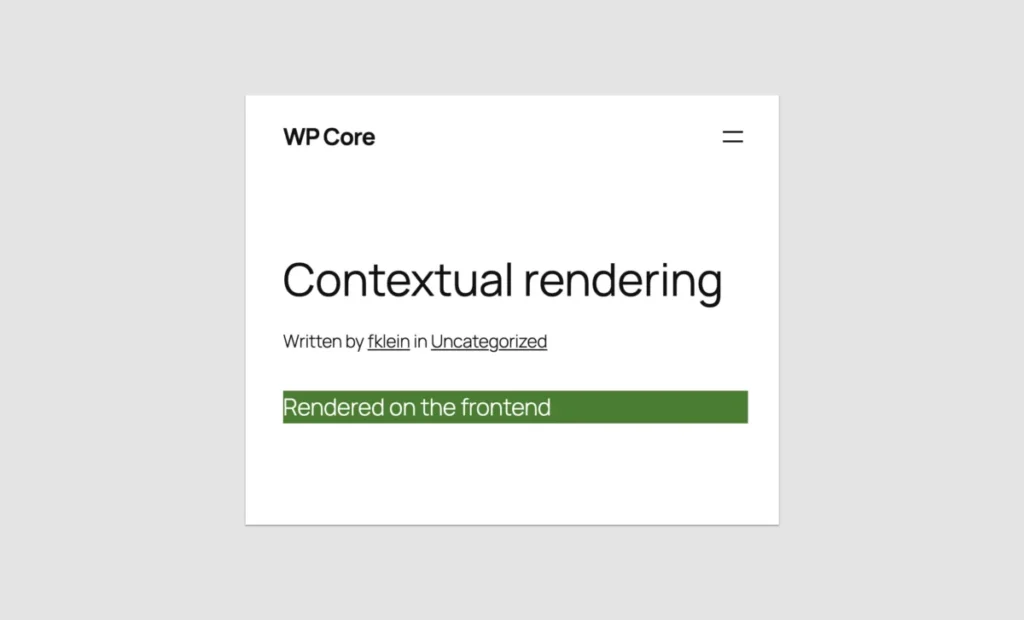
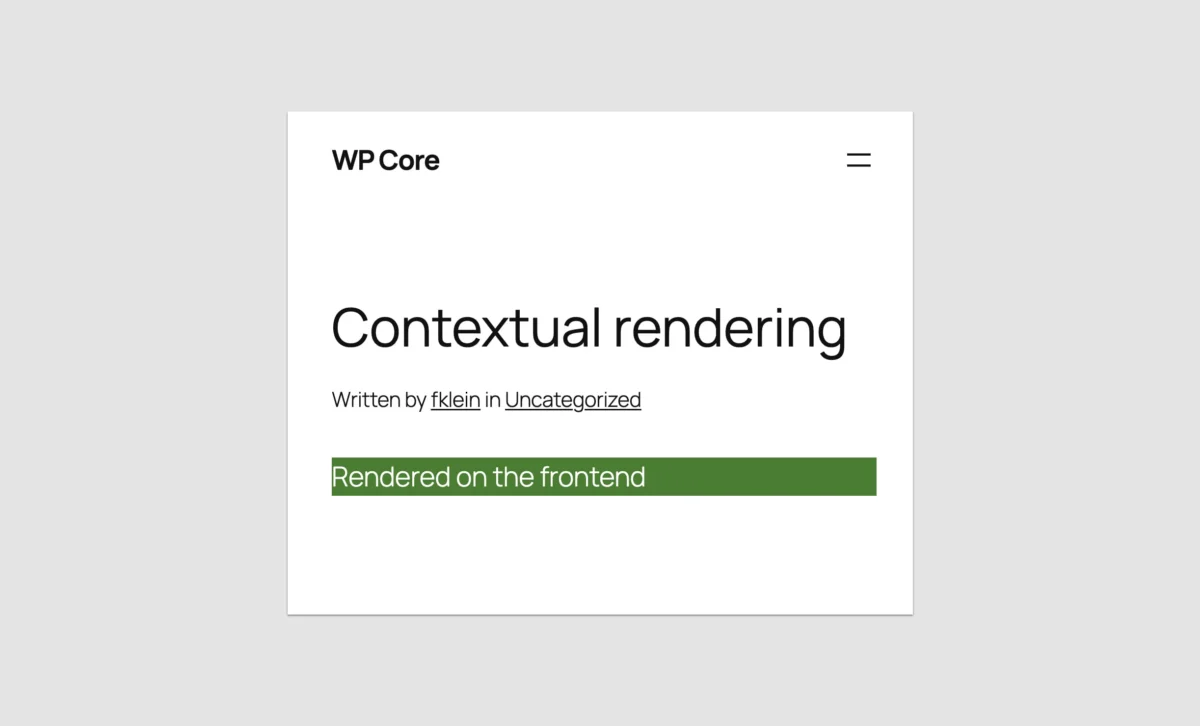
This code snippet abstracts away the client-side registration that previously required a dedicated block.js file. The block appears in the editor, functions within the layout, and renders perfectly on the front end. For adding interactivity, the attributes key allows developers to define simple inputs (strings, numbers, booleans) that automatically spawn corresponding controls in the WordPress sidebar settings.
Supporting Data and Architectural Limitations
Despite the convenience, it is vital to acknowledge that this is not a "magic bullet" for all development needs. The limitations are inherent to the server-side nature of the implementation.
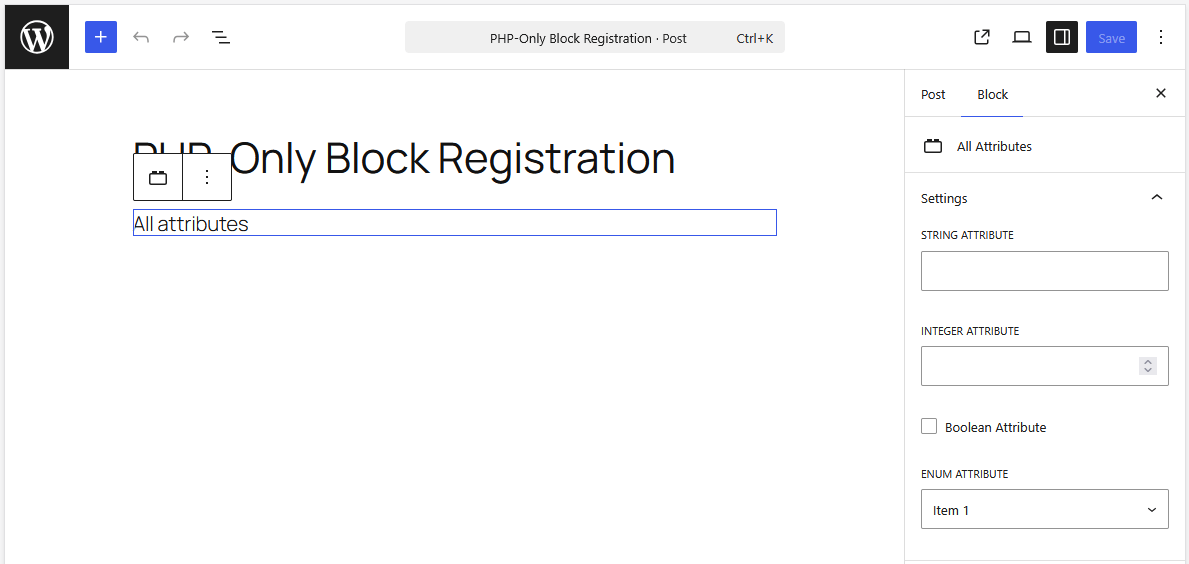
- Interaction Constraints: Because the block is rendered via a REST API endpoint and returned as HTML, there is no direct, persistent connection to the JavaScript state of the editor. This means in-place, WYSIWYG editing is impossible for these blocks; all content modification must occur within the sidebar settings.
- The Context Void: Perhaps the most significant hurdle is the lack of global post context. Because the block editor uses a stateless REST API, global variables like
$postare not available during the render callback. Developers must currently rely on workarounds, such as parsing URL parameters or using custom data attributes to track the post ID. - Data Stale-ness: Since these blocks query the database directly or use rendered output, they do not automatically update in real-time as a user types in other parts of the editor. They are, essentially, "snapshots" of data that require a page reload or a manual trigger to refresh.
The Strategic Pivot: Migrating Legacy Code
While the limitations may discourage those looking to build complex, highly interactive blocks, they are irrelevant for the "killer use case": the migration of legacy themes.
For years, many enterprise-level WordPress sites have remained on "Classic" themes, held back by thousands of lines of legacy PHP code (custom widgets, shortcodes, or template functions). Rewriting these into React blocks would cost thousands of dollars and hundreds of hours. With the new PHP-only approach, these features can be wrapped in a block-registration function and immediately integrated into the modern Site Editor.

This provides a clear path forward for agencies and freelance developers to adopt block-based themes without abandoning their existing codebases. It is, effectively, the "bridge" that allows for the modernization of the WordPress web without requiring a complete rewrite.
Official Perspectives and Community Reception
The WordPress Core team has positioned this feature not as a replacement for JavaScript development, but as a "democratization of the block system." Lead contributors have emphasized that while React remains the engine for high-performance, interactive experiences, PHP is the language of the WordPress community. By providing an "escape hatch" for simple blocks, the platform aims to reduce the "boilerplate fatigue" that has plagued developers for years.

Community reception has been largely positive, though tempered with caution. Seasoned JavaScript developers warn that relying too heavily on server-side rendering will lead to a fragmented editor experience where blocks behave inconsistently. However, the prevailing sentiment is one of relief. For a developer managing a site with a custom post-loop widget, the ability to turn that into a block in ten minutes—rather than two days—is a massive productivity gain.
Implications for the Future of WordPress
The introduction of PHP-only blocks suggests that WordPress is finally entering a phase of "Developer Experience" (DX) optimization. After years of chasing the performance and architecture of high-end single-page applications, the platform is acknowledging that the utility of the system is just as important as its technical purity.

Key Takeaways for Developers:
- Use for Simplicity: If your block needs to display a static list of posts, a call-to-action button, or a piece of legacy functionality, PHP-only is the way to go.
- Avoid for Interactivity: If your block requires live previews, drag-and-drop interfaces, or complex data handling, stay within the traditional JavaScript-based block ecosystem.
- The "Hybrid" Future: We are likely moving toward a hybrid ecosystem where themes and plugins contain a mix of JS-powered "app-like" blocks and PHP-powered "content-focused" blocks.
Conclusion
Was the seven-and-a-half-year wait worth it? For the developer who has been stuck maintaining a legacy classic theme, the answer is an emphatic yes. WordPress 7.0 has effectively removed the "all-or-nothing" barrier to block development.
While the new system will not replace the sophisticated requirements of modern, interactive web design, it solves the most pressing issue in the WordPress ecosystem: the friction of adoption. By allowing PHP developers to bring their existing skill sets into the modern era, WordPress has ensured that the next generation of themes will be built on the block editor, regardless of the developer’s familiarity with React. The era of the "PHP-only block" is not the end of JavaScript in WordPress; rather, it is the beginning of a more inclusive, flexible, and accessible development workflow.