Raspberry Pi Revolutionizes Digital Signage: The Smart Display Module Arrives
Main Facts: Bringing Compute Module 5 to Enterprise Displays
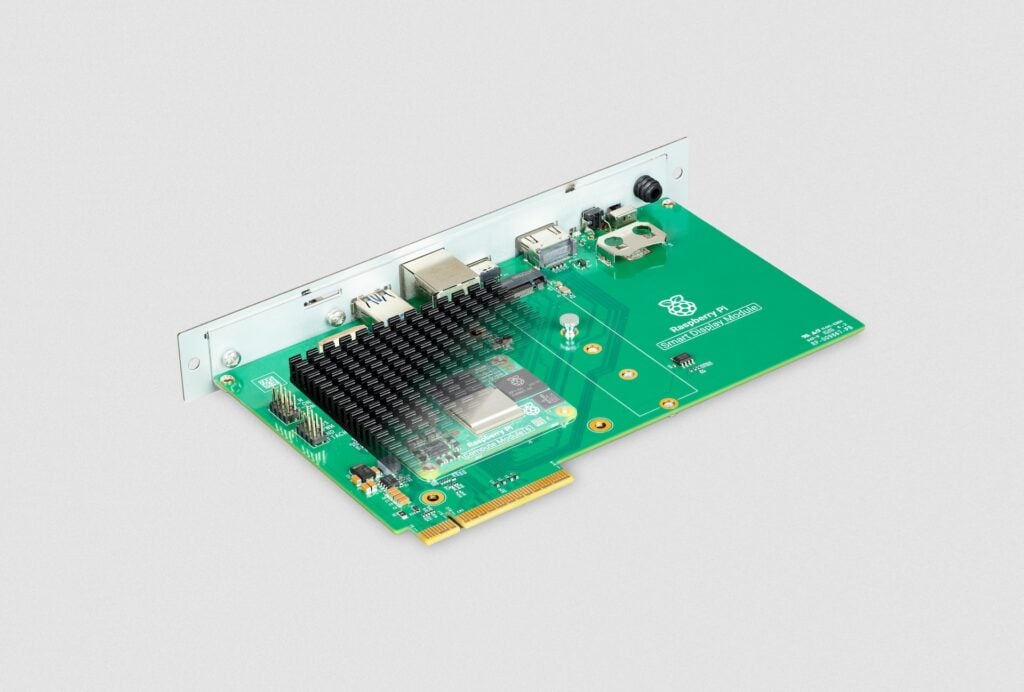
The landscape of commercial digital signage, corporate visual communication, and interactive multimedia experiences is undergoing a significant shift. Raspberry Pi has officially announced the global market launch of its highly anticipated Smart Display Module (SDM). Available immediately through the company’s worldwide network of Approved Resellers at an aggressive price point of just $30 (with the Compute Module 5 sold separately), this specialized adapter board is engineered to transform standard professional displays, large-format screens, and compatible projectors into fully functioning, high-performance Linux-powered endpoints.
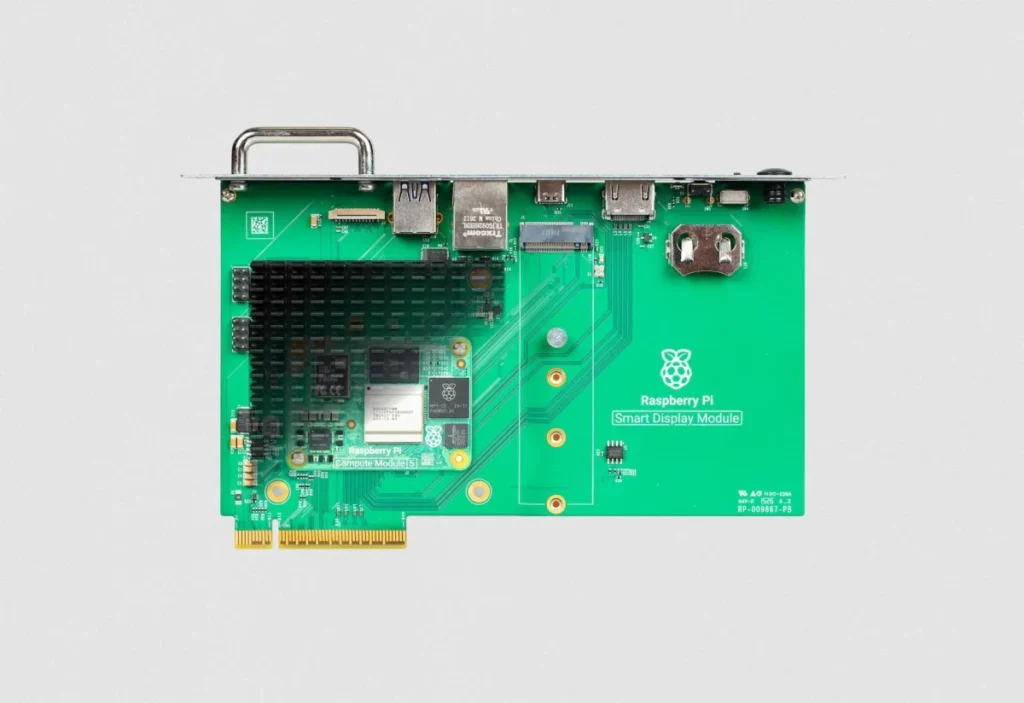
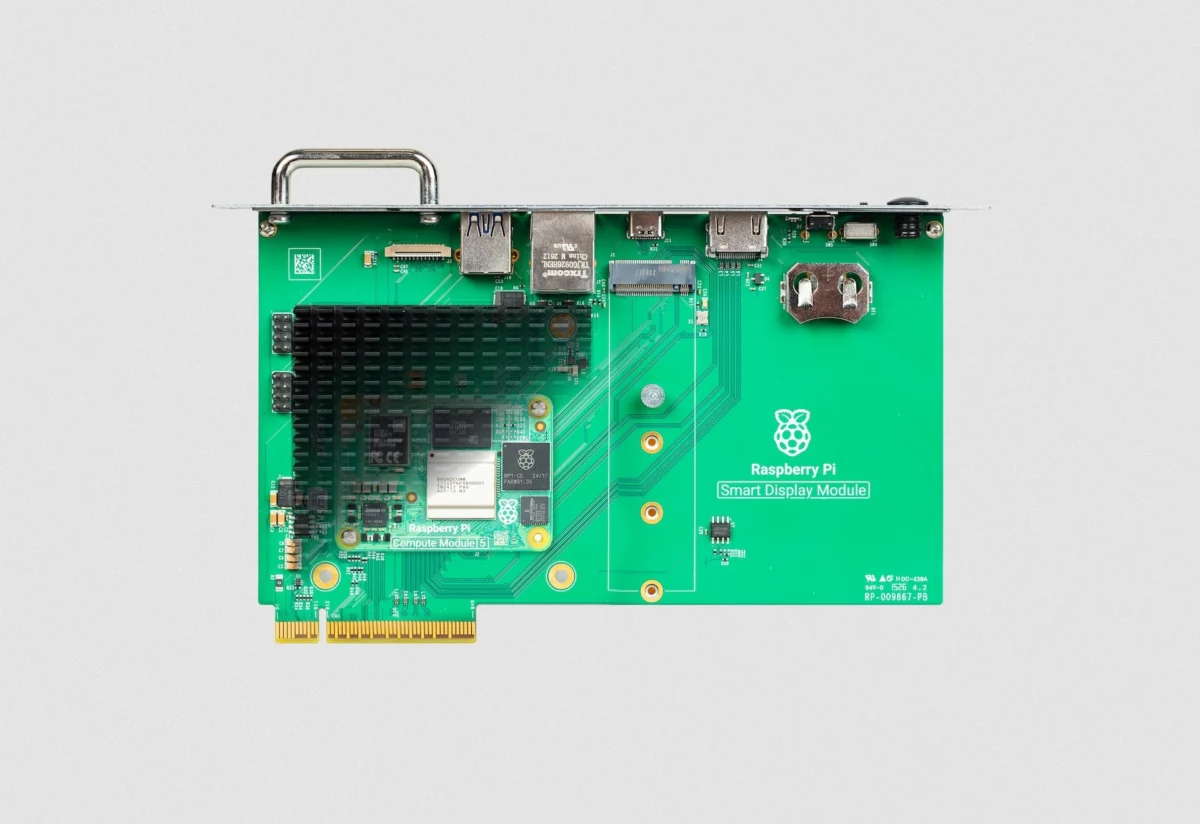
Developed in close strategic collaboration with industry giant Sharp Display Solutions Europe, the Raspberry Pi Smart Display Module is built around the open industry-standard Intel® Smart Display Module (SDM) specification. By bridging the gap between Raspberry Pi’s immensely popular ecosystem and enterprise-grade display hardware, the SDM offers a sleek, cost-effective, low-power performance tier capable of driving crisp 4K video playback while seamlessly integrating with existing Content Management Systems (CMS) already optimized for the Raspberry Pi 5 architecture.
Key Hardware Specifications and Capabilities
- Core Compatibility: Designed specifically as an advanced adapter board for the Raspberry Pi Compute Module 5 (CM5).
- Standard Compliance: Fully compatible with any display, monitor, or projector conforming to the Intel® SDM specification (both Small and Large slots, depending on deployment needs).
- Integrated Connectivity: Eliminates external cable clutter by slotting directly into compatible hardware, routing internal connections for power, high-definition video, multi-channel audio, data buses, and hardware control interfaces.
- M.2 Expansion Slot: Features an onboard M.2 slot, allowing integrators to add high-speed NVMe storage or dedicated AI acceleration modules—such as Hailo processors—to run local computer vision, audience analytics, and interactive machine learning tasks at the edge.
- Silent, Fanless Operation: Engineered for rigorous 24/7/365 commercial operation without moving parts, ensuring maximum reliability and zero noise pollution in quiet retail, museum, or corporate office environments.
Chronology: From Concept to Global Commercial Launch
The journey of the Raspberry Pi Smart Display Module from an engineering concept to a globally available commercial product highlights the company’s deepening focus on the B2B and industrial sectors.
January: The Initial Introduction
The hardware community first caught wind of the project in January, when Raspberry Pi formally introduced the Smart Display Module concept. Designed as a purpose-built adapter board tailored for the Compute Module 5, the announcement immediately drew attention from commercial AV integrators, digital signage operators, and hardware tinkerers looking for a standardized way to embed Raspberry Pi processing power directly into commercial-grade displays.
February: Public Debut at ISE Barcelona
Just weeks after its initial unveiling, Raspberry Pi took the hardware to the international stage, showcasing the Smart Display Module at Integrated Systems Europe (ISE) 2024 in Barcelona—the world’s largest audiovisual and systems integration exhibition. The live demonstrations running on Sharp displays generated substantial industry buzz, proving that the module could deliver enterprise-level reliability and 4K media playback without the thermal or budgetary overhead typical of traditional x86-based SDM slots.
The Testing Phase: Real-World Trials
Following the ISE exhibition, Raspberry Pi placed early evaluation units into the hands of select commercial partners and managed service providers. Among them was Media Looper, a specialized digital signage provider catering to small and medium-sized businesses. Media Looper subjected the Smart Display Module to a rigorous three-month trial integrated within a Sharp commercial display framework. The trial evaluated thermal endurance, software stability under continuous 24/7 playback, and ease of physical installation.
Today: General Global Availability
Today marks the official commercial release. The Smart Display Module is now live and shipping globally through Raspberry Pi’s authorized distribution channels, opening the door for widespread adoption across retail, transportation, hospitality, and corporate sectors.
Supporting Data and Technical Architecture
To understand the engineering achievement of the Raspberry Pi Smart Display Module, one must examine how it fits into the broader enterprise hardware ecosystem.
Overcoming the "Dongle and Cable" Dilemma
Historically, deploying media players for digital signage involved a messy web of components: a mini-PC or single-board computer, an external power supply brick, an HDMI cable running from the player to the screen, a USB cable for touch or control, and a mounting bracket bolted to the back of the chassis. This tangled setup introduced multiple points of failure. Loose HDMI connections, bumped power supplies, and dust accumulation frequently caused commercial screens to go dark, requiring costly on-site technician visits.
The Intel SDM specification was originally created to solve this exact problem for x86 architecture by standardizing an internal slot—similar to an oversized PCI Express edge connector—built directly into the body of professional commercial displays. By bringing this form factor to the Raspberry Pi Compute Module 5, Raspberry Pi has democratized the internal slot standard. The module slides cleanly into the back of the display, locking securely into place with internal pins handling power delivery, data transfer, and audio-visual streams.
Performance Metrics & AI Integration
- Visual Fidelity: Native hardware-accelerated 4K video decoding ensures smooth playback of high-bitrate promotional loops, menu boards, and corporate broadcast feeds.
- Power Efficiency: Operating within the stringent power envelopes defined by the SDM standard, the module draws minimal wattage, significantly reducing cooling requirements for large multi-screen video walls.
- Edge Intelligence via M.2: The inclusion of an M.2 expansion slot transforms the board from a simple media player into an intelligent edge device. By adding a Hailo AI accelerator or similar hardware, businesses can run real-time audience measurement (such as demographic analysis, dwell time tracking, and gaze detection) directly on the display without sending sensitive video streams to the cloud.
Target Vertical Markets
- Flight Information Display Systems (FIDS): High-reliability environments like airports and train stations where 24/7 uptime is mandatory.
- Corporate and Retail Signage: Dynamic promotional displays, internal corporate communication portals, and interactive product catalogs.
- Wayfinding & Interactive Kiosks: Touch-enabled campus and mall maps that require fast response times and robust local operating systems.
- Immersive Art and Museum Exhibits: When paired with SDM-compatible professional projectors, the module provides a compact, hidden brain for complex projection-mapping and interactive installations.
Official Responses and Industry Reception
The commercial viability of any new B2B hardware standard relies heavily on early validation from developers, service providers, and industry partners. The reception to the Raspberry Pi Smart Display Module has been overwhelmingly positive.
The Voice of the Integrators: Media Looper
During the three-month field test conducted by Media Looper, the service provider evaluated how the hardware would perform under actual commercial conditions. The results exceeded expectations. Jon McIntosh, Founder of Media Looper, shared his enthusiastic endorsement following the trial period:
"It does everything our Raspberry Pi 5 does, with no cable, power supply, or bracket for a customer to disturb. We would deploy it as our default for any customer whose display has an SDM slot."
This sentiment underscores the primary value proposition for managed service providers: a drastic reduction in support tickets and truck rolls caused by disconnected cables or tampered external hardware.
Collaboration with Sharp Display Solutions Europe
The partnership with Sharp Display Solutions Europe was instrumental in refining the physical and electrical characteristics of the module. By ensuring native interoperability with Sharp’s professional-grade displays—which are widely deployed in mission-critical corporate and retail environments—Raspberry Pi has ensured that the Smart Display Module meets the stringent quality assurance demands of enterprise buyers.
Implications: What the SDM Means for the Future of Digital Signage
The launch of the Raspberry Pi Smart Display Module carries profound implications for the digital signage industry, systems integrators, and software developers alike.
1. Democratizing Enterprise-Grade Hardware
Historically, Intel SDM-compatible slots were populated almost exclusively by x86-based Core or Celeron modules. These units, while powerful, often carried a heavy price tag—frequently costing hundreds or even thousands of dollars per endpoint. By introducing a $30 adapter board that leverages the high-performance, low-cost Compute Module 5, Raspberry Pi has shattered the cost barrier for enterprise-tier internal slot solutions. Small and medium-sized businesses can now deploy professional, cable-free digital signage networks at a fraction of traditional hardware costs.
2. Streamlining Software Deployment
Because the Smart Display Module runs on the standard Raspberry Pi OS and Compute Module 5 architecture, software developers do not need to write or port custom code for a proprietary hardware platform. Any existing Content Management System (CMS) or Linux application already compatible with the Raspberry Pi 5 can run natively on the SDM. This accelerates time-to-market for digital signage software vendors looking to offer integrated hardware packages to their clients.
3. Raising the Bar for Reliability and Security
In commercial environments, physical security and reliability are paramount. Exposed single-board computers running on tablet chargers are vulnerable to theft, accidental unplugging, and power surges. The enclosed nature of an SDM slot protects the hardware from tampering, environmental dust, and physical damage. Coupled with Raspberry Pi’s robust enterprise software support, businesses gain a secure, easily manageable digital signage ecosystem that can be updated, monitored, and maintained remotely at scale.
Looking Ahead
As businesses increasingly demand smarter, more efficient, and aesthetically clean visual communication tools, the Raspberry Pi Smart Display Module arrives as a timely game-changer. By combining the flexibility and affordability of the Raspberry Pi ecosystem with the professional, integrated engineering of the Intel SDM standard, Raspberry Pi has once again redefined what is possible in low-cost, high-performance computing.
For enterprise buyers, systems integrators, and developers wishing to explore the Smart Display Module further, units are available now starting at $30 via Raspberry Pi Approved Resellers. Additional technical documentation and sales inquiries can be accessed directly through the official Raspberry Pi website.