High-Tech Hardware Hacking: Ledger Donjon Cracks Raspberry Pi’s RP2350 Secure Microcontroller Using $250,000 Laser Rig
Main Facts
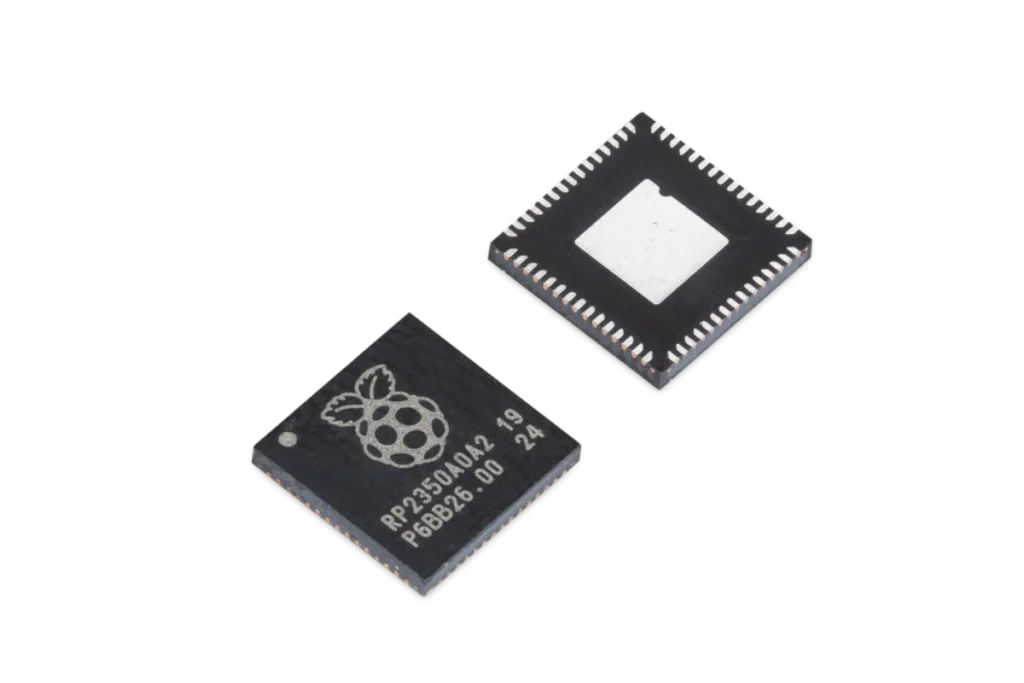
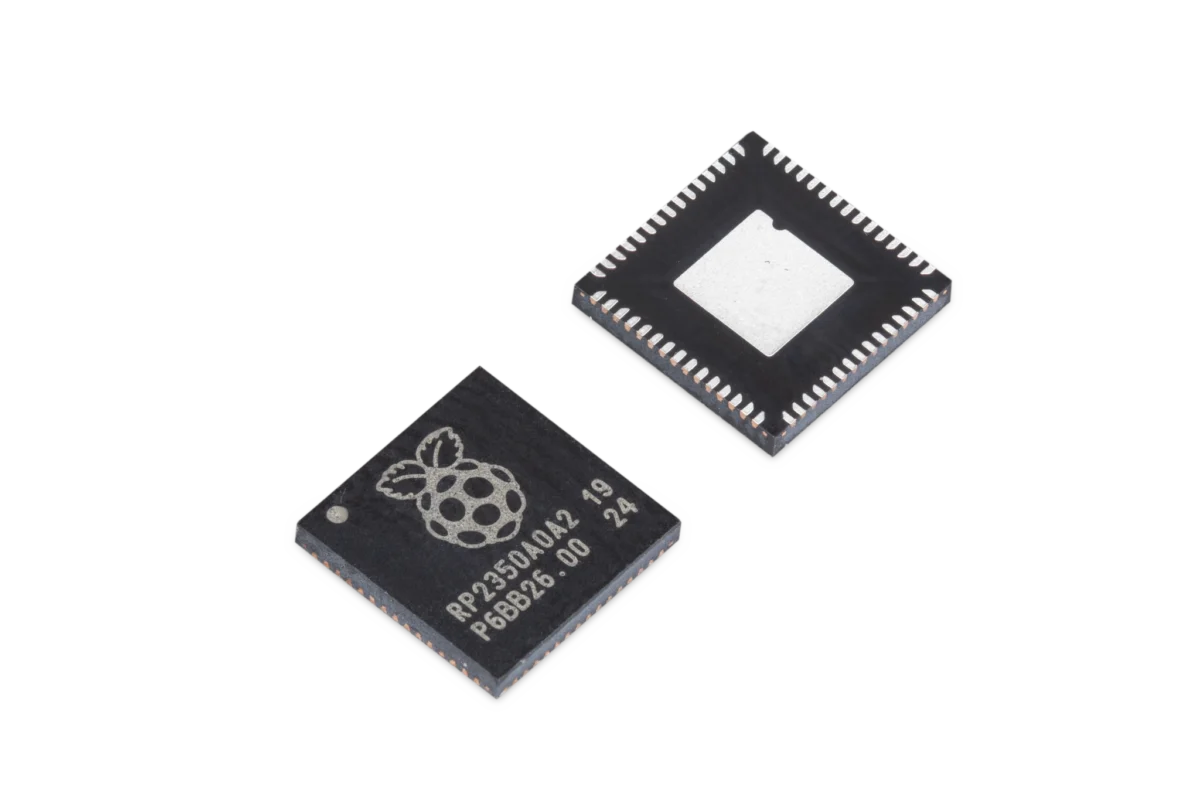
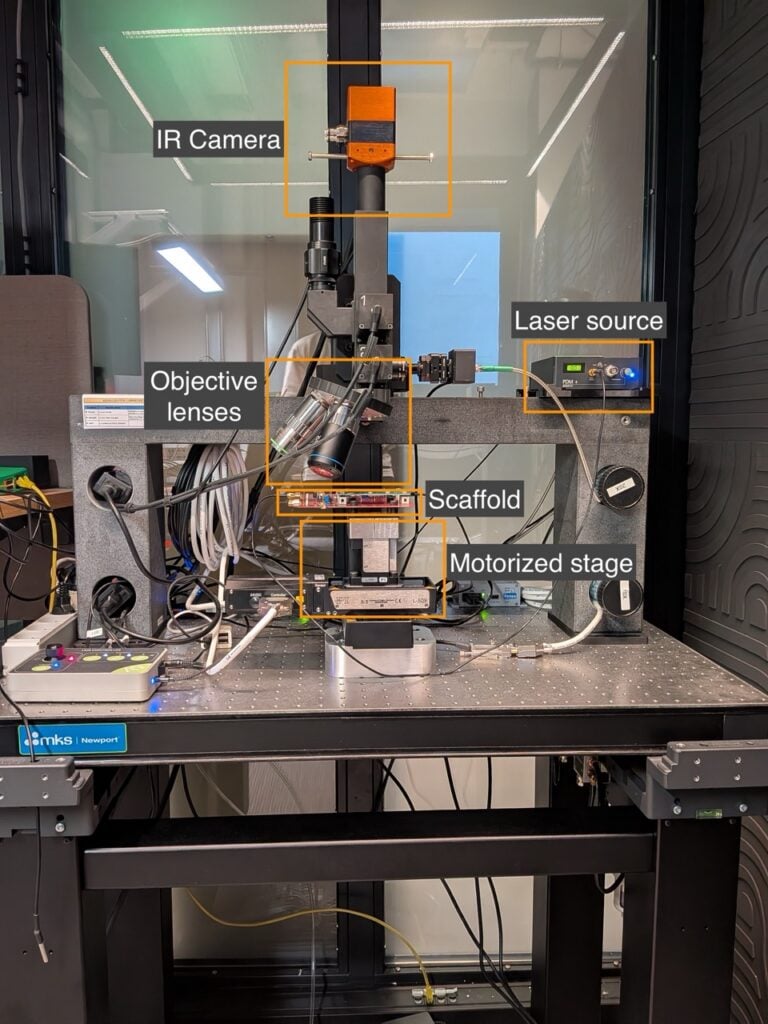
In the relentless cat-and-mouse game of semiconductor security, hardware hackers have once again pushed the boundaries of what is possible. Ledger Donjon—the renowned security evaluation laboratory belonging to cryptocurrency hardware wallet manufacturer Ledger—has successfully bypassed the core security mechanisms of the Raspberry Pi RP2350 microcontroller. Utilizing a sophisticated laboratory setup featuring approximately $250,000 worth of specialized microscopy and laser equipment, the research team successfully executed a laser fault injection (LFI) attack to re-enable the secured debug interface on the modern RP2350-A4 chip.
The breakthrough, achieved through meticulous target localization and precision infrared laser positioning, highlights the immense challenges manufacturers face when attempting to achieve absolute hardware security. Despite the high-profile nature of the vulnerability, Raspberry Pi has confirmed that it will not respin the silicon for this specific exploit. The findings validate the ongoing importance of responsible vulnerability disclosure programs and provide critical insights into the physical vulnerabilities inherent in modern silicon design.
Chronology of Events: From Launch to Laser Faults
August 2024: The Debut of the RP2350 and the First Hacking Challenge
Raspberry Pi officially launched the RP2350, its highly anticipated secure microcontroller designed to bring robust security features—such as secure boot, protected storage, and hardware-enforced isolation—to the maker community and industrial developers alike. Recognizing that true security can only be validated through rigorous peer review, Raspberry Pi concurrently launched its inaugural Hacking Challenge. This event invited the global security community to find flaws in the chip’s defenses, offering substantial rewards for successful exploits.
The first challenge proved immensely informative. Multiple security researchers successfully discovered vulnerabilities, prompting Raspberry Pi to respin the RP2350 silicon (moving to the A4 stepping) and patch boot ROM vulnerabilities to neutralize the reported breaks.
The Evolution of the Attack Vectors
During that initial challenge, a prominent security researcher known as "Courk" demonstrated an ingenious homebrew infrared laser setup capable of faulting the earlier A2 stepping of the RP2350. Courk’s attack manipulated internal register states, causing the chip to behave in unintended ways and bypassing security gates. Raspberry Pi successfully addressed this specific homebrew vector by issuing a boot ROM revision implemented in the current A4 die revision.
However, hardware security is an ever-evolving arms race. While homebrew rigs lower the barrier to entry, well-funded and exceptionally equipped professional laboratories operate on an entirely different plane of sophistication.
Recent Months: Ledger Donjon’s Responsible Disclosure
Several months ago, the engineers at Ledger Donjon reached out to Raspberry Pi to coordinate the responsible disclosure of their independent security research. Utilizing high-end failure analysis equipment, the Ledger Donjon team independently developed an advanced laser fault injection technique tailored to the RP2350-A4. Their methodology demonstrated that even after silicon respins and software mitigations, deeply entrenched physical attack vectors remain viable given sufficient capital, tools, and technical expertise.
Supporting Data and Technical Breakdown
The Anatomy of a Laser Fault Injection (LFI) Attack
To understand the magnitude of Ledger Donjon’s achievement, one must examine the physics of Laser Fault Injection. Modern microcontrollers like the RP2350 are densely packed with microscopic transistors and logic gates operating at gigahertz-equivalent operational frequencies. Under normal conditions, these integrated circuits strictly enforce security policies, locking down debug ports (such as SWD/JTAG) and protecting One-Time Programmable (OTP) memory contents from external reading.
Ledger Donjon’s attack methodology relied on the following key phases:
- Target Identification: Using high-resolution optical microscopy, the researchers mapped the silicon die layout to pinpoint the precise physical locations of registers and bus control logic responsible for access control.
- Optical Preparation: Because silicon is semi-transparent to specific infrared wavelengths, the team could target the internal circuitry either from the front side (if metal layers permit) or, more effectively, by thinning the silicon substrate and targeting from the backside.
- Precision Irradiation: Using a finely focused infrared laser beam pulsed at precise nanosecond intervals, the researchers induced localized photoelectric effects. This temporary ionization creates a transient current, flipping bits within specific internal registers.
- State Manipulation: By hitting the exact register at the precise clock cycle during boot or runtime, the laser pulse forced the RP2350 to skip security evaluation routines, effectively unlocking the debug interface and allowing the readout of sensitive OTP memory blocks.
The Cost of Entry
While Courk’s previous exploit proved that ingenuity can sometimes compensate for expensive gear, Ledger Donjon’s research underscored the brute-force technical reality of advanced physical attacks. Replicating their specific methodology requires access to a laboratory outfitted with approximately $250,000 in specialized hardware, including:

- High-precision motorized micro-positioning stages.
- Advanced optical microscopes with infrared capabilities.
- Pulsed laser sources capable of sub-micron spatial resolution and picosecond temporal precision.
- Complex trigger-synchronization hardware to align laser pulses with internal CPU clock cycles.
Official Responses and Industry Impact
Raspberry Pi’s Perspective
Raspberry Pi responded to the disclosure with a mixture of professional respect and pragmatic evaluation. In their official communications, the organization praised the Ledger Donjon team for their technical excellence, professionalism, and adherence to coordinated vulnerability disclosure principles.
Crucially, after thoroughly analyzing the research, Raspberry Pi leadership and engineering teams determined that the findings do not warrant a silicon respin. A chip respin is a costly and time-consuming process involving millions of dollars in mask fees, extensive re-verification, and supply chain delays. Deciding against a respin indicates that Raspberry Pi views the attack vector as posing a low practical risk to the vast majority of end-users.
Why No Respin? Threat Modeling in Practice
In hardware security, absolute security is an economic and physical impossibility; security is instead a function of risk management and threat modeling. For an attacker to successfully replicate Ledger Donjon’s attack, they must:
- Physically acquire the target device.
- Destructively decapsulate and prepare the silicon die (often thinning the die to tens of micrometers).
- Invest a quarter-million dollars in laboratory infrastructure.
- Possess deep expertise in semiconductor physics, optics, and reverse engineering.
For mass-market consumer electronics, IoT devices, or maker projects, an attack vector requiring a $250,000 laser laboratory per device is economically unviable. Attackers typically follow the path of least resistance—focusing on software bugs, side-channel analysis, or supply chain interception rather than building a micro-optics lab to extract secrets from a single microcontroller.
Implications for the Future of Microcontroller Security
The Ongoing Battle: The Second Hacking Challenge
Even as the dust settles on the Ledger Donjon disclosure, Raspberry Pi’s security journey continues. The company’s Second Hacking Challenge has been running for an extended period, shifting its focus from fault injection to Side Channel Analysis (SCA).
Side channel analysis involves monitoring a device’s physical characteristics—such as power consumption, electromagnetic radiation, or acoustic emissions—while it performs cryptographic operations, attempting to mathematically deduce secret keys without physically altering the chip. Despite multiple deadline extensions and intense efforts by international security teams, the second challenge remains unbeaten, though reports indicate that several participating groups are drawing uncomfortably close to a breakthrough. The challenge is slated to conclude at the end of next month, promising further announcements in the hardware security space.
Lessons Learned for Silicon Designers
The Ledger Donjon disclosure and the broader history of the RP2350 hacking challenges offer several vital takeaways for the semiconductor industry:
- Security Through Transparency: By actively encouraging researchers to break their silicon, Raspberry Pi has identified vulnerabilities under controlled conditions rather than discovering them silently exploited in the wild.
- Physical Security is Relational: Hardening silicon against physical attacks is an escalating arms race. Measures that deter casual hobbyists (such as basic ROM locks) can often be circumvented by professional labs with advanced tooling.
- Contextual Risk Assessment: Manufacturers must balance the theoretical vulnerability of a chip against the real-world threat landscape of its intended deployment environments.
As the RP2350 continues to power millions of projects worldwide, the collaborative efforts between Raspberry Pi and elite research outfits like Ledger Donjon ensure that future iterations of silicon will be measurably more resilient against the ever-advancing frontier of hardware hacking.