
The Backbone of Open Source: Gentoo Linux Appeals for Infrastructure Support Amidst Sponsor Departure


In the vast, interconnected ecosystem of open-source software, the public’s attention is almost exclusively captured by the release of new features, the resolution of critical security vulnerabilities, or the shifting tides of desktop environments. However, beneath the polished interfaces and high-performance kernels lies a silent, foundational layer: the infrastructure. Without servers to host source code, package repositories, mirrors, and communication channels, even the most legendary Linux distributions would cease to exist.
Today, that fragile reality is coming to the forefront for one of the most respected names in the Linux world. Gentoo, the source-based distribution synonymous with power-user control and deep customization, has issued a formal call for infrastructure sponsors. Following the departure of several long-standing backers, the project faces a critical juncture in maintaining the hardware that keeps its ecosystem operational.
The Reality of Maintaining "Source-Based" Infrastructure
To understand why Gentoo’s call for help is so significant, one must first understand its architecture. Unlike binary-based distributions like Ubuntu or Fedora, where users download pre-compiled software, Gentoo’s Portage package manager thrives on compiling software directly on the user’s machine. This "source-based" philosophy offers unparalleled optimization and choice, but it places a unique, heavy burden on the project’s infrastructure.

Gentoo requires robust, distributed systems to distribute source code, maintain its massive tree of ebuilds (the scripts that define how software is compiled), and provide the critical updates that keep users secure. Because Gentoo doesn’t rely on a single corporate benefactor to foot the entire bill, it has historically operated on a decentralized model of goodwill, donated hardware, and third-party hosting.
However, this model is inherently volatile. As the economic landscape of the tech industry shifts, companies are tightening their budgets, and for some, "non-core" infrastructure sponsorships are the first to be pruned. The recent announcement by the Gentoo team confirms that the project’s current infrastructure is feeling the strain of these departing partners, necessitating an urgent search for new allies.
A Timeline of the Crisis
The challenge currently facing Gentoo did not emerge overnight; it is the culmination of long-term shifts in how open-source projects are supported.

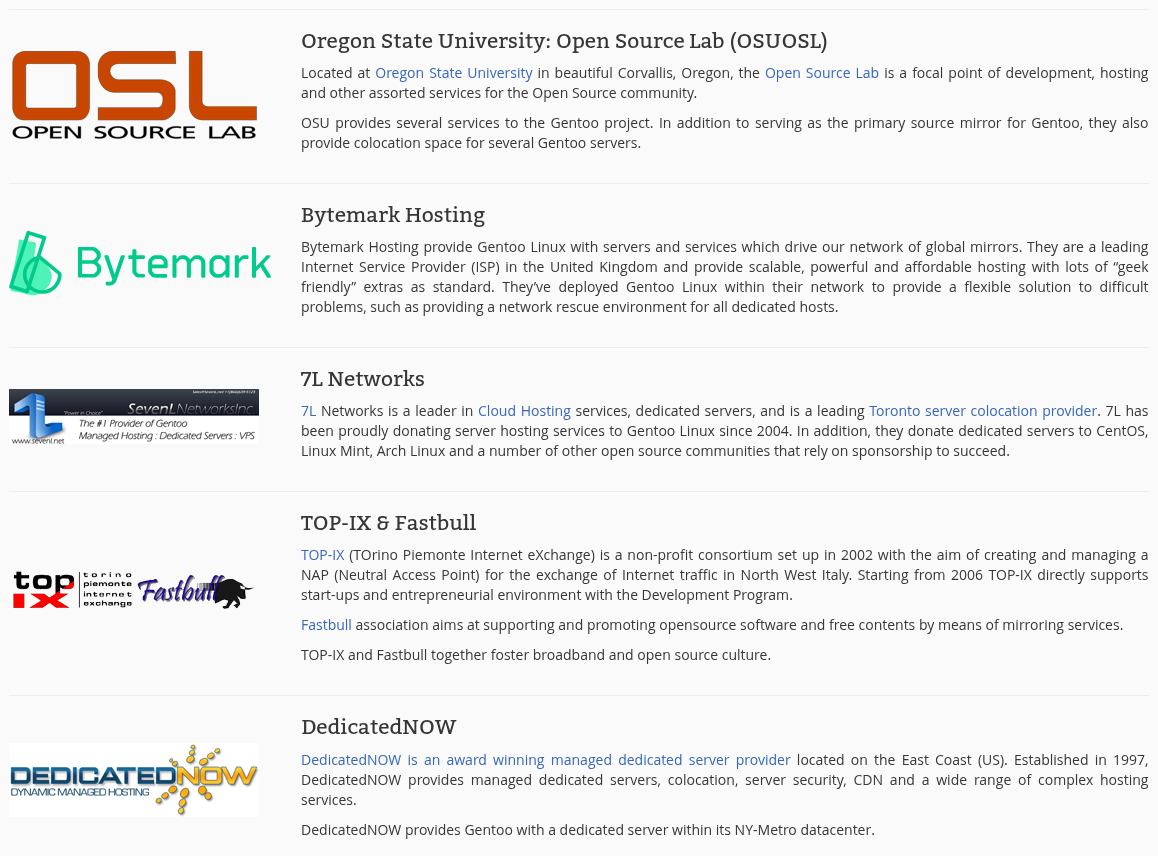
- The Era of Stability: For years, Gentoo maintained a steady roster of prestigious sponsors, including the Oregon State University Open Source Lab (OSUOSL), CDN77, HP, and Hetzner. These entities provided the backbone of the project’s connectivity and hardware needs.
- The Shift in Corporate Strategy: Over the past eighteen months, several long-term partners began evaluating their contributions. In early 2026, the project leadership noted a decline in active communication and renewed commitments from a portion of its sponsor list.
- October 2026 – The Call to Action: On October 7, 2026, the official Gentoo project news feed published a formal request for new infrastructure sponsors. The notice explicitly stated that previous contributors had ceased their support, leaving gaps in the project’s technical capacity.
- The Present Day: The project is now actively vetting new potential partners. While the community remains resilient, the infrastructure team is working overtime to migrate services and ensure that no downtime impacts the user experience.
The Five Pillars of Support
Gentoo’s official wiki page for sponsorship outlines a flexible, multi-faceted approach to collaboration. The project is not looking for a "one-size-fits-all" check; instead, it offers five distinct avenues for organizations or individuals to provide support, reflecting the nuanced needs of their distributed network.
1. Donated Hardware
The project welcomes physical hardware donations for its US-based hosting locations. The requirements are modest by enterprise standards—the project seeks servers capable of handling contemporary workloads. The value here lies in the long-term utility of the hardware, allowing the project to reduce its reliance on rented virtual environments.
2. Colocation Services
Perhaps the most critical need is for physical rack space, power, and high-speed network connectivity. Gentoo is specifically seeking international colocation partners. While the US is well-covered, global distribution is essential to ensure that users in Europe, Asia, and the Southern Hemisphere can access repositories with minimal latency.
3. Virtual Machine (VM) Hosting
While Gentoo prefers physical infrastructure for certain performance-intensive tasks, they acknowledge that cloud-based virtual machines are a practical necessity for many of their ancillary services. The requirement is a modest "minimum of 2 vCPUs, 4GB of RAM, and 25GB of storage." The project’s team notes that while they are leaning into the cloud, many of their core services are "monolithic," meaning they require stable, persistent environments that are not always optimized for containerized orchestration like Kubernetes.
4. Managed Root Servers
For companies with spare capacity, Gentoo is open to utilizing full-package hosted physical servers. In this arrangement, the sponsor provides a root server—similar to those offered by providers like Hetzner—or even allows Gentoo to gain full remote access to unused hardware. The sponsor retains ownership and high-level management, while the Gentoo team handles the operating system maintenance and software configuration. This provides a "hands-off" option for organizations that want to support the project without deep technical involvement.
5. Direct Financial Contributions
Cash remains the most fungible asset. Any donations provided to the Gentoo foundation are funneled directly into covering the costs of colocation, bandwidth, and the maintenance of existing hardware. This is often the simplest path for corporate entities that lack the technical capacity to host infrastructure but possess the desire to support the project’s long-term sustainability.

Implications for the Open Source Ecosystem
Gentoo’s current predicament serves as a microcosm for the broader "sustainability crisis" in open source. Projects like the Linux Firmware Update Service (LVFS) have managed to solve this by courting major industry players—such as Lenovo, Dell, HP, and NVIDIA—at a "Premier" level of $100,000 per year. While LVFS has successfully turned its necessity into a corporate business case, not every project has the same level of industry integration.
The implications for the open-source community are clear: Infrastructure is not free.
When a project like Gentoo struggles, it sends a ripple effect through the community. If the infrastructure fails, the ability to build and secure software on top of the distribution vanishes. This is why the project emphasizes a "vision-aligned" approach to sponsorship. They are not merely looking for landlords for their servers; they are looking for partners who believe in software that respects user choice, prioritizes openness, and rejects the "black box" nature of modern proprietary operating systems.

A Call to the Community
The Gentoo infrastructure team has made their contact information public: [email protected]. They are encouraging any organization with excess rack space, unused server hardware, or a desire to contribute financially to reach out.
For the reader, the lesson is simple: if you benefit from the work of a distribution like Gentoo—whether you use it for your personal workstation, your company’s servers, or as a base for your own research—there is a tangible way to ensure it survives. The future of open source depends on the willingness of those who benefit from it to contribute to the foundational layers that keep the gears turning.
As we move further into an era where "Big Tech" is increasingly locking down software ecosystems, supporting distributions that stand for the "old-school" values of transparency and user-controlled compilation is more than just a donation; it is an investment in the freedom of the computing future. Whether through a single server or a recurring financial commitment, the act of sponsoring projects like Gentoo is the most direct way to ensure that the spirit of the open-source movement remains, in every sense of the word, independent.








