Beyond the "Pinky-Promise": Reimagining VPN Security in an Age of Surveillance
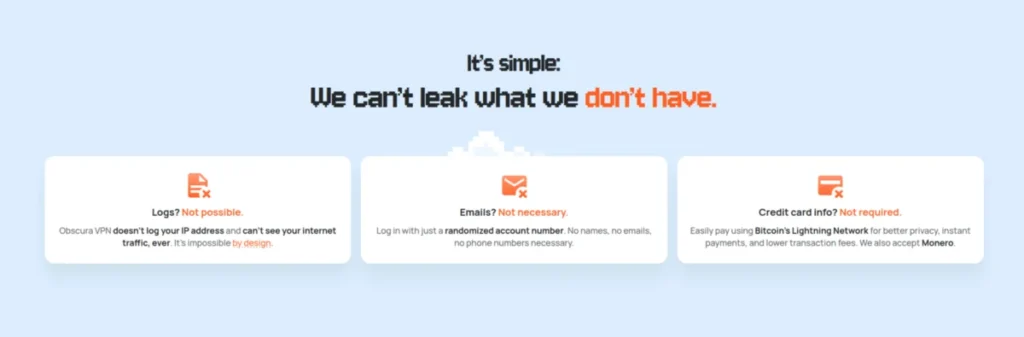
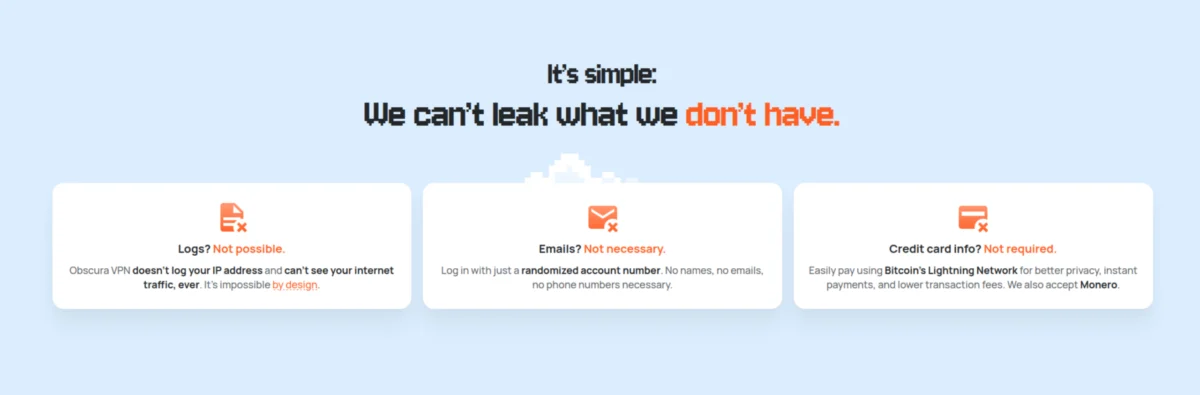
The Virtual Private Network (VPN) industry has long been built on a foundation of faith. For years, the standard pitch to privacy-conscious consumers has been a simple, reassuring mantra: "We don’t keep logs." It is a pledge that invites users to hand over their entire digital footprint to a service provider, trusting that their browsing history, identity, and traffic patterns are being treated with the utmost discretion.
However, for a growing segment of the cybersecurity community, this "no-logs" promise has become increasingly hollow. In an era of rampant data harvesting, aggressive subpoena powers, and the constant threat of corporate acquisition, relying on the internal policy of a single company is no longer viewed as a robust security strategy. It is, at best, a gamble.
Enter Obscura VPN, a project led by former Bitcoin Core contributor Carl Dong. Obscura is not looking to improve the existing VPN model; it is looking to dismantle it. By introducing a "Two-Party Relay" architecture, Obscura is attempting to shift the paradigm from blind trust to verifiable, mathematical privacy.
The Evolution of Privacy: From Bitcoin to VPNs
To understand the motivation behind Obscura, one must look at the background of its founder. Carl Dong, known in open-source circles as a "head-janitor" and a staunch advocate for user sovereignty, spent years contributing to the bedrock of the cryptocurrency world. His philosophy is rooted in the cypherpunk mantra: "Don’t Trust, Verify."
A Chronology of Disillusionment
- The Early Era: VPNs were initially niche tools for remote office access and bypassing basic geo-restrictions.
- The Marketing Boom (2015–2022): The industry exploded, fueled by aggressive marketing and "no-log" claims that were rarely audited or verified. Scandals involving companies like Onavo demonstrated that these promises were often little more than marketing fluff.
- The Turning Point (2023–2025): The rise of LLM-driven cyberattacks and the normalization of data-brokerage-to-government pipelines made the traditional "trust-me-bro" VPN model appear antiquated and dangerous.
- The New Paradigm (2026): Projects like Obscura began applying decentralized, multi-hop architectural principles to consumer-grade VPN tools, mirroring the security models seen in technologies like Apple’s iCloud Private Relay.
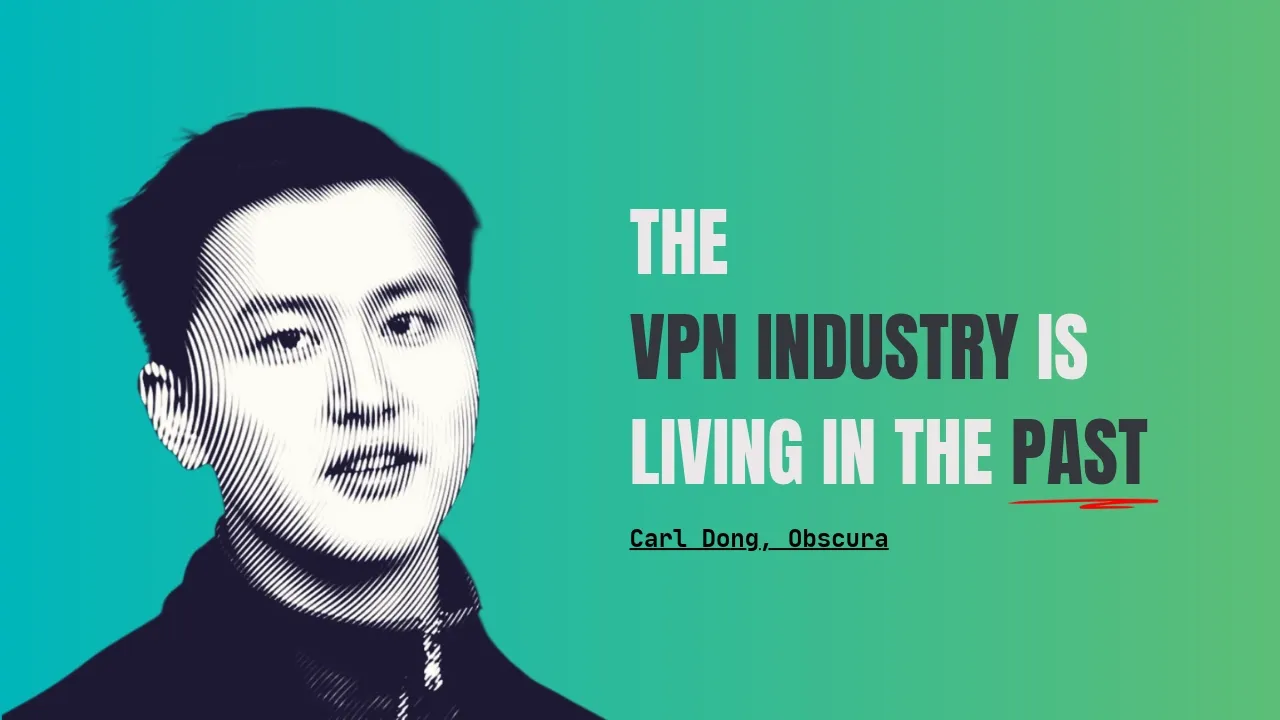
Dong explains that his transition from Bitcoin to VPNs was driven by a realization: "The VPN industry is living in the past. Three conglomerates dominate and give the illusion of choice… The no-logs pinky-promise has never been adequate for software that can access the entirety of your internet traffic."
Deconstructing the Two-Party Relay
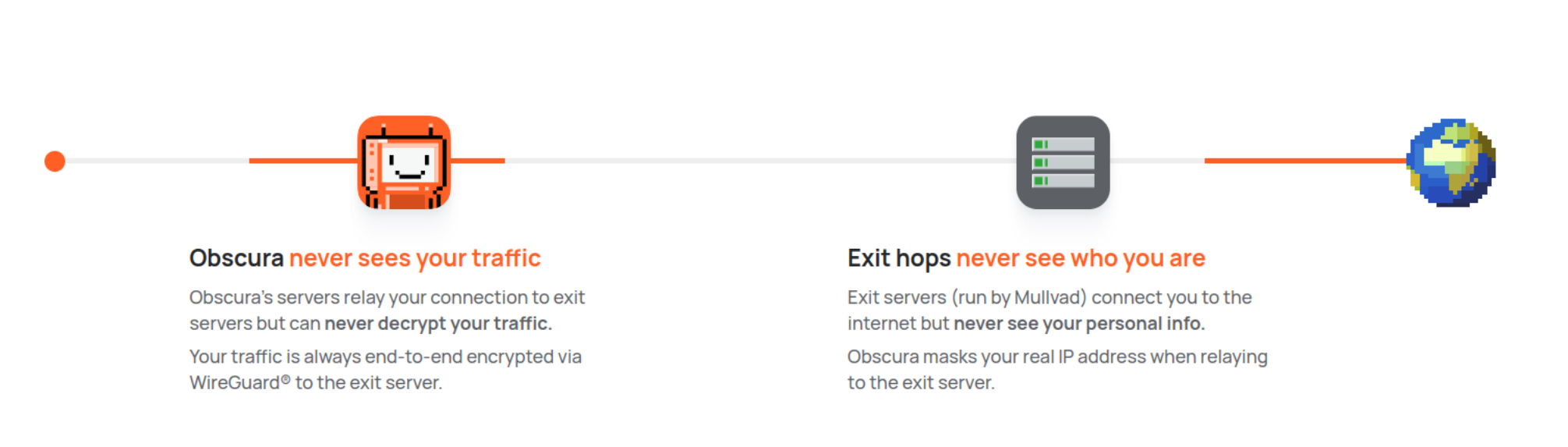
The core innovation of Obscura is its Two-Party Relay system. In a traditional VPN setup, a single provider holds the keys to both your identity (your IP address and billing info) and your traffic (what websites you visit). If that provider is compromised, hacked, or served with a warrant, the privacy of the user is completely dissolved.
How Obscura Breaks the Chain
Obscura operates on a split-trust model:
- The First Hop (Obscura): The user connects to Obscura’s servers. Obscura sees the user’s IP address and billing information but does not see the user’s traffic.
- The Second Hop (Mullvad): The traffic is end-to-end encrypted to a key controlled by Mullvad, a Swedish VPN provider renowned for its transparency. Mullvad handles the exit hop, meaning they see the traffic headed to the open internet, but they have no way of knowing who the user is.
Because these two companies are independent, they would have to collude to de-anonymize a user. This eliminates the "single point of failure" that has plagued the VPN industry for decades. For those familiar with Tor, the concept is similar, but with a critical difference: instead of relying on a volunteer-run network that can be plagued by latency, Obscura utilizes high-performance, dedicated infrastructure to ensure the speed expected of a modern VPN.
Technical Rigor: Why QUIC and Reproducible Builds Matter
The technical underpinnings of Obscura reflect its founder’s background in high-stakes software development. One of the primary criticisms of standard VPNs is the "TCP-over-TCP" meltdown, where nested congestion control algorithms can lead to massive performance drops.
The QUIC Advantage
Obscura’s "stealth" protocol is built on QUIC, the transport layer protocol that powers HTTP/3. By mimicking web traffic, Obscura makes it significantly harder for censorship middleboxes to perform Deep Packet Inspection (DPI). Because QUIC fragments and shuffles messages across UDP datagrams, censorship systems are forced to perform costly reassembly—an operation that most current systems are not designed to handle.

Reproducible Builds: The "Verify" Component
Perhaps the most significant contribution to the industry is the commitment to reproducible builds. In security-critical software, the source code available on GitHub is not always what ends up in the binary downloaded by the user. A malicious actor could inject backdoors during the build process.
Reproducible builds ensure that the binary file is bit-for-bit identical to the source code. "Even if the published source code is not malicious, that says nothing about the app you download," Dong notes. "For VPNs, a malicious app has access to the entirety of your internet traffic." By prioritizing this, Obscura allows users to verify that what they are running is exactly what the developers intended.
Implications for the Future of Online Privacy
The rise of services like Obscura raises a larger question: Is the VPN industry reaching a breaking point?
The Economics of Privacy
Observers have pointed out that Obscura’s $8/month price point is higher than some bargain-basement VPNs, which often operate on a "data-mining-for-profit" model. However, Dong argues that the economics are straightforward: "For a business to work, you need your costs to be lower than your revenue. We aren’t going to construct a massive data center… We’re a small group of six people." By eschewing venture capital and the associated pressure to monetize user data, the company maintains its independence.
The "Cursed Knowledge" of Internet Infrastructure
During the interview, Dong highlighted the dangers of the TLS SNI (Server Name Indication) extension. In many TLS connections, the domain name of the server you are visiting is sent in plaintext. This is a massive vulnerability that allows ISPs to track user behavior regardless of whether the traffic is encrypted.
"Last year, Obscura was erroneously blocked by a few US ISPs, and SNI was exactly what they used," Dong explains. This revelation underscores a chilling reality: the internet’s architecture was not designed with modern privacy in mind.
Conclusion: A New Standard?
Obscura is not just a tool; it is a critique of the status quo. It challenges the user to take responsibility for their digital hygiene rather than offloading that burden to a private company. While the split-trust model introduces new complexities, it also provides a verifiable path to privacy that was previously unavailable to the average consumer.
Whether this model becomes the new industry standard remains to be seen. However, as legislative pressure on encryption mounts and surveillance capitalism continues to refine its methods, the "pinky-promise" model of the past is clearly failing. For those who demand more than just a marketing slogan, the shift toward verifiable, decentralized, and multi-hop privacy solutions like Obscura represents a necessary evolution in how we defend our digital lives.
As the industry faces increased scrutiny, the question is no longer "which VPN can I trust?" but rather "how can I architect my connection so that I don’t have to trust anyone?" In answering that question, Carl Dong and his team have set a high bar for the rest of the privacy space.