The Silent Sunset: DigitalOcean Quietly Winds Down Its Open Source Credits Program
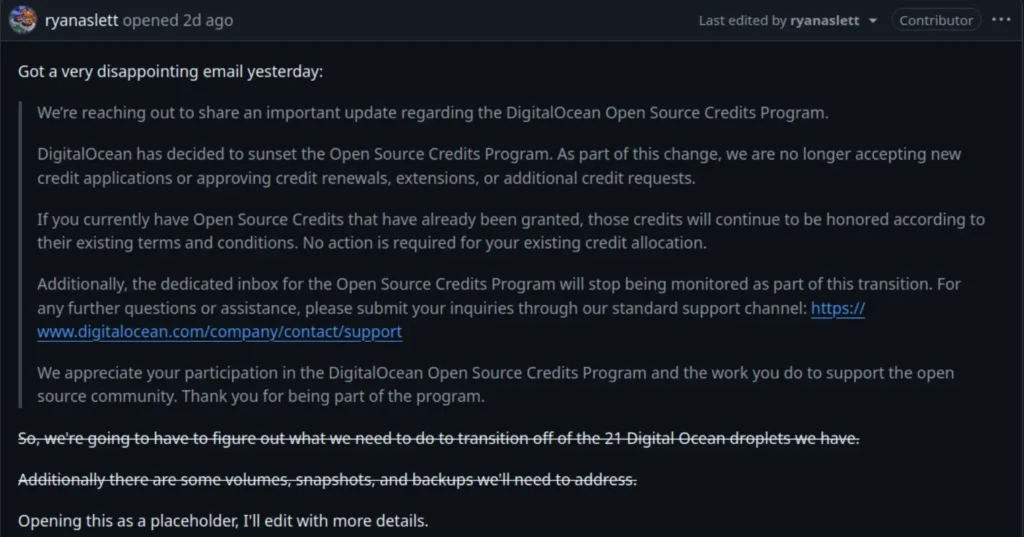
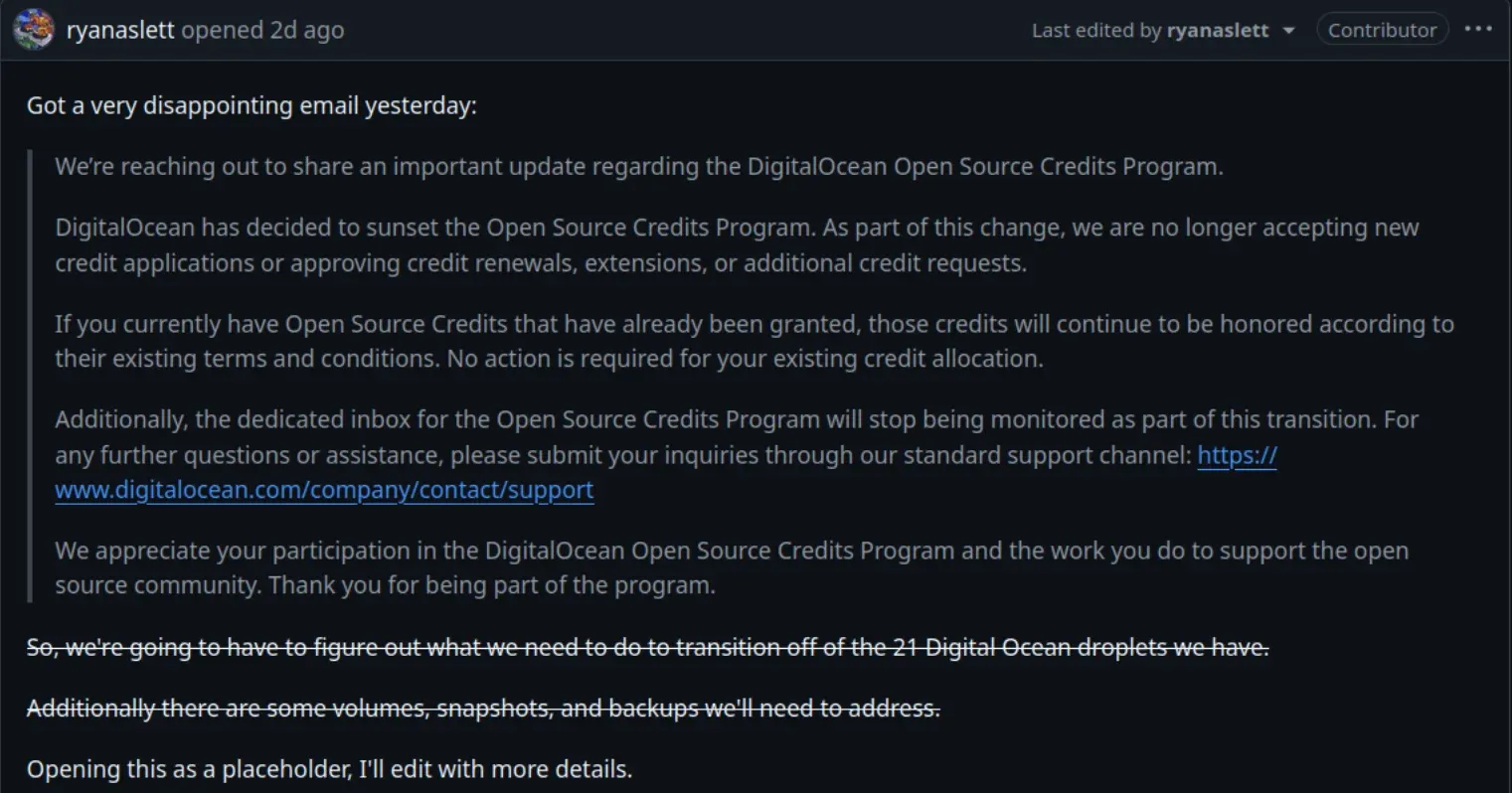
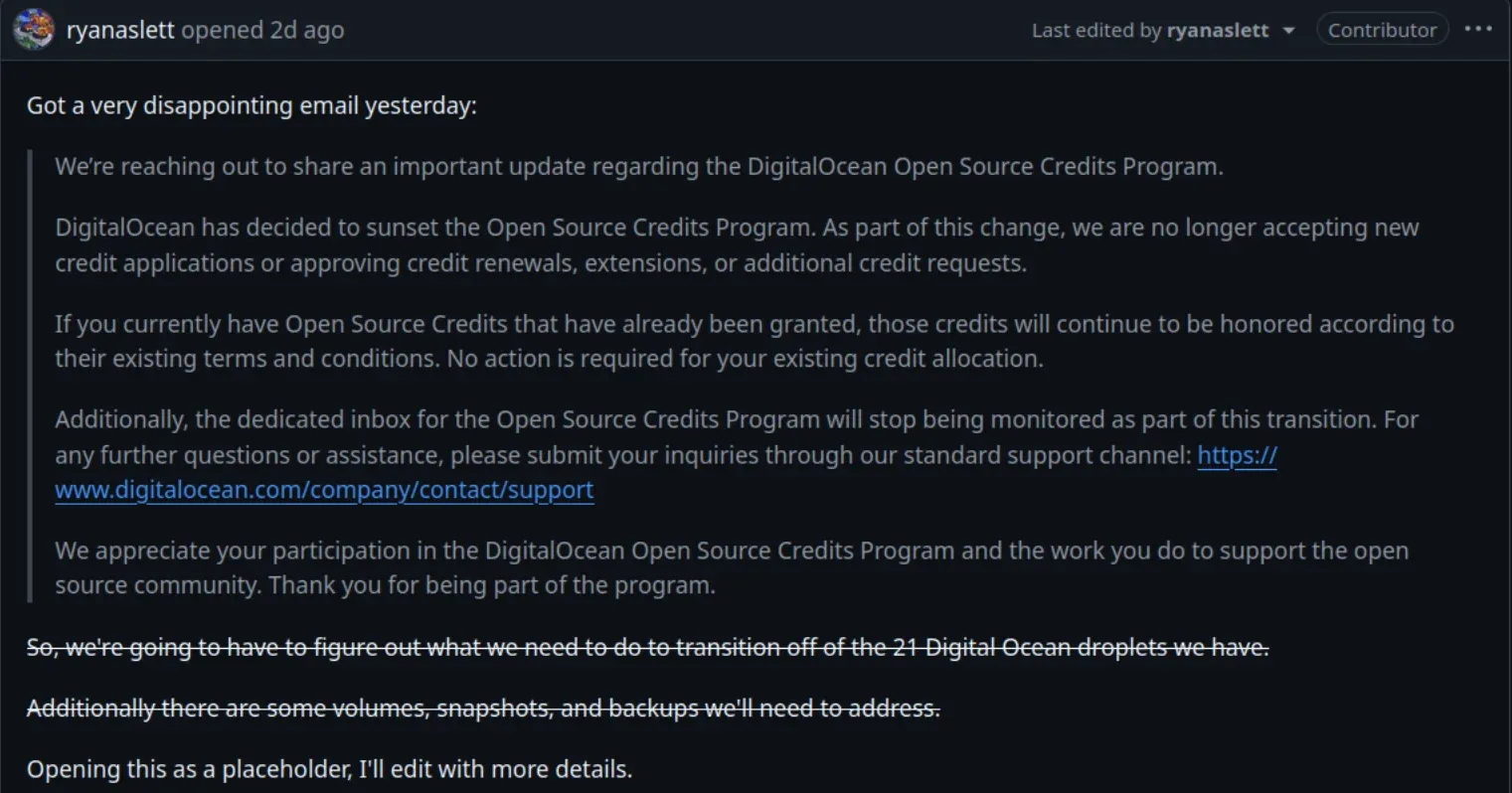
The open-source ecosystem is currently reeling from a series of quiet, unannounced policy shifts by DigitalOcean, one of the cloud industry’s most prominent infrastructure providers. In what appears to be a major strategic pivot, the company has begun sunsetting its "Open Source Credits Program," a long-standing initiative that provided essential cloud infrastructure—including virtual servers, storage, and backup solutions—to open-source projects at no cost.
For years, this program served as the backbone for thousands of developer-led projects. By providing free compute resources, DigitalOcean effectively subsidized the CI/CD pipelines, documentation hosting, and release mirrors that keep the global software supply chain running. Now, as the program winds down, maintainers are being left to grapple with unexpected infrastructure costs or the daunting task of migrating their services to new providers.
A Chronology of the Discontinuation
The shift first entered the public consciousness through a GitHub issue within the Node.js project. Maintainers of the Node.js foundation received an email from DigitalOcean stating: "DigitalOcean has decided to sunset the Open Source Credits Program. As part of this change, we are no longer accepting new credit applications or approving credit renewals, extensions, or additional credit requests."

Initially, the news was treated as an isolated incident or perhaps an error in communication. However, as the news spread, it became clear that this was a systemic policy change. Other prominent projects began confirming that they had received similar notices.
The timeline of this transition is characterized by a lack of transparency. There was no official blog post, no press release, and no public statement on DigitalOcean’s social media channels. Instead, the program was simply shuttered from within. The dedicated email address used for applications, opensource@digitalocean.com, has effectively been silenced, leaving no pathway for new projects to apply or for existing ones to seek extensions.
The Symbiotic Nature of the Partnership
To understand the impact of this move, one must understand the mutualistic relationship that defined the Open Source Credits program. It was never purely an act of charity; it was a highly effective marketing and ecosystem-building strategy.

When a project like Node.js or a smaller community-driven utility hosted its infrastructure on DigitalOcean, it often displayed the company’s logo on its website, documentation, and README files. This created a powerful "halo effect." Thousands of developers, students, and system administrators were introduced to DigitalOcean through these projects.
This exposure translated into business value:
- Developer Mindshare: Developers who learned to deploy on DigitalOcean’s platform during their work on open-source projects often carried that familiarity into their professional careers, leading to corporate adoption.
- Community Goodwill: The program positioned DigitalOcean as a champion of the developer community, fostering brand loyalty that is difficult to replicate through traditional advertising.
- Infrastructure Testing: The diverse, high-volume workloads of open-source projects served as real-world stress tests for DigitalOcean’s infrastructure, providing valuable data and performance insights.
By withdrawing this support, DigitalOcean is not only potentially alienating the very demographic that built its reputation but also risking the erosion of the "developer-first" identity that distinguishes it from hyperscalers like AWS, Google Cloud, and Microsoft Azure.
Pattern of Decline: The Erosion of Community Perks
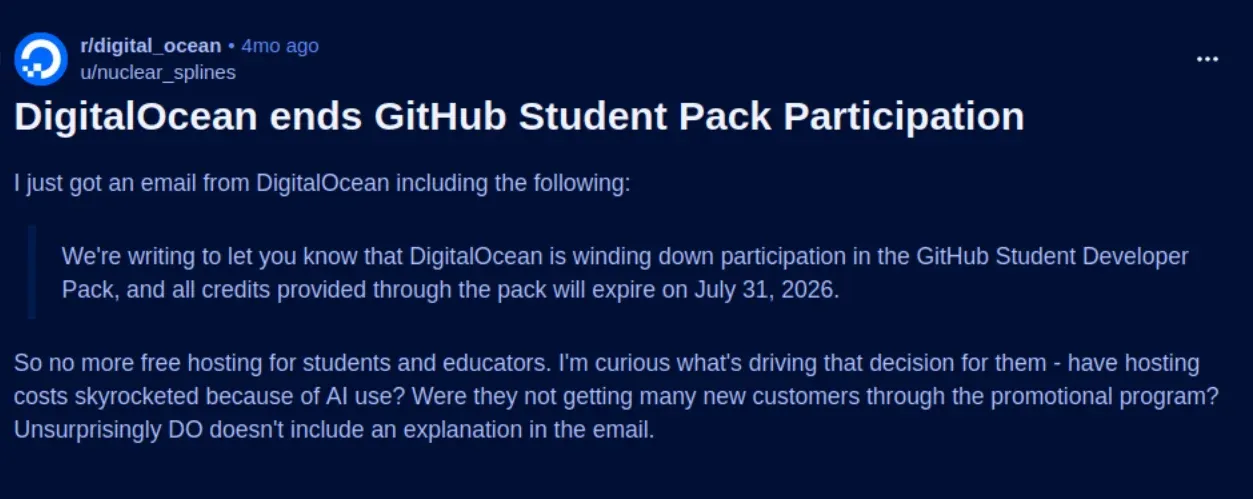
This is not the first time DigitalOcean has quietly retracted community-facing benefits. Observers have noted a recurring pattern of "feature depreciation" regarding their free-tier offerings. Earlier this year, reports surfaced that the company had removed its participation in the GitHub Student Developer Pack.
Students who had previously relied on these credits to learn the ropes of cloud deployment found themselves unable to claim the standard $200 in free credit. As with the current situation, there was no formal explanation provided. Users were left to trade notes on forums like Reddit and GitHub, attempting to piece together the reality of the situation from fragments of customer support responses.
These incremental cuts suggest a shift in corporate priorities. As DigitalOcean navigates the pressures of the modern cloud market—which is increasingly dominated by AI-driven workloads and enterprise-grade contracts—community outreach programs appear to be losing their standing on the balance sheet.
The "Olive Branch" and the Reality of Corporate Strategy
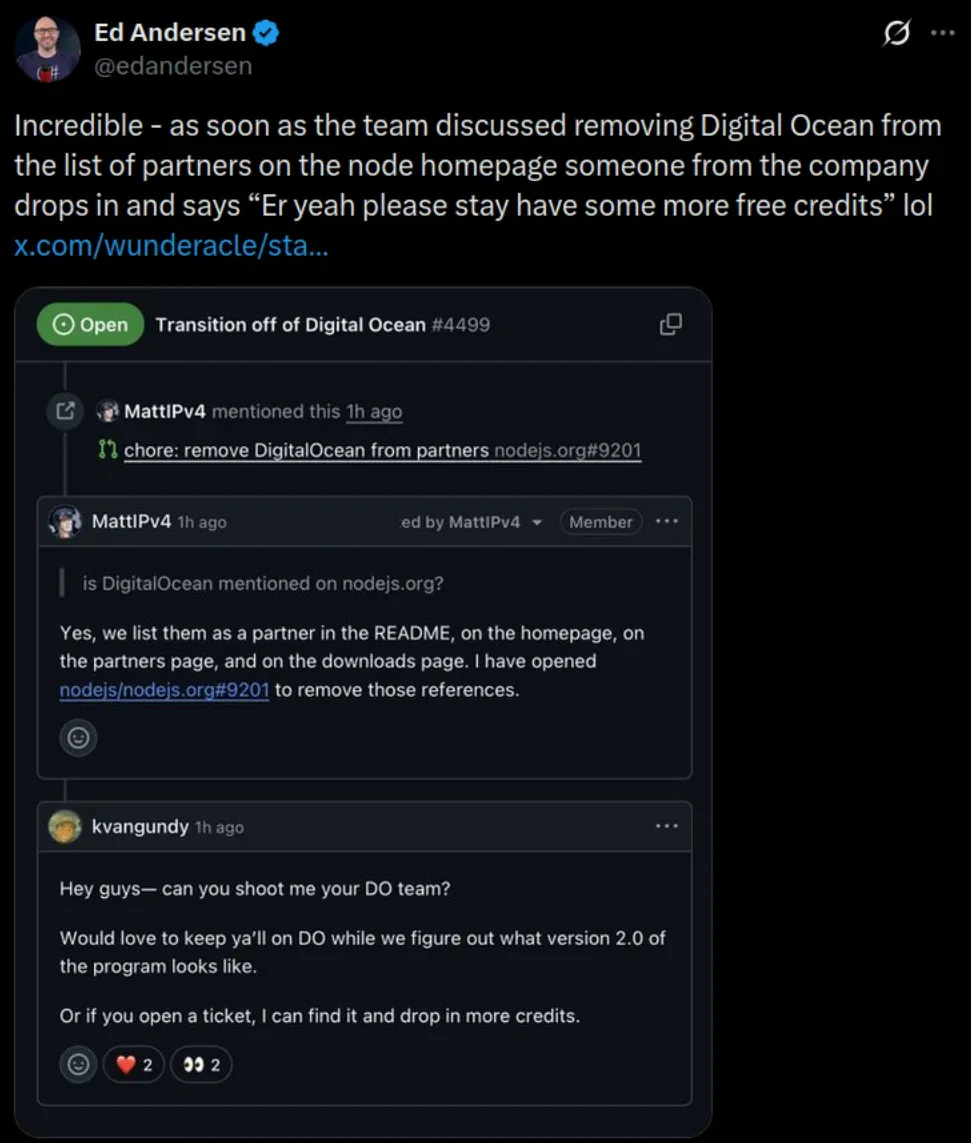
Interestingly, the situation with Node.js took a surprising turn. Following the initial notification of the program’s closure, the Node.js build team began drafting a "transition plan" to move their infrastructure away from DigitalOcean. This included plans to remove DigitalOcean’s branding from their high-traffic landing pages.
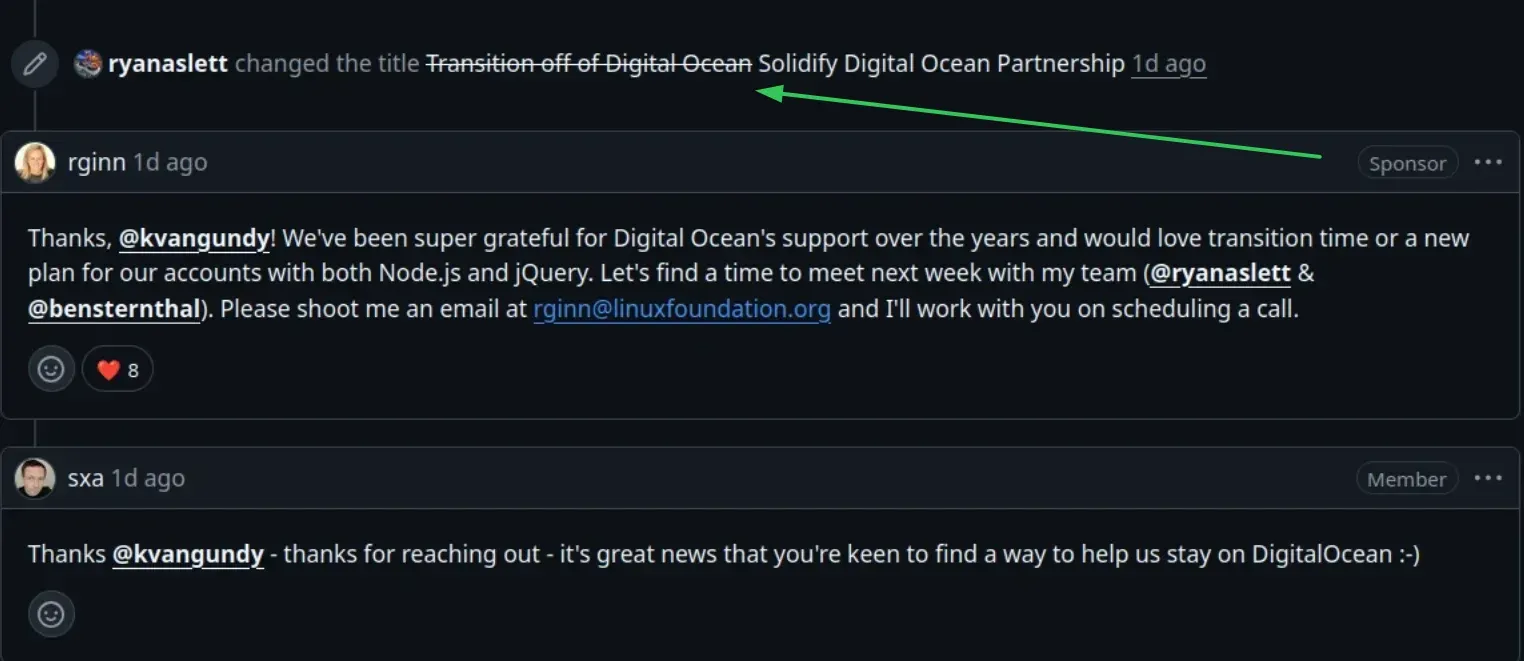
Faced with the prospect of losing one of the most significant open-source partners in the industry, DigitalOcean quickly pivoted. They reached out to the project, hinting at a "Version 2.0" of their support program. This intervention effectively halted the migration, and the GitHub discussion was subsequently renamed to "Solidify Digital Ocean Partnership."
However, this "olive branch" raises more questions than it answers. Is this a genuine effort to revamp the program for a more selective group of elite projects, or is it a damage-control strategy designed to keep high-profile partners from publicly abandoning the platform? For smaller, less "visible" open-source projects, no such reprieve appears to be forthcoming.
The Financial Paradox: Donating Millions While Cutting Credits
Perhaps the most confusing element of this saga is the disparity between the cancellation of the credit program and DigitalOcean’s ongoing philanthropic activity. Only weeks before the news of the program’s sunset broke, DigitalOcean made headlines by donating $3 million to the Omacom Foundation, the organization behind Omarchy Linux.
This creates a puzzling narrative. On one hand, DigitalOcean is signaling that it has the liquidity to act as a founding corporate patron for major foundations. On the other, it is tightening the belt on the thousands of smaller projects that rely on monthly credits to function.
One interpretation is that the company is shifting its strategy from "broad-based community support" to "targeted, high-visibility sponsorships." By focusing on one or two massive entities, the company gains significant PR and strategic alignment, while the thousands of individual contributors—who keep the internet’s smaller libraries and tools running—are effectively left to fend for themselves.
Implications for the Future of Open Source
The implications of this move are profound. The rise of AI has fundamentally changed the economics of software. In the past, companies valued open-source projects as essential components of their own technology stacks. Today, with AI capable of generating vast swaths of boilerplate code, the perceived necessity of maintaining community-driven, human-led projects is shifting.
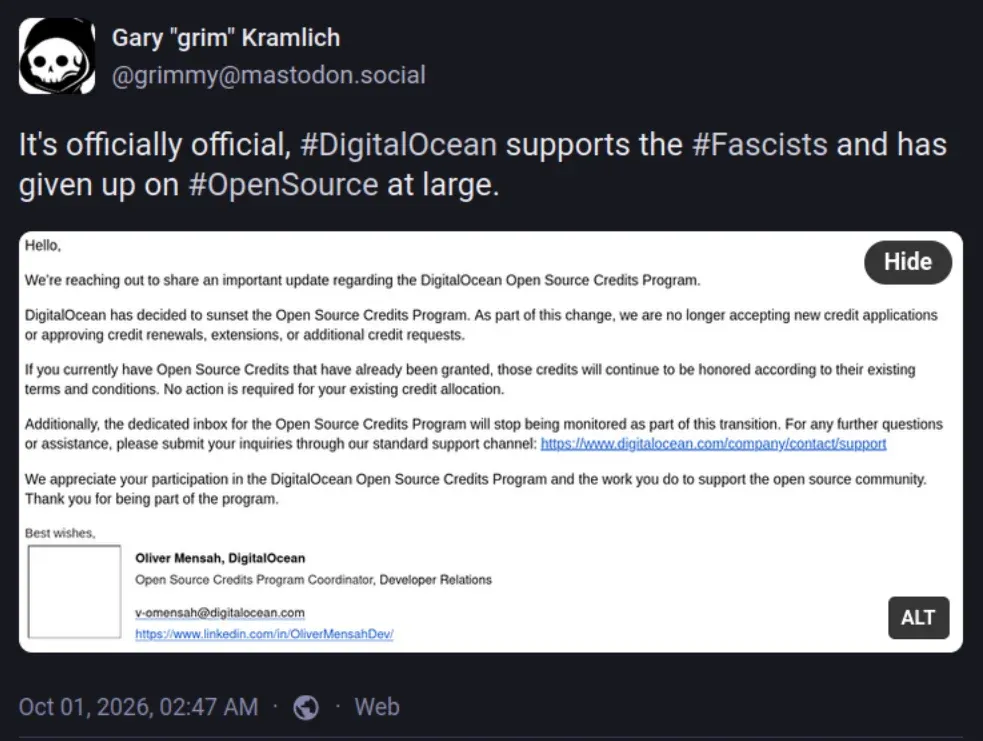
As Gary Kramlich, lead developer of the Pidgin messenger project, noted, many maintainers have been struggling with rising costs for some time. "We’re re-evaluating everything we’re running and cutting things," he shared, highlighting a grim reality for many: the death of a project by a "thousand cuts."
For the average open-source maintainer, the message is clear: the era of "free" infrastructure support is becoming increasingly fragile. As cloud providers face pressure to demonstrate profitability and efficiency to shareholders, the long-tail of open-source projects that once enjoyed support as a "goodwill gesture" are now being viewed as liabilities rather than assets.
What Lies Ahead?
As we look to the future, the open-source community must prepare for a landscape where corporate partnerships are less permanent and more transactional. Projects that have historically relied on the generosity of cloud providers must now look toward alternative models, such as:
- Diversified Hosting: Relying on a mix of smaller, community-focused providers or decentralized hosting solutions.
- Increased Monetization: Forcing projects to seek direct sponsorships from users or commercial entities that consume their code.
- Resource Optimization: Drastically reducing the infrastructure footprint of projects to minimize operational costs.
While it is possible that new infrastructure providers will emerge to fill the void, the loss of DigitalOcean’s program serves as a sobering reminder of the volatility inherent in relying on corporate sponsorship for public-good software. For now, the "quiet sunset" continues, and the maintainers of the world’s most vital digital infrastructure are left to find a new path forward in an increasingly indifferent cloud market.