
Transforming the Page: How an ESP32-C3 E-Reader Cleverly Disguises Itself as a Network Printer
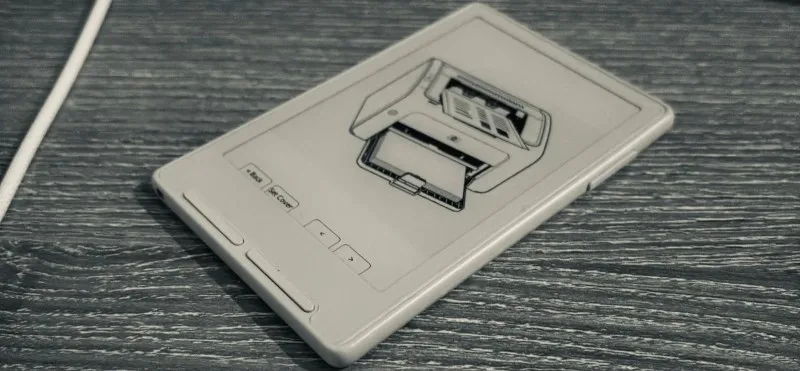
In the ever-evolving landscape of maker innovations and embedded systems engineering, hardware hacking often bridges the gap between obsolete utility and brilliant, unconventional reinvention. The latest testament to this philosophy comes from developer Nishant Joshi, who has engineered a striking transformation: turning an ordinary E-ink e-reader into a fully functioning, network-connected printer. By modifying the CrossPoint firmware to integrate the Internet Printing Protocol (IPP) on an ESP32-C3 microcontroller, Joshi has effectively allowed low-cost reading hardware to bypass traditional software barriers, accepting native print jobs directly from modern operating systems without the need for custom drivers or specialized companion applications.
This project not only breathes new life into specialized portable reading devices like the Xteink X4 and Xteink X3 but also demonstrates how resourceful firmware architecture can overcome severe hardware limitations—such as a micro-controller’s constrained RAM—to process high-resolution graphical output.
Main Facts: The Intersection of E-Ink and IPP
At its core, the project hinges on clever protocol implementation and hardware adaptation. Nishant Joshi’s modified firmware fork turns compatible ESP32-C3-based E-ink e-readers into network-discoverable printing peripherals.
- The Protocol: By implementing the Internet Printing Protocol (IPP)—the global standard for modern network printing—the device automatically announces its presence to macOS, Windows, and Linux operating systems on the same local network.
- The Workflow: Users can simply open a document, navigate to their standard print menu, select the E-ink reader as a printer, and hit print. No third-party apps, cables, or manual file conversions are required.
- Device Specifications: The modified firmware configures the reader to present itself to the operating system as a monochrome, single-sided printer operating at a crisp 300 DPI resolution configured for A5 paper dimensions.
- Format Compatibility: To streamline the printing pipeline, the firmware accepts industry-standard Apple Raster and PWG Raster formats natively, meaning host operating systems can output jobs using standard printer driver architectures.
- Supported Hardware: The firmware fork has been successfully validated on devices built around the ESP32-C3 microcontroller, specifically including the Xteink X4 and Xteink X3 e-readers.
Chronology: The Evolution of the Hack
The path from a standard low-power e-reader to a functional network printer followed a logical trajectory of embedded systems problem-solving, moving from protocol conceptualization to memory management breakthroughs.
Phase 1: Identifying the Hardware Baseline
The foundation of the project relies on the ESP32-C3, a low-cost, low-power system-on-chip (SoC) featuring a 32-bit RISC-V single-core microprocessor equipped with integrated 2.4 GHz Wi-Fi and Bluetooth 5 (LE). Devices like the Xteink X3 and Xteink X4 utilized this chip to offer affordable, connected reading experiences. Joshi recognized that the combination of wireless connectivity and a capable microcontroller made these e-readers prime candidates for network peripheral simulation.
Phase 2: Integrating the IPP Stack
Standard network printers rely on complex communication protocols to negotiate job properties, rendering modes, and status updates. Joshi focused on integrating an IPP server stack directly into the CrossPoint firmware ecosystem. By speaking the native language of modern CUPS (Common Unix Printing System) and Windows print subsystems, the ESP32-C3 could respond to network discovery queries (such as mDNS/Bonjour) and advertise itself as an available output device.
Phase 3: Solving the RAM Bottleneck
The most formidable hurdle in the development timeline was memory allocation. A single A5 page rendered at 300 DPI generates a raster image far too large to fit entirely within the limited SRAM of an ESP32-C3 chip. Trying to buffer a whole page would cause immediate memory overflow and system crashes. Joshi bypassed this by rewriting how incoming data is ingested, shifting from a whole-image buffer to a stream-based, row-by-row processing loop.
Phase 4: Establishing the Digital Output Tray
With real-time streaming solved, the final functional milestone involved persistence. Because E-ink screens retain images without power but do not inherently function as storage devices, Joshi engineered a parallel writing routine. As the device receives and renders each row to the display panel, it simultaneously writes the data to an onboard SD card. This created a dual-purpose architecture: a live viewing screen and a permanent digital archive acting as an "output tray."
Supporting Data: Engineering Around Hardware Constraints
To fully appreciate the elegance of Joshi’s implementation, one must examine the engineering mechanics required to process high-resolution graphic jobs on constrained silicon.
The Mathematics of 300 DPI on a Microcontroller
An A5 page measures roughly 148 × 210 millimeters (or approximately 5.8 × 8.3 inches). At a resolution of 300 Dots Per Inch (DPI), a monochrome document requires a grid roughly 1,748 pixels wide by 2,480 pixels high.
- Total pixels per page = ~4,335,040 pixels.
- In a 1-bit monochrome format (where each pixel is strictly black or white), this equates to over 541 kilobytes of raw image data per page.
While 541 KB might sound trivial on a modern desktop computer with 16 gigabytes of RAM, the ESP32-C3 typically features only 400 KB of internal SRAM, much of which is already consumed by the Real-Time Operating System (RTOS), Wi-Fi stacks, and firmware overhead.
Streaming and Parallel Persistence
By refusing to load the complete 541 KB block into memory at once, the modified CrossPoint firmware reads incoming Apple Raster or PWG Raster data chunk by chunk.
- Packet Reception: The Wi-Fi stack captures incoming IPP print packets.
- Row Breakdown: The firmware extracts pixel rows on the fly.
- Simultaneous Dispatch: The extracted row is pushed immediately to the E-ink display controller interface while concurrently being appended to an open file stream targeting the physical SD card.
This parallel architecture ensures that the device never blocks waiting for storage I/O to catch up, maintaining a smooth, linear progression from network transmission to physical-screen rendering. The resulting folder on the SD card serves as a historical repository, meaning users can thumb through previously "printed" documents directly on the device without re-initiating a print job from their computer.
Official Responses and Community Reception
The maker community has responded with widespread enthusiasm following the documentation of the project on platforms like Hackaday.io. Open-source hardware communities have long championed the ethos of repurposing single-purpose electronics, and this hack has struck a chord among IoT enthusiasts and retro-computing hobbyists alike.
Community Reactions and Implications for Open-Source Firmware
Reviewers and fellow developers have highlighted the project as a masterclass in lateral thinking. Rather than viewing the ESP32-C3 e-reader as a closed ecosystem designed strictly for reading DRM-free eBooks or static documents, Joshi’s work reframes the device as a general-purpose IoT display node with input capabilities.
Furthermore, because the project builds upon a fork of the CrossPoint firmware, it opens the door for other developers to contribute enhancements. Potential community-driven roadmap items discussed in forums include:
- Expanding format support for compressed raster variants.
- Optimizing partial-refresh routines to speed up multi-page document scrolling on E-ink panels.
- Implementing security layers (such as IPP Everywhere authentication) for environments where open network printing poses privacy risks.
Implications: The Future of Upcycling and Pervasive Computing
Nishant Joshi’s E-ink printer hack carries profound implications for how we view hardware longevity, electronic waste, and ambient computing.
Combatting E-Waste Through Creative Firmware
Consumer electronics are frequently discarded not because their physical components (screens, batteries, casings) fail, but because their proprietary software ecosystems become obsolete or unsupported. E-readers, in particular, often end up in drawers or landfills once their manufacturer-backed storefronts close or their software fails to sync with modern operating systems.
Projects like this prove that low-cost microcontrollers paired with flexible open-source firmware can completely redefine a device’s utility lifecycle. An e-reader that no longer appeals as a library portal can easily find a second life as an ambient desk display, a minimalist notification ticker, or—in this case—a physical-digital hybrid printer that saves paper while providing the tactile focus of electronic ink.
The Rise of DIY Network Peripherals
As the Internet of Things matures, the boundary between "smart" appliances and general-purpose microcontrollers continues to blur. Standardized protocols like IPP are traditionally reserved for heavy network infrastructure and corporate office hardware. By successfully implementing a robust printing stack onto a $5 Wi-Fi microcontroller, developers are democratizing network peripherals.
Makers can now theoretically turn any screen, LED matrix, or specialized output device into a network printer, opening up fascinating avenues for artistic installations, receipt-printer journaling, and offline-first digital communication tools.
Building Your Own Setup
For hardware enthusiasts inspired to replicate or expand upon Joshi’s work, the barrier to entry remains relatively low. Builders typically start with a compatible ESP32-C3-based e-reader or construct a custom breadboard/PCB prototype using standalone modules.
- For those designing compact, custom IoT implementations from scratch, developers frequently utilize the SuperMini form factor development module based on the ESP32-C3, prized for its minuscule footprint and integrated wireless capabilities.
- Alternatively, developers stepping up to newer silicon iterations—such as kits built around the ESP32-C6-Zero—gain access to Wi-Fi 6 connectivity and expanded peripheral integration, paving the way for even faster data transmission speeds and lower power consumption profiles in future iterations of ambient network devices.
Ultimately, Joshi’s modification stands as a brilliant reminder that with a bit of inventive coding, hardware is never truly bound by its original design. By transforming a reading device into a writing surface, the project successfully bridges the digital-physical divide, one pixel row at a time.








