The Evolutionary Arms Race: How Sickle Cell Trait Rewires the Malaria Parasite
For as long as humanity has traversed the globe, we have been locked in a relentless biological "arms race" against Plasmodium falciparum, the most lethal of the malaria-causing parasites. In regions where the disease is endemic, this struggle has left a permanent, indelible mark on our genome. The most famous outcome of this pressure is the sickle cell trait (HbAS)—a genetic variation that, while devastating when inherited in double doses (sickle cell disease), provides a robust shield against severe malaria when present in a single copy.
For decades, scientists have understood that this genetic adaptation protects the host by altering the internal environment of their red blood cells. However, a landmark study published in Nature Microbiology has unveiled a deeper, more complex layer to this relationship. It appears that the sickle cell trait does more than just fortify the host; it actively dictates the genetic composition of the malaria parasite itself.
The Evolutionary Tapestry of Malaria
The history of malaria is the history of human migration. As populations expanded, the parasite evolved alongside us, constantly finding new ways to breach our defenses. In response, human populations—particularly in sub-Saharan Africa—developed the sickle cell hemoglobin (HbS) variant.
Under normal conditions, hemoglobin carries oxygen through the bloodstream. In those with the sickle cell trait, the presence of the HbS variant causes red blood cells to take on a rigid, sickle-like shape under certain conditions. This structural change inhibits the parasite’s ability to thrive. For years, the prevailing wisdom was that this was a purely defensive strategy. But new research suggests a more dynamic, reciprocal evolutionary interaction.
A New Perspective: The Parasite’s Genetic Signature
A multidisciplinary research team, led by Dr. Sandrine Nsango—an associate professor of molecular biology at the University of Douala and a prominent researcher at the Centre Pasteur du Cameroun—has shifted the focus from the human host to the parasite’s own genetic profile.
"Sickle cell trait may protect against malaria, not only by changing how the human host responds to infection, but also by shaping which parasites are able to survive and establish infection," says Dr. Nsango.
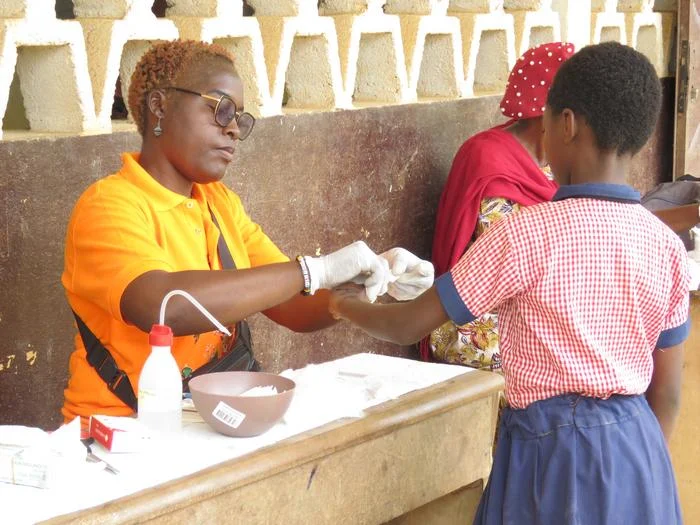
The study, titled "Sickle cell haemoglobin status shapes malaria parasite genotype in asymptomatic infections," reveals that the HbS variant acts as a filter, allowing only specific "varieties" of P. falciparum to take hold. By analyzing the genetic material of parasites found in over 2,246 healthy schoolchildren in Mfou, Cameroon, the researchers identified a distinct class of parasites—those carrying specific sickle-associated alleles (Pfsa+)—that preferentially infect individuals with the sickle cell trait.
Chronology of the Discovery
The road to this discovery began by looking at the exceptions to the rule. Previous studies had observed that when individuals with the sickle cell trait did, in fact, fall ill with symptomatic malaria, they were often infected by a rare, specific strain of the parasite.
- Initial Observations: Researchers identified rare "breakthrough" cases where HbS carriers developed symptoms. Genomic sequencing of these parasites revealed they carried unique genetic markers, later termed Pfsa (Plasmodium falciparum sickle-associated) alleles.
- Expanding the Scope: The team hypothesized that if these parasites could break through the protection in symptomatic cases, they might also be present in the vastly larger, often overlooked population of asymptomatic carriers.
- Field Research in Mfou: Between [dates of study], the team recruited 2,246 schoolchildren in the Mfou district of Cameroon. The goal was to map the genetic landscape of both the hosts and the parasites they carried.
- Data Synthesis: By comparing the human hemoglobin genotypes (HbAA vs. HbAS) with the parasite genotypes (Pfsa+ vs. others), the researchers identified a clear, statistically significant correlation between the host’s blood type and the parasite’s genetic makeup.
Supporting Data: The Asymptomatic Reservoir
One of the most striking findings of the study is the sheer prevalence of asymptomatic malaria. In the study population, three-quarters of the children were found to be carrying the parasite without showing any outward signs of illness. This "asymptomatic reservoir" is a critical component of malaria transmission, as these individuals can unknowingly pass the parasite to mosquitoes, which then carry it to others.
The data revealed that the rate of infection is essentially the same regardless of whether a person carries the sickle cell trait. Both those with normal hemoglobin (HbAA) and those with the trait (HbAS) are equally likely to become infected. However, the type of parasite they carry differs significantly.
The HbS genotype is strongly associated with parasites carrying the Pfsa+ alleles at the Pfsa1 and Pfsa3 loci. This suggests that the parasite is not merely "stuck" in a host with sickle cell trait; it has evolved, through these specific alleles, to find a way into that host’s system.
"We found that while infection rates were similar," the paper notes, "the likelihood of developing symptomatic disease in those with the sickle cell variant was roughly one-tenth that of those without it." This confirms that even if the parasite has "evolved" a way to gain entry, it remains significantly less effective at causing life-threatening disease in the presence of the sickle cell trait.
Official Responses and Scientific Context
The global health community has greeted the study with significant interest. Malaria remains a leading cause of mortality worldwide, and the mechanisms behind partial immunity are of high value for vaccine and drug development.
Dr. Nsango emphasizes that these findings represent a fundamental shift in how we view the parasite. "The sickle cell mutation is one of the clearest examples of how infectious diseases can shape human evolution, but our findings suggest that humans also shape the evolution of the parasite in return," she explains.
By acknowledging this feedback loop, researchers hope to move away from "blunt force" malaria control strategies—such as universal bed nets or broad-spectrum anti-malarials—toward more nuanced, biology-informed interventions. If we understand which strains of the parasite are dominant in specific populations, we can theoretically design treatments that target the specific genetic vulnerabilities of those strains.
Implications for Future Medicine
The implications of this research are twofold: they influence our understanding of human history and our future approach to public health.
1. Understanding Parasite Adaptation
If the malaria parasite is constantly adapting to our genetic defenses, then our medical interventions must be equally agile. The discovery of the Pfsa alleles suggests that if we were to successfully eradicate one type of malaria, another might simply evolve to take its place. This "co-evolutionary dance" warns against over-reliance on a single method of control.
2. Therapeutic Development
The study highlights that the protection offered by the sickle cell trait is not a simple "on/off" switch. It is a biological barrier that forces the parasite to mutate. If researchers can replicate the mechanism by which the sickle cell trait prevents these parasites from becoming virulent—even when they successfully infect a host—they might unlock a new class of "host-directed therapies." These would be drugs that, like the sickle cell trait, create a hostile environment for the parasite, potentially preventing the progression from asymptomatic infection to deadly disease.
3. Precision Public Health
As genomic sequencing becomes more accessible, public health officials in regions like Cameroon may eventually be able to track the prevalence of specific parasite strains in real-time. By monitoring the Pfsa alleles in a given region, researchers could predict the potential for malaria outbreaks and tailor preventative measures accordingly.
Conclusion: A Continued Dialogue
The research conducted in the Mfou District Hospital is more than just a genetic study; it is a testament to the persistent nature of life. The malaria parasite and the human host are locked in a sophisticated, centuries-old dialogue. Each time we alter our biological landscape, the parasite responds.
Dr. Nsango and her colleagues have provided a vital window into this interaction. By recognizing that the sickle cell trait does not just protect the host, but also serves as a selective pressure on the parasite, we are better equipped to understand the limits of our own biology. Moving forward, the goal is clear: to stop treating malaria as a static enemy and start treating it as a dynamic, evolving partner in the story of human health. As we continue to decode the genetic nuances of P. falciparum, we may finally find the leverage needed to tip the scales in this eternal, microscopic war.