
Bringing Server-Side Power to the Edge: The TinyGo Starter Kit Bridges the Gap Between Go and Microcontrollers
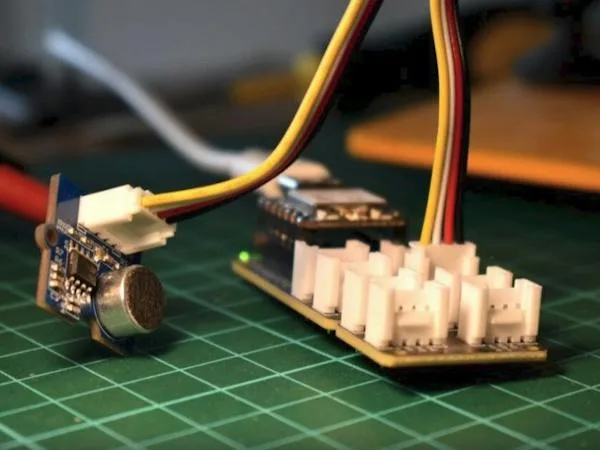
In the fast-evolving ecosystem of embedded systems and Internet of Things (IoT) development, hardware has traditionally been dominated by C and C++, with Python carving out a comfortable niche for rapid prototyping and education. However, a major shift is underway. With the official release of the TinyGo Starter Kit—anchored by Seeed Studio’s popular XIAO ESP32-C3 board—developers familiar with the modern, high-performance Go programming language can now bridge the gap between cloud infrastructure and edge computing.
Priced at $53.54, this comprehensive bundle aims to eliminate the friction points traditionally associated with embedded development: complex wiring, tedious soldering, and unfamiliar toolchains. By combining a pre-soldered microcontroller, a modular expansion base, an array of eleven plug-and-play Grove sensors, and a specialized curriculum crafted by TinyGo core contributors, the kit provides an accessible runway for software engineers looking to venture into hardware.
Main Facts: What Is the TinyGo Starter Kit?
The TinyGo Starter Kit is an all-in-one hardware and software learning package designed to bring the Go programming language directly to microcontroller-based electronics.
At the heart of the package is the Seeed Studio XIAO ESP32-C3, a compact yet remarkably capable development board featuring native 2.4GHz Wi-Fi and Bluetooth Low Energy (BLE 5.0) capabilities. Unlike traditional bare-bones microcontroller boards that require breadboards and jumper wires, this kit utilizes the Grove Base for XIAO. This modular expansion board features standardized four-pin Grove connectors, allowing developers to plug in sensors and actuators instantly without ever picking up a soldering iron.
The kit includes:
- 11 Plug-and-Play Grove Modules: Ranging from basic input/output components like buttons and buzzers to sophisticated environmental sensors, OLED displays, and programmable RGB LEDs.
- The XIAO ESP32-C3 Board: Pre-soldered and ready for immediate deployment.
- The Grove Base for XIAO: Providing safe, standardized power and signal routing for all included modules.
- Official Software Tutorials: Written specifically for the kit by Patricio Whittingslow, a prominent contributor to the TinyGo project.
By leveraging TinyGo v0.41, the ecosystem now boasts native wireless support for the XIAO ESP32-C3 and XIAO ESP32-S3 boards. This ensures that developers can write networking code—such as connecting to local wireless networks, publishing MQTT payloads, or setting up web servers—entirely in idiomatic Go.
Chronology: The Evolution of Go on Microcontrollers
To understand the significance of the TinyGo Starter Kit, it is essential to look at the historical trajectory of the Go programming language and its transition from cloud-native infrastructure down to resource-constrained silicon.
2009–2018: The Rise of Server-Side Go
Originally developed at Google by Robert Griesemer, Rob Pike, and Ken Thompson, Go (often referred to as Golang) was publicly announced in November 2009. Designed to address the pain points of large-scale software development at Google, Go combined the safety and performance of statically typed compiled languages with the readability and ease of use characteristic of dynamic languages. Over the next decade, Go became the undisputed lingua franca of cloud-native infrastructure, powering massive distributed systems, microservices, containerization tools (like Docker and Kubernetes), and high-throughput web APIs.
Despite its dominance in the backend world, running Go on microcontrollers was initially deemed impractical. Standard Go relies on a heavy runtime, garbage collection mechanisms, and memory footprints that easily overwhelm chips equipped with only a few kilobytes of RAM and flash storage.
2019: The Birth of TinyGo
Recognizing the potential of bringing Go’s clean concurrency model and syntax to the edge, developer Ron Minnich and a community of open-source contributors launched TinyGo. Utilizing LLVM (Low Level Virtual Machine) infrastructure, TinyGo recompiled a subset of Go specifically for embedded systems. It optimized memory management, trimmed the runtime, and introduced support for WebAssembly (Wasm).
Over subsequent updates, TinyGo steadily expanded its hardware support base. What started as an experimental project for a handful of boards gradually evolved into a robust ecosystem supporting more than 150 different microcontrollers, including chips from the Nordic Semiconductor nRF series, Raspberry Pi’s RP2040, and various ESP32 variants.
2024–2026: Native Wireless and Hardware Bundles
As TinyGo matured, the primary bottleneck shifted from basic GPIO (General-Purpose Input/Output) control to complex peripheral integration, particularly wireless stacks. The release of TinyGo v0.41 marked a major milestone by introducing native wireless support for popular Wi-Fi-enabled chips like the ESP32-C3 and ESP32-S3.
Simultaneously, hardware manufacturers like Seeed Studio recognized the need to pair these software advancements with turnkey physical kits. The introduction of the TinyGo Starter Kit bridges the gap between software capability and hardware accessibility, offering developers a standardized platform to test, build, and deploy IoT devices using purely Go code.
Supporting Data: Specifications and Ecosystem Analysis
To evaluate the utility of the TinyGo Starter Kit, it helps to break down the technical specifications of its core components and compare its approach with traditional embedded development methodologies.
Technical Specifications Matrix
| Component | Specification / Feature | Benefit to Developer |
|---|---|---|
| Microcontroller | Seeed Studio XIAO ESP32-C3 | Compact form factor, low power consumption, built-in 32-bit RISC-V architecture. |
| Wireless Connectivity | 2.4GHz Wi-Fi (802.11 b/g/n) & BLE 5.0 | Enables robust IoT prototyping, cloud connectivity, and local sensor telemetry. |
| Expansion Interface | Grove Base for XIAO | Standardized 4-pin interface eliminates wiring errors and removes the need for soldering. |
| Software Backend | TinyGo v0.41 / LLVM | Compiles Go source code efficiently into bare-metal machine code or WebAssembly. |
| Peripherals | 11 Grove Modules | Covers input, output, visual display, and environmental sensing use cases. |
The Elimination of the "Language Barrier"
Historically, software engineers working in enterprise environments—where languages like Go, Python, or Java predominate—faced a steep learning curve when attempting to build IoT prototypes. Transitioning to microcontrollers meant diving into C or C++ pointer arithmetic, manual memory management, and platform-specific vendor SDKs (such as the ESP-IDF).
TinyGo removes this cognitive overhead. A developer who writes microservices in Go can utilize the exact same syntax, concurrency primitives (goroutines and channels), and package structures to read an analog sensor or transmit data over MQTT.
Furthermore, because TinyGo supports WebAssembly, developers can compile their embedded logic to run directly inside a web browser. This allows for powerful simulation, testing, and debugging workflows before a single byte is flashed to physical silicon.
Official Responses and Developer Insights
The release of the TinyGo Starter Kit has generated significant enthusiasm within both the Go community and the broader open-source hardware movement.
Patricio Whittingslow, a core contributor to TinyGo and the author of the kit’s official tutorial series, emphasizes that the primary goal of the project is pedagogical and practical accessibility. According to Whittingslow, hardware education often stalls because beginners spend more time troubleshooting wiring mistakes or struggling with complex C++ template libraries than focusing on logic and application architecture.
"When you remove soldering and messy wiring from the equation, and when you allow developers to use a language they already know and love, the learning velocity increases exponentially," project stakeholders note. "The TinyGo Starter Kit is built on the philosophy that building physical computing projects should be as straightforward as writing a web scraper or a REST API."
Industry analysts observing the IoT space note that the convergence of modern programming languages with low-cost, high-performance microcontrollers (such as the RISC-V-based ESP32-C3) is democratizing product development. Small teams and enterprise software houses alike can now prototype edge devices rapidly without needing specialized embedded systems engineers on staff from day one.
Implications: What This Means for IoT, Edge Computing, and Education
The launch and adoption of specialized toolchains like TinyGo, backed by turnkey hardware packages, carry broad implications for several distinct sectors.
1. Bridging Cloud and Edge Infrastructure
In modern enterprise architectures, data flows continuously from edge sensors to cloud data lakes. Traditionally, this required a fragmented software stack: C/C++ running on the edge device communicating via custom serialization protocols with Go- or Node.js-based cloud backends.
By unifying the language ecosystem—using Go for both cloud microservices and edge firmware—organizations can streamline codebases, share data structures and validation logic across the entire network topology, and reduce the onboarding time for software engineers transitioning between cloud and IoT teams.
2. Lowering Barriers in STEM Education
Educational institutions have long relied on Python (via Raspberry Pi or CircuitPython) and C++ (via Arduino) to introduce students to physical computing. While effective, the introduction of Go into the curriculum provides students with exposure to a strongly typed, compiled language celebrated for its performance and concurrency handling in professional environments. The plug-and-play nature of the Grove system ensures that students at the middle school, high school, or university level can focus on algorithmic thinking rather than hardware assembly.
3. Rapid Prototyping for Commercial IoT
For startups and enterprise innovation labs, time-to-market is everything. Developing a proof-of-concept for a smart agriculture sensor, an industrial monitoring node, or a smart-home appliance typically requires iterative hardware revisions. The combination of the XIAO ESP32-C3, wireless connectivity, and pre-existing TinyGo drivers for common sensors allows engineers to spin up functional prototypes in hours rather than weeks.
Conclusion
At $53.54, the TinyGo Starter Kit represents far more than a simple collection of electronic components and a development board. It is a physical manifestation of an ongoing evolution in software engineering—one where language boundaries are dissolving, and the power of modern, cloud-native programming is being successfully pushed down to the absolute edge of the network.
Whether you are a seasoned backend developer looking to tinker with physical computing, an educator searching for a modern entry point into STEM, or an IoT engineer seeking a rapid prototyping workflow, the combination of Seeed Studio’s robust hardware and TinyGo’s innovative compiler technology provides an compelling invitation to start building.








