Revolutionizing Edge AI: Harvard Researchers Introduce ‘Wake Vision,’ a Massive 6-Million-Image Dataset to Supercharge TinyML Computer Vision

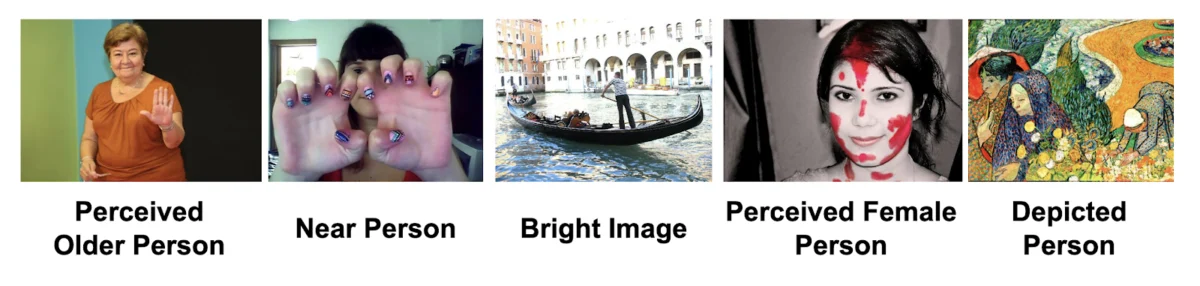
CAMBRIDGE, Mass. — In the rapidly evolving landscape of artificial intelligence, one of the most exciting yet constrained frontiers is TinyML—the practice of deploying functional machine learning models onto ultra-low-power edge devices, microcontrollers, and IoT hardware. For years, the development of these highly efficient vision systems has faced a severe bottleneck: a critical shortage of large-scale, high-quality, domain-specific training data.
To bridge this digital divide, a team of researchers from Harvard University—comprising Colby Banbury, Emil Njor, Andrea Mattia Garavagno, and Vijay Janapa Reddi—has officially unveiled Wake Vision. Described as a high-quality, large-scale dataset boasting approximately 6 million images, Wake Vision aims to completely redefine how person-detection models are trained, evaluated, and deployed on resource-constrained hardware.
Main Facts: What is Wake Vision?
At its core, Wake Vision is designed to accelerate research and development in TinyML computer vision applications, specifically focusing on person detection—widely considered the cornerstone vision task for edge intelligence.
Standard, massive machine learning datasets like ImageNet or PASCAL VOC are tailored for overparameterized, cloud-based models that run on high-performance GPUs. They are fundamentally incompatible with TinyML architectures, which often feature memory footprints of only a few hundred kilobytes. Prior to Wake Vision, the field heavily relied on datasets such as the Visual Wake Words (VWW) benchmark. While VWW laid foundational groundwork, its restricted size and inherent limitations made it difficult for developers to train robust, production-grade models capable of handling real-world deployment challenges.

Wake Vision shatters these previous boundaries. Spanning roughly 6 million images, it is nearly 100 times larger than the Visual Wake Words dataset. Crucially, the release features two distinct training sets combined with a rigorous filtering and labeling process. This dual-track approach allows researchers to directly investigate the nuanced interplay between raw dataset volume and meticulous label quality.
Chronology: The Journey to Edge-Native Datasets
The path toward Wake Vision reflects the broader historical evolution of edge computing and machine learning:
- The Pre-TinyML Era: Early computer vision research exclusively prioritized accuracy over efficiency, yielding multi-gigabyte datasets and models requiring server-grade compute clusters.
- The Emergence of Edge AI (2019): Recognizing the need for intelligence at the extreme edge, the academic community introduced benchmarks like the Visual Wake Words dataset. This allowed microcontrollers to begin recognizing simple visual triggers, such as the presence of a human in a room.
- The Production Bottleneck: As industries increasingly demanded reliable smart home appliances, industrial automation, and security devices powered by batteries, engineers hit a wall. VWW and similar legacy datasets were too small to prevent model overfitting or handle edge-case environments reliably.
- The Harvard Initiative: Recognizing that parameter-constrained models behave fundamentally differently than massive cloud models regarding data quality, researchers at Harvard University spearheaded the creation of Wake Vision, systematically curating millions of images to support fine-grained benchmarks and robust real-world testing.
- Present Day Launch: Wake Vision is now fully accessible to the global research community via a permissive CC-BY 4.0 license, supported by an active leaderboard and native integration into popular dataset platforms.
Supporting Data: Why Data Quality Trumps Quantity in TinyML
For years, conventional wisdom in deep learning held that data quantity supersedes data quality. In massive, overparameterized neural networks with billions of parameters, models possess enough capacity to absorb, adapt to, and effectively ignore noise or errors within the training labels.
However, Wake Vision’s extensive empirical evaluations demonstrate that TinyML tells an entirely different story.

Because TinyML models are intentionally underparameterized—often operating with parameter counts ranging from 78 thousand to roughly 11 million—they lack the excess capacity to easily bypass noisy training data. The research team’s comparative analyses reveal a critical finding: high-quality, low-error labels provide exponentially greater performance benefits to underparameterized models than simply scaling up raw data volume.
Despite this, the Harvard team discovered that larger, noisier datasets still retain immense value when paired with advanced, fine-grained training techniques. By structuring Wake Vision with two distinct training configurations, the dataset provides a practical sandbox for engineers to optimize this exact trade-off.
Furthermore, empirical benchmarks demonstrate that hybrid pipelines—utilizing the massive training set for initial pre-training followed by targeted fine-tuning on the high-quality dataset subset—yield the most impressive performance gains, pushing the boundaries of what ultra-low-power microcontrollers can achieve.
Official Responses and Expert Insights
The academic and engineering communities have greeted the rollout of Wake Vision with immense enthusiasm, viewing it as a long-overdue maturation of the TinyML ecosystem.

Lead researchers have emphasized that the dataset was built not just to provide more data, but to provide smarter data. In technical briefs accompanying the launch, the Harvard team noted that traditional open-source datasets frequently fail to capture the complex, nuanced environments in which edge devices must ultimately operate. By engineering fine-grained benchmarks into Wake Vision, the creators sought to provide developers with immediate visibility into model vulnerabilities.
Industry stakeholders and edge computing hardware manufacturers have similarly praised the initiative. By democratizing access to a dataset of this scale under a permissive Creative Commons license, the project removes major legal and financial barriers for independent developers, academic labs, and enterprise research divisions alike.
Implications: Real-World Testing and Future Horizons
The implications of Wake Vision extend far beyond academic benchmarks; they directly impact how smart devices function in our daily lives.
Granular Real-World Benchmarks
Unlike legacy datasets that offer flat, binary classifications, Wake Vision incorporates detailed, fine-grained testing suites designed to evaluate model performance across a spectrum of real-world scenarios. These specialized tests allow developers to measure performance variables such as:

- Recognition accuracy across diverse demographic categories (e.g., perceived age and gender).
- Robustness under varying environmental lighting conditions (such as hyper-bright or dimly lit rooms).
- Spatial awareness, assessing how models perform when subjects are positioned at varying distances (near versus distant persons).
By surfacing these metrics early in the design phase, Wake Vision helps developers identify, isolate, and mitigate potential algorithmic biases and performance blind spots before hardware deployment.
The Wake Vision Leaderboard
To foster a collaborative and competitive ecosystem, the project hosts a dedicated Leaderboard on its official web portal. This platform tracks state-of-the-art model submissions, detailing exact metrics such as accuracy, error rates, and cross-scenario robustness. It serves as a central hub for both veteran researchers and newcomers to validate their methodologies against standardized benchmarks.
Accessibility and Open Access
To ensure seamless adoption, Wake Vision has been integrated into leading data repositories and services, allowing engineers to pull the dataset directly into existing machine learning pipelines with minimal friction. Governed by a CC-BY 4.0 permissive license, the dataset, code, and associated benchmarks are entirely open-source.
Conclusion and Next Steps
As the Internet of Things (IoT) continues to expand into billions of battery-powered devices, the demand for privacy-preserving, locally processed computer vision will only accelerate. By solving the persistent data bottleneck that has long plagued edge AI, Wake Vision provides the essential raw material required to build the next generation of smart, responsive, and ultra-efficient micro-devices.

Researchers, engineers, and machine learning enthusiasts can explore the dataset, review top-performing models, and submit their own architectural breakthroughs by visiting the official Wake Vision Website.