The CSS Frontier: A Deep Dive into the Latest Web Platform Evolution (What’s !important #18)
As the seasons shift, so too does the landscape of the modern web. The latest edition of What’s !important (#18) arrives at a time of rapid innovation, marking a period where CSS—once a simple styling language—has evolved into a sophisticated programmatic tool. From experimental browser features to refined user interface patterns, the past few weeks have provided developers with a treasure trove of new capabilities.
This report synthesizes the most significant updates in CSS and web platform development, offering a comprehensive look at how these changes are reshaping the way we build the internet.
Main Facts: The New Wave of Web Development
The core narrative of this development cycle is the shift toward "progressive enhancement" and "browser-native solutions." Historically, developers relied on heavy JavaScript libraries to handle complex interactions like tooltips, syntax highlighting, and responsive layout management. Today, we are witnessing a migration of these tasks into the browser’s engine itself.
Key breakthroughs include:
- Interaction Control: Advanced handling of user intent via new CSS properties.
- Hardware Integration: The native
<geolocation>element streamlining location permissions. - Performance Optimization: The use of
::highlight()for low-latency syntax rendering. - Layout Intelligence: The introduction of
flex-wrap: balanceto solve the age-old problem of uneven grid distribution.
Chronology: A Timeline of Recent CSS Advancements
The velocity of these updates is unprecedented. Below is the chronological breakdown of the most critical announcements that have dominated developer discourse:
- Early August: The conversation on UI UX began with Abhishek Jakhar’s deep dive into tooltip performance, followed swiftly by Chris Coyier’s implementation of "interest invokers."
- Mid-August: The focus shifted toward the
<geolocation>element, with extensive documentation on bridging the gap between legacy APIs and the modern, declarative HTML approach. - Late August: The "Bramus Era" of development updates began, with the introduction of the class prefix selector and the
@supports named-feature()function, both of which promise to simplify CSS architecture and feature detection. - Current Status: Developers are now experimenting with these features in Canary builds and Chrome-specific environments, preparing for cross-browser adoption.
Supporting Data and Technical Deep Dives
The Evolution of UI Interactions
The challenge of tooltips has long plagued developers: how do you balance responsiveness with usability? If a tooltip appears too fast, it becomes visual noise; too slow, and it feels unresponsive. Abhishek Jakhar’s research suggests a "delayed-then-instant" approach. By implementing a short delay to prevent accidental triggers, but allowing instant dismissal, developers can create a smoother user experience.
Chris Coyier took this further by leveraging Interest Invokers. By utilizing interest-delay-start and interest-delay-end, browsers can now handle the state management of tooltips natively. While currently limited to Chrome, this represents a significant shift in how we approach interactive elements.
The <geolocation> Paradigm Shift
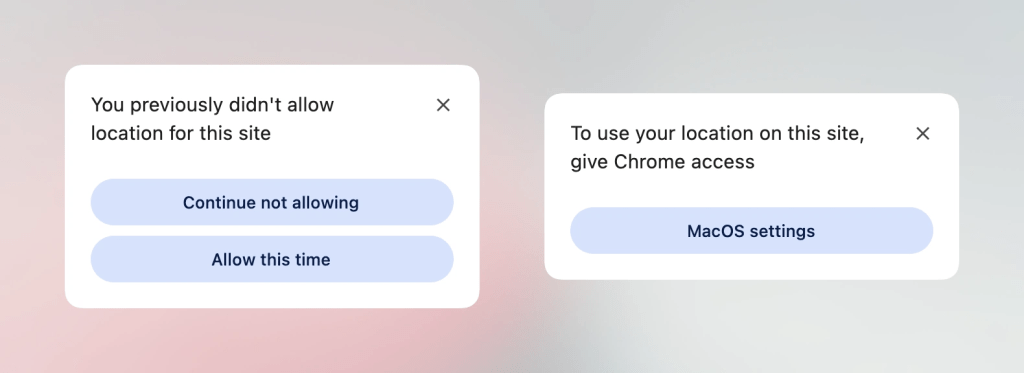
The Geolocation API has historically been one of the most brittle parts of the web platform, often failing due to complex interactions between hardware sensors and browser permissions. The new <geolocation> HTML element aims to standardize this. While it currently introduces certain styling restrictions that developers must navigate, it provides a much cleaner, more accessible way for users to manage their location permissions. As Piccalilli’s recent report highlights, developers can already use this alongside the existing API, ensuring backward compatibility while preparing for a future where <geolocation> is the standard.
MicroLighter and the ::highlight() API
Syntax highlighting was once the domain of heavy JS engines like Prism.js or Highlight.js. Dave Rupert’s MicroLighter project flips this model on its head by utilizing the new Custom Highlight API. By tapping into ::highlight(), MicroLighter can manipulate the rendering of text nodes without the massive memory overhead of traditional DOM-heavy highlighting methods. This is a massive win for performance, particularly on documentation-heavy websites.
Official Responses and Expert Perspectives
The community reaction has been divided but largely optimistic. Regarding the Dark Mode Toggle debate, industry voices are split between a two-state (Light/Dark) and a three-state (Light/Dark/System) approach. Lea Verou remains a staunch supporter of the two-state system, citing simplicity, while Bramus advocates for the three-state toggle, arguing that users deserve granular control over their environment.
The general consensus, as voiced by developers like Vale.Rocks, leans toward an "auto-until-overridden" model. This approach respects the user’s OS-level preferences by default but provides an escape hatch that remembers the user’s specific choice, effectively marrying the best of both worlds.
Furthermore, the introduction of the class prefix selector (.something-*) has been met with excitement. By allowing developers to target classes using a prefix, CSS will become significantly more performant. Current attribute selectors ([class^="something-"]) are computationally expensive for browsers to parse; a dedicated CSS selector would effectively remove this bottleneck, leading to snappier style calculations in large-scale applications.
Implications for the Future of the Web
The implications of these changes are profound. We are seeing a move away from "JavaScript-everything" toward a more declarative, browser-native architecture.
1. Performance Gains
By offloading tasks like syntax highlighting to the ::highlight() API and layout balancing to flex-wrap: balance, developers are reducing the reliance on the main thread. This leads to lower Time-to-Interactive (TTI) metrics and more stable Cumulative Layout Shift (CLS) scores.
2. Simplified Codebases
The class prefix selector and @supports named-feature() function suggest a future where CSS is more expressive and easier to maintain. Developers will no longer need to write complex workarounds to detect browser capabilities or style dynamically generated elements.
3. The "Autumn" of Modern Web Development
As we move into the final quarter of the year, the focus is clearly on maturation. The features discussed here—while some are currently limited to Chrome—set a clear trajectory for the web platform. The integration of CSS grid coordinates into custom properties, as demonstrated by Temani Afif, is a prime example of this maturation. Being able to access grid metadata—such as row/column count and cell coordinates—directly within CSS opens up entirely new possibilities for hover proximity effects and grid-based animation that were previously impossible without complex JavaScript math.
Conclusion
The latest updates in What’s !important (#18) confirm that CSS is becoming an increasingly powerful language. While browser support remains a hurdle, the adoption of progressive enhancement techniques ensures that the web remains resilient. For developers, the message is clear: the tools you need are finally being built into the browser. It is time to move away from the heavy-handed hacks of the past and embrace the elegant, declarative future of CSS.
As we look toward the end of the year, these features will likely become the foundation upon which the next generation of web applications is built. Keep an eye on these experimental APIs; today’s "progressive enhancement" is tomorrow’s web standard.