The Privacy Paradox: Evaluating "Talorys," the Personal AI Agent Running in Your Cloudflare Account
In the rapidly expanding landscape of artificial intelligence, a central tension has emerged: the trade-off between the convenience of high-performance, cloud-hosted AI agents and the sanctity of personal data. Most mainstream AI "personal assistants" operate as black boxes, siphoning user interactions into opaque servers owned by tech giants. For those seeking a middle ground—where convenience meets ownership—a new project called Talorys has surfaced as a compelling, albeit imperfect, solution.
Created by developer [rociiu] and hosted on GitHub, Talorys offers a novel architecture: it functions as an AI agent that resides entirely within your personal Cloudflare account. While it is technically still running on a cloud-based infrastructure, it shifts the locus of control from a third-party vendor to the user’s own cloud instance. As privacy-conscious computing continues to gain momentum, Talorys represents an intriguing experiment in self-hosted AI orchestration.
The Core Concept: Sovereignty in the Cloud
The fundamental appeal of Talorys lies in its transparency. Unlike centralized AI services that treat user data as proprietary training material or opaque telemetry streams, Talorys is open-source. By leveraging Cloudflare’s infrastructure, the developer has created a system that allows users to audit the code, inspect the prompts, and, crucially, own the storage where their data resides.
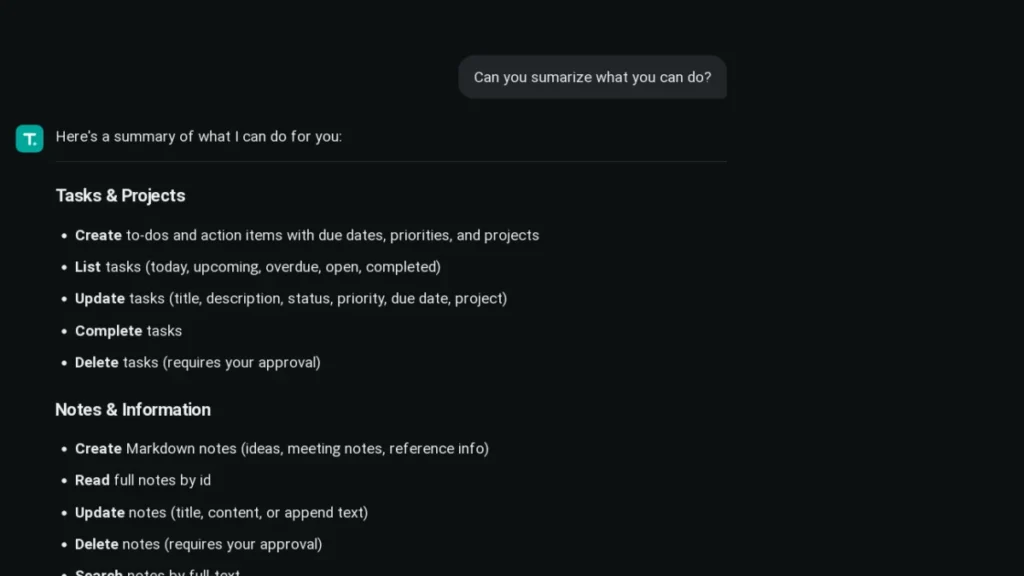
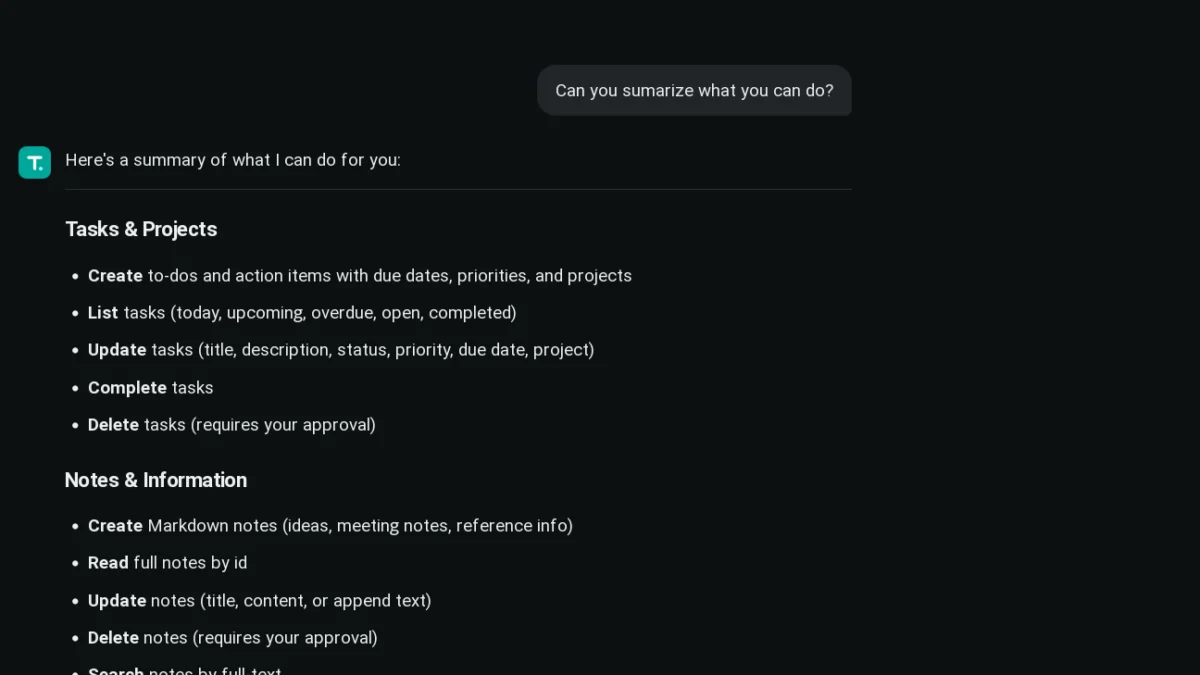
The "personal agent" market is currently dominated by models that prioritize feature bloat over data security. Talorys takes a minimalist approach. It is not designed to be a general-purpose chatbot or a complex automation engine. Instead, it positions itself as a task-oriented, note-taking, and reminder-based system. By keeping the scope narrow, the project aims to minimize the attack surface and reduce the complexity of the privacy model.
Chronology of Development and Deployment
The project, while still in its nascent stages, has garnered attention for its ease of deployment. The installation process is designed to be frictionless, bypassing the common "dependency hell" that often plagues self-hosted software.
- Initialization: Users can connect a custom domain or utilize the default
pages.devsubdomain provided by Cloudflare. - Authentication: A single command-line interface (CLI) operation manages authentication, provisioning the necessary server-side services and data stores within the user’s specific Cloudflare ecosystem.
- Operation: Once deployed, the agent utilizes Cloudflare’s workers and AI engines to process natural language requests.
- Feedback Loop: Early adopters have begun testing the agent’s ability to manage schedules and notes, providing the community with initial performance data regarding its reliability and rate-limit handling.
Technical Infrastructure and Data Handling
Talorys operates by piggybacking on Cloudflare’s "Free Tier" compute resources. This allows for a zero-cost entry point for many users, provided their usage remains within the established daily request quotas.
The Privacy Trade-off
The most significant question regarding Talorys is whether "your cloud account" is truly synonymous with "privacy." Because the agent relies on Cloudflare’s AI engines, data must transit through the company’s infrastructure. While the developer asserts that there is no telemetry and the code is open for public scrutiny, the underlying model remains a black box hosted by a third party.
However, compared to standard SaaS AI models, Talorys offers distinct advantages:
- Data Exportability: Users can easily access, download, or delete their data at any time.
- Prompt Transparency: The logic governing the agent’s behavior is available on GitHub, allowing users to see exactly what instructions (system prompts) are being sent to the AI.
- No Telemetry: By design, the application avoids the data-harvesting practices common in commercial AI wrappers.
Performance Limitations and Real-World Testing
In practical, real-world testing, Talorys demonstrates both the potential and the growing pains of early-stage AI orchestration. When tasked with administrative duties, such as setting up recurring meetings, the results have been mixed.
In one documented trial, the agent successfully registered one of three requested meetings. However, it struggled with temporal logic, scheduling a meeting for a Sunday instead of the requested Monday, despite the task title explicitly mentioning the correct day. Furthermore, the agent encountered Cloudflare’s rate limits, leading to a failure in creating the third meeting. Subsequent attempts to rectify these errors showed that while the agent is capable of learning from corrections, its reliability is currently inconsistent. It also exhibited issues with state management, where it claimed to have deleted an incorrect meeting but failed to do so, requiring manual intervention from the user.
These issues highlight a critical reality: Talorys is not a finished, enterprise-grade replacement for high-end digital assistants. It is a tool for power users—those willing to tolerate minor glitches in exchange for the ability to self-host their task management.
Implications for the AI Ecosystem
The emergence of projects like Talorys signals a broader shift in how users interact with AI. As the novelty of chatbots wears off, the demand for "sovereign AI"—tools that operate within the user’s digital perimeter—is growing.
The "Free-Tier" Risk
The project’s reliance on Cloudflare’s free-tier compute resources presents a potential long-term vulnerability. Should the project gain significant popularity, it is possible that Cloudflare might adjust its rate limits, potentially rendering the tool unusable or forcing a transition to paid tiers. This is a recurring theme in the "free cloud" movement; just as users have experimented with free Oracle servers for VPNs and self-hosting, they must remain cognizant that these resources are subject to the provider’s terms of service and business priorities.
The Future of Personal Agents
Talorys does not currently support integrations with calendars, email clients, or web search. For many, this will be a deal-breaker. However, for those who value privacy, the absence of these features may be an acceptable cost. By avoiding complex integrations, the developer has kept the system lightweight and easier to debug.
The success of Talorys may also pave the way for a new category of "micro-agents." Instead of one massive, all-knowing, and potentially invasive AI, the future may lie in specialized, localized agents that each handle a single domain of a user’s life—one for notes, one for scheduling, and one for file management—all running on a private cloud instance.
Conclusion: A Compromise, Not a Cure-All
Talorys is a testament to the fact that you do not need to be a large corporation to build a functional, usable AI agent. By stripping away the corporate bloat and focusing on a transparent, user-controlled architecture, [rociiu] has provided a valuable blueprint for those who are tired of the "black box" approach to artificial intelligence.
While it is not flawless, and while it requires a degree of technical comfort to maintain, it succeeds in its primary objective: providing a space for AI interaction that is not inherently designed to monetize the user’s behavior. For the privacy-conscious developer or the enthusiast who enjoys tinkering with cloud architecture, Talorys is a refreshing, albeit experimental, step forward.
As we move toward a future where AI is integrated into every facet of our digital existence, the question of where that AI lives will become just as important as what it can do. Talorys is one of the first voices in a growing chorus demanding that the answer be: "It lives with me."