Tech and Infrastructure Roundup: From Danish Digital Hurdles to Maritime Safety
The landscape of modern technology and infrastructure is rarely a straight line. Whether it is a government agency attempting a complex migration to open-source software, users pushing back against the encroaching advertising in smart home devices, or engineers managing the delicate, volatile remains of World War II history, the common thread is the tension between legacy systems and the desire for modernization.
In this deep dive, we examine three major stories from the week: the stumble of Denmark’s open-source initiative, the rise of "vibe coding" in the smart home sector, and the successful stabilization of the SS Richard Montgomery.
1. Denmark’s Open-Source Pivot: A Lesson in Interoperability
The Main Facts
The Danish government’s ambitious effort to transition away from proprietary Microsoft software has hit a significant roadblock. After committing to a shift toward open-source alternatives, specifically utilizing the Collabora suite, the program has been quietly abandoned following a failed pilot phase. The primary point of failure was not the software itself, but the inability to maintain seamless document interoperability between government departments using Collabora and those still operating within the Microsoft Office ecosystem.
Chronology of the Transition
- Late 2025: The Danish government announces a formal policy to reduce dependence on proprietary software, citing long-term cost savings and digital sovereignty as primary drivers.
- Early 2026: A pilot program is launched, migrating a subset of government employees to Collabora.
- Mid-2026: Reports begin to surface regarding friction in document sharing. Files generated in Collabora often suffered from formatting degradation when opened in Microsoft Office, and vice versa.
- October 2026: The pilot program is quietly shuttered. Government officials signal a retreat from the current deployment strategy, citing "operational realities."
Implications for Digital Sovereignty
The failure highlights a critical reality in enterprise IT: software migration is never purely about the application layer; it is about the data ecosystem. When a government relies on proprietary formats (like .docx or .xlsx) that are subject to "version creep" and proprietary extensions, moving to an open standard like the Open Document Format (ODF) requires a total, rather than piecemeal, commitment. By attempting to run a hybrid environment, Denmark created a "silo effect," where productivity plummeted because staff could not reliably share data.
Industry analysts note that this failure should serve as a cautionary tale for other nations, such as the Netherlands, which are currently pursuing similar Linux-based, open-source migrations. Without a universal mandate to switch to ODF across all departments simultaneously, the friction of interoperability will almost inevitably derail the effort.
2. The Rise of "Vibe Coding" and Smart TV Liberation
The Main Facts
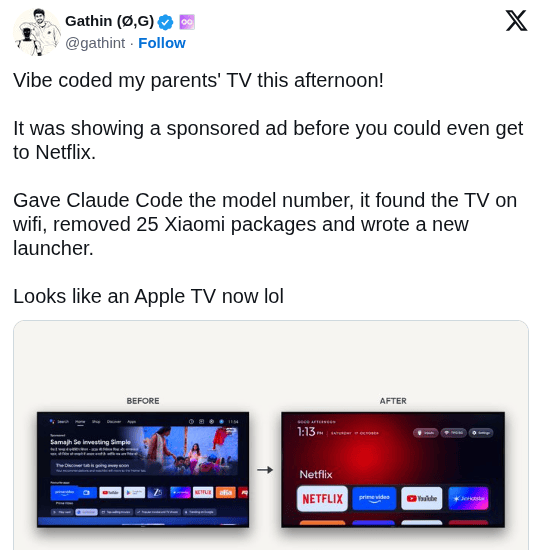
A new trend dubbed "vibe coding" has emerged among tech-savvy users who are increasingly frustrated with the "ad-bloat" prevalent in modern smart TVs. By leveraging large language models (LLMs) like Claude or GPT-4, users are generating scripts and commands to strip away the intrusive interfaces of their smart TVs, effectively "jailbreaking" their home entertainment systems.
Supporting Data: The Android Debug Bridge (ADB) Factor
While the media buzz surrounding this trend paints it as a revolutionary act of AI-driven hacking, the technical reality is more grounded. Most modern smart TVs operate on the Android TV or Google TV platforms. Because these systems are essentially hardened versions of the Android mobile OS, they retain support for the Android Debug Bridge (ADB).
The "vibe coding" process typically involves:
- Network Access: Using ADB to establish a secure link between a PC and the television over a local network.
- Package Management: Using the AI to identify and systematically uninstall the specific APKs (Android Package Kits) responsible for home screen advertisements, telemetry, and non-essential "bloatware."
- Launcher Replacement: Installing custom, third-party launchers that provide a clean, ad-free, and highly functional interface.
The Consumer-Developer Gap
The gap between the "arcane magic" perceived by the public and the "basic administration" performed by developers is significant. For the average user, the ability to converse with an AI to generate a batch script to clean a TV interface is empowering. However, it also highlights the growing divide between corporate product design—which prioritizes ad-revenue streams—and user agency. Manufacturers have increasingly made these devices difficult to navigate, and users are using the latest generation of AI tools to "reclaim" hardware they have already purchased.
3. The SS Richard Montgomery: Defusing a Historical Threat
The Main Facts
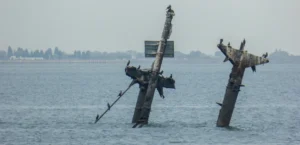
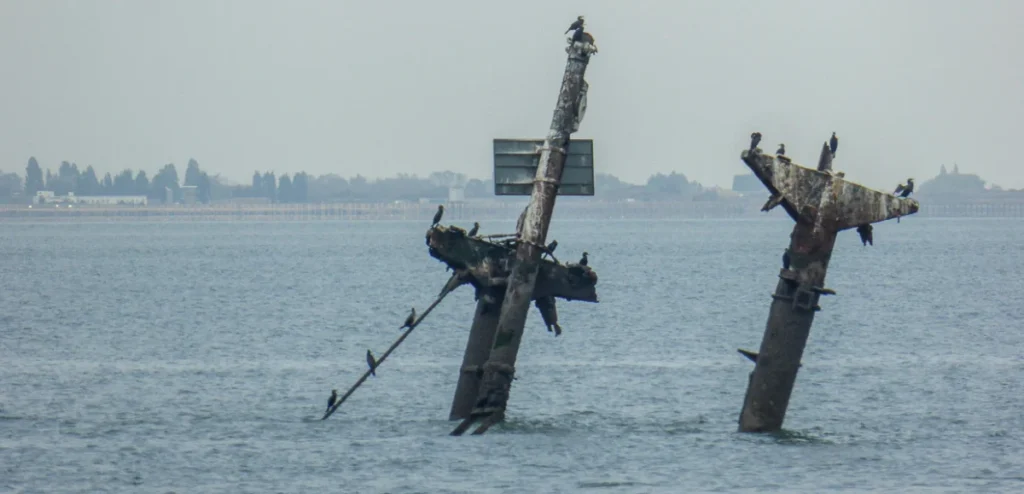
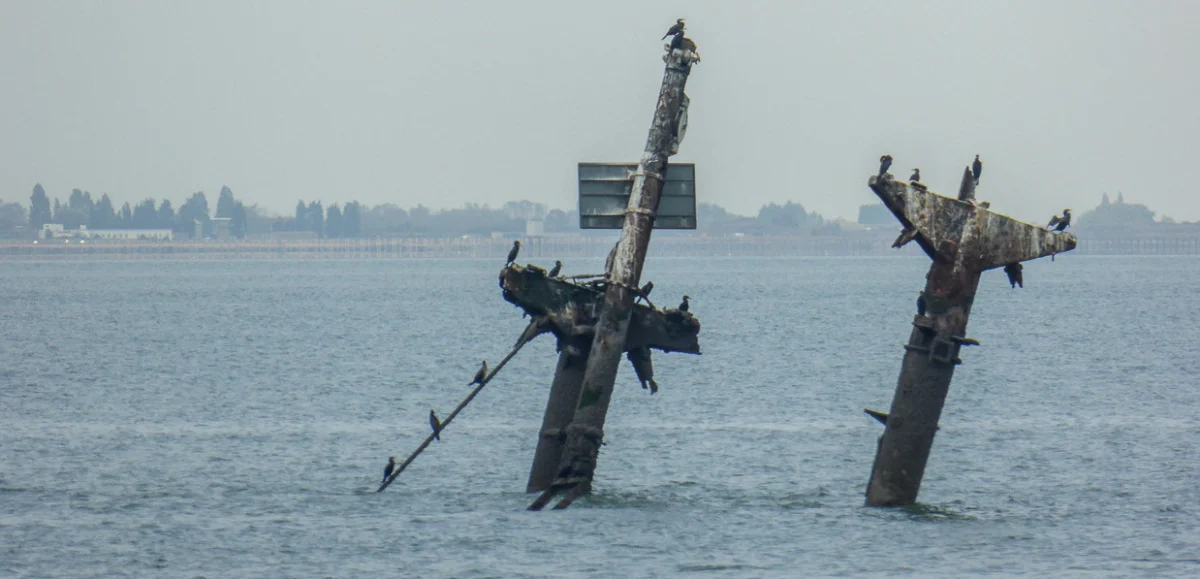
Off the coast of Sheerness, England, a high-stakes engineering project has reached a successful milestone. The SS Richard Montgomery, a Liberty ship that sank in 1944, has been a ticking time bomb for over eight decades. The ship rests in the Thames Estuary with approximately 1,400 metric tons of unexploded munitions still within its hull.
Chronology of the Intervention
- 1944: The Richard Montgomery runs aground and splits in two, trapping a massive quantity of high-explosive bombs.
- 1944–2026: The vessel remains a designated danger zone, with the government monitoring the structural integrity of the wreck as it slowly deteriorates in the tidal currents.
- October 2026: Engineers complete the removal of the ship’s masts. The decision was prompted by structural surveys indicating that the masts were dangerously close to collapsing into the holds, which could have triggered a sympathetic detonation of the remaining cargo.
Official Responses and Risk Management
The UK Ministry of Defence and maritime authorities have long maintained a "monitor and manage" approach. However, as the steel hull continues to corrode, the risks of a spontaneous collapse have increased. The removal of the masts was described as a "delicate operation," requiring specialized underwater cutting equipment and remote-operated vehicles (ROVs) to avoid vibrations that might disturb the volatile payload.
While the removal of the masts stabilizes the ship for the time being, the greater challenge—removing the explosives themselves—remains a daunting prospect. Expert consensus suggests that any attempt to remove the cargo could be more dangerous than leaving it in situ, as the explosives have become unstable over the last 80 years. The success of the mast removal provides a temporary reprieve for the surrounding coastline, but the Richard Montgomery remains a permanent fixture in the list of the world’s most dangerous shipwrecks.
4. Bridging the Gap: Local Wikipedia and Data Context
In a lighter, yet equally intriguing development, the "Local Wikipedia" project by Ed Jefferson offers a different way to view our physical surroundings. By mapping the vast, crowd-sourced knowledge of Wikipedia to geographic coordinates, the tool allows users to filter information based on proximity.
Implications of Localized Data
We live in an age of information overload. Often, we are inundated with global news while remaining ignorant of the historical, geographical, and cultural significance of the ground beneath our feet. The Local Wikipedia project demonstrates the power of metadata. By utilizing the geographic tags inherent in many Wikipedia articles, the platform transforms the abstract "encyclopedia" into a contextual, local guide.
Whether it is learning about the history of a local park, the architecture of a nearby building, or the significance of a local landmark, tools like this help ground the digital experience in the physical world. It serves as a reminder that even in a world obsessed with AI, global software migrations, and historical infrastructure management, there is immense value in simply knowing where you are.
Final Thoughts
These stories, while disparate in nature, all revolve around the management of legacy and system complexity. Whether it is a government trying to escape the "legacy" of a proprietary software ecosystem, a user trying to strip the "legacy" bloat from a TV, or a nation trying to manage the "legacy" of a wartime catastrophe, the fundamental challenge remains the same: how do we transition from the systems of yesterday to the needs of today without triggering a collapse?
For those interested in contributing to the ongoing documentation of these technological shifts, or if you have encountered similar instances of digital or physical infrastructure challenges, we encourage you to submit your findings to our editorial team. The intersection of history, engineering, and digital policy is where the most important stories of our time are being written.