The Silicon Revolution: AWS Unleashes Graviton5 to Redefine Cloud Compute and Agentic AI
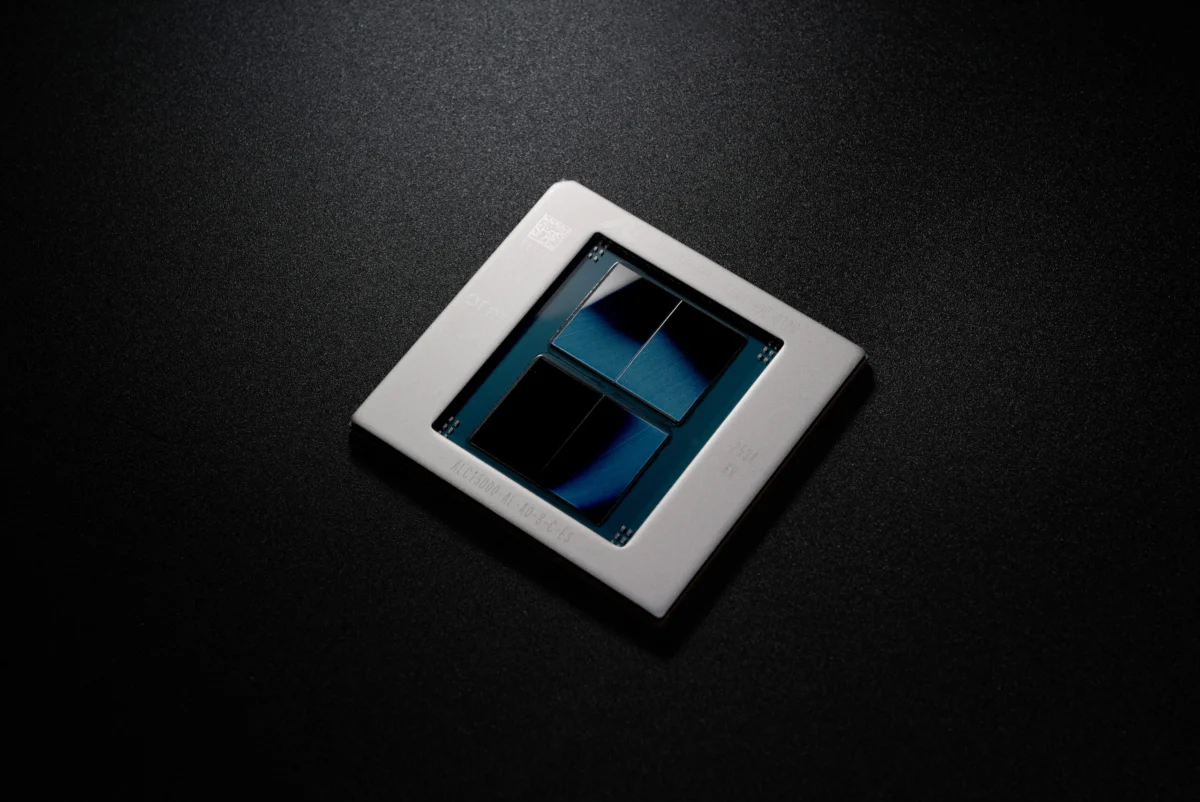
The cloud computing landscape has reached a pivotal inflection point. As artificial intelligence evolves from simple conversational interfaces to complex "agentic" systems—capable of planning, executing, and orchestrating multi-step workflows—the underlying infrastructure must undergo a corresponding transformation. Amazon Web Services (AWS) has answered this call with the general availability of its Amazon EC2 M9g and M9gd instances, powered by the fifth generation of its custom-designed Graviton silicon.
Representing eight years of relentless innovation and five generations of custom silicon design, the Graviton5 processor is positioned as the most powerful and energy-efficient chip AWS has ever engineered. For enterprises struggling to balance the insatiable performance demands of modern AI with sustainability mandates and cost-efficiency, the M9g series offers a high-performance, future-proof bridge.
The Evolution of Custom Silicon: A Chronology of AWS Graviton
To understand the magnitude of the M9g release, one must look back at the trajectory of AWS’s silicon strategy. The journey began nearly a decade ago, born from a desire to break free from the traditional constraints of general-purpose x86 hardware.
- 2018 (Graviton1): AWS introduced its first custom Arm-based processor, signaling a fundamental shift in how cloud providers view their hardware stack. It was a modest start, targeted at simple, scale-out workloads.
- 2019 (Graviton2): This generation changed the market narrative. With massive gains in performance-per-dollar, it proved that Arm-based server chips could compete with—and often outperform—industry incumbents in real-world scenarios.
- 2021 (Graviton3): AWS introduced industry-leading features like DDR5 memory and improved floating-point performance, solidifying Graviton as a premier choice for high-performance computing (HPC) and data-intensive applications.
- 2023 (Graviton4): The focus shifted to density and sheer throughput, optimizing for the increasing demands of containerized microservices and complex database clusters.
- 2025 (Graviton5): Announced in preview at re:Invent 2025 and now generally available, Graviton5 represents the "Agentic Era" of computing. It is the first CPU in the AWS fleet to embrace PCIe Gen6 and DDR5-8800 memory, specifically designed to handle the heavy lifting of modern AI orchestration.
Technical Architecture: Under the Hood of Graviton5
The M9g and M9gd instances are not merely iterative updates; they are a fundamental re-architecting of the compute node. Graviton5 boasts an impressive 192 cores, a 5x increase in L3 cache compared to its predecessor, and a 33% reduction in inter-core latency. These specifications are engineered to address the primary bottleneck of modern AI: the "wait time" between CPU-bound tasks.
By utilizing DDR5-8800 memory, the processor ensures that the high-speed data flow required by large-scale AI agents is never starved. Furthermore, the integration of PCIe Gen6 allows for unprecedented I/O throughput, ensuring that data movement between storage, memory, and accelerators remains fluid.
Security Through Mathematical Precision: The Nitro Isolation Engine
Perhaps the most significant architectural advancement beyond the raw compute is the introduction of the Nitro Isolation Engine. As cloud security threats become more sophisticated, AWS has moved beyond standard hypervisor isolation.

The Nitro Isolation Engine uses formal verification—a rigorous, mathematically proven method—to ensure that virtual machine memory, CPU registers, and I/O devices are isolated with absolute certainty. By mediating all access through a minimal, formally verified API set, AWS is setting a new industry standard for what "secure cloud" truly means. It is no longer just about preventing unauthorized access; it is about providing mathematical proof that such access is impossible.
Performance Metrics and Real-World Impact
Before today’s general availability, early adopters provided a clear look at how M9g performs under the pressure of production workloads. The results are striking across diverse domains:
- Database Optimization: HubSpot, a global leader in CRM and marketing technology, reported that deploying M9g for their MySQL databases resulted in a staggering 60% reduction in query duration.
- Analytics Throughput: ClickHouse, the high-performance analytical database, observed a 36% performance boost over the M8g series, achieving these gains with zero code changes—a testament to the architectural maturity of the Graviton ecosystem.
- Observability at Scale: Honeycomb, an industry pioneer in observability, conducted a six-month A/B test of their production environment. They concluded that the M9g instances provided 36% better throughput per core compared to Graviton4, proving that the hardware scales linearly with complex, high-concurrency workloads.
The Agentic AI Paradigm Shift
The most critical implication of the Graviton5 release is its alignment with the "Agentic AI" trend. As AI shifts from simple query-response models to agents that execute multi-step tasks, the demand for CPU compute is exploding.
Meta, one of the world’s most prominent AI players, has already begun a massive-scale deployment of Graviton instances—numbering in the tens of millions of cores—to power its agentic AI initiatives. These workloads require the exact attributes that Graviton5 provides: high core density for concurrent environments, massive cache sizes to handle context-heavy reasoning, and the ability to orchestrate tasks without being bottlenecked by memory bandwidth.
Implications for the Broader Ecosystem
The arrival of M9g and M9gd has profound implications for three distinct groups: developers, CTOs, and the sustainability-conscious enterprise.
For the Developer
With the AWS Graviton Getting Started Guide and the new AI-powered "AWS Transform" service, the barrier to entry has never been lower. AWS Transform can automatically analyze, recompile, and validate Java applications for migration from x86 to Graviton. This automation reduces the migration friction that has historically held back developers from adopting Arm-based instances.

For the CTO
The economics of the cloud have shifted. With M9g, businesses are not just buying compute; they are buying efficiency. The ability to achieve up to 35% better performance for web applications and 30% better performance for databases means that companies can either handle more traffic with the same infrastructure or significantly reduce their cloud footprint, leading to direct bottom-line benefits.
For the Sustainable Enterprise
Energy efficiency is no longer a "nice-to-have" feature; it is a board-level imperative. Graviton5’s superior performance-per-watt allows organizations to meet their sustainability targets while simultaneously increasing their compute capacity. By maximizing energy utilization per unit of compute, AWS is effectively helping its customers lower their carbon footprint without sacrificing performance.
The Future of Infrastructure
The launch of the M9g and M9gd instances marks a coming-of-age for the AWS Graviton program. With over 350 instance types and 120,000 customers already onboard, Graviton is no longer an "alternative" to traditional x86 hardware—it is the default choice for high-performance, modern cloud architectures.
As we look toward the future, the integration of PCIe Gen6 and the focus on formal verification suggest that AWS is building a future where performance and security are not trade-offs, but complementary pillars of a robust cloud infrastructure. For any organization looking to scale their AI capabilities while keeping costs and energy consumption in check, the transition to Graviton5 is not just an option; it is a necessity.
The era of Agentic AI is here, and with the Graviton5-powered M9g instances, the hardware finally has the power to keep up with the software.