The Great Initialization Shift: KaOS Challenges the Status Quo with Dinit
For over a decade, systemd has served as the undisputed bedrock of the Linux ecosystem. Providing a comprehensive suite of system management tools—ranging from service initialization and logging to device handling—it has become the default choice for the vast majority of mainstream distributions. However, its expansive scope has long been a point of contention within the Unix philosophy community, which champions the modular approach: "Do one thing and do it well."
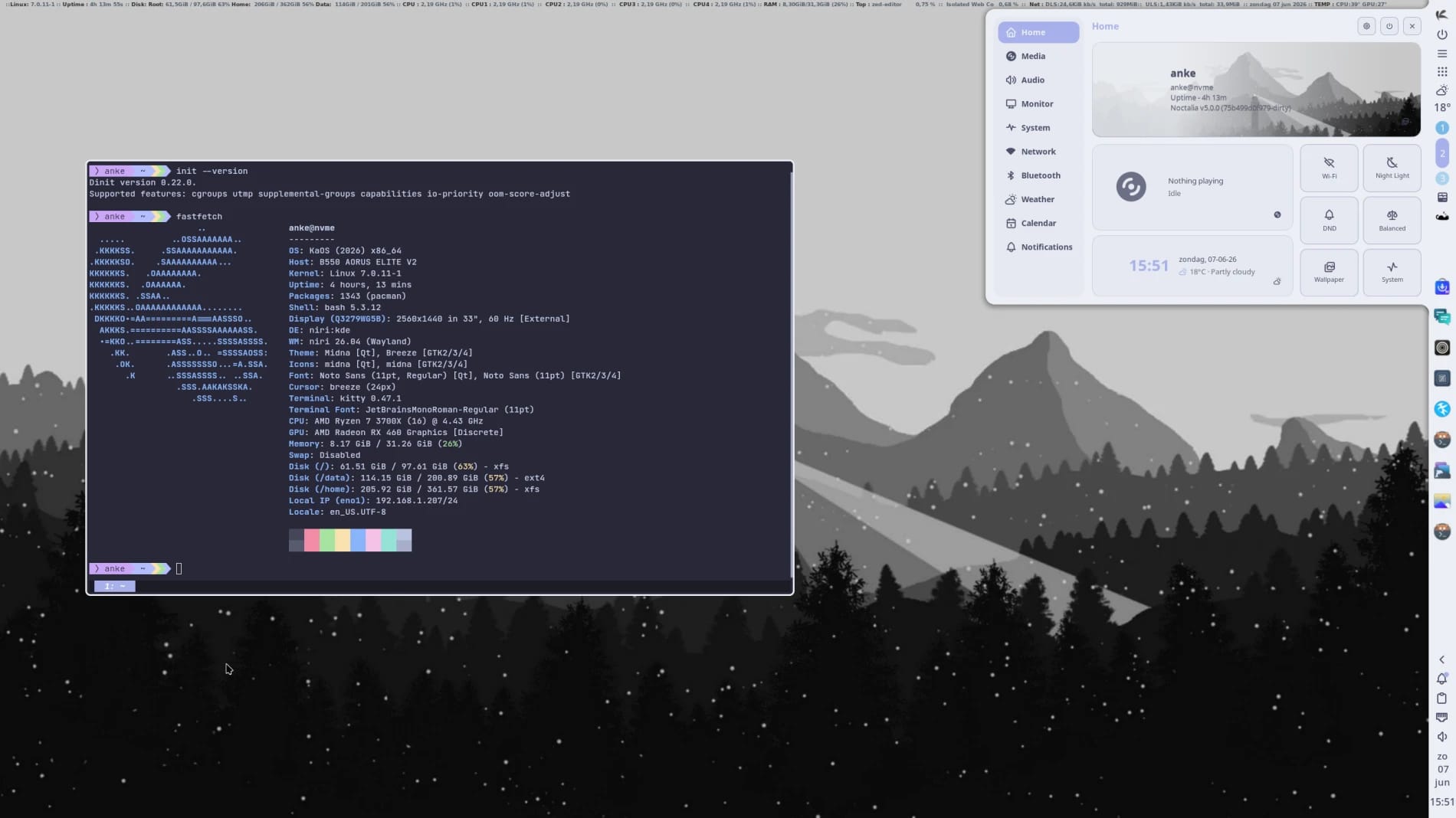
In a bold move that signals a growing desire for architectural diversity, the KaOS project—a niche, independent distribution built around the Qt toolkit—has officially unveiled the first release candidate (RC) of its new, non-systemd-centric architecture. By transitioning to the Dinit service manager, KaOS is not merely swapping a boot component; it is redefining its operational philosophy to prioritize simplicity and maintainability in an increasingly complex software landscape.
Main Facts: The Architecture of Change
The KaOS Dinit 2026.06 RC marks a significant milestone in the project’s history. Moving away from the monolithic integration of systemd, the developers have architected a new startup stack that delegates responsibilities to specialized, lightweight components.
At the heart of this transition is Dinit, a dependency-based service manager designed to be modular and efficient. Unlike traditional init systems that might struggle with complex boot sequences, Dinit excels at parallel service execution while maintaining strict dependency tracking. To ensure a cohesive user experience, the team has implemented a "best-of-breed" approach for the remaining system duties:
- Turnstile: Handles complex session and login tracking, filling the gap left by systemd-logind.
- seatd: A minimal seat management daemon that provides a secure, lightweight alternative to systemd’s seat management capabilities.
- greetd with tuigreet: Replaces the traditional SDDM display manager, offering a more streamlined, text-based interface that integrates natively with the new seatd-driven session management.
Crucially, the team has opted for a pragmatic path. KaOS is not discarding systemd entirely; essential low-level components like udev (for device management) and tmpfiles remain in use. This "hybrid" approach allows the distribution to benefit from the robustness of established low-level Linux tools while shedding the weight of the broader systemd ecosystem.
Chronology: The Road to Departure
The decision to migrate was not made in a vacuum, nor was it a spontaneous reaction to community pressure. It was, according to the KaOS development team, a move born of necessity.
- Mid-2023: The project team begins identifying "upstream drift" as a primary risk factor. As systemd expanded its footprint, the maintainability of the distribution became increasingly difficult.
- Late 2024: Systemd 254 drops support for the "split /usr" setup—a configuration that had been a staple of KaOS’s filesystem architecture. This change forced the team to either re-engineer their entire distribution or seek an alternative init system.
- Early 2025: Further technical hurdles arise as later versions of systemd remove AUFS (Advanced Multi-Layered Unification Filesystem) compatibility, which was critical for the distribution’s live-media functionality.
- Mid-2025: The integration of systemd as a hard dependency in KDE Plasma—the primary desktop environment for KaOS—reaches a critical threshold. The developers conclude that remaining on systemd would eventually lead to a "forced obsolescence" of their independent distribution model.
- June 2026: After months of internal testing and architectural refinement, the team releases the KaOS Dinit 2026.06 RC, providing a viable, non-systemd path for the user base.
Supporting Data: Why Dinit?
Dinit is not a newcomer to the Linux scene. It is a mature, C++-based service manager that has already found a home in several specialized distributions, including Chimera Linux and eweOS. Its popularity in these projects stems from its design philosophy: it is small, performant, and, most importantly, it respects the boundaries of the init process.
In benchmarks conducted during the transition, the KaOS team noted that the boot sequence using Dinit felt significantly more responsive. Because Dinit is built to handle complex dependency chains without the overhead of a massive daemon, the time from power-on to a usable session was reduced.

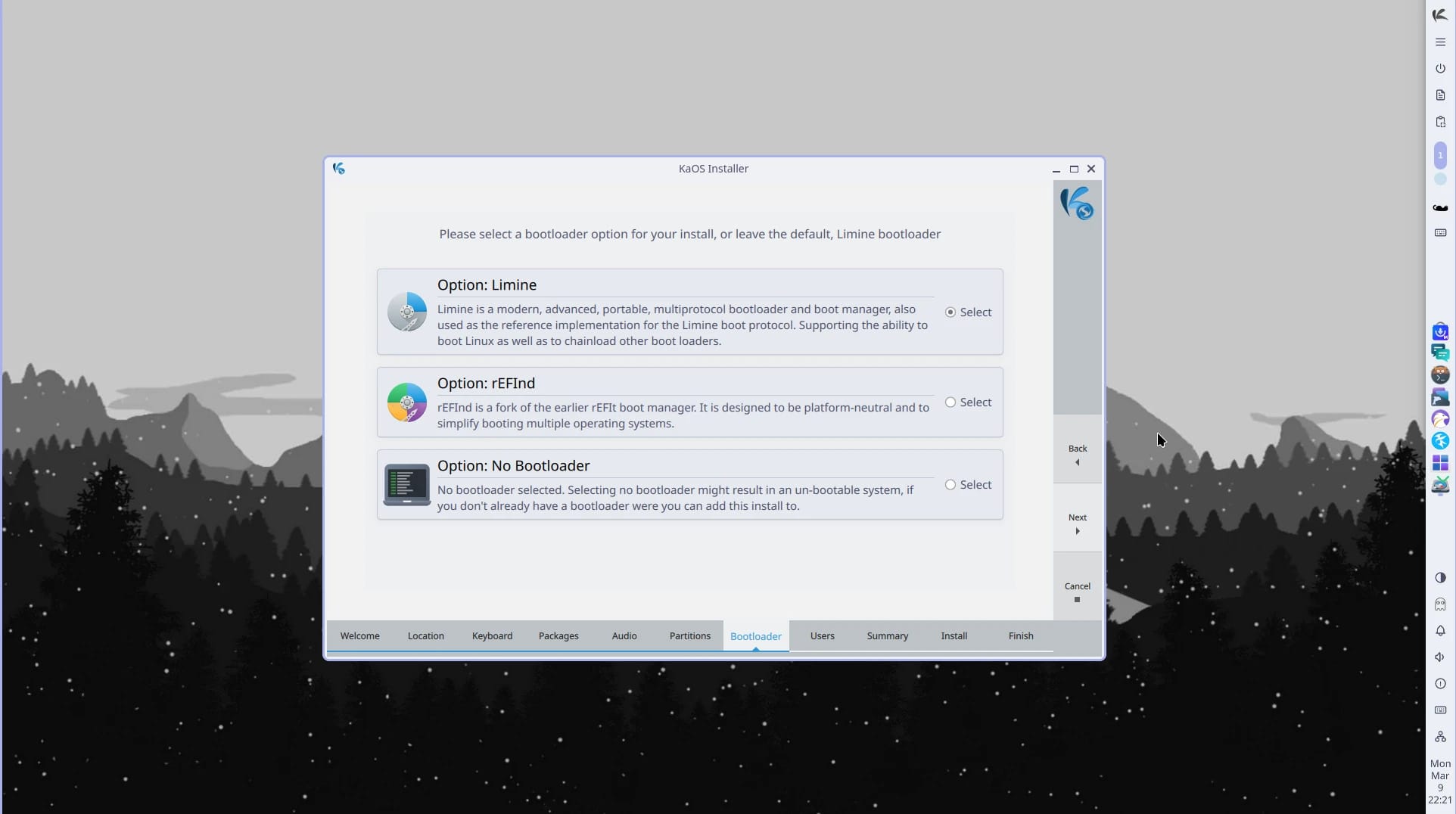
Furthermore, the integration of Limine as the new default bootloader enhances this performance. By moving away from older, more cumbersome bootloaders, KaOS ensures that the transition from the firmware stage to the init stage is as seamless as possible. The inclusion of Croeso, a new welcome utility, serves to guide users through the 15 most common post-install tasks, ensuring that despite the major "under the hood" changes, the user experience remains polished and accessible.
Official Responses and Developer Insight
The KaOS developers have been transparent regarding the motivations behind this transition. In their official documentation, they stated: "Switching init systems became the only real option for the project to maintain its independence."
The developers emphasize that this was not an anti-systemd crusade, but rather a decision based on software longevity. By decoupling the desktop environment and user-space utilities from the init system, KaOS ensures that it can continue to support the latest versions of Qt and KDE without being tethered to the release cycles or architectural choices of the systemd project.
However, the team remains cautious. They acknowledge that the current RC is not for the faint of heart. "This is a release candidate, not a stable release," the team noted in their announcement. "Rough edges are expected, and we encourage users to report issues via our tracking portals." The team has also committed to maintaining the traditional systemd-based ISOs for the foreseeable future, ensuring that users have a clear transition path or the option to remain on the legacy architecture.
Implications: The Future of "Systemd-Free" Linux
The KaOS move highlights a significant shift in how independent Linux distributions view their long-term viability. As major desktop environments like GNOME and KDE Plasma become more tightly integrated with the systemd stack, the "middle ground" for independent distributions is shrinking.
1. The Fragmentation vs. Freedom Debate
Critics of the move argue that fragmenting the init system landscape makes life harder for software developers who must now support multiple system management paradigms. However, proponents argue that without the existence of alternative init systems, the Linux ecosystem risks becoming a monoculture. The ability for projects like KaOS, Artix, and Chimera to innovate with Dinit or OpenRC keeps the broader community honest and forces developers to consider portability.
2. The Rise of Modular System Management
The combination of Dinit, Turnstile, and seatd represents a new "standard" for systemd-free Linux. By choosing components that communicate effectively through standardized protocols, these distributions are demonstrating that it is possible to replicate the functionality of a monolithic system manager using a collection of specialized, modular tools.
3. Impact on the KDE Plasma Ecosystem
Perhaps the most significant implication is the impact on KDE. As a distro built explicitly around the Qt/KDE stack, KaOS’s success in moving to Dinit provides a roadmap for other distributions that wish to maintain a KDE-based desktop without fully adopting the systemd ecosystem. If KaOS succeeds in providing a seamless experience, it could embolden other distributions to push for better upstream support for non-systemd init systems within the KDE project.
Conclusion: A New Chapter
The introduction of the KaOS Dinit 2026.06 RC is more than just a technical update; it is a statement of intent. It proves that even in an era of massive, integrated software suites, there is still space for the independent-minded developer to carve out a different path.
For the end user, this transition offers a glimpse into a more modular, understandable operating system. While the path ahead for the KaOS team will undoubtedly involve bug squashing and refining the integration of these new tools, the project has already succeeded in its primary goal: ensuring that KaOS remains a distribution controlled by its community and its developers, rather than by the shifting requirements of a single upstream project.
As the Linux community watches the progress of this RC, the real question is not whether Dinit is "better" than systemd, but whether the existence of such alternatives is necessary for the health of the open-source ecosystem. If the enthusiasm surrounding the KaOS announcement is any indication, the answer is a resounding "yes."
For those interested in testing the future of KaOS, the ISOs are currently available via regional mirrors. As the project moves toward a stable release, it will be fascinating to see how the landscape of "systemd-free" Linux evolves to meet the challenges of 2026 and beyond.