Weekly AWS Roundup: The Expansion of Swift, Enterprise AI Upgrades, and New Cloud Resilience Standards
As the cloud computing landscape continues to evolve at a blistering pace, this week’s AWS updates underscore a significant shift toward two critical priorities for modern engineering teams: cross-platform flexibility and high-availability architecture. From the long-awaited general availability of the AWS IoT Device SDK for Swift to major upgrades in how enterprises handle generative AI and identity management, the latest announcements reflect a broader trend of bridging the gap between legacy enterprise workloads and cutting-edge edge computing.
1. Main Facts: The Swift Frontier and Enterprise AI Advancements
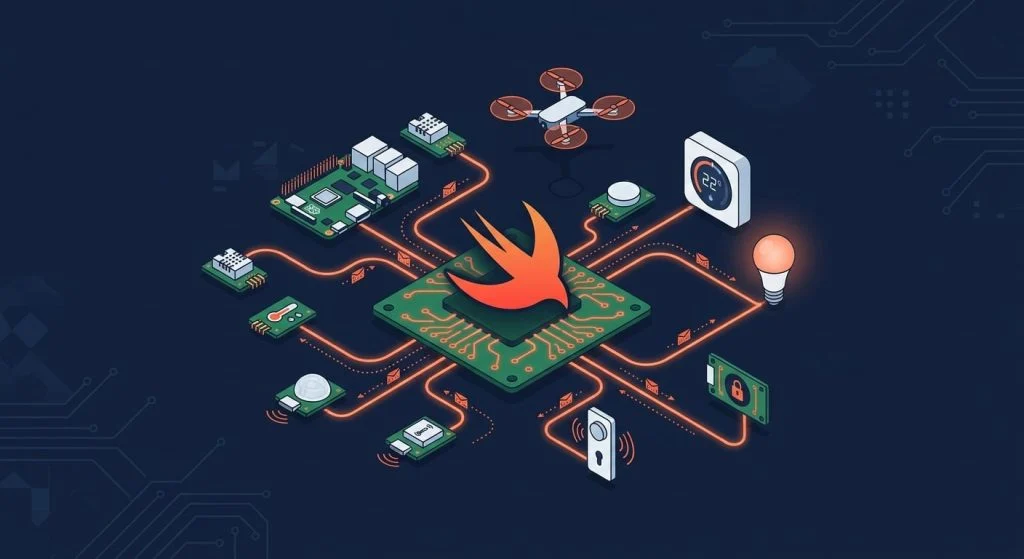
The most notable development this week is the general availability (GA) of the AWS IoT Device SDK for Swift. For developers embedded in the Apple ecosystem, this marks a turning point. By bringing production-ready support for MQTT 5, Device Shadow, Jobs, and fleet provisioning to macOS, iOS, tvOS, and Linux, AWS is signaling that Swift is no longer confined to mobile application development.
Simultaneously, AWS has significantly bolstered its generative AI offerings on Amazon Bedrock. The introduction of OpenAI’s GPT-5.5 and GPT-5.4 models, alongside the powerful Codex model, provides developers with a robust toolset for agentic coding and complex, multi-step autonomous tasks. These models are not just being added to the catalog; they are being integrated with the same security, governance, and operational controls that define the AWS enterprise experience.
Finally, for organizations focused on mission-critical uptime, Amazon Cognito now supports multi-Region replication. This feature addresses one of the most persistent pain points in cloud architecture: ensuring that user identity remains intact and accessible during regional infrastructure disruptions.
2. Chronology of Developments: A Week of Rapid Integration
The week began with a focus on developer ergonomics and the maturation of the Swift language. By Monday, the Swift Server Workgroup (SSWG) had solidified its influence on cloud-native patterns, leading directly into the GA announcement of the AWS IoT Device SDK.
Mid-week, the focus shifted toward the data layer and enterprise licensing. The announcement regarding Amazon RDS for SQL Server and the "Bring Your Own Media" (BYOM) initiative highlighted AWS’s commitment to facilitating cloud migration for organizations heavily invested in Microsoft’s ecosystem. By allowing customers to reuse existing SQL Server licenses via the License Mobility program, AWS effectively lowered the barrier to entry for on-premises migrations.
As the week progressed, the attention turned to high-availability and AI. The rollout of Cognito’s multi-Region replication on Thursday provided a critical update for compliance-heavy industries. The week concluded with the integration of OpenAI’s latest model suite into Bedrock, cementing the platform as a primary hub for enterprise-grade generative AI deployments.
3. Supporting Data and Technical Implications
The Rise of Swift at the Edge
The move to support Swift on IoT devices is not occurring in a vacuum. It follows a rising tide of interest in using Swift as a server-side and edge-computing language. Projects like WendyOS demonstrate this trajectory, offering first-class Swift support for high-performance hardware like the NVIDIA Jetson and Raspberry Pi.
- Connectivity Standards: The inclusion of MQTT 5 in the new SDK is critical. Unlike previous versions, MQTT 5 offers improved error reporting, shared subscriptions, and user properties, which are essential for managing large, complex fleets of IoT devices.
- Performance Metrics: By enabling native Swift code on these devices, developers can leverage memory safety and performance characteristics that exceed traditional interpreted languages, effectively reducing the overhead of managing edge-deployed AI models.
AI and Enterprise Governance
The arrival of GPT-5.5 on Amazon Bedrock is perhaps the most high-impact change for the developer community.
- Model Capabilities: GPT-5.5 is specifically engineered for "agentic coding"—the ability for an AI to not only suggest code but to execute, test, and debug it across multiple files and systems.
- Operational Control: Unlike using these models via a public API, Bedrock integration ensures that data remains within the AWS perimeter. For enterprises, this satisfies stringent data privacy requirements (GDPR, HIPAA, SOC2) that have previously prevented the adoption of high-performance LLMs.
4. Official Perspectives and Industry Implications
AWS has consistently positioned itself as the "builder’s cloud." By providing the tools for Swift developers to interact with the AWS IoT core, the company is effectively acknowledging that the next generation of industrial and consumer IoT will be written in languages that provide both safety and speed.
Regarding the multi-Region replication for Amazon Cognito, the industry consensus is that this is a "must-have" feature. Identity provider (IdP) outages have historically been a single point of failure for many SaaS companies. By allowing near real-time synchronization of user pools and credentials to standby regions, AWS is effectively commoditizing disaster recovery for identity services, making it accessible to startups and enterprises alike.
5. Strategic Implications for Architects and Developers
The convergence of these announcements points to three major strategic shifts:

A. The "Bring Your Own" Era
The RDS for SQL Server BYOM update is a strategic maneuver to capture the "middle market" of enterprise IT. Many companies have been reluctant to move to the cloud because they have already prepaid for multi-year software licenses. By integrating License Manager, AWS is not just providing infrastructure; it is providing a license-compliance dashboard that reduces the friction of moving on-premises assets.
B. Resilience as a Standard Feature
Multi-Region replication in Cognito signifies that "High Availability" is no longer an optional architectural design choice that requires months of custom engineering; it is becoming a standard feature of managed services. Architects should now treat cross-region failover as a configuration task rather than a development project.
C. The Proliferation of Agentic Workflows
With the availability of Codex and GPT-5.5, the developer experience (DX) is about to undergo a fundamental change. Integrating these models into IDEs like Visual Studio Code and Xcode means that the "AI-powered developer" is the new baseline. Companies that fail to integrate these tools into their CI/CD pipelines will likely find themselves at a significant productivity disadvantage within the next 18 months.
Conclusion: Looking Ahead
As we look toward the remainder of the year, the themes of this week—resilience, language-specific support for modern stacks, and enterprise-grade generative AI—will likely define the AWS product roadmap. For developers and architects, the key takeaway is clear: the tools you need to build secure, global, and intelligent applications are no longer niche; they are becoming fundamental, "out-of-the-box" capabilities of the AWS ecosystem.
Whether you are deploying Swift-based code to a fleet of edge sensors or architecting a global identity system that must survive regional outages, the latest updates provide the foundation to move faster and with greater confidence. As always, the best way to understand these changes is to begin experimenting in the console today. The evolution of cloud computing continues, and the distance between an idea and a production-ready, globally scaled application has never been shorter.
For more information on these updates, check the AWS What’s New page. To get involved with the broader builder community, explore the AWS Builder Center to connect with engineers solving similar challenges.