Android XR Ecosystem Expands: A New Frontier for Immersive Computing
Date: 15 June 2026
Authors: Stevan Silva, Group Product Manager; Vinny DaSilva, Developer Relations Engineer, Android XR
The landscape of extended reality (XR) is undergoing a tectonic shift. As hardware becomes more refined and the integration between mobile ecosystems and spatial computing deepens, the barrier to entry for developers is collapsing. With the Samsung Galaxy XR already in the hands of consumers and the Android XR ecosystem reaching a new level of maturity, Google has unveiled a suite of transformative tools designed to democratize high-end spatial development. From the release of Developer Preview 4 of the Android XR SDK to the inclusion of major game engines like Unreal and Godot, the message is clear: the future of Android is not just in your pocket—it is all around you.
Main Facts: The Evolution of the Android XR Platform
The latest updates, revealed in tandem with Google I/O and the Augmented World Expo (AWE), signify a shift from experimental phase to full-scale production readiness. The Android XR ecosystem is now defined by three pillars: accessibility, integration, and performance.
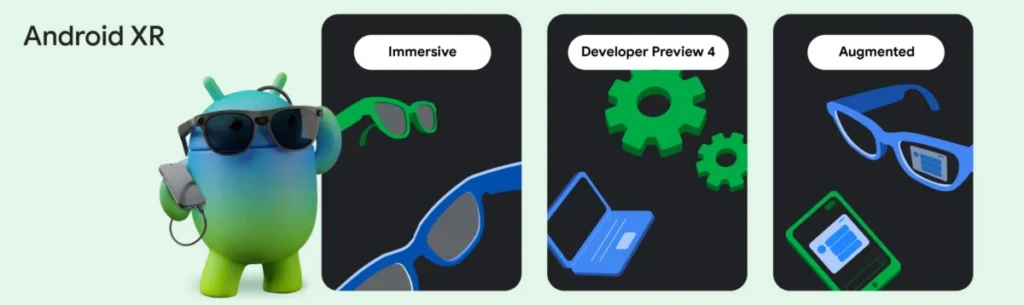
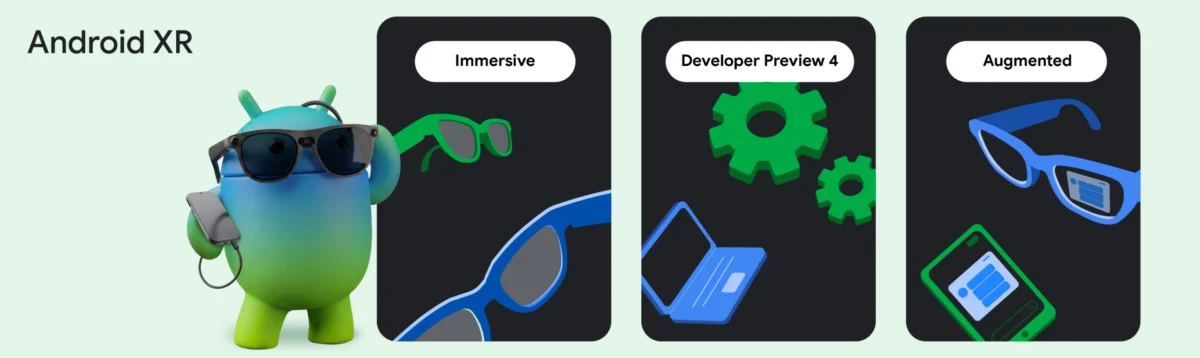
At the core of these updates is Developer Preview 4 (DP4) of the Android XR SDK. This release empowers developers to build immersive and augmented reality (AR) applications directly from their laptops. By providing specialized libraries for both fully immersive VR environments and lightweight AR overlays, Google is enabling a "build-once, deploy-anywhere" philosophy.
Furthermore, the introduction of the Android XR Engine Hub marks a significant milestone for 3D creators. By extending official support to Unreal Engine and Godot—bolstering the existing Unity framework—Google is ensuring that developers are not forced to learn new proprietary languages to enter the XR space. The Engine Hub, a desktop utility for Windows, allows for real-time viewport testing, effectively shrinking the iteration cycle from minutes to seconds.
Chronology: The Road to Spatial Maturity
The progression of Android XR has been a calculated, multi-year endeavor.
- Early 2025: Initial concepts for Jetpack XR were introduced, focusing on the abstraction of spatial tasks within the standard Android development lifecycle.
- Late 2025: The launch of the Samsung Galaxy XR provided the first robust, consumer-facing hardware proof-of-concept, establishing the "wired glass" and "immersive headset" paradigms.
- May 2026 (Google I/O): Google signaled a massive expansion in developer tooling, highlighting the shift toward Kotlin-first architectural designs for XR perception.
- June 2026 (AWE & Present): The release of Developer Preview 4 and the formal announcement of the Android XR Developer Catalyst Program. This marks the transition from "internal testing" to "public ecosystem growth," inviting the global developer community to populate the Google Play Store with spatial-first experiences.
Supporting Data: Engineering for the Next Decade
The technical rigor behind these updates is designed to solve the two biggest pain points in XR development: emulation and UI/UX adaptability.
The Emulator Revolution
One of the most significant barriers to XR development has historically been the requirement for expensive, specialized hardware. With the latest update to Android Studio, developers can now leverage an advanced XR Emulator. This allows for the simulation of complex spatial interactions—such as hand-tracking, gaze input, and spatial mapping—entirely within a software environment. This democratization ensures that a developer in a remote area with nothing but a laptop can create experiences equal in quality to those built by teams with full hardware labs.
Jetpack Projected and Compose Glimmer
For developers working on "intelligent eyewear" (audio and display glasses), the Jetpack Projected library is a game-changer. It allows existing mobile applications to spawn "projected" experiences.
- Device Availability API: This new API hooks into standard Android Lifecycle states. It detects when glasses are donned or doffed, allowing an app to transition seamlessly from a phone screen to a heads-up display (HUD).
- Jetpack Compose Glimmer: This toolkit has been specifically optimized for optical see-through displays. It solves the perennial issue of text legibility on transparent screens and provides pre-built, touchpad-optimized navigation components, ensuring that developers do not have to reinvent standard interface patterns.
Geospatial Precision
For location-based experiences, the integration of ARCore for Jetpack XR with Google’s Visual Positioning System (VPS) represents the gold standard. By anchoring digital content to precise global coordinates, developers can create "persistent AR"—experiences where a virtual object remains fixed in a real-world location, even if the user leaves and returns days later.

Official Perspectives: Empowering the Global Developer
Google’s approach is centered on "meeting developers where they are." By providing deep integration with Unity, Unreal, and Godot, they have removed the "platform tax" that previously hindered XR adoption.
"We want you to build using the ecosystems and workflows you already know best," note Stevan Silva and Vinny DaSilva. Their focus on the Android XR Developer Catalyst Program highlights a commitment to human capital as much as technical capital. This program serves as an incubator, offering selected developers early access to hardware and, more importantly, a direct line of communication with the engineers building the platform.
This is not just about tools; it is about building a community of "early adopters" who can define the UX language of the next decade. The success of early partners, such as NAVER Papago, which has successfully translated its mobile translation interface into a seamless, glasses-based augmented experience, serves as a blueprint for what is possible.
Implications: The Future of Spatial Computing
The implications of this update are profound for the mobile app economy.
1. The Death of the "Siloed" App
The integration of the Jetpack XR SDK means that mobile apps will no longer be confined to a 6-inch glass rectangle. Every app on the Play Store is now a potential "spatial" app. A fitness app can now push live heart-rate data to your AR glasses while you run; a navigation app can cast persistent arrows onto the street in front of you.
2. Industry-Standardization
By bringing Godot and Unreal into the fold, Google is positioning Android XR as the industry-agnostic backbone of the metaverse. This prevents the "walled garden" effect that has stunted the growth of other VR platforms. If an experience runs on Android XR, it should, in theory, be portable across a variety of hardware form factors, from thin glasses to full-occlusion headsets.
3. The Shift to "Ambient" Computing
The push for intelligent eyewear and the optimization of text legibility suggest that Google is betting on ambient computing. The goal is to move the user away from "phone-gazing" and toward a more natural, head-up interaction model. As these tools mature, the smartphone may eventually transition from being the "display" to being the "compute engine" for the wearable on your face.
Conclusion: How to Get Involved
The ecosystem is moving at a breakneck pace. For developers looking to make their mark, the path is clear:
- Download the latest Android Studio: Utilize the XR Emulator to prototype your vision.
- Explore the Engine Hub: If you are a game developer, bring your projects over using the newly minted Godot or Unreal support.
- Join the Catalyst Program: Apply for the Developer Catalyst Program to gain access to pre-release hardware and launch guidance.
The transition to spatial computing is not a question of "if," but "when." With the tools now available, Google has ensured that the "when" is today. Whether you are building for the Samsung Galaxy XR or the next generation of smart eyewear, the Android XR platform provides the foundation, the tools, and the ecosystem to turn your ideas into reality. The horizon of computing is no longer flat—and it’s time to start building in 3D.