ArmSoM Sige6: A New Paradigm for Edge AI and Embedded Computing
The Single Board Computer (SBC) market is witnessing a significant shift. For years, manufacturers have relied heavily on a predictable cadence of Rockchip-based iterations. However, ArmSoM—a company carving out a reputation for robust, industrial-grade development boards—is signaling a departure from the status quo. With the announcement of the Sige6, ArmSoM is pivoting to Allwinner silicon, aiming to bridge the widening chasm between entry-level hobbyist boards and high-power, power-hungry industrial servers.
The Sige6 is not merely another iterative update; it is a strategic response to the specific bottlenecks currently stifling edge AI development, high-speed memory limitations, and power efficiency in always-on environments.
The Evolution of the Sige Series: Breaking the Rockchip Mold
ArmSoM has established its brand identity through the Sige series, which has historically utilized Rockchip processors. These boards found success in multimedia and IoT applications, providing a reliable foundation for developers. However, the industry is changing. The rise of edge AI, the demand for sophisticated cloud-to-edge integration, and the requirement for long-term production availability have forced manufacturers to rethink their hardware roadmaps.
The decision to move to the Allwinner A733 chipset for the Sige6 marks the most significant architectural change in the company’s history. By moving away from its established supplier, ArmSoM is making a calculated bet that the A733’s specific feature set addresses the "market gaps" that have left many developers compromising on performance or power efficiency.
Core Architecture and Technical Specifications
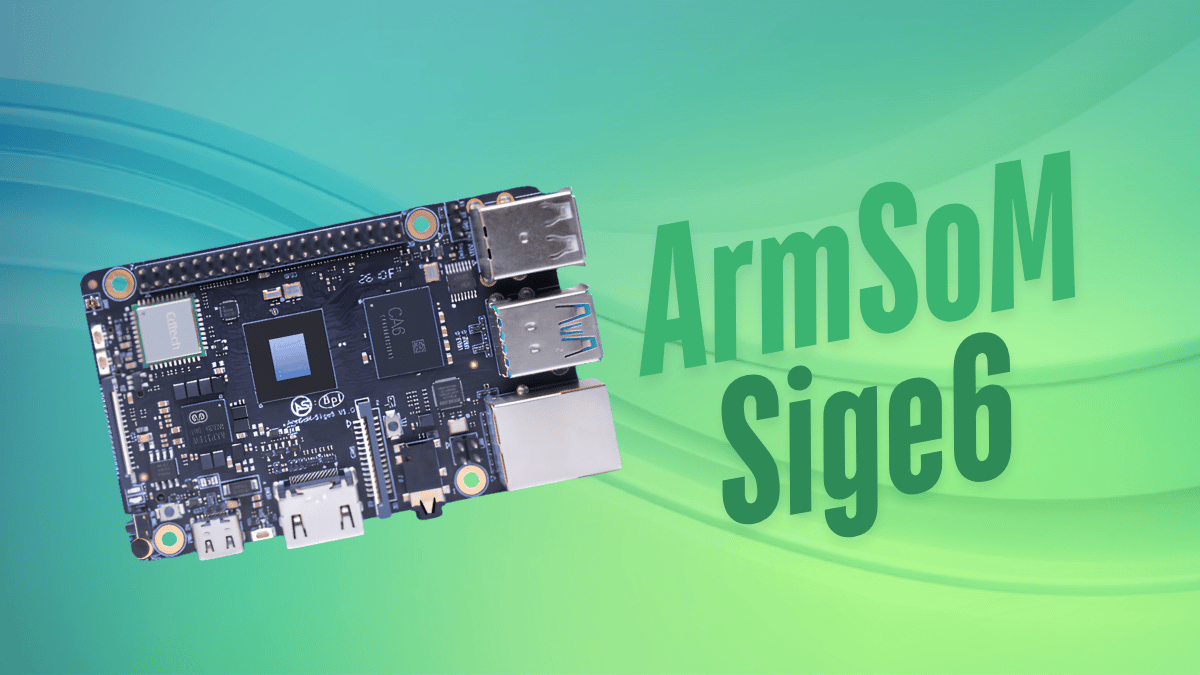
At the heart of the ArmSoM Sige6 lies the Allwinner A733. This 12nm octa-core system-on-chip (SoC) is designed specifically for modern AI-heavy workloads. The configuration features two high-performance Cortex-A76 cores clocked at 2.0 GHz, supported by six energy-efficient Cortex-A55 cores at 1.8 GHz. This "big.LITTLE" architecture is a staple in mobile computing, but in the SBC world, it represents a sweet spot for balancing raw compute power with thermal management.
The Power of LPDDR5 and AI Acceleration
One of the primary pain points addressed by the Sige6 is memory throughput. Many mid-range SBCs are still tethered to older LPDDR4 or even DDR3 memory, which creates significant bottlenecks for AI inference and data-intensive tasks. The Sige6 breaks this trend by supporting LPDDR5 RAM, with capacities ranging from 2 GB to 16 GB. This transition allows for higher bandwidth, facilitating faster data processing for AI models and complex multitasking.
Visual and AI performance is further bolstered by the Imagination BXM-4-64 MC1 GPU. This hardware is capable of handling OpenGL ES 3.2, Vulkan 1.3, and OpenCL 3.0, ensuring that the Sige6 remains compatible with modern graphics APIs. Crucially, the board features an integrated 3 TOPS (Tera Operations Per Second) Neural Processing Unit (NPU). This dedicated AI acceleration hardware is what distinguishes the Sige6 from previous generations, allowing for lightweight AI inference directly at the edge without requiring additional, costly accelerators.
Supporting Data: Addressing the Market Gaps
ArmSoM’s internal assessment of the SBC landscape identifies three critical failures in current offerings:

- The AI Deficit: Many boards lack dedicated AI hardware, forcing developers to rely on inefficient CPU-bound inference.
- The Memory Wall: The persistence of legacy memory standards limits the effective bandwidth of boards that are otherwise powerful enough to handle high-load tasks.
- The Efficiency Paradox: High-performance boards often fail in "always-on" scenarios due to thermal throttling or excessive power draw, making them unsuitable for remote deployment.
The A733 SoC serves as the solution to these issues. With its 12nm process, the Sige6 maintains a lower thermal profile than many of its competitors, making it a viable candidate for fanless industrial enclosures or space-constrained mini-PC builds.
Chronology of Development and Availability
The trajectory of the Sige6 has been defined by careful planning and a commitment to long-term industrial support.
- Design Phase (2024): ArmSoM identified the Allwinner A733 as the optimal chip to replace the aging Rockchip lineup in their flagship series.
- Engineering Validation: Throughout late 2024 and early 2025, the team worked on optimizing the PCB layout to accommodate the high-speed LPDDR5 memory and the PCIe 3.0 interface.
- The Announcement (Mid-2026): ArmSoM formally unveiled the Sige6, positioning it as a direct competitor to high-end SBCs while maintaining a focus on AI-centric applications.
- Market Entry (August 2026): The product is scheduled for general availability across major e-commerce platforms, including the official store, AliExpress, and Taobao.
A defining feature of this release is the company’s promise of longevity. ArmSoM has officially committed to keeping the Sige6 in production until January 2036. This decade-long availability window is a vital metric for B2B clients, OEMs, and system integrators who require a stable, repeatable hardware platform for long-term infrastructure projects.
Official Responses and Strategic Vision
In their documentation regarding the chip selection, ArmSoM representatives highlighted that the Sige6 is not designed to be the "cheapest" board, but rather the most balanced. By choosing the A733, they are targeting specific vertical markets: digital signage, media servers, and industrial network appliances.
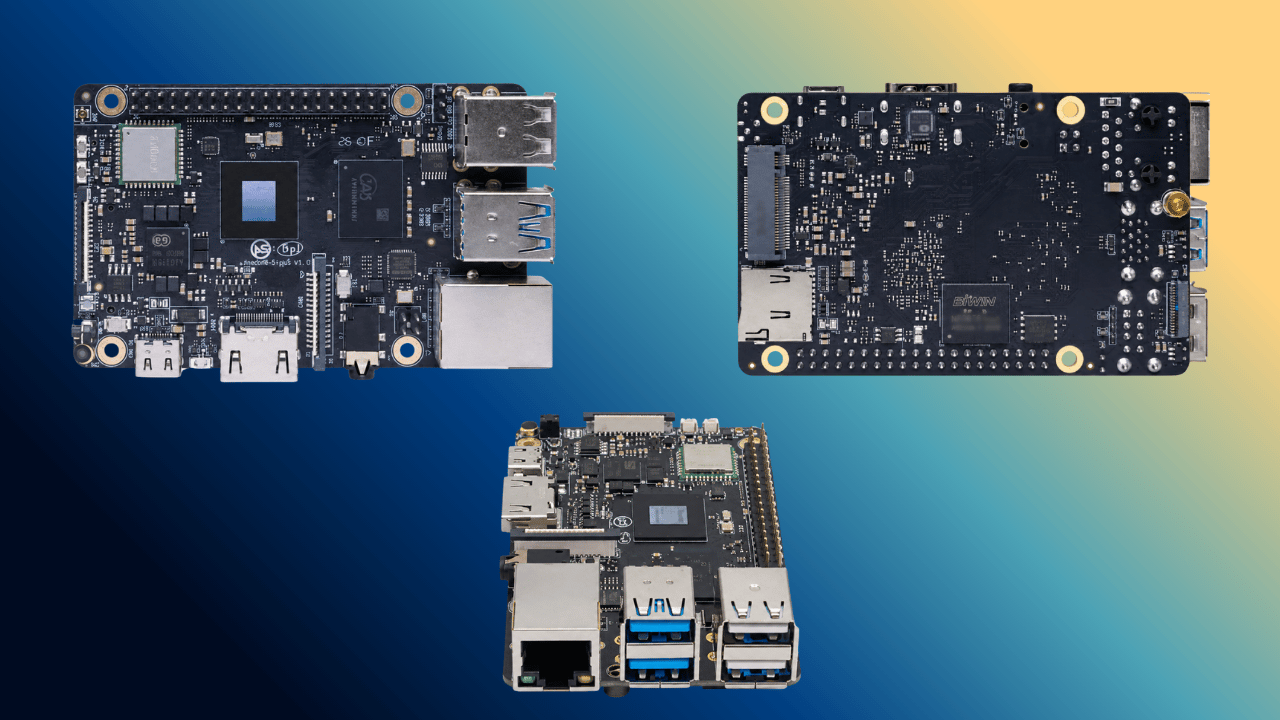
The inclusion of a PoE-capable Ethernet port underscores this intent. By combining high-speed NVMe storage via the M.2 PCIe 3.0 slot with power-over-ethernet, the Sige6 can be deployed in remote locations with minimal cabling, effectively serving as an intelligent node in a larger network.
When asked about the shift in silicon partners, the company maintained that their primary loyalty remains to the end-user’s performance requirements rather than any single chip manufacturer. This philosophy allows ArmSoM to remain agile, selecting the best available SoC for the specific generation of hardware they are producing.
Implications for the Industry
The introduction of the ArmSoM Sige6 carries several implications for the broader SBC market:
1. The Normalization of AI at the Edge
By including a 3 TOPS NPU as a standard component rather than a luxury add-on, ArmSoM is setting a new baseline. Developers can now expect to run localized LLMs (Large Language Models), object detection, and predictive maintenance algorithms on standard-issue hardware. This will likely trigger a ripple effect, forcing competitors to incorporate similar AI acceleration in their upcoming models to remain competitive.

2. High-Speed Memory Adoption
The transition to LPDDR5 is a significant move. As AI models become larger and more complex, the bottleneck often shifts from CPU clock speed to memory bandwidth. By adopting LPDDR5, ArmSoM is ensuring that the Sige6 will remain relevant for several years, even as software requirements evolve.
3. The Shift in Power vs. Performance
The industry has long struggled to reconcile the high power consumption of "Desktop-class" SBCs with the low-power requirements of "Edge-class" computing. The A733’s 12nm architecture proves that developers do not necessarily need to sacrifice power efficiency for computational performance. This efficiency is critical for projects involving solar-powered sensors, remote industrial monitoring, and high-density rack deployments.
4. A New Standard for Lifecycle Management
The commitment to support the Sige6 through 2036 is a bold statement. In an era where hardware support is often dropped after 3-5 years, a ten-year support lifecycle provides the assurance necessary for enterprise adoption. It signals that ArmSoM is no longer targeting just the hobbyist market; they are actively courting industrial, medical, and aerospace sectors where hardware turnover cycles are measured in years, not months.
Conclusion: A Future-Proof Platform?
The ArmSoM Sige6 represents a calculated pivot that reflects the maturation of the SBC market. By addressing the critical deficiencies in memory, AI processing, and power management, ArmSoM has created a versatile platform that appeals to both the DIY enthusiast and the industrial engineer.
As the device reaches the hands of developers in August 2026, the real-world performance benchmarks will be the true test of this hardware. However, based on the specifications and the strategic decision-making behind the board, the Sige6 is well-positioned to become a cornerstone of the next wave of edge computing. For those looking to build systems that require long-term stability, robust AI capabilities, and modern memory speeds, the Sige6 stands as a formidable contender in an increasingly crowded, yet vital, industry.