Beyond the Google Walled Garden: A Deep Dive into the iodé Project
In an era where personal data has become the world’s most valuable commodity, the smartphone has evolved into a sophisticated tracking device. For the average consumer, the convenience of the Android ecosystem—dominated by Google Play Services—comes at a heavy price: constant surveillance, granular data harvesting, and an aggressive advertising footprint.
Enter iodé, an ambitious project positioned at the intersection of digital sovereignty and environmental sustainability. By providing a "de-Googled" Android distribution that balances privacy with day-to-day usability, the project is carving out a niche in a market previously reserved for tech-savvy power users. Recently, I sat down with Brian, a key figure behind the iodé project, to discuss the evolution of the operating system, the challenges of modern mobile privacy, and why the future of hardware might just be refurbished.
The Philosophy of iodé: Privacy Without the Pain
At its core, iodé is designed to strip away the telemetry and tracking mechanisms inherent in stock Android while maintaining the features that keep a modern smartphone functional. Unlike projects that demand a degree in computer science to operate, iodé is built with the "normal user" in mind.
"iodé is a project that is interested in making sure that there’s a privacy-based Android distribution that is also very easy to use," Brian explains.
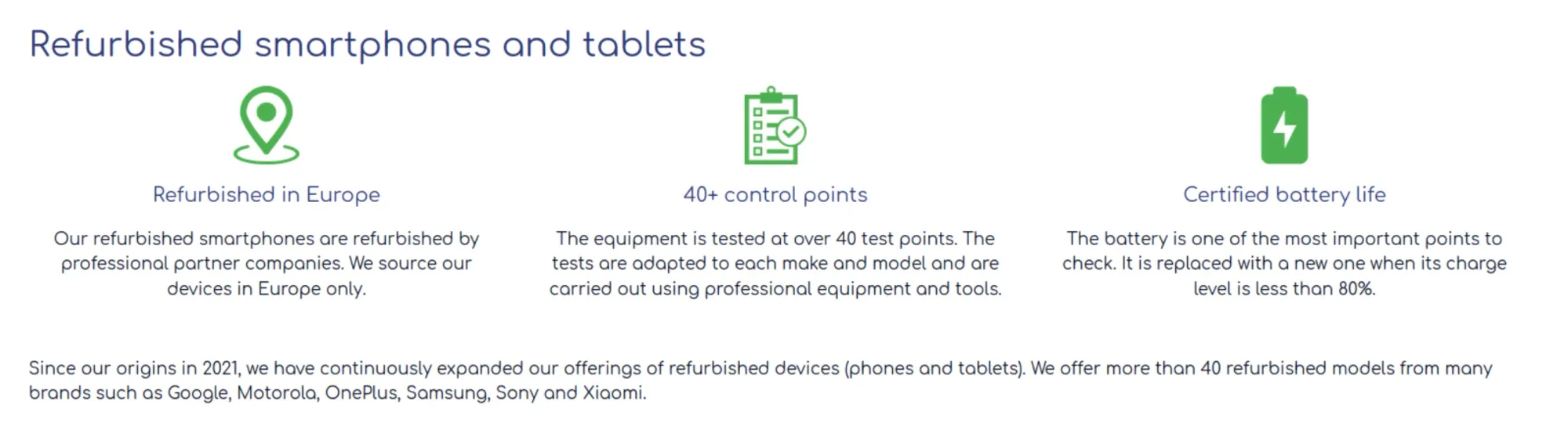
The project’s standout feature is its proprietary tracker blocker. While many privacy-conscious users resort to third-party apps that hijack the system’s VPN slot, iodé integrates this functionality directly into the OS. This "firewall" monitors all outbound connections from both apps and the web browser, effectively decapitating the ad-tracking industry’s ability to build a profile of the user. It is, as Brian puts it, "a way to know exactly which connections your device is making, preventing trackers from following you around the internet."
Solving the App Compatibility Conundrum
The primary barrier to entry for de-Googled operating systems is the "app gap." Without the Google Play Store, users often fear they will lose access to essential banking, navigation, or social media applications. iodé addresses this through a two-pronged strategy.
First, the system ships with F-Droid, an open-source repository, alongside Aurora Store. Aurora functions as a sophisticated, privacy-preserving front end for the Google Play Store. It allows users to download the apps they need without exposing their Google account credentials or personal data to the tech giant.
"You can install any app that’s on Google Play without Google knowing which apps you’re installing," says Brian. Furthermore, the system includes a "spoofing" feature, allowing users to disguise their device identity to download apps that might otherwise be marked as incompatible. For those who still require the official Google Play Services, the project remains flexible; users can install the official store or utilize MicroG, a lightweight emulator that satisfies the requirements of most modern applications without the invasive background processes of the original Google suite.
The Sustainability Mandate: Hardware Longevity
While most software-focused privacy projects ignore the hardware they run on, iodé has made sustainability a pillar of its identity. The project explicitly encourages the use of refurbished devices, arguing that the most eco-friendly phone is the one that has already been manufactured.
This approach is not merely altruistic; it is technical. Stock Android versions from manufacturers like Xiaomi or OPPO are notorious for "bloatware"—pre-installed, non-removable software that runs constantly in the background, consuming CPU cycles and RAM. Because the iodé image is exceptionally lean, it breathes new life into older hardware.
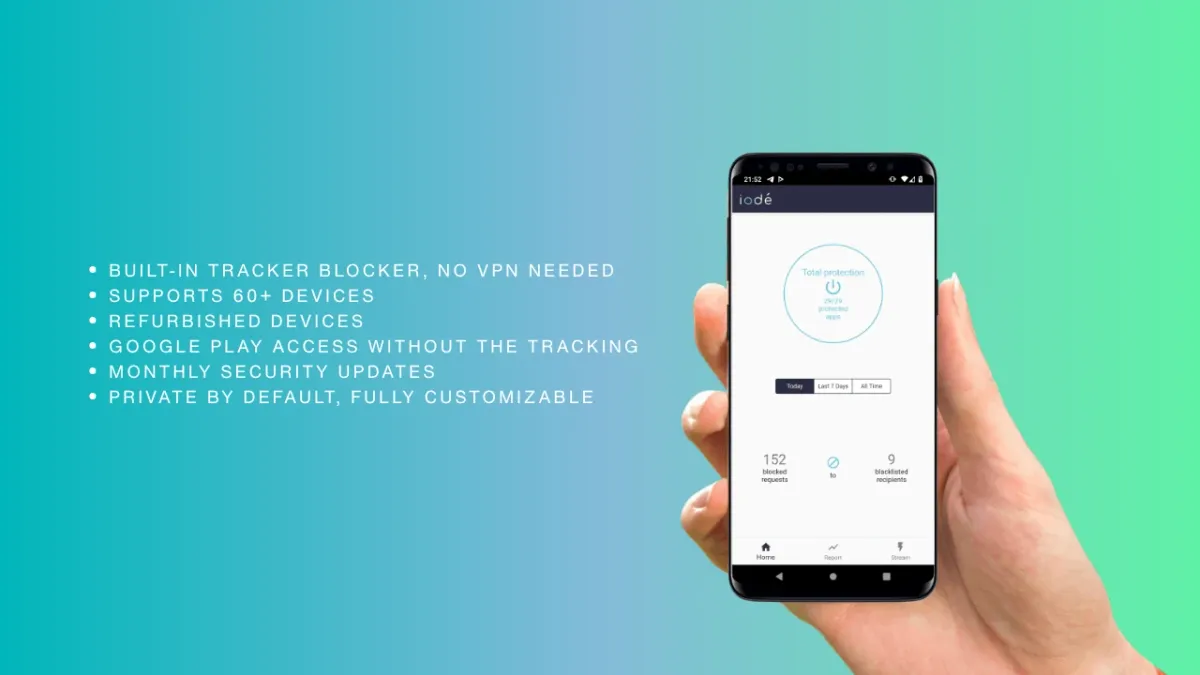
"Because iodé is more minimal, it can run on older hardware with lower specifications," Brian notes. This allows users to keep their devices for years longer than the industry-standard two-year cycle, significantly reducing e-waste. By partnering with ethical manufacturers like Fairphone and Shift, the project is pushing for a circular economy in a sector typically defined by planned obsolescence.
Community, Competition, and the "Infighting" Narrative
The privacy-focused Android ecosystem—home to giants like LineageOS, /e/OS, and GrapheneOS—is often viewed by outsiders as a fractured landscape. However, Brian views these projects as a rising tide that lifts all boats.
"There are very few devices to choose from; probably less than 1% of all Android devices can be de-Googled," he remarks. Given the limited market penetration, he argues that inter-project rivalry is counterproductive. Instead, he emphasizes collaboration, particularly regarding the Google Play Integrity API. This API has increasingly become a tool for "monopoly" rather than security, locking users out of banking apps if their bootloader is unlocked.
Regarding the critical stance of projects like GrapheneOS, Brian remains diplomatic but firm. "We have never attacked Graphene. They have a great project, but it is limited exclusively to Google Pixel hardware." iodé, by contrast, supports over 60 devices, including Motorola handsets, by working within the constraints of what manufacturers allow. "All of these projects are working with very limited resources, and it would be wise if we didn’t do any sort of infighting," he adds.
Data-Free Growth: How Big is the Movement?
In a ironic twist, the very privacy measures that make iodé successful make it difficult to measure. Because the OS does not track its users, the team has no concrete "phone-home" statistics. However, anecdotal evidence and download metrics point to a massive surge in interest.
"In the last two years, there have been a quarter of a million downloads," Brian reveals. He estimates that there are well over 10,000 users relying on iodé as their primary, daily-driver smartphone. Perhaps most surprisingly, the project is seeing significant organic growth in the United States, a market where they do not even officially sell devices. This suggests that the desire for privacy is a global phenomenon, cutting across borders and regulatory environments.
Implications: The Future of the "De-Googled" Phone
The existence of projects like iodé represents a fundamental shift in how we perceive our relationship with technology. The "implied contract" of the smartphone—that we surrender our privacy for the sake of utility—is being rewritten.
Key Takeaways for the Consumer:
- Security vs. Convenience: While "locked bootloaders" are the gold standard for security, the reality of the hardware market means that not every device can accommodate them. iodé offers a balanced approach, providing monthly security updates and protecting the user from telemetry, even on devices where a fully locked state isn’t possible.
- Choice as a Feature: By allowing users to uninstall any pre-installed app, iodé restores the concept of "ownership" to the device owner. If you don’t like the stock map app or the music player, you aren’t forced to keep them.
- The Power of the Minimalist OS: As phones become more powerful, software bloat has often negated hardware gains. iodé proves that a lightweight OS can keep older, refurbished phones running smoothly for years, proving that privacy and sustainability are natural allies.
As we look toward the future, the success of iodé suggests that the "de-Googled" movement is no longer a fringe endeavor. It is a maturing sector of the technology industry that is challenging the status quo. Whether you are a privacy advocate concerned about your data or a sustainability enthusiast looking to curb your e-waste, the project offers a compelling, functional, and highly ethical alternative to the status quo.
If you are currently weighing your options, the pitch from the iodé team is simple: you don’t have to sacrifice usability to regain your privacy. With a growing list of supported devices and a commitment to transparency, iodé is not just an operating system; it is an invitation to reclaim your digital life.