Bridging the Gap: How the New Volcano Plugin for Headlamp Revolutionizes Batch Workload Management on Kubernetes
By Mahmoud Magdy | June 25, 2026
In the rapidly evolving ecosystem of cloud-native computing, Kubernetes has long served as the gold standard for orchestrating containerized applications. However, as organizations increasingly push the boundaries of Artificial Intelligence (AI), Machine Learning (ML), and High-Performance Computing (HPC), the limitations of native Kubernetes scheduling have become apparent. Enter Volcano, the specialized batch scheduler designed to handle the complexities of these high-performance workloads.
Today, the management of these complex environments has taken a significant leap forward. A new integration—the Volcano plugin for Headlamp—promises to transform how DevOps engineers and data scientists interact with their batch clusters. By bringing deep visual context and intuitive navigation to the Volcano ecosystem, this plugin addresses a long-standing pain point: the fragmentation of operational visibility.
The Core Challenge: Kubernetes and the Batch Workload Paradigm
To understand the significance of this development, one must first recognize the fundamental shift in how applications behave on modern infrastructure. Kubernetes was architected with a "long-running service" philosophy—applications are expected to be available continuously, scaling horizontally as demand dictates.
Conversely, batch workloads, AI model training, and scientific simulations operate under an entirely different set of rules. These jobs arrive dynamically, often competing for finite cluster resources. They frequently require "gang scheduling," where multiple workers must launch simultaneously to perform a synchronized task. If one worker fails to initialize, the entire job might be forced to restart, leading to wasted compute cycles and significant project delays.
Volcano addresses this by extending the Kubernetes API with concepts like Queues, Priorities, Quotas, and PodGroups. While powerful, these abstractions have historically been trapped behind the command line. Operators using kubectl or the Volcano CLI often find themselves toggling between multiple terminal windows, manually correlating Jobs with their associated PodGroups and Queues. This cognitive load is what the new Headlamp plugin seeks to eliminate.
Chronology of the Integration
The development of the Volcano plugin for Headlamp is a response to the growing demand for "observability-first" Kubernetes management.
- Q1 2026: Initial architectural discussions began regarding how to bridge the gap between Headlamp’s extensible UI framework and Volcano’s custom resource definitions (CRDs).
- April 2026: The project entered an intensive development phase, focusing on mapping the relationships between Volcano’s unique objects—Jobs, Queues, and PodGroups—and standard Kubernetes Pods.
- May 2026: Beta testing was conducted with a small group of data engineers who frequently deploy large-scale training jobs on GPU-accelerated clusters.
- June 25, 2026: The plugin was officially released to the Headlamp plugin catalog, marking a milestone in accessible batch management.
Supporting Data: Why Visual Context Matters
The necessity for this plugin is supported by the operational friction typically associated with batch scheduling. In a production environment, a single AI training job may involve thousands of Pods. When a job stalls, an engineer must typically execute a sequence of at least four distinct commands:
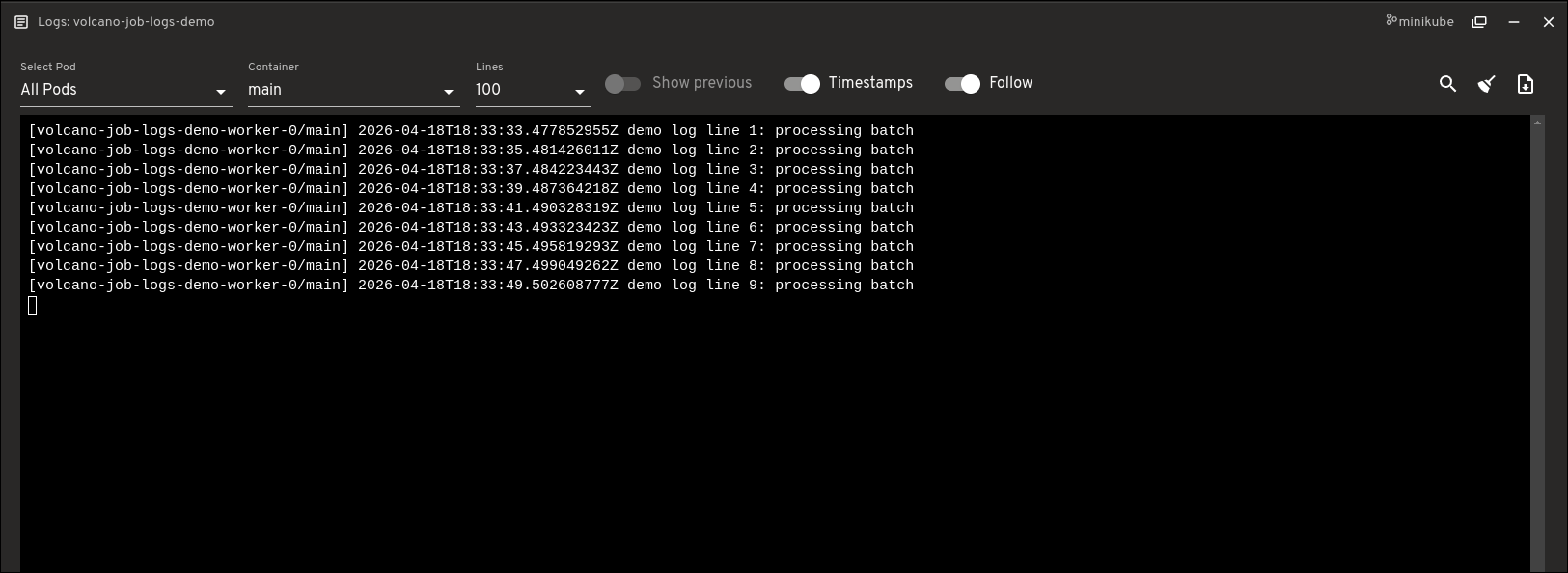
kubectl get jobsto find the job ID.kubectl get podgroupsto check for gang scheduling blockers.kubectl describe queueto verify if resource quotas are exhausted.kubectl logsacross multiple pods to find the specific failure point.
According to preliminary user feedback during the plugin’s development, this "context switching" consumes approximately 60% of the time spent on troubleshooting routine batch failures. By consolidating these views into a unified dashboard, the Headlamp plugin reduces the navigation time by an estimated 70%, allowing teams to focus on resolution rather than resource discovery.
The Anatomy of the Volcano Plugin
The plugin’s architecture is built around four primary pillars of visibility:
1. The Job Detail Experience
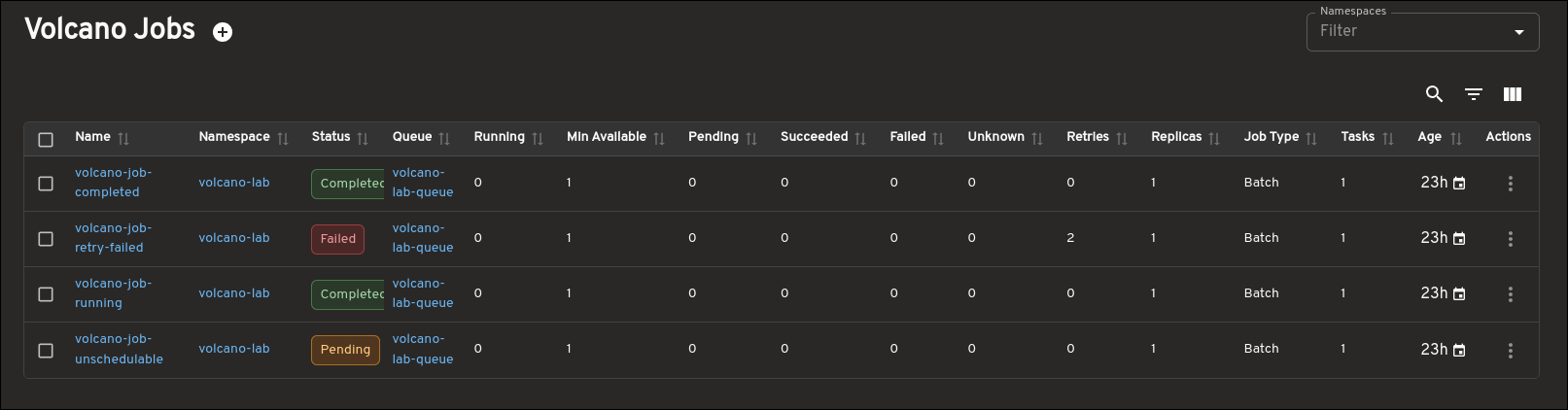
The Job view acts as the mission control for the plugin. It provides a comprehensive snapshot of workload health, including the number of pods currently running versus the minimum available threshold required by the scheduler. Most importantly, it introduces lifecycle management directly into the browser—users can now Suspend or Resume jobs with a single click, a feature that previously required YAML edits or CLI flags.
2. Queue and Capacity Management
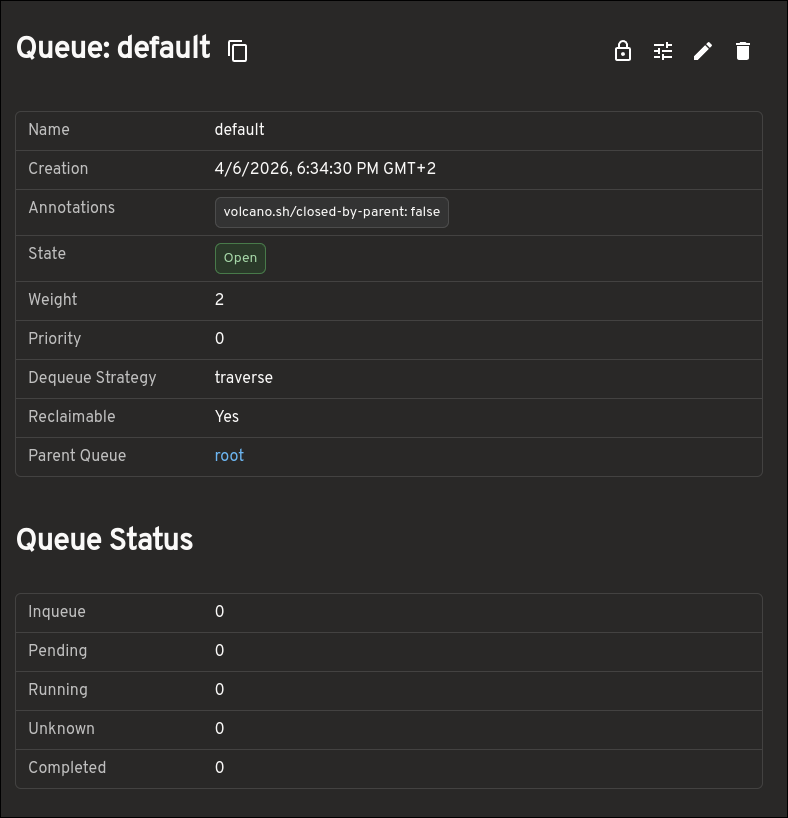
Managing resource fairness across teams is a core competency of Volcano. The plugin surfaces granular data regarding allocated, deserved, and guaranteed resources. This allows cluster administrators to visualize exactly why a specific team’s job might be waiting in the queue, providing transparency that raw JSON output from the CLI simply cannot match.
3. PodGroup Inspection
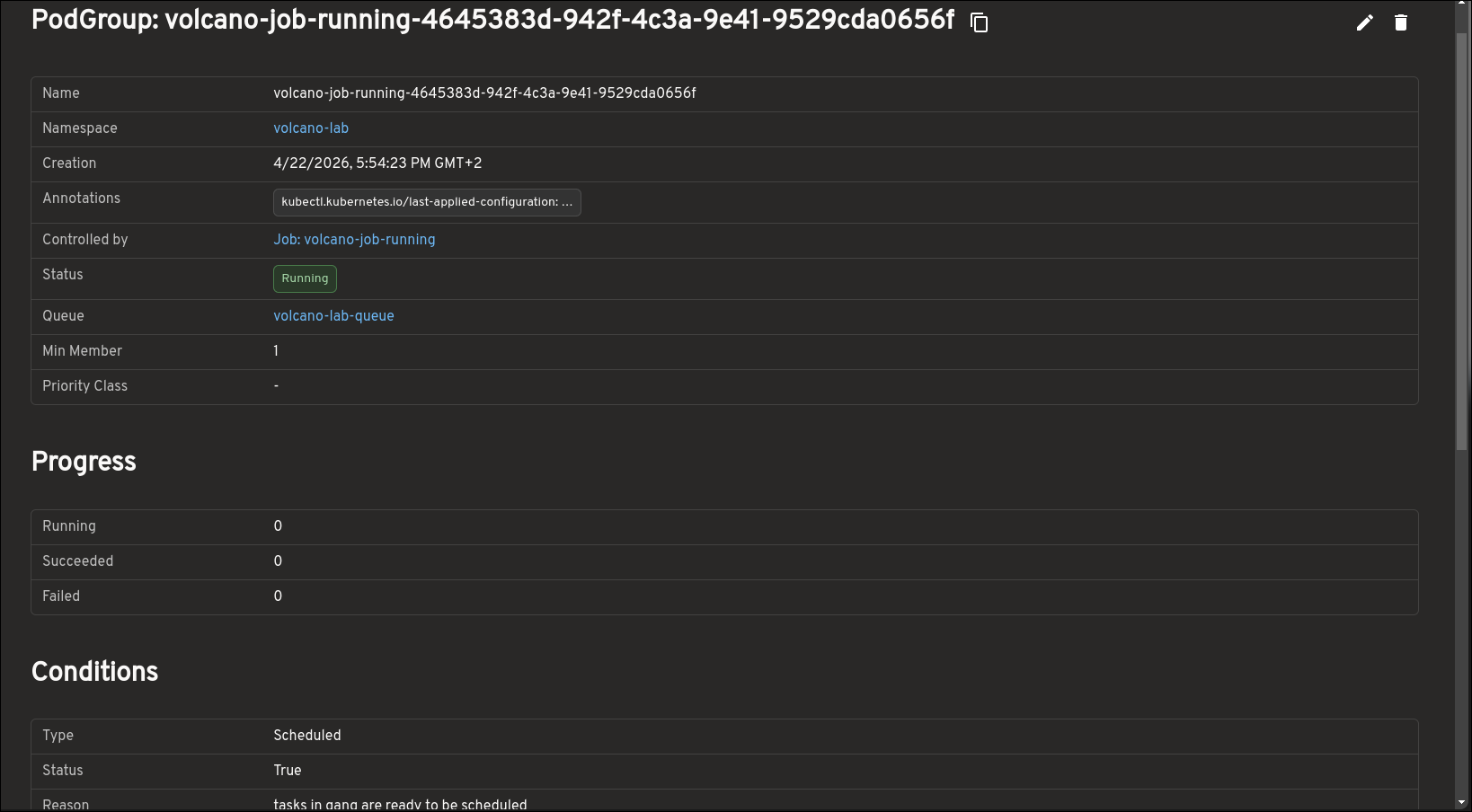
The PodGroup is the "glue" of gang scheduling. The plugin provides a dedicated view that highlights the scheduling state of the group. If a job is blocked, the UI explicitly displays the conditions preventing it from executing, effectively turning a "black box" scheduling failure into an actionable insight.
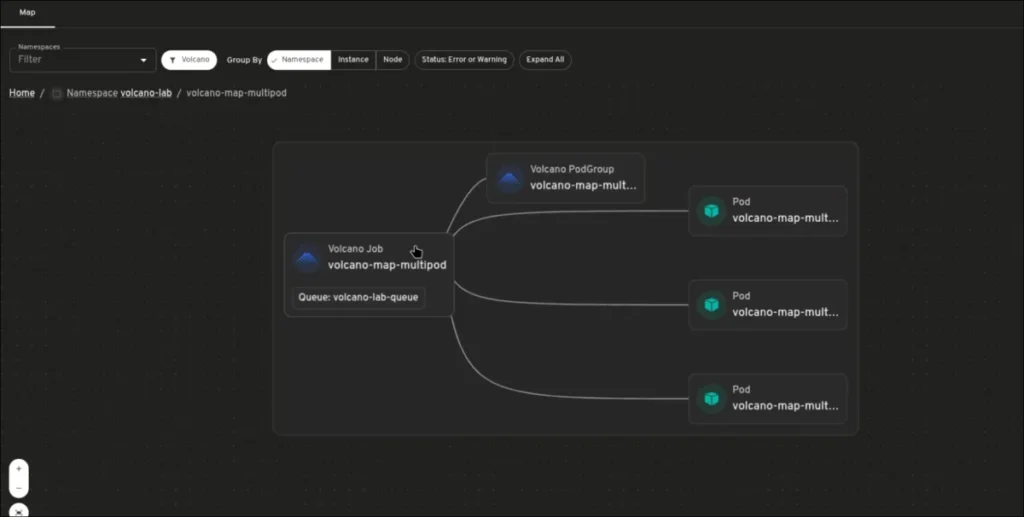
4. The Unified Map View
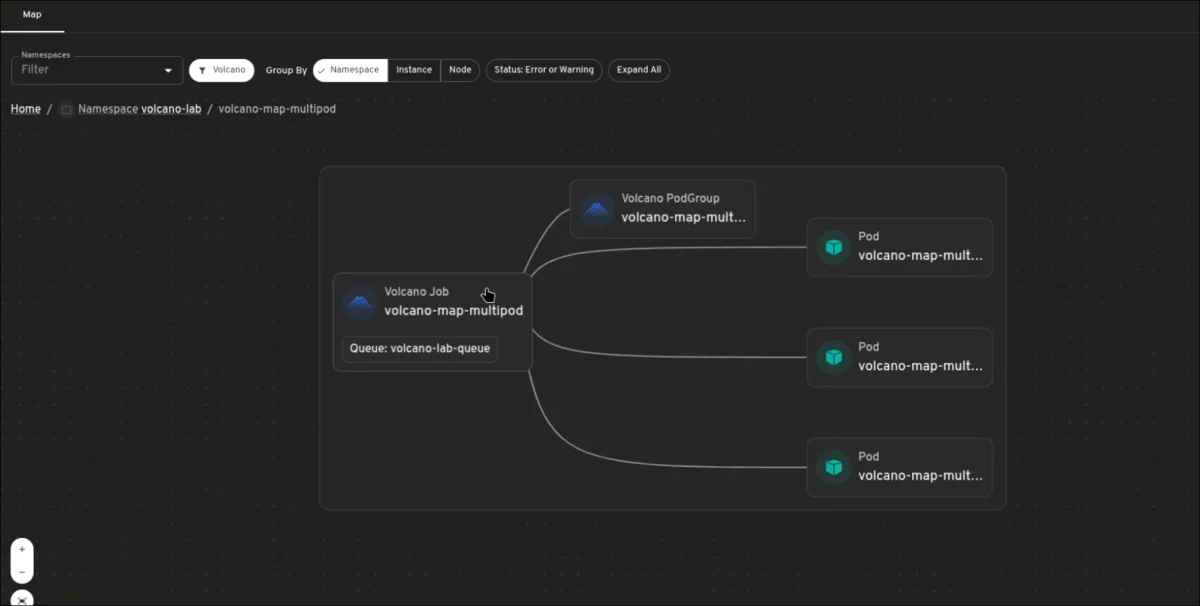
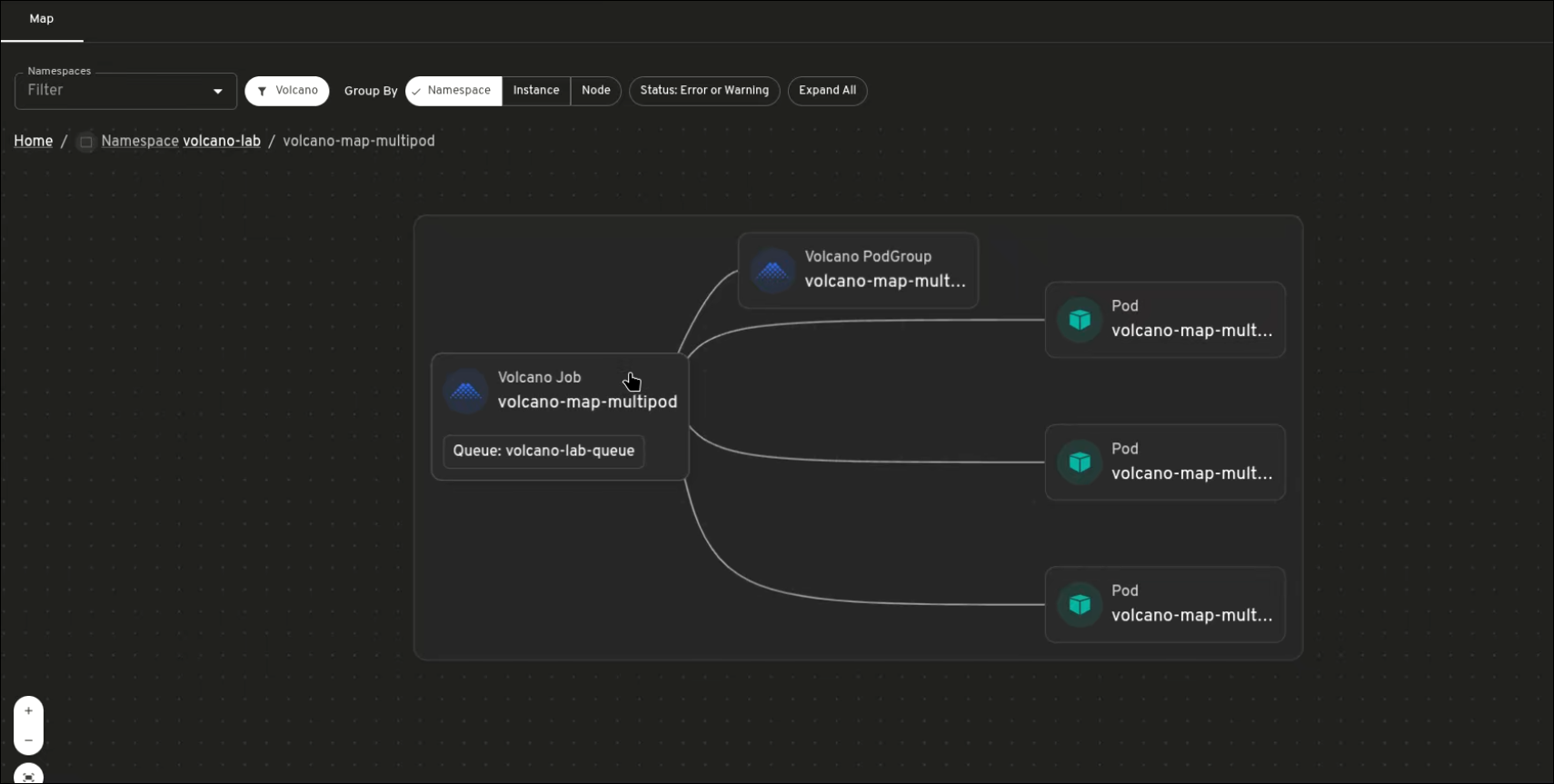
Perhaps the most innovative feature is the "Map View." This visualization tool draws dynamic connections between Jobs, Queues, PodGroups, and individual Pods. By seeing the topology of the workload, engineers can instantly identify bottlenecks—such as a saturated Queue or a misconfigured PodGroup—without needing to manually parse logs.
Official Responses and Industry Implications
Industry analysts have pointed to this integration as a sign of the "maturation phase" for Kubernetes in AI infrastructure.
"We are moving past the era where only a handful of SRE experts can manage complex batch scheduling," noted a lead developer on the project. "By democratizing access to Volcano’s sophisticated scheduling capabilities, we are enabling data scientists and researchers to manage their own infrastructure more confidently. The goal isn’t to replace the CLI, but to provide a ‘north star’ for troubleshooting that allows for faster iteration cycles."
The implications for the broader ecosystem are clear: as AI workloads continue to demand higher reliability and faster scheduling, the tools used to manage them must evolve from simple text-based interfaces to high-fidelity, context-aware dashboards.
Future Outlook: What Lies Ahead
While the current version of the plugin delivers robust monitoring and lifecycle management, the development team has already outlined a roadmap for the coming months.
- Prometheus Integration: Plans are underway to pull real-time metrics into the Headlamp dashboard, allowing users to overlay performance data (like GPU utilization or memory pressure) directly onto their Job and Queue views.
- Advanced Scheduling Insights: Future updates will likely include "scheduling recommendations," where the plugin analyzes historical job data to suggest optimal queue placements or resource requests.
- Workflow-Oriented Visibility: Beyond individual jobs, the team is exploring ways to visualize entire pipelines, offering a higher-level view of how batch jobs relate to long-running microservices in the same cluster.
How to Get Started
The Volcano plugin is available now through the Headlamp plugin catalog. Users can install it with a simple click, instantly unlocking the new UI components in their existing cluster management environment.
For those interested in contributing or reporting bugs, the development team maintains an active presence in the Headlamp plugins repository. As the landscape of AI and batch computing continues to shift, user feedback will be the primary driver for the next generation of features.
In conclusion, the combination of Volcano’s powerful scheduling logic and Headlamp’s user-centric interface represents a significant leap forward for Kubernetes users. By making the invisible visible, the community is taking a decisive step toward a more efficient, transparent, and manageable future for cloud-native batch workloads.