Canonical Extends Zero-Downtime Security to ARM64: A New Era for Ubuntu Livepatch
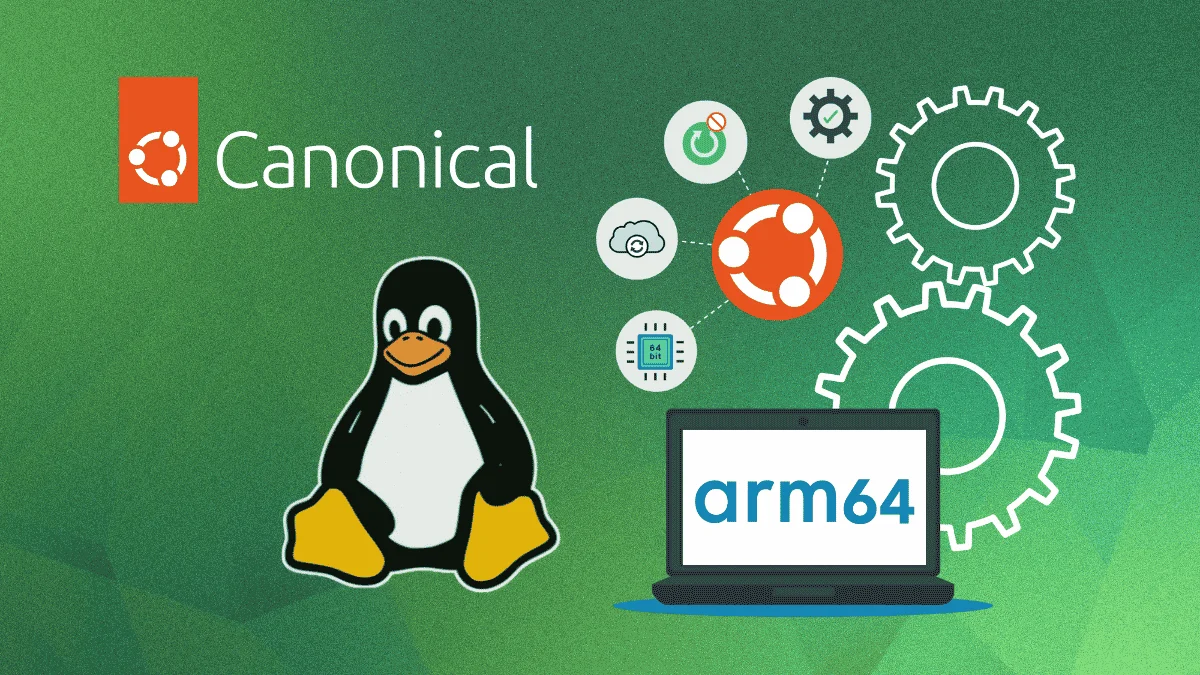
In a significant leap forward for server and edge computing, Canonical has officially enabled Livepatch support for ARM64 architectures. This long-awaited functionality, which allows administrators to apply critical kernel security updates without the need for a system reboot, bridges a crucial gap between the ubiquitous AMD64 ecosystem and the rapidly expanding world of ARM-based infrastructure. Available now for users of Ubuntu 26.04 LTS and Ubuntu Core 26, this development represents years of collaborative engineering aimed at eliminating downtime in modern, high-availability environments.
The Technical Hurdle: Why ARM64 Lagged Behind
While AMD64 (x86_64) systems have enjoyed the luxury of live kernel patching for years, bringing the same capability to ARM64 was far from a "copy-paste" task. The primary barrier to entry was the absence of a stable, upstream implementation of "reliable stacktraces" within the ARM64 Linux kernel.
Livepatching is a delicate operation. To safely swap out code in a running kernel, the system must be able to perform a reliable stacktrace to ensure that the function being replaced is not currently in use by a process. If the system cannot accurately determine the state of the call stack, attempting to patch the kernel could result in a catastrophic system crash.
In 2023, when Canonical engineers conducted a formal gap analysis, they found that the foundational tools required for this level of precision—including specific support within the GNU Compiler Collection (GCC), objdump, and the Kpatch utility—were either underdeveloped or entirely missing for the ARM64 architecture.
A Chronology of Innovation (2023–2026)
The road to bringing Livepatch to ARM64 was a marathon, not a sprint. The evolution of this project can be traced through several critical phases:
- 2023: The Discovery Phase. Canonical launched an internal audit of the Linux kernel’s ARM64 capabilities. The results were sobering; the upstream kernel ecosystem lacked the necessary hooks to safely execute live code replacement.
- 2024: Building the Foundation. As the industry began a massive pivot toward ARM-based silicon for cloud computing and edge deployments, the pressure to solve the problem intensified. Canonical, in partnership with Arm and upstream kernel maintainers, began the heavy lifting of modifying the compiler toolchain and the kernel itself to support the required reliability features.
- Early 2025: Integration. Work accelerated, with significant contributions from kernel developers across the industry. By refining how ARM64 handled function entry and exit points, the team successfully created a stable environment for dynamic patching.
- February 2026: Validation. By late February, the ARM64 Livepatch client was fully operational within Canonical’s internal test environments. It successfully demonstrated the ability to apply security patches to Ubuntu 26.04 LTS and Ubuntu Core 26 without interrupting service.
- June 2026: Official Deployment. Canonical formalized the rollout, confirming that ARM64 users on the latest LTS and Core releases can now leverage the feature, finally reaching feature parity with their AMD64 counterparts.
Understanding the Power of Livepatch
At its core, Livepatch is a mechanism that intercepts calls to vulnerable kernel functions and redirects them to a patched version of the code that resides in a separate memory space. This occurs in real-time, effectively "hot-swapping" the vulnerable code while the system remains under heavy load.
For the enterprise, this is transformative. In mission-critical environments—such as financial transaction processors, telecommunications gateways, or large-scale AI inferencing clusters—a reboot can cost thousands, if not millions, of dollars in lost productivity and service level agreement (SLA) penalties. Livepatch eliminates the "reboot window" entirely, allowing security teams to address high-severity vulnerabilities (often designated as CVEs) the moment a patch is released, rather than waiting for a scheduled maintenance window.
The Role of Ubuntu Pro
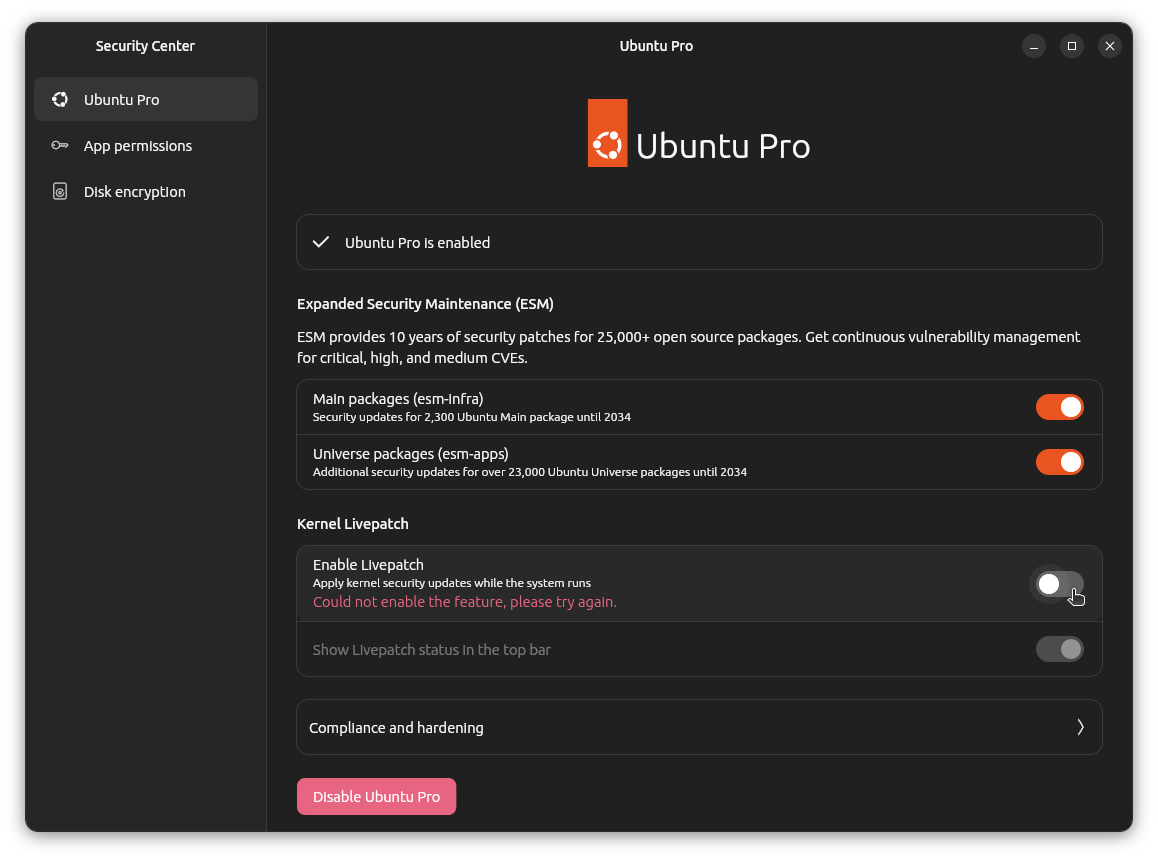
This enterprise-grade feature is delivered through Ubuntu Pro, Canonical’s comprehensive management and security subscription service. Ubuntu Pro bundles several value-added services, including:
- Expanded Security Maintenance (ESM): Providing security updates for thousands of packages beyond the standard repository.
- Compliance Tools: Automated support for CIS, FIPS, and other regulatory frameworks.
- Livepatch: The crown jewel of the service for high-uptime requirements.
Crucially, Canonical has maintained a "freemium" model for this service. Users can enable Livepatch for personal use on up to five machines at no cost. This makes the technology accessible to home lab enthusiasts, small business owners, and developers running ARM-based single-board computers or cloud instances, effectively democratizing the kind of high-level security management previously reserved for massive data centers.
Implications for the ARM64 Ecosystem
The successful deployment of Livepatch on ARM64 sends a clear signal to the market: ARM is no longer just for mobile devices or low-power IoT. With cloud providers like AWS (Graviton), Google Cloud, and Microsoft Azure increasingly offering ARM-based instances, the demand for "data center-class" management features has skyrocketed.

1. Edge Computing Stability
Edge devices, which are often physically inaccessible or located in remote environments, benefit most from this update. Patching an edge node remotely via Livepatch prevents the risk of a "bricked" device or a failed reboot that would necessitate a physical site visit.
2. Cloud Cost Efficiency
By decoupling security patching from uptime requirements, companies can maintain tighter security postures without the need to "over-provision" clusters to handle the capacity loss during rolling reboots.
3. Closing the Gap with x86
For years, the argument against migrating to ARM for server-side workloads often cited "lack of tooling maturity." By achieving feature parity with Livepatch, Canonical has effectively removed one of the last remaining technical hurdles preventing widespread ARM64 adoption in the enterprise.
Important Caveats and Best Practices
While the arrival of ARM64 Livepatch is a milestone, both Canonical and industry experts urge caution regarding its role in a broader maintenance strategy.
Livepatch is not a "get out of jail free" card for system maintenance.
While it is exceptional at mitigating kernel-level vulnerabilities, it does not address user-space applications, libraries, or system-level configuration files. A kernel that has been patched ten times over several months via Livepatch is still a kernel that has been running for months.
Canonical explicitly recommends that administrators continue to perform periodic full-system reboots. Long uptimes can lead to the accumulation of "state rot"—memory leaks, stale processes, and un-cleared kernel caches that are not resolved by patching a specific function. A clean boot remains the gold standard for resetting the system’s state.
For the average desktop user, the impact of this update may be minimal. Most desktop users shut down or restart their machines daily, making the risk of a vulnerability exploitation window quite small. However, for the user who maintains a persistent server or a home lab, or for the enterprise managing a fleet of ARM-based servers, this capability is an essential evolution of the Ubuntu ecosystem.
Conclusion
The enablement of Livepatch for ARM64 on Ubuntu 26.04 LTS and Ubuntu Core 26 is a testament to the power of open-source collaboration. It required a deep-stack effort—from the compiler developers to the kernel maintainers and the Canonical engineering team—to bring this functionality to fruition.
As the industry continues to diversify its hardware stack, moving away from a reliance on traditional x86 architectures, the availability of robust, enterprise-grade management tools on ARM64 will become the baseline expectation. With this update, Canonical has demonstrated that they are not just keeping pace with the industry’s shift toward ARM—they are actively paving the way for it. For those managing ARM64 infrastructure, the days of choosing between "security" and "uptime" are officially over.