Doom on the Loopy: A Retro-Gaming Odyssey Revives Casio’s Niche Console
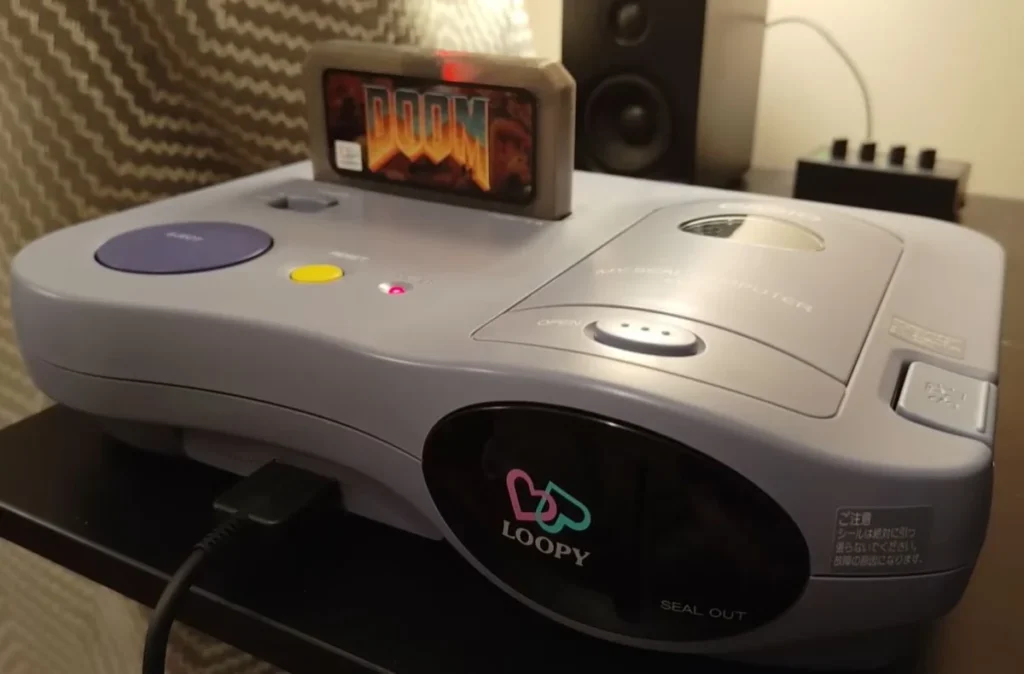
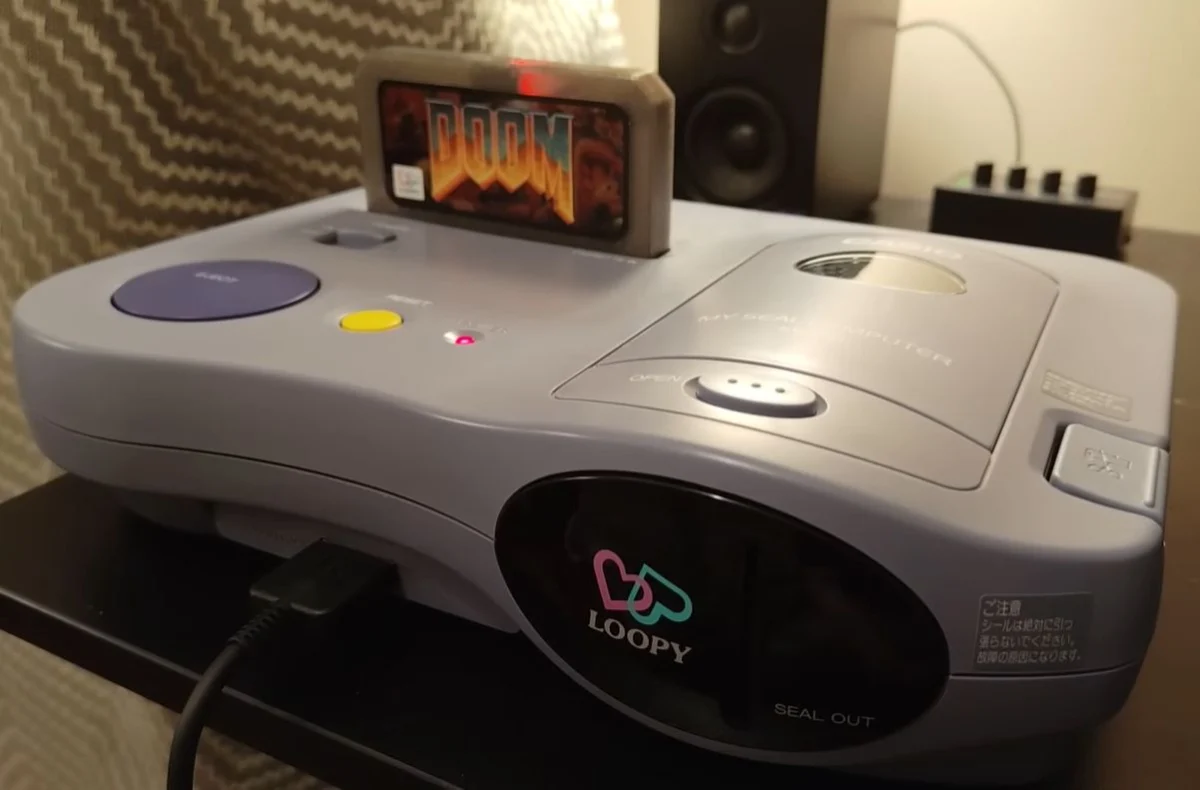
An ambitious independent developer has achieved what Casio never dared, porting the seminal first-person shooter Doom to the obscure 1995 console, the Casio Loopy. Originally marketed exclusively to a female audience with a focus on creative, non-violent gameplay, the Loopy’s hardware, while surprisingly capable for its era, was never intended for the pixelated carnage of id Software’s iconic title. This remarkable feat, spearheaded by a developer known as [Throaty Mumbo], not only breathes new life into a forgotten piece of gaming history but also underscores the enduring passion and technical prowess within the retro-gaming community.
Main Facts: A Cult Classic Reimagined
In a striking juxtaposition of gaming philosophies, the brutal, demon-slaying action of Doom has found an unlikely home on the Casio Loopy, a console initially designed for "refined female gamers" and characterized by its vibrant, creative titles and a unique built-in printer. Released in 1995 by electronics giant Casio, the Loopy, officially known as the "My Seal Computer C-1," was a curious anomaly in a console market dominated by the likes of the PlayStation, Sega Saturn, and Nintendo 64. While these mainstream titans battled for supremacy with cutting-edge graphics and increasingly violent content, the Loopy offered a gentler alternative, focusing on activities like dress-up, fortune-telling, and photo manipulation, often utilizing its integrated thermal printer to create stickers and print in-game screenshots.
Despite the backing of a major corporation like Casio and a surprisingly robust internal architecture featuring a Hitachi SH-1 16 MHz CPU and 1 MB of RAM, the Loopy’s commercial lifespan was tragically brief. Its active software development ceased after a mere year, and hardware manufacturing was discontinued by the end of 1998, leaving behind a paltry library of just eleven official titles. None of these, predictably, included anything resembling the demonic legions of Doom.
This perceived "egregious wrong"—the absence of Doom on such a distinctive console—spurred independent developer [Throaty Mumbo] to embark on a challenging and technically demanding project. His mission: to bring the quintessential FPS experience to the pink-hued, sticker-printing machine. The fruits of his labor are now available to the handful of dedicated enthusiasts who own a Casio Loopy, accessible via a dedicated GitHub repository (https://github.com/ThroatyMumbo/LoopyDOOM) and requiring a custom cartridge solution like the FloopyDrive (https://github.com/partlyhuman/floopydrive) to overcome the system’s original ROM limitations.
The resulting port, while currently in an unoptimized state with a characteristically low resolution, demonstrates impressive performance given the hardware constraints. Crucially, it even supports the Loopy’s signature feature: the built-in printer. This allows players to print screenshots of their demon-slaying exploits, a feature that, as [Throaty Mumbo] humorously notes, was notably absent from contemporary Sega or Nintendo consoles for capturing "glorious headshots." The project is a vibrant testament to the ingenuity and dedication of the retro-gaming community, pushing the boundaries of what was thought possible on a long-forgotten piece of hardware.
Chronology: From Pink Console to Pixelated Hell
The story of LoopyDOOM is a convergence of distinct historical trajectories: the peculiar rise and fall of a niche console, the explosive impact and enduring legacy of a gaming masterpiece, and the modern phenomenon of independent developers pushing the boundaries of retro hardware.
The Casio Loopy’s Brief Reign
The Casio Loopy made its debut in October 1995, amidst a console generation that would redefine interactive entertainment. While Sony’s PlayStation and Sega’s Saturn battled for adult and teenage audiences with sophisticated 3D graphics and mature themes, Casio sought a different demographic. Recognizing a gap in the market, the company targeted young girls with a console that emphasized creativity, personalization, and social interaction. Its distinctive pink and purple aesthetic, coupled with the "My Seal Computer" moniker, immediately set it apart.
The console’s primary selling point was its integrated thermal printer, allowing players to instantly print stickers and small photos from their gameplay. This feature was deeply integrated into its limited software library, which included titles like Dream Change, Hori Hori DS, and Anime Land, focusing on character customization, virtual pet care, and mini-games. Despite its innovative approach and unique selling proposition, the Loopy struggled to gain significant market traction. Its niche appeal, limited third-party support (only Casio developed games for it), and the overwhelming competition from more powerful and versatile consoles ultimately sealed its fate. Active software development ceased within a year of its launch, and hardware production concluded by 1998, rendering it one of the more peculiar footnotes in console history.
Doom’s Unstoppable March
Concurrently, id Software’s Doom, released in December 1993 for MS-DOS, was forging an entirely different legacy. A visceral, fast-paced first-person shooter, Doom revolutionized the gaming landscape with its cutting-edge 3D graphics (pseudo-3D, using binary space partitioning), immersive sound design, intense action, and pioneering multiplayer deathmatch mode. It quickly became a cultural phenomenon, defining a genre and influencing countless games that followed.
Beyond its gameplay, Doom also became an unofficial benchmark for hardware capabilities and programmer ingenuity. Its source code was famously released in 1997, catalyzing a vibrant modding community and inspiring an almost obsessive drive to port the game to virtually every conceivable piece of electronic hardware. From scientific calculators and digital cameras to smartwatches and even pregnancy tests (though some of these were conceptual or highly modified), Doom‘s portability became a legendary test of skill and an emblem of the game’s robust, well-engineered engine. This era solidified Doom‘s status not just as a game, but as a cultural icon and a proving ground for technical mastery.
The Genesis of LoopyDOOM
It is against this backdrop that [Throaty Mumbo]’s project emerged. The sheer incongruity of Doom on the Casio Loopy—a console diametrically opposed in design philosophy and target audience—served as a powerful catalyst. For many retro-enthusiasts, the challenge of porting Doom to the most unlikely platforms is a rite of passage, a demonstration of technical prowess, and a tribute to the game’s enduring legacy.
[Throaty Mumbo]’s journey likely began with extensive research into the Loopy’s architecture, reverse-engineering its proprietary systems, and understanding the nuances of its Hitachi SH-1 CPU. The SH-1, while capable for its intended purpose, presented unique optimization challenges for a game like Doom, which was originally designed for more general-purpose computing environments. The project would have involved meticulous code adaptation, memory management, and graphic rendering optimizations, all while navigating the system’s limited resources. The specific timeline of [Throaty Mumbo]’s development is not detailed in the original report, but such a complex undertaking would span many months, if not years, of dedicated effort, culminating in the public release of the LoopyDOOM port and the accompanying FloopyDrive solution.
Supporting Data: Technical Feats and Historical Context
The LoopyDOOM project is more than just a novelty; it represents a significant technical achievement, pushing the boundaries of what was thought possible on a very specific, and often underestimated, piece of hardware.
The Loopy’s Underestimated Hardware
While the Casio Loopy was commercially unsuccessful, its internal specifications reveal a console that was, for its time and intended purpose, quite capable. The Hitachi SH-1 16 MHz CPU was a powerful 32-bit RISC processor, similar to those found in early 32-bit consoles, albeit at a lower clock speed than the likes of the Sega Saturn’s dual SH-2 CPUs (which ran at 28.6 MHz). The 1 MB of RAM was also respectable, offering sufficient working memory for its creative applications.
However, Doom is a demanding application. Even though it runs in "pseudo-3D," its engine requires significant computational power for ray-casting, texture mapping, and managing complex enemy AI and level geometry. The SH-1 CPU, while 32-bit, would have required highly optimized code to render Doom‘s fast-paced action at a playable frame rate. Furthermore, the Loopy’s original 2 MB of ROM space was a critical bottleneck. Doom WADs (Where’s All the Data), which contain levels, sprites, and textures, can easily exceed this limit, even for the shareware episode. This limitation is precisely why [Throaty Mumbo]’s solution necessitated doubling the available ROM space via the FloopyDrive cartridge, allowing for a "handful of levels" rather than the entire game.
The resolution, noted as "fairly low" in the port’s current unoptimized state, is another technical compromise. The Loopy’s native display resolution was 256×192 pixels, which is already quite low by modern standards. To achieve acceptable performance for Doom, the port likely renders at an even lower internal resolution, then scales it up, or utilizes various rendering tricks to reduce the pixel count and draw calls, sacrificing visual fidelity for frame rate. This is a common strategy in porting demanding games to underpowered hardware.
The successful integration of the Loopy’s built-in printer, allowing players to "screenshot those glorious headshots," is perhaps the most charming and technically impressive aspect of the port. It demonstrates a deep understanding of the console’s unique hardware capabilities and a commitment to leveraging its full functionality, rather than simply getting the game to run.
Navigating DOOM’s Demands
Doom‘s source code, released under the GNU General Public License (GPL) in 1997, provided an invaluable foundation for projects like LoopyDOOM. However, porting it to a system vastly different from its original MS-DOS environment is never trivial. Key challenges for [Throaty Mumbo] would have included:
- Graphics Rendering: Adapting Doom‘s software renderer to the Loopy’s display hardware, optimizing drawing routines, and managing palettized graphics.
- Input Handling: Mapping Doom‘s keyboard and mouse controls to the Loopy’s gamepad.
- Sound: Re-implementing Doom‘s iconic sound effects and music using the Loopy’s audio capabilities.
- Memory Management: Efficiently utilizing the Loopy’s limited 1 MB RAM for game state, textures, and assets, especially with expanded WADs.
- Performance Optimization: Aggressively profiling and optimizing code to maximize frame rate on the 16 MHz SH-1 CPU. This often involves assembly language optimizations, clever data structures, and careful use of the CPU’s instruction set.
The mention of the port being in an "unoptimized state" suggests that further performance gains and perhaps higher resolutions could be achieved with more development time, highlighting the iterative nature of such ambitious homebrew projects.
The Rise of Retro-Computing and Homebrew
The LoopyDOOM project is firmly situated within the thriving global community of retro-computing enthusiasts, console modders, and homebrew developers. This community is driven by a desire to preserve digital history, explore the limits of vintage hardware, and create new experiences for old systems. Projects range from developing new games for defunct consoles to reverse-engineering proprietary formats, creating flash cartridges, and, as seen here, porting iconic titles to unlikely platforms.
The availability of resources like GitHub for code sharing and collaboration, along with forums and communities dedicated to specific consoles, has democratized retro-development. Tools like the FloopyDrive, which allows loading custom software onto the Loopy via a modern interface, are crucial enablers for such projects, circumventing the need for original (and often scarce) game cartridges. This ecosystem fosters innovation and ensures that the legacy of gaming hardware, no matter how obscure, continues to be explored and expanded upon long after its commercial viability has ended.
Community and Developer Engagement
Given the niche nature of this project and the elapsed time since the Casio Loopy’s commercial relevance, "official responses" in the traditional sense from Casio or id Software are unlikely. Instead, the narrative focuses on the developer’s motivation, the retro-gaming community’s embrace, and the broader industry’s tacit understanding of such fan-driven efforts.
[Throaty Mumbo]’s Vision and Execution
[Throaty Mumbo]’s public statements and the existence of the LoopyDOOM project itself serve as the primary "official response" from the development side. His stated motivation—to "right this egregious wrong" of Doom‘s absence on the Loopy—encapsulates the playful yet determined spirit of many homebrew developers. It’s a passion project driven by curiosity, technical challenge, and a desire to merge two disparate pieces of gaming history.
The fact that he made the source code available on GitHub indicates a commitment to the open-source ethos prevalent in the retro-gaming community. This allows other developers to inspect, learn from, and potentially contribute to the project, fostering further innovation and collaboration. The detailed video demonstration (https://www.youtube.com/watch?v=nDe06uY5C40) further serves as a transparent and engaging "developer’s diary," showcasing the project’s progress and features directly to the intended audience.
The Retro-Gaming Community’s Embrace
While the original article humorously notes the target audience for LoopyDOOM as "the two dozen people or so who have one of these systems," the retro-gaming community is precisely where such projects find their most ardent supporters. News of Doom ports to unusual hardware consistently generates excitement and admiration within these circles. Forums, subreddits, and social media groups dedicated to vintage consoles and homebrew development eagerly share and discuss these achievements.
The Casio Loopy, despite its obscurity, has a small but dedicated cult following. For these enthusiasts, a project like LoopyDOOM is a monumental event, offering a completely new and unexpected experience on their beloved, often overlooked, hardware. It validates their passion for the console and adds a new, vibrant chapter to its otherwise brief history. The collaborative spirit often extends to hardware solutions, with projects like the FloopyDrive emerging from the community to enable software loading for systems that otherwise lack modern connectivity.
Industry Stance on Legacy IP and Fan Projects
The general stance of original IP holders like id Software (now part of ZeniMax Media/Microsoft) and Casio on fan-made projects involving their legacy hardware and software is typically one of benign neglect, provided the project is non-commercial and doesn’t infringe directly on active intellectual property or generate significant revenue.
Doom‘s source code being open-source further legitimizes fan projects, as long as the original WAD files (which are still proprietary and copyrighted) are obtained legally by the user. Casio, having long exited the console market, is highly unlikely to take any action regarding a fan port for a console discontinued over two decades ago, especially when it generates positive, albeit niche, interest in their historical products. These projects are often seen as free publicity and a testament to the enduring appeal of their creations, rather than a threat. The understanding is that these are labors of love, not commercial ventures, and therefore often fall outside the scope of aggressive IP enforcement.
Implications: A Legacy Reclaimed
The LoopyDOOM project, while seemingly a niche curiosity, carries broader implications for the world of retro-gaming, hardware preservation, and the enduring power of iconic software.
Breathing New Life into Obscure Hardware
The most immediate implication of LoopyDOOM is the revitalization of the Casio Loopy’s legacy. For years, it has been an interesting but ultimately forgotten footnote in console history, remembered mostly for its unique printer and peculiar market positioning. Now, it has gained an unexpected, almost paradoxical, new identity as a platform capable of running one of gaming’s most hardcore titles. This project forces a re-evaluation of the console’s technical capabilities, demonstrating that its SH-1 CPU and memory, while limited, were not entirely incapable of more complex tasks than Casio originally envisioned.
Such projects contribute significantly to hardware preservation. By dissecting, understanding, and programming for these old systems, developers like [Throaty Mumbo] create invaluable documentation and tools that ensure these consoles can continue to be explored and enjoyed by future generations. It elevates the Loopy from a museum piece to a functional, albeit unique, gaming machine once more.
The Enduring Power of DOOM
LoopyDOOM further cements Doom‘s status as a timeless benchmark and a cultural touchstone. The game’s robust engine, modular design, and the accessibility of its source code have made it the ultimate "can it run Doom?" test. Every new, improbable port reinforces its legendary status, showcasing its adaptability and the sheer genius of its original design. It’s a testament to how well-engineered software can transcend its original platform and continue to captivate and challenge developers decades later. For a game released in 1993, its continued relevance through these fan projects is unparalleled.
A Testament to Passion and Ingenuity
Ultimately, the LoopyDOOM project is a powerful testament to the passion, ingenuity, and technical skill of the retro-gaming community. It highlights the dedication of individuals who are willing to invest countless hours into understanding arcane hardware, reverse-engineering complex systems, and writing highly optimized code, all for the sheer joy of creating something new and unexpected. It’s a celebration of hacking in its purest form—exploring, modifying, and extending the capabilities of existing systems.
This spirit of exploration and creation not only enriches the history of gaming but also serves as an inspiration for aspiring engineers and programmers. It demonstrates that with enough determination, even the most obscure and forgotten pieces of technology can be imbued with new life, offering fresh perspectives and unexpected experiences. The Casio Loopy, once a quirky footnote, now stands proudly as another unlikely platform where the forces of hell have been definitively, if low-resolutionally, conquered.