From Flight Path to Living Room: The Engineering of ‘Skylight,’ a Real-Time Aerial Tracking System
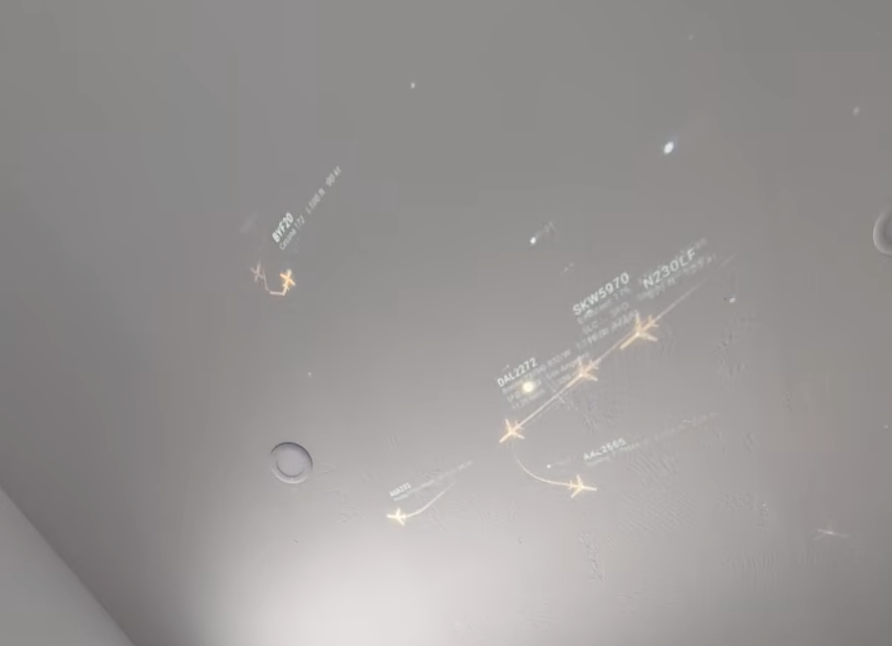
The roar of a jet engine is a familiar sound for millions of urban dwellers, but for Cameron Paczek, a maker and software engineer living directly beneath the departure path of San Francisco International Airport (SFO), the sound was more than a nuisance—it was a call to innovation. Paczek’s home sits in a high-intensity noise contour where aircraft, fresh from the runway, thunder overhead at altitudes as low as 600 to 800 feet. This proximity transformed his living room into a theater of aviation, eventually leading to the creation of "Skylight," a sophisticated, Raspberry Pi 5-powered system that projects real-time flight data onto his ceiling and uses artificial intelligence to track aircraft via a motorized camera.
Main Facts: The Intersection of Data, Art, and Aerospace
The "Skylight" project represents a unique convergence of several modern technologies: Software-Defined Radio (SDR), projection mapping, computer vision, and edge computing. At its core, the system is designed to automate the process of identifying aircraft that are physically shaking the user’s home.
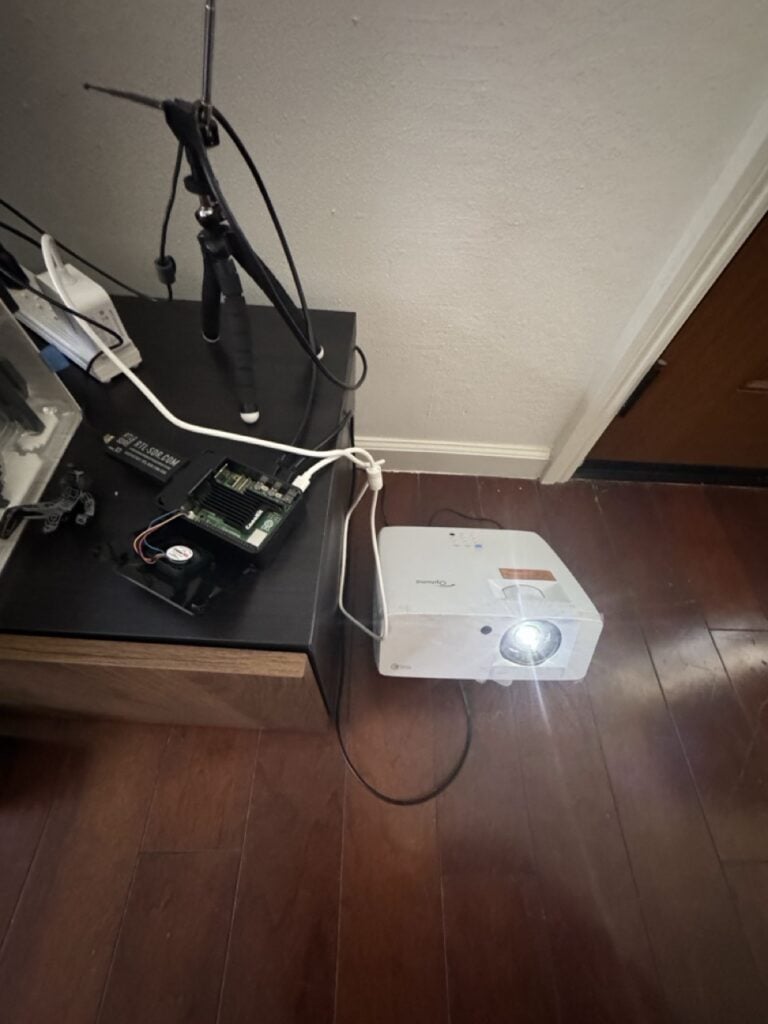
The hardware suite is anchored by the Raspberry Pi 5, the latest iteration of the popular single-board computer, which provides the necessary computational overhead to handle simultaneous data ingestion, geometric calculations, and AI-driven video processing. To "see" the planes before they are visible, Paczek utilizes an RTL-SDR (Software Defined Radio) dongle tuned to the 1090MHz frequency. This allows the system to intercept Automatic Dependent Surveillance-Broadcast (ADS-B) signals—unencrypted data packets transmitted by commercial and private aircraft containing their GPS coordinates, altitude, airspeed, and flight identification.
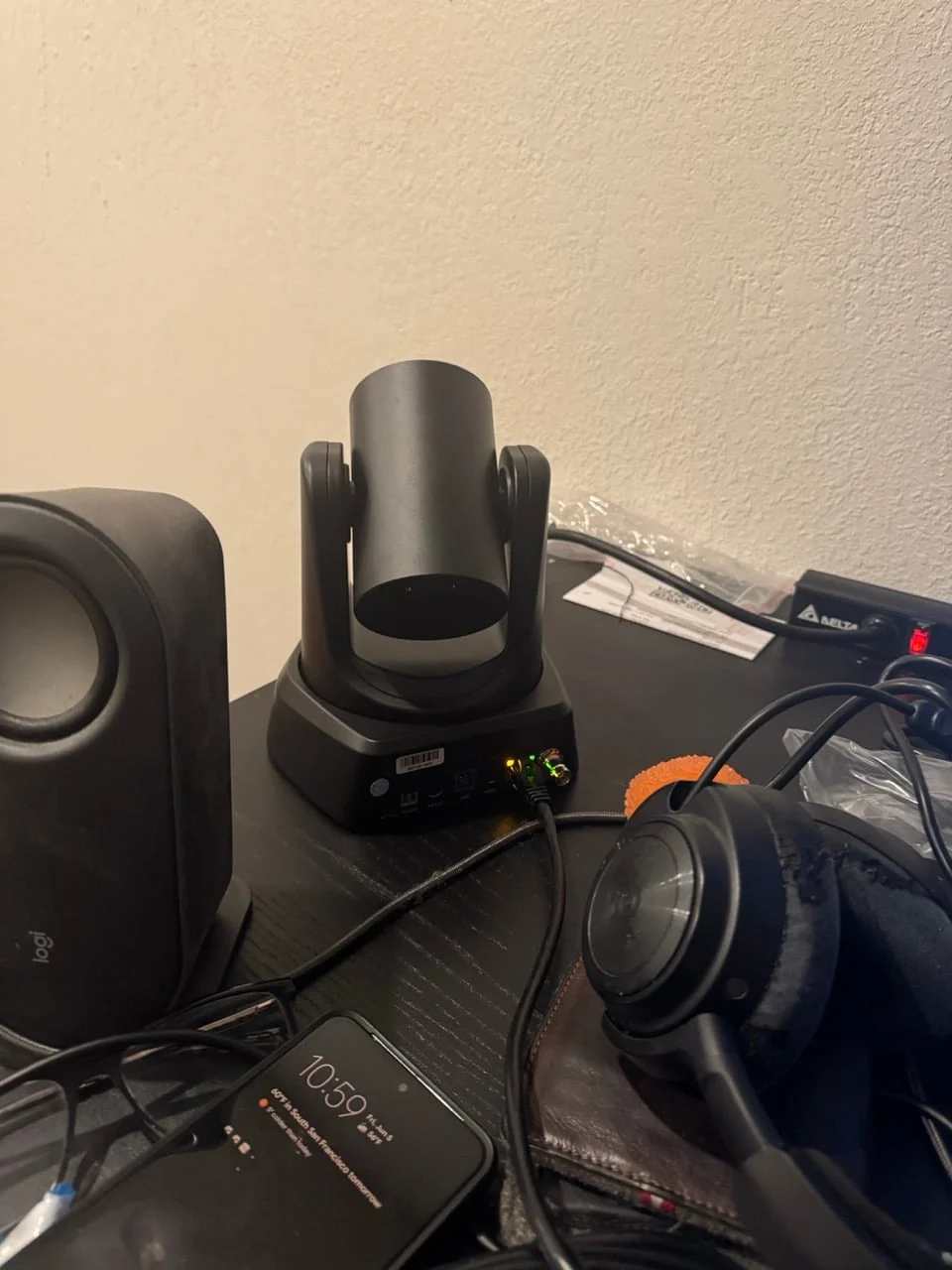
The project differentiates itself from standard flight-tracking apps through its delivery method. Rather than requiring the user to look at a smartphone, "Skylight" uses projection mapping to turn the interior ceiling of the home into a dynamic, "transparent" window to the sky. Furthermore, an external VISCA-enabled PTZ (Pan-Tilt-Zoom) camera uses the YOLOX-Nano object detection model to lock onto the aircraft in the sky, streaming high-definition close-ups directly to the user’s television.
Chronology: From Noise Complaints to Open-Source Innovation
The development of Skylight followed a trajectory from a personal hobby to a complex engineering feat.
Phase 1: The Sensory Catalyst
The project began shortly after Paczek moved into his new residence under the SFO departure corridor. He quickly realized that "departure pushes"—periods where dozens of planes take off in rapid succession—created a rhythmic disruption. Every few minutes, the house would vibrate, prompting him to check FlightRadar24 to identify the craft. This manual process of hearing a sound, opening an app, and correlating the data was the "friction" that sparked the need for an automated solution.
Phase 2: The Artistic Spark
While the data side of the project was rooted in aviation, the visual inspiration came from TikTok. Paczek had been exploring the world of projection mapping—a technique typically used in large-scale art installations to project video onto irregularly shaped surfaces. He realized that the ceiling of his home could serve as a canvas for the very data he was seeking. By projecting the flight path and aircraft details directly above him, he could bridge the gap between the physical vibration of the house and the digital identity of the plane.
Phase 3: Hardware Integration and Logic
With the vision established, Paczek began the technical build. He chose the Raspberry Pi 5 for its improved throughput and the RTL-SDR for data capture. The primary challenge was the "simple geometry" required to translate global GPS coordinates into a localized projection. He developed a script that calculated the plane’s position relative to his home’s specific longitude and latitude, allowing the projected icon to move across his ceiling in synchronization with the plane’s actual movement overhead.
Phase 4: The AI Evolution
The final and most complex phase involved the external camera. Simply knowing where a plane is via GPS is often insufficient for a high-zoom visual because of latency and atmospheric variables. To solve this, Paczek integrated a VISCA-enabled PTZ camera and the YOLOX-Nano detection model. This allowed the system to use ADS-B data for "rough aiming" and then switch to computer vision to "find" the plane in the frame, center it, and zoom in automatically.
Supporting Data: The Technical Architecture of ‘Skylight’
To understand the scale of Paczek’s achievement, one must look at the specific technologies that allow Skylight to function with such low latency.
ADS-B and 1090MHz Ingestion
ADS-B is the backbone of modern air traffic control. Unlike traditional radar, which "bounces" signals off a plane, ADS-B is "cooperative," meaning the aircraft periodically broadcasts its own state. By using an RTL-SDR, Paczek is essentially running a localized version of an Air Traffic Control (ATC) tower. The 1090MHz frequency is standard for commercial aviation, ensuring that almost every major carrier flying out of SFO is captured by his system.
The Power of Raspberry Pi 5
The choice of the Raspberry Pi 5 was critical. The project involves:
- SDR Data Processing: Decoding raw radio waves into JSON or CSV data.
- Geometric Mapping: Real-time trigonometry to calculate azimuth and elevation.
- Kiosk Mode Rendering: Displaying a high-frame-rate canvas for the projector.
- AI Inference: Running YOLOX-Nano (a high-performance, low-parameter object detection model) to identify aircraft shapes against the sky.
Previous versions of the Raspberry Pi would likely have struggled with the simultaneous demands of AI inference and high-definition video streaming.
The YOLOX-Nano Model
YOLOX is a high-performance version of the YOLO (You Only Look Once) family of object detectors. The "Nano" version is specifically optimized for edge devices like the Raspberry Pi. It allows the camera to distinguish between a bird, a cloud, and a Boeing 737, ensuring the PTZ motors don’t waste energy or lose focus on the target.
Official Context: The Maker Movement and Open Source Ethics
While there has been no official statement from SFO or the FAA regarding this specific project, the "Skylight" system exists within a well-established legal framework. In the United States, receiving unencrypted radio signals like ADS-B is generally legal for hobbyist use, provided the data is not used for commercial gain or to interfere with aviation safety.
The project has been met with significant acclaim within the "Maker" community—a global subculture of DIY engineers and programmers. By uploading the entire codebase and hardware list to GitHub, Paczek has adhered to the open-source philosophy that defines the Raspberry Pi ecosystem. This allows other developers to fork the project, potentially adding features like weather overlays, noise level logging, or integration with smart home lighting (e.g., dimming the lights when a particularly interesting plane, like a 747 or a vintage craft, flies over).
Industry experts note that projects like Skylight highlight the increasing accessibility of "aerospace-grade" data. What was once the exclusive domain of government agencies and multi-billion-dollar airlines is now accessible to a hobbyist with a $100 computer and a $30 radio dongle.
Implications: The Future of the "Transparent" Home
The implications of Paczek’s work extend beyond simple plane-spotting. Skylight represents a step toward the "contextual home"—an environment that is deeply aware of its external surroundings.
1. Environmental Awareness and Mitigation
For residents in high-noise areas, technology like this changes the psychological relationship with the environment. Instead of the noise being an "invasive" force, it becomes a "data point." This shift from passive victim of noise pollution to active observer can change the resident’s experience of urban living.
2. The Democratization of Surveillance
While "surveillance" often carries a negative connotation, Paczek’s use of AI and PTZ cameras shows how these tools can be used for education and curiosity. However, it also raises questions about privacy and the "eyes in the sky." As more hobbyists deploy AI-powered cameras that can track objects with high precision, the boundary between a "cool project" and an "automated surveillance network" becomes thinner, necessitating a conversation about the ethics of domestic computer vision.
3. Educational Potential
The "Skylight" project is a masterclass in STEM (Science, Technology, Engineering, and Math). It provides a tangible application for complex concepts like radio frequency physics, coordinate geometry, and machine learning. Educators could potentially use similar setups to engage students in the mechanics of flight and the importance of data transparency.
4. Smart Home Integration
In the future, the logic behind Skylight could be applied to other phenomena. A similar system could track the ISS (International Space Station), identify bird species in a backyard, or monitor local micro-climates. The "ceiling as a screen" concept could transform how we perceive weather alerts, satellite passes, or even local traffic.
Cameron Paczek’s "Skylight" is more than just a "nerdy" way to see what’s shaking the house; it is a testament to the power of modern hobbyist electronics. It proves that with a bit of ingenuity, a Raspberry Pi, and a willingness to share code, anyone can turn the roof over their head into a window to the world above. For those living under the flight paths of the world’s busiest airports, the sky is no longer a mystery—it’s a dashboard.