Bridging the AI Gap: AWS Unveils Autonomous Release Management for DevOps Agent
In an era where generative AI is accelerating the pace of software development, engineering teams are increasingly struggling to keep up with the sheer volume of code generated by automated tools. As pull requests flood delivery pipelines, the human-centric bottleneck of manual code review and testing has become a primary inhibitor to organizational velocity. Today, Amazon Web Services (AWS) is addressing this critical friction point by announcing a major preview release for the AWS DevOps Agent, introducing sophisticated "release readiness" and "autonomous testing" capabilities.
This update represents a fundamental shift in how organizations approach the CI/CD lifecycle. By transforming the DevOps Agent from a reactive incident-management tool into a proactive gatekeeper, AWS is empowering teams to maintain production stability without sacrificing the speed afforded by modern AI-assisted coding.
Main Facts: A New Tier of Autonomous Governance
The AWS DevOps Agent, previously focused on post-deployment operations—such as autonomous incident investigation and root cause analysis—is now extending its reach to the "left" of the development lifecycle. The new preview features are designed to serve as an "always-available teammate" that understands the intricate dependencies of an entire technical estate, whether hosted on AWS, in hybrid environments, or across multi-cloud architectures.
Key Capabilities Introduced:
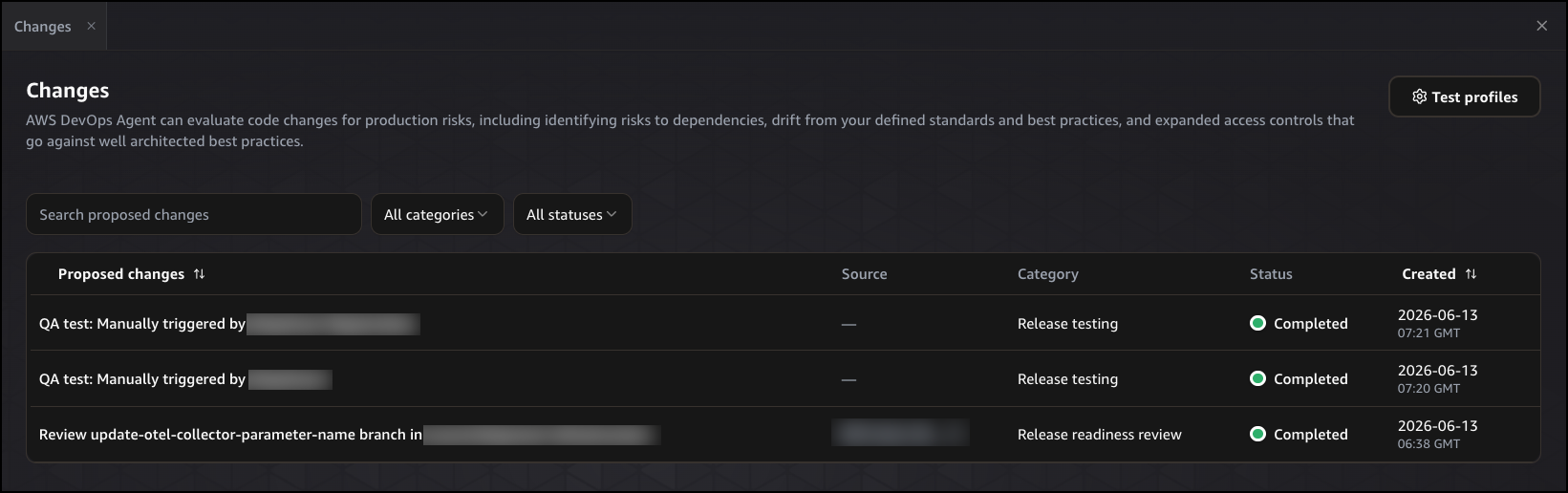
- Release Readiness Review: A mechanism that evaluates every code change against production-grade standards. It assesses dependency safety, cross-repository risks, and compliance with the AWS Well-Architected Framework.
- Autonomous Release Testing: Rather than relying on rigid, pre-configured test suites, the agent dynamically reasons about specific code changes. It constructs tailored, change-specific test plans for web and API-based applications, executing them in isolated, production-like environments before the code is merged.
- Natural Language Standards: Teams can define their own organizational "best practices" in plain English. The agent then enforces these standards, acting as an automated compliance officer that understands context-specific requirements, such as data encryption mandates or network security protocols.
Chronology of Development: From Incident Response to Proactive Guardrails
The evolution of the AWS DevOps Agent reflects the broader maturation of AI in the enterprise.
- Foundational Phase (General Availability): The tool was initially launched to handle "Day 2" operations. It gained recognition for its ability to autonomously troubleshoot production incidents, provide root cause analysis (RCA), and suggest mitigation strategies for recurring system failures.
- The "AI-Code" Inflection Point: As developers began adopting AI coding assistants, the velocity of code creation surged. AWS observed that while coding agents were writing code faster, the review queues were becoming stagnant. Human reviewers, feeling the pressure, were increasingly forced to approve changes without thorough examination, leading to "test drift"—a condition where test environments no longer accurately mimic production.
- The Current Preview (June 2026): By integrating into the CI/CD pipeline, the DevOps Agent now bridges the gap between code creation and deployment. The agent is now capable of performing reviews and running tests on-demand, either via the AWS console or directly through IDE integrations like the Kiro power or Claude Code plugin.
Supporting Data: Why Automated Review is No Longer Optional
The necessity of this update is underscored by the current state of software engineering. Data suggests that as development teams integrate AI models into their workflows, the frequency of commits has outpaced the capacity of manual oversight.
The Cost of Review Fatigue
When human reviewers are overwhelmed, two primary risks emerge:

- Security and Functional Regressions: Under time pressure, developers may miss subtle security vulnerabilities or logic flaws that AI models—which don’t suffer from "review fatigue"—are actually quite adept at catching.
- Environment Drift: The discrepancy between testing environments and production environments remains a leading cause of deployment failures. The DevOps Agent addresses this by utilizing AWS-managed isolated environments to execute lightweight user journey tests that verify builds before they enter the main production pipeline.
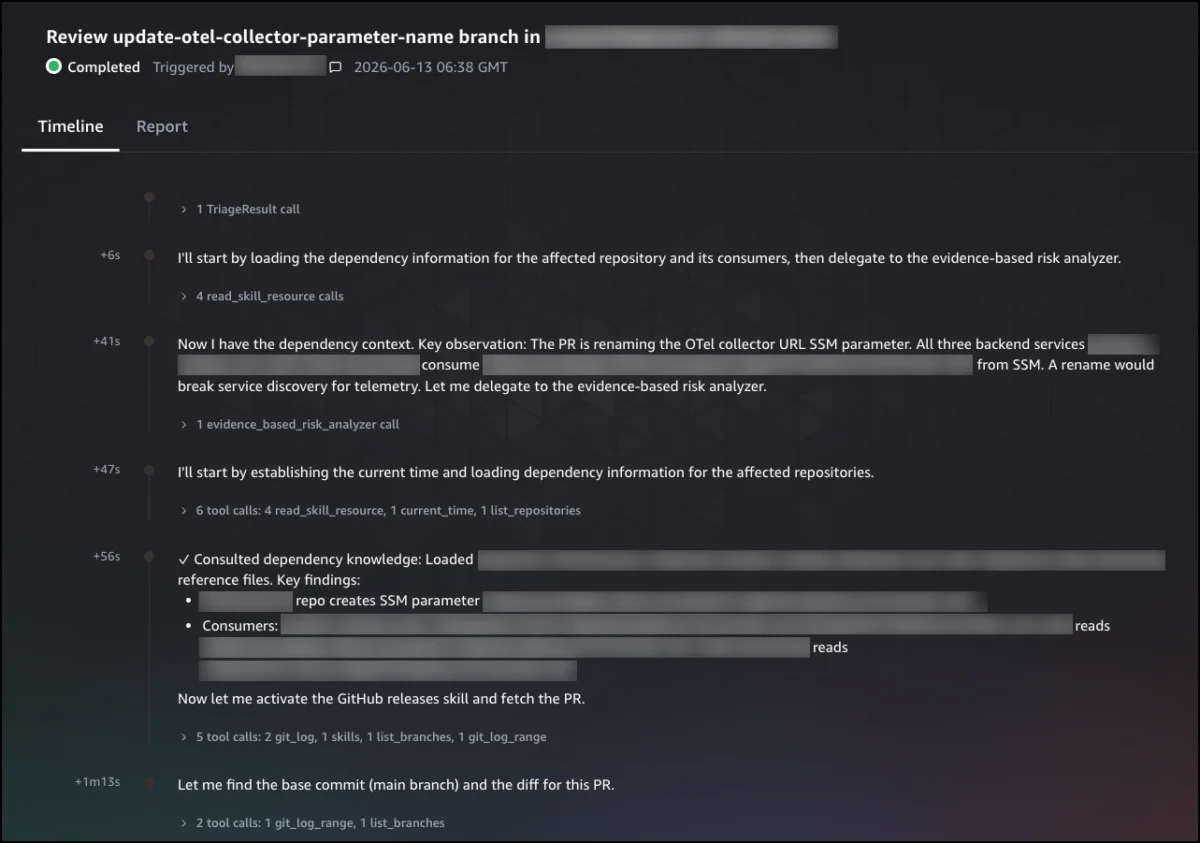
The agent’s efficacy is measured by its ability to provide structured, actionable feedback. Instead of generic error messages, the tool generates a "Release Report" that categorizes findings by severity. These reports include a clear recommendation—BLOCK, Proceed with Caution, or Safe to Release—backed by evidence from the agent’s reasoning timeline.
Implications for Engineering Culture and Security
The introduction of these features has profound implications for how organizations manage the "human-in-the-loop" aspect of DevOps.
1. Reclaiming Developer Focus
By automating the tedious, repetitive aspects of code review—such as checking for dependency risks or adherence to standard library versions—senior engineers can redirect their attention toward high-value architectural decisions and feature innovation. The agent acts as a first-pass filter, ensuring that by the time a human reviewer opens a pull request, the "low-hanging fruit" of bugs and compliance issues has already been pruned.
2. Standardizing Compliance at Scale
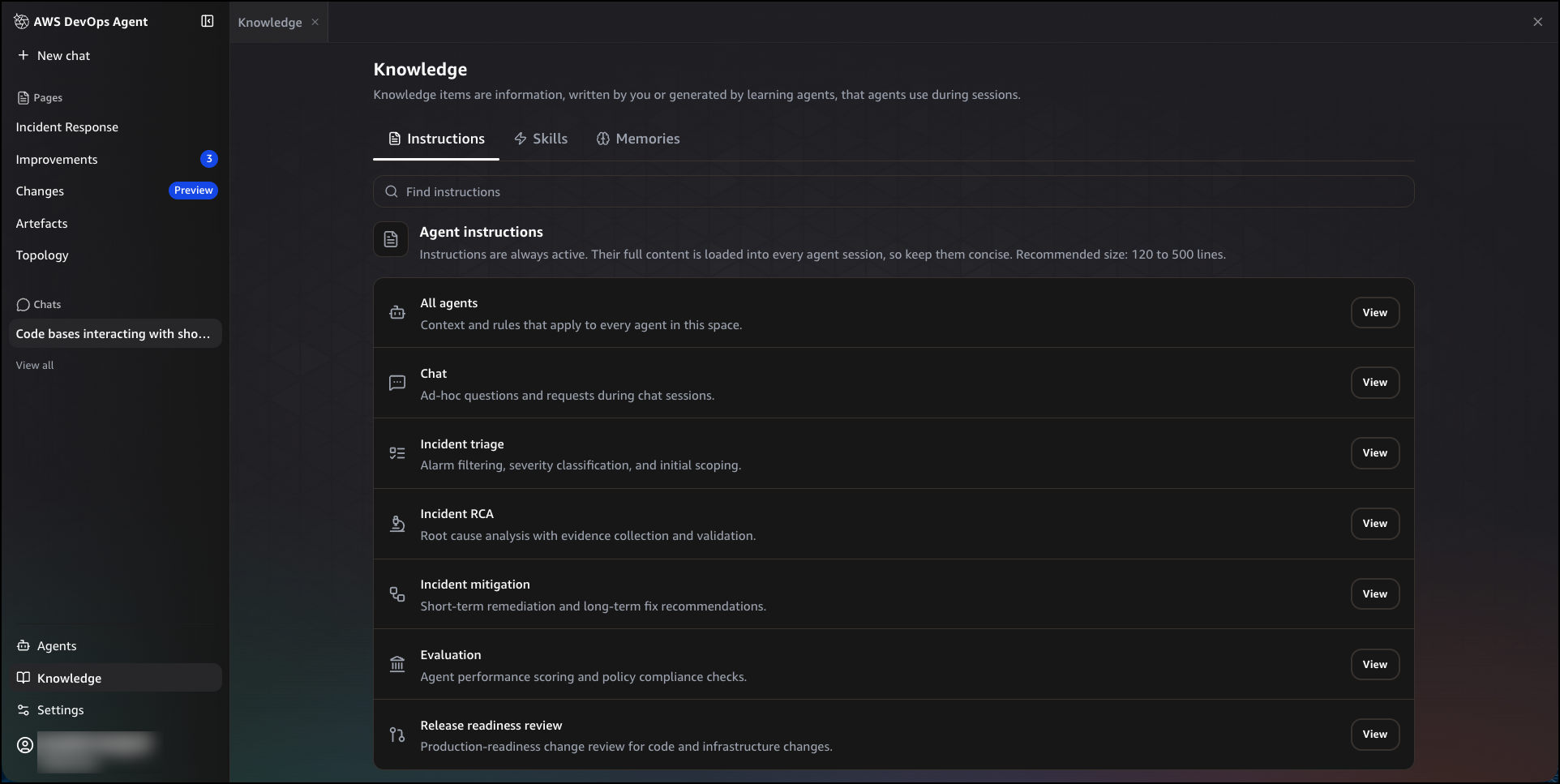
In large enterprises, maintaining consistent standards across dozens of teams is notoriously difficult. With the AWS DevOps Agent, a central platform team can define "Instructions" (the "Knowledge" tab) that act as global governance rules. Whether it is a requirement for specific logging levels or a mandate for data classification, these instructions are applied uniformly to every code change, significantly reducing the "compliance gap."
3. Deepening the Observability Loop
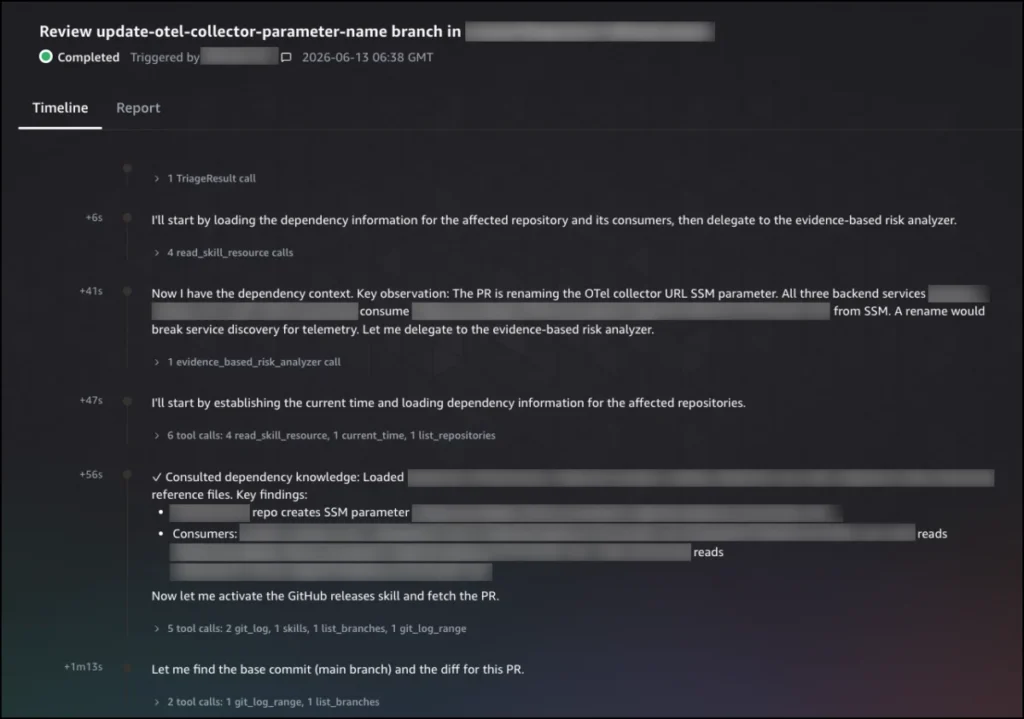
The "Timeline" tab within the agent’s console provides a transparent audit trail of its reasoning. This is critical for organizations that require strict adherence to governance. By documenting which tools were called, which dependencies were analyzed, and what observations were made, the agent provides a "paper trail" that is essential for both post-mortem analysis and ongoing regulatory reporting.
Official Perspective: Moving Toward Autonomous Operations
While the technical specifications of the release are robust, the overarching goal, according to the AWS product team, is to move toward a state of "increasingly autonomous" software operations. The DevOps Agent is not intended to replace human oversight but to augment it.
By providing a consistent, logic-driven partner in the delivery pipeline, AWS is attempting to solve the "trust deficit" that often accompanies automated deployment. When a developer receives a "Safe to Release" signal from the agent, they do so with the confidence that the code has been tested against real-world production configurations rather than static, outdated test scripts.
Getting Started: Implementation and Best Practices
For teams looking to integrate the new capabilities, the process is designed to be low-friction:
- Initial Setup: Users connect their GitHub or GitLab repositories to the Agent Space. The agent immediately begins indexing the code and building a "knowledge graph" of dependencies.
- Customization: The "Instructions" interface allows teams to write plain-English rules. For example, a user might input: "Ensure all S3 buckets are encrypted and that no public read access is enabled on any new infrastructure resource." The agent will then treat this as a mandatory check for every release readiness review.
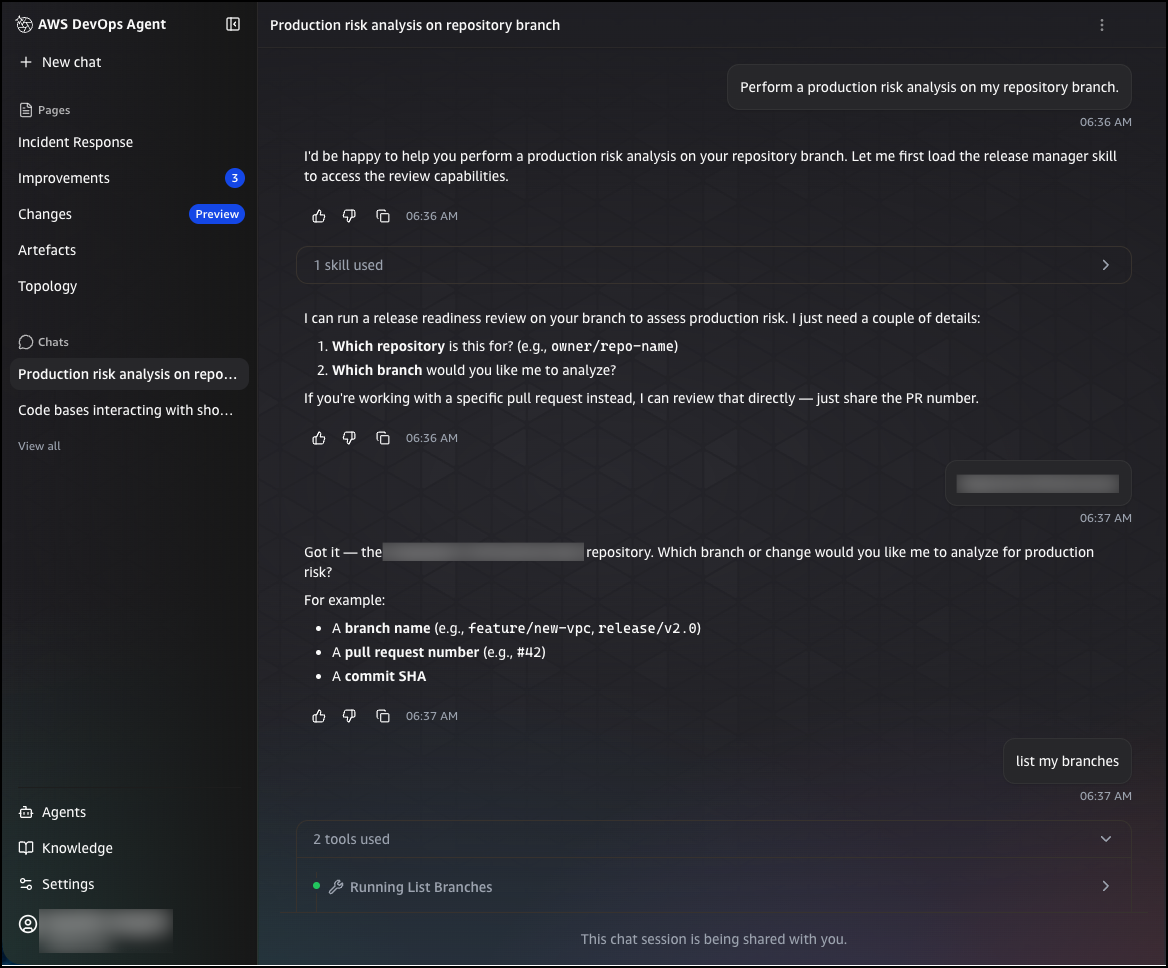
- Execution: Reviews can be triggered by a pull request or via a simple chat prompt, such as: "Perform a production risk analysis on my repository branch."
The Future of the Agent
The preview is currently available at no additional cost in the US East (N. Virginia) Region. As the preview progresses, industry analysts expect to see further integrations with third-party security tools and deeper hooks into observability platforms, further tightening the loop between development, security, and operations (DevSecOps).
In conclusion, the AWS DevOps Agent’s latest update is a timely response to the realities of AI-augmented software development. By automating the guardrails of the release process, AWS is helping organizations convert their growing code volume into stable, high-quality production value, effectively turning the "release queue" from a bottleneck into a competitive advantage.