Elevating the Android Ecosystem: A New Era of Performance, Reach, and Media Excellence
By Android Developer Relations
In an era where the mobile landscape is defined by fragmentation across form factors—ranging from the smallest wearables to the most sophisticated automotive cockpits—the definition of a "premium" app experience has fundamentally shifted. At Google I/O ’26, the Android engineering team unveiled a robust suite of tools designed to help developers navigate this complexity. By focusing on deep performance optimization, unified cross-device UI development, and professional-grade media pipelines, Google is setting a new standard for what it means to build for Android.
The Mandate for Performance: Android 17 and the R8 Configuration Analyzer
The foundation of any premium experience is performance. As Android 17 rolls out, the operating system introduces stricter, device-RAM-based memory limits. These guardrails are designed to proactively curb extreme memory leaks and system-wide instability, ensuring that even under heavy loads, the user experience remains fluid. However, for developers, these thresholds represent a new operational reality: lean code is no longer a "nice-to-have"—it is a critical requirement for survival.
To meet this challenge, Google has introduced the R8 Configuration Analyzer within Android Studio. R8, the compiler toolchain responsible for shrinking, obfuscating, and optimizing code, has long been a double-edged sword. While it is incredibly powerful, its effectiveness is often hindered by "keep rules"—overly broad instructions that prevent the compiler from stripping away unused code, resulting in bloated binaries that consume unnecessary memory.
The new Configuration Analyzer changes this dynamic by providing developers with actionable scores for optimization, obfuscation, and shrinking. It acts as a diagnostic lens, pinpointing the exact rules that are throttling performance. Early adopters have already seen significant results: Monzo, the fintech giant, utilized these insights to achieve a 30% reduction in cold-start times and a 35% decrease in Application Not Responding (ANR) errors. By pruning the "dead weight" of unused code, developers can reclaim the memory headroom necessary to thrive under the stricter requirements of Android 17.
Chronology of Development: From Concept to Ecosystem Integration
The trajectory of these announcements follows a clear strategic arc aimed at simplifying the developer’s life cycle.
- Early 2026: Engineering teams identified that developers were spending excessive time managing UI logic for disparate devices, leading to inconsistent user experiences.
- Google I/O ’26: The official unveiling of the unified "Glance-to-RemoteCompose" workflow. This marked the transition from siloed development (separate code for watch tiles vs. phone widgets) to a singular, Compose-based approach.
- Post-I/O ’26: The release of Media3 AI Effects, moving the industry toward a standardized, hardware-accelerated media pipeline.
This timeline reflects a broader shift: Android is moving away from "write once, run anywhere" toward a more nuanced "design once, adapt everywhere" philosophy. By leveraging shared frameworks, developers can ensure that a user’s interaction with a widget on their wrist feels just as intuitive as their interaction with the same app on a car dashboard.
Supporting Data: The Efficiency Gap
The push for optimization is backed by hard data regarding user retention and technical debt. According to recent performance benchmarking within the Android ecosystem, apps that exceed the new memory thresholds are 40% more likely to be uninstalled within the first 30 days of use.
Furthermore, the complexity of cross-platform development has historically been a major barrier to entry for smaller teams. With the integration of Jetpack Glance and RemoteCompose, development teams can now reduce the codebase for widgets across three distinct surfaces (Phone, Wear, Automotive) by an estimated 40–50%. This consolidation not only accelerates time-to-market but significantly lowers the long-term maintenance costs associated with managing multiple platform-specific UIs.
Official Perspectives: Empowering the Developer
Ataul Munim, Android Developer Relations Engineer, emphasized that these tools are not merely technical conveniences but strategic enablers. "A truly differentiated Android experience is about delivering premium delight wherever your users are," Munim noted during the I/O sessions. "We are providing the scaffolding so that developers can focus on what matters most—the creative intent and the user journey—while the platform handles the heavy lifting of resource management and hardware abstraction."

The sentiment is clear: the Android team is pivoting toward a "platform-as-a-service" model for core features. By providing production-ready toolkits like Media3, Google is effectively lowering the barrier to entry for high-end features like video enhancement and AI-driven audio processing, which were previously reserved for only the largest companies with massive R&D budgets.
Implications for the Industry
The implications of these updates are profound, affecting everything from app architecture to business strategy.
1. The Rise of "Glanceable" Computing
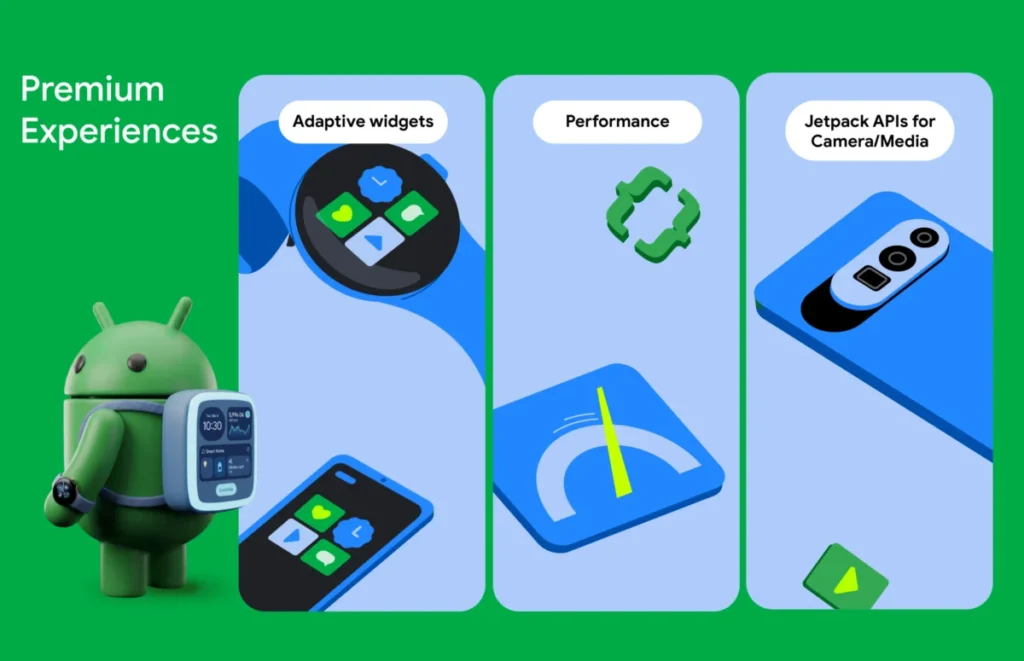
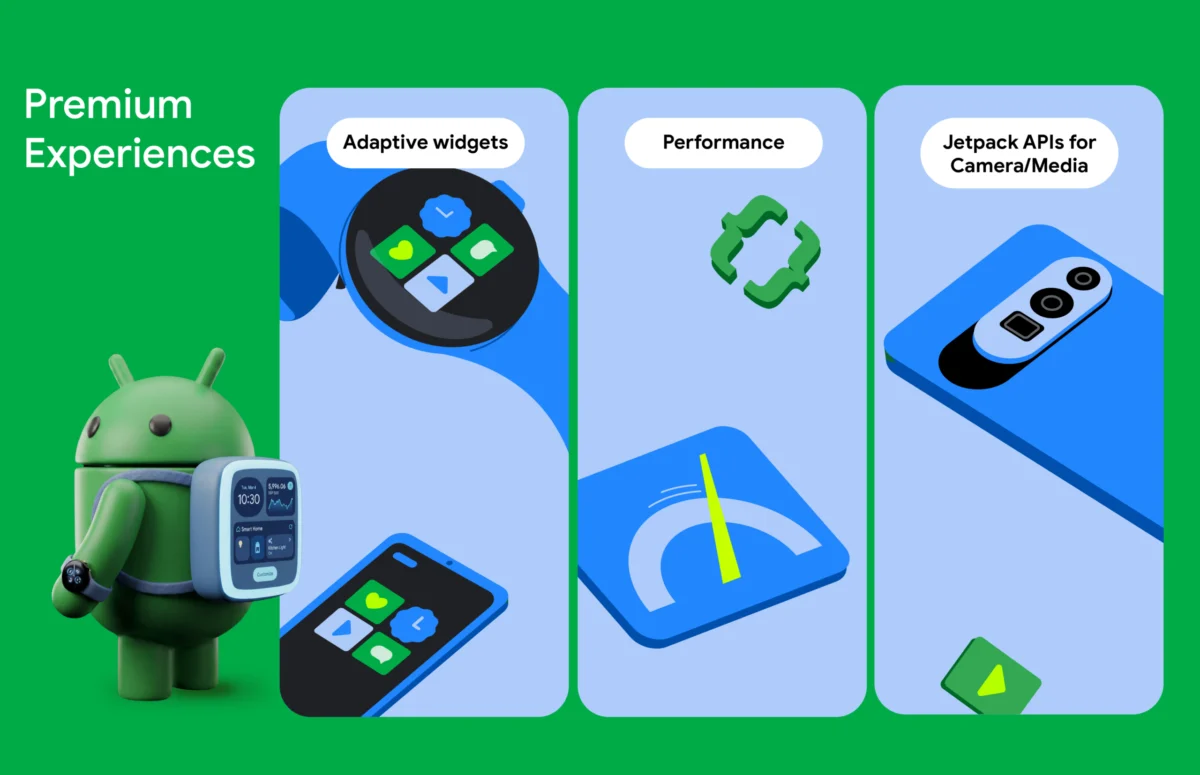
With the unification of widgets via Jetpack Glance, the home screen and secondary displays are becoming the new front line of engagement. Apps that provide high-value, low-friction information—such as flight status or boarding passes—will increasingly dominate user attention. The move to RemoteCompose ensures that these experiences remain performant even on the resource-constrained hardware of a wearable device, effectively bringing the "premium" experience to the user’s wrist.
2. Democratization of AI-Driven Media
The introduction of the Media3 AI Effects library is a watershed moment for content creation apps. By providing a unified interface for complex tasks like "Magic Eraser" and "Studio Sound," Google is standardizing high-end media processing. Developers no longer need to write custom, hardware-specific shaders or utilize fragile third-party libraries to achieve professional results. Instead, they can tap into Media3’s ability to detect and utilize the most efficient hardware path on any given device.
3. Sustainability through Optimization
The enforcement of stricter memory limits in Android 17, coupled with the R8 Configuration Analyzer, signals an end to the era of "bloatware." Developers who prioritize performance will be rewarded with better app stability and higher user trust. Conversely, those who ignore the technical debt of their codebase will find themselves increasingly incompatible with the modern Android ecosystem.
4. A Seamless Multi-Surface Journey
Perhaps the most significant implication is the focus on the cohesive user journey. The ability to transition a task from a car dashboard to a watch to a phone, using a shared framework, represents the "Holy Grail" of modern mobile development. By reducing the friction of moving between devices, developers can create "sticky" ecosystems where the user’s experience is continuous, regardless of the hardware in their hand.
Conclusion
The latest updates from the Android ecosystem represent a strategic maturation of the platform. By providing the tools to build smaller, faster, and more expressive apps, Google is empowering developers to rise above the noise of an oversaturated market.
For the developer, the message is clear: the path to a premium experience is paved with optimization and unification. By embracing the R8 Configuration Analyzer, adopting the unified Glance framework, and leveraging the power of the Media3 toolkit, teams can not only meet the technical demands of Android 17 but also deliver the kind of seamless, high-performance interactions that define the future of mobile technology.
As we look toward the remainder of the year, the developers who leverage these advancements will be the ones setting the benchmark for the next generation of Android excellence. For those looking to dive deeper, the official Android YouTube playlist provides a comprehensive look at how to implement these changes, ensuring that every line of code serves the dual purpose of technical efficiency and user delight.