From Skepticism to Pragmatism: Linus Torvalds and the Evolution of AI in the Linux Kernel
In the insular, high-stakes world of kernel development, few voices carry as much weight—or as much potential for blunt force—as that of Linus Torvalds. For decades, the creator of Linux has served as the final arbiter of what enters the world’s most important software project. When it comes to the meteoric rise of Artificial Intelligence and Large Language Models (LLMs), Torvalds has spent the last three years traversing a complex intellectual arc.
Once dismissive, branding the industry as "90 percent marketing," Torvalds has transitioned into a position of pragmatic acceptance. Today, his stance is clear: Linux is not an anti-AI project. For those within the community who find this integration objectionable, his message is equally sharp: fork the project or walk away.
The Chronology of a Shift: From Hype to Integration
The journey from outright skepticism to institutional policy was neither linear nor simple. It was a process of empirical observation, trial, and the inevitable friction that arises when new technology meets established engineering rigor.
The "Marketing" Phase (2023)
At the Open Source Summit in Japan in late 2023, Torvalds offered a tepid outlook on AI. When questioned about the potential for AI-generated code to infiltrate the Linux kernel, he remained unmoved, suggesting that human developers were already quite proficient at introducing bugs, making the "AI threat" somewhat redundant. By October 2024, his frustration with the industry reached a fever pitch. During an interview with TFiR in Vienna, he famously distilled the AI landscape into a ratio: 90 percent marketing, 10 percent reality. He signaled that he would largely ignore the noise until the industry moved past the peak of the Gartner hype cycle.
The "Vibe Coding" Experiment (2025)
The tone shifted significantly by November 2025. At the Open Source Summit in Korea, Torvalds expressed a "fairly positive" view on what he dubbed "vibe coding." He viewed it as a low-stakes pedagogical tool—a digital equivalent to typing code from magazines in the 1980s. This curiosity led to the development of AudioNoise, a side project where Torvalds experimented with AI-assisted workflows. While he kept the kernel’s core development shielded from these experiments, the psychological barrier had been breached.
The Policy Era (2026)
By April 2026, the arrival of Linux 7.0 necessitated formal governance. The introduction of the "AI Coding Assistants" policy marked the transition from personal opinion to professional regulation. The rules were pragmatic:
- All code must adhere to GPL-2.0 licensing.
- AI tools are prohibited from adding
Signed-off-bytags. - Human developers must take full legal and technical responsibility, signified by a new
Assisted-bytag.
Supporting Data: The Burden of Automation
The integration of AI into the Linux ecosystem has not been without significant technical and administrative costs. While the theoretical productivity gains—often cited as 10x or 100x by Silicon Valley evangelists—are tempting, the reality on the ground has proven more volatile.
The "Clanker" and Fuzzing
In early 2026, maintainer Greg Kroah-Hartman’s experiments with "clanker," an AI-assisted fuzzing tool, demonstrated the potential for automation to find edge-case vulnerabilities. However, this success was quickly overshadowed by the "garbage in, garbage out" phenomenon.
The Cost of Hallucination
Linus Torvalds has repeatedly highlighted that the primary danger of AI isn’t necessarily malicious code, but "hallucinated" code—code that looks syntactically correct but is logically hollow or dangerous. By mid-2026, the Linux mailing lists were flooded with trivial, AI-assisted bug reports. These reports often required hours of expert manual labor to verify, effectively shifting the burden of work from the AI to the human maintainers. As Torvalds noted in Mumbai, separating a fabricated bug report from a genuine one has become a significant time sink, threatening the efficiency of the development cycle.
Official Responses: The "Fork or Walk" Doctrine
The definitive turning point in the community’s discourse occurred on July 14, 2026. Following a heated debate regarding anti-LLM sentiment in documentation and policy recommendations from organizations like the Software Freedom Conservancy, Torvalds intervened.
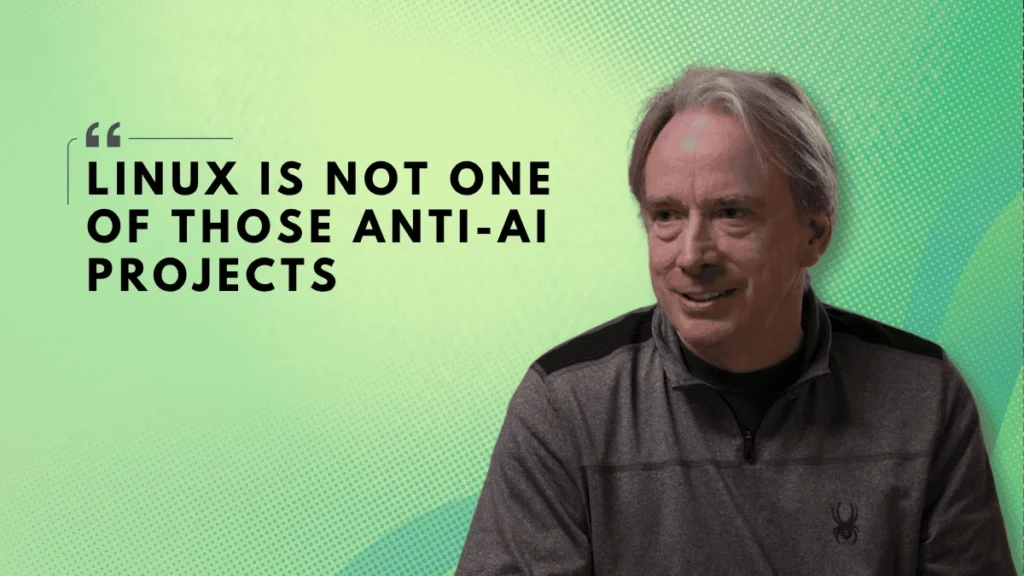
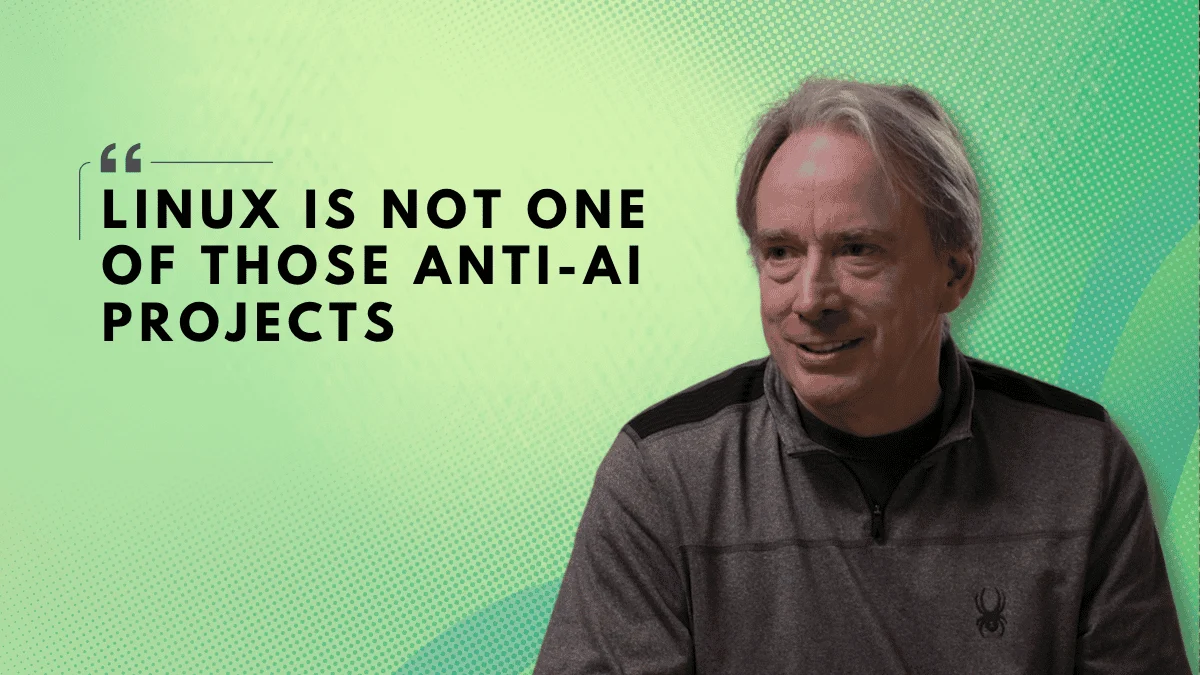
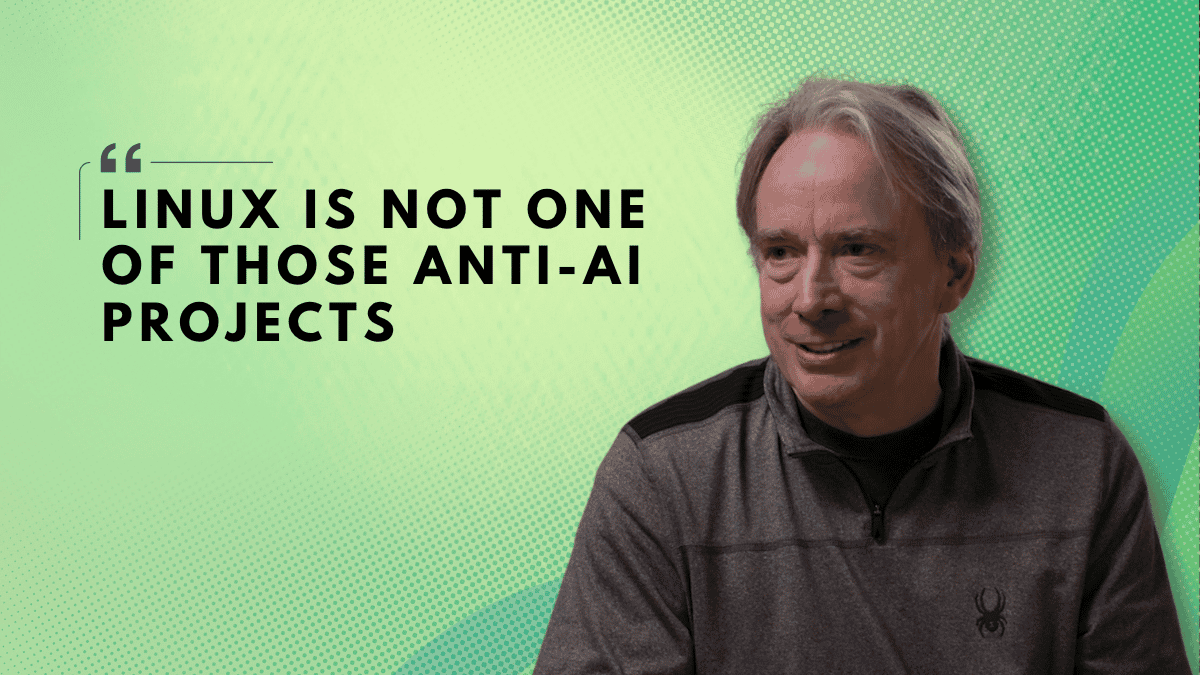
His statement was unequivocal: "Linux is not one of those anti-AI projects."
This was not merely a statement of preference; it was a boundary-setting exercise for the future of the project. Torvalds articulated that the goal of the kernel is to maintain the highest quality software, and if a tool—AI or otherwise—aids in that mission, it should not be discarded based on ideology. By telling dissenters to "fork the project," he effectively neutralized the political friction that threatened to derail technical progress, reaffirming his role as the project’s ultimate pragmatist.
Implications for the Future of Open Source
The "Torvalds Doctrine" on AI carries profound implications for the wider open-source landscape.
The Death of Ideological Gatekeeping
Torvalds has signaled that the Linux kernel will not serve as a venue for broader societal debates about the ethics of AI training data or corporate automation. Instead, the focus remains entirely on the output. If the code is sound, the provenance is secondary—provided the licensing and human accountability requirements are met. This will likely force other open-source projects to adopt similar, strictly technical policies to avoid being paralyzed by similar internal debates.
The Evolution of the Developer Role
The role of the kernel developer is shifting from a "writer of code" to an "editor and auditor of AI-generated output." This shift requires a higher level of seniority. If AI can handle the boilerplate and simple bug fixes, the human developer must possess an even deeper understanding of the system to catch the subtle, nuanced errors that LLMs currently struggle to navigate.
The Institutionalization of Tools
With the "Assisted-by" tag now an official part of the Linux workflow, we are entering an era where AI is treated as a specialized, albeit fallible, tool—much like a compiler or a static analysis tool. The industry is moving away from the "AI as a savior" narrative toward "AI as a force multiplier," provided it is harnessed by experienced hands.
Conclusion
Three years ago, Linus Torvalds viewed AI with the skepticism of a veteran engineer who had seen countless "next big things" fail to live up to their marketing. Today, his perspective is defined by a calculated acceptance. He has acknowledged that while the industry surrounding AI is often bloated with hyperbole, the underlying technology offers genuine utility that can, if managed correctly, serve the kernel project.
By refusing to turn the Linux kernel into a political battleground, Torvalds has protected the integrity of the project while acknowledging the inevitable reality of modern software engineering. The message to the community is clear: the future of Linux will be defined by the quality of the code, not the source of its origin. As the project enters this new chapter, it serves as a bellwether for the rest of the technology sector—a reminder that in the world of high-performance computing, the only thing that matters is what actually works.